SUZUKI

Real-world test: Suzuki Swift consumes less fuel than other petrol cars, even with all-wheel drive
The compact Japanese hatchback with mild hybrid drive and AllGrip all-wheel drive proved to be the most fuel-efficient petrol car tested in the first half of 2026 by the Italian website Motor1.
Suzuki has once again confirmed its reputation as a manufacturer of economical compact cars, and its usual test, on the 360-kilometer route from Rome to Frosinone, was conducted by Motor1.
The new Suzuki Swift won the title of the most fuel-efficient petrol car in tests conducted during the first six months of 2026, confirming the brand's long-standing philosophy focused on low fuel consumption.
However, how does a car that is only 3.86 meters long, with a 1.2L mild hybrid engine and AllGrip Auto all-wheel drive, manage to achieve such good results?
The Swift’s new 1.2L petrol engine combines outstanding fuel efficiency with impressive low-end torque for quick, responsive acceleration. It is also equipped with a number of advanced features that help suppress emissions.
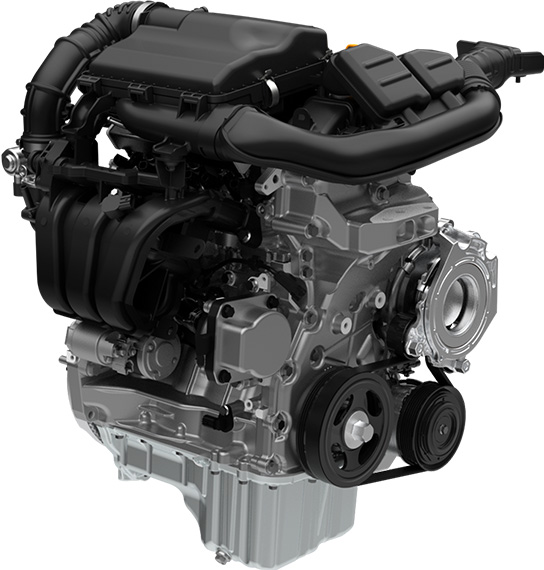
The 1.2L, 3-cylinder Z12E engine used in the Suzuki Swift and Dzire Boostergreen models.
The engine incorporates mild-hybrid technology to reduce CO2 emissions and improve fuel economy.
The unit generates approximately 81 hp and 107 Nm of torque, with additional support from a 3 hp electric motor.
The image highlights the engine's new design, which focuses on efficiency and urban performance.
Low weight and efficient engine...One of the key reasons is the very low weight of the vehicle. The Suzuki Swift 1.2 Hybrid 4WD AllGrip in the Top equipment package weighs only 995 kilograms, which gives it a great advantage over the competition.
The combination of low weight, a naturally aspirated 1.2-liter three-cylinder engine with 83 hp, a 12-volt mild hybrid system and a five-speed manual transmission enabled an average consumption of only 4.05 l/100 km in the real consumption test with a petrol cost of 25.21 euros on the test route.
The Japanese philosophy of efficiency, even with all-wheel drive...Suzuki emphasizes that the car was developed according to the Japanese principle of "Sho-Sho-Kei-Tan-Bi", which implies that the vehicle should be compact, light, simple and maximally efficient.
That is why the Swift uses a simple five-speed manual transmission and technical solutions that reduce weight, energy losses and fuel consumption, without compromising functionality.
The AllGrip Auto four-wheel drive system attracts special attention. It is a mechanical system with a cardan shaft and a viscous coupling that automatically transfers part of the torque to the rear wheels when the front ones lose grip. In extreme situations, the power distribution can be as high as 50:50.
Although the four-wheel drive version has 2.5 cm more ground clearance than the front-wheel drive model, this has almost no effect on consumption.
For comparison, the Swift with the same engine, but with front-wheel drive, achieved an even lower consumption of 3.9 l/100 km, which also places it among the most economical petrol cars tested in the last twelve years.
The weather also played a role...The excellent result was partly influenced by favorable weather conditions. The test began at a temperature of 13 °C, when there was no need for intensive use of heating or air conditioning.
In addition, the drive was carried out on a dry road. It is known that wet asphalt can increase fuel consumption by 5 to 10 percent, so the ideal weather conditions further helped the Swift achieve an exceptionally low result.

Fuel economy explained...Once you are ready to buy a new car, how do you find out which one is the most economical? It’s good to know you can compare apples with apples. Every new car sold has a fuel rating displayed as X.X Litres per 100km. This means the car uses so many litres of fuel for every 100 km travelled. So, the lower the fuel figure the better the fuel economy.
All manufacturers put their new cars through international standardised testing to find out what this fuel economy figure is. In addition, every car sold in New Zealand at a dealership is required to display this figure on the car, making it easy for you to compare between vehicles.
Before deciding on what vehicle is right for you, it’s important to understand fuel economy ratings and what they mean.
The official fuel economy tests...All Suzukis are tested to the internationally agreed standards and guidelines to determine their official fuel economy and CO2 emission figures. Tests are conducted in controlled conditions using a machine called a dynamometer which simulates different driving environments. The tests produce results for the following types of driving:
-Urban: Simulates driving in traffic, including a combination of idling, acceleration, steady driving and deceleration.
-Open Road: Simulates open-road driving with a sustained period of steady driving at higher speeds (average speed: 63km/h, maximum speed: 120km/h).
-Combined Cycle: The combined figure is the average of the two tests, weighted by the distance covered in each part of the test. This is the result quoted as the vehicle’s fuel consumption figure.
But how will your Suzuki perform in the real world? Noted independent New Zealand Motoring journalist Donn Anderson has undertaken numerous real-world fuel economy runs with Suzuki models in New Zealand – all of which bettered the official combined cycle fuel tests. Completed with two occupants and luggage and no special preparation, the results were remarkable.
-The Baleno 1.0 RS Turbo bettered the official figures by 24%
-The S-Cross 1.4 Prestige Turbo bettered the official figures by 23%
-The Ignis 1.2 bettered the official figures by 12.8%.
However, it is important to remember that your fuel consumption may vary compared to the official figure. Factors such as your vehicle’s condition, your driving style, and traffic and road conditions all have a bearing on how efficiently your car performs.
Below you will find a few helpful driving and vehicle tips to keep in mind.
Understanding fuel economy labels...All vehicles for sale through a registered motor vehicle dealership in New Zealand must carry a government-authorised fuel label. This lets you compare the fuel economy and running costs of any vehicle using a star system.
The star rating gives up to 6 stars for the most fuel efficient vehicles based on a standard distance travelled over 12 months and a uniform cost per litre. This information must also be available on the seller’s website.
The label also gives the cost per year to run the car based on the published fuel economy figure. It is expressed as litres of fuel the vehicle will use while travelling 100kms (L/100km), with an average fuel price of $2.80/litre and driving 14,000km per year.
The Suzuki Swift achieves exceptional fuel efficiency—even with its AllGrip all-wheel-drive system—due to its ultralight HEARTECT platform, a highly efficient small-displacement 3-cylinder engine, and a self-charging 12V mild-hybrid system that reduces engine load during acceleration.
Core efficiency technologies:
Lightweight HEARTECT platform: Weighing significantly less than standard hatchbacks (often under 950–1,000 kg), the Swift requires far less kinetic energy and engine strain to get moving.
Mild-hybrid assist (SHVS): An Integrated Starter Generator (ISG) captures energy during deceleration and uses a small lithium-ion battery to provide torque-assist when pulling away from a stop.
Optimized ALLGRIP auto AWD: Unlike heavy, permanent 4WD setups that constantly waste energy, Suzuki’s automatic all-wheel-drive system engages the rear wheels only when it detects front-wheel slippage, keeping drag low during normal driving.
Autonews




Nenhum comentário:
Postar um comentário