AUTONEWS
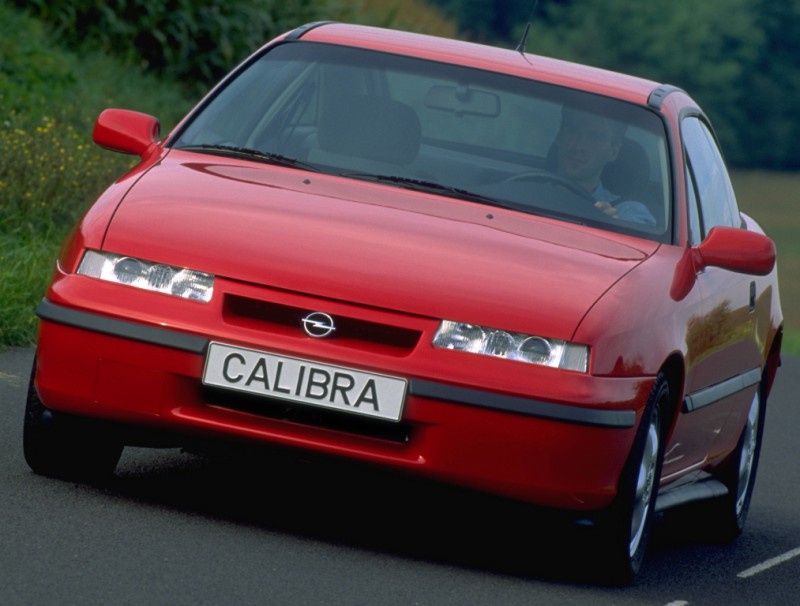
Opel Calibra: The car surpassed Ferraris, Porsches, and Lamborghinis of its time
The Opel Calibra dazzled in the 90s, and not just for its looks. In one important aspect, it was the best car in the world, surpassing even the most luxurious and sporty models.
The Opel Calibra arrived on the market in the early 1990s and was never "just any car." By that, we mean more than just its design or the power of its engines, inherited from the Vectra. We are talking about a quality that neither Ferrari, Porsche, nor Lamborghini of the time managed to surpass, but which few know or remember.
At the time (production ceased in 1997), most coupe manufacturers focused primarily on what was under the hood and, above all, on power and performance. But Opel looked beyond the hood and decided to consider the air around the moving car, that invisible enemy from which it cannot escape. Opel engineers sought to minimize air resistance in their new coupe, and to that end, they worked on every detail of the body with surgical precision.
The result was a drag coefficient of just 0.26, making the Calibra the most aerodynamic production car in the world (we emphasize: of its time). To give you an idea, a Ferrari Testarossa, with its bold silhouette, had a coefficient of 0.36. A Lamborghini Diablo, no less sporty, had a coefficient of 0.38. And a Porsche 911 Turbo (of the 964 generation, the one sold at the time) had a coefficient of 0.34. It is true that these sports cars also needed aerodynamic features to keep the car glued to the road, a need that was not so important in the Opel. But for a car like the Calibra, which was affordable for a typical salaried worker, this was simply amazing.
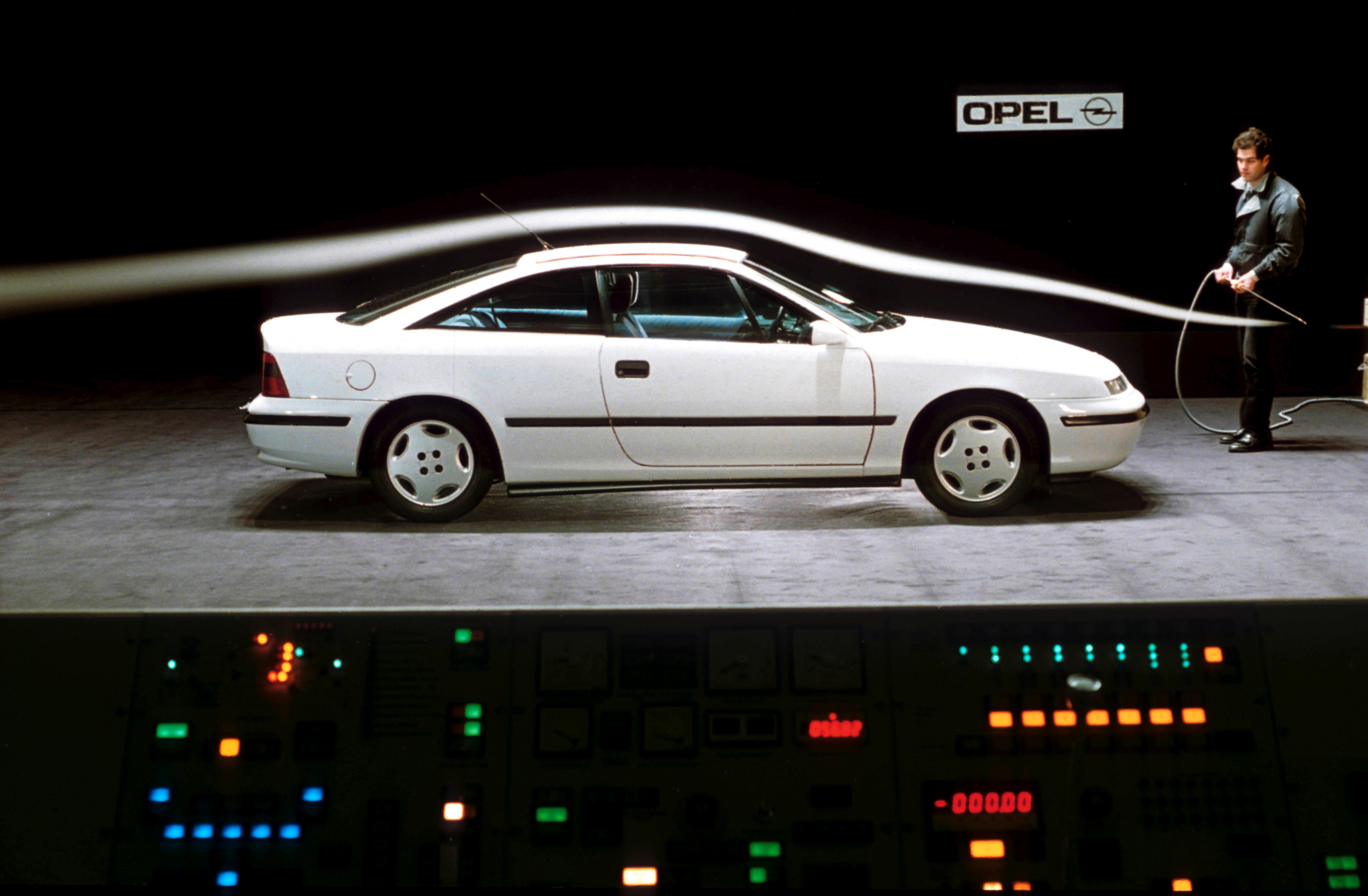
Small details...How did you achieve so much success? The key was that every line of its body was calculated to allow the air to caress it, rather than resist it: it had a sloping roof, rounded hood and sides, a windshield that seemed to align with the roof, teardrop-shaped rearview mirrors, and side skirts that efficiently directed airflow...
But that wasn't all, as the small spoiler prevented the formation of air trails that would slow the car down (if the air is suddenly pushed away from the car, the drag coefficient worsens), the wheel arches minimized aerodynamic drag, and even the door seals were optimized. We imagine all this left other manufacturers speechless.
Against gusts of wind...One consequence that many Calibra owners must have noticed was the car's excellent response to crosswinds. The aerodynamic efficiency not only reduced drag but also contributed to more predictable driving, less prone to unwanted movements.
The Calibra was sold in 2.0i (115 hp), 2.0i 16v (136 hp), 2.0 16v Turbo 4x4 (204 hp), and 2.5 V6 (170 hp) versions, and it's necessary to consider the context of the time to understand that the fuel consumption of 7.9 liters/100 km for the simplest version was a good figure, although perhaps not surprising for a car with such aerodynamics.

A European cult classic...At its market launch in 1990, the all-wheel drive system was available as an option, in addition to the standard front-wheel drive for both 2.0-liter petrol engines. In March 1992, Opel made waves when the Calibra Turbo hit dealerships at a price of 49,800 marks. All-wheel drive, a six-speed gearbox, sports seats and 16-inch alloy wheels were standard equipment. However, those affected aerodynamics - the 16V, V6, 4x4 and turbo models had a worse Cd of 0.29, due to changes in the cooling system, the underbody, the use of spoked wheels and glass details.
During its lifetime, the entry-level 115 hp 2.0-liter Calibra was the most popular model with 130,000 units produced, followed by the 150 hp model – over 61,000 of these cars were produced. The largest markets for the Calibra were Germany, the United Kingdom, Italy, Spain, and France. As a General Motors car, the Calibra was sold in the United Kingdom under the Vauxhall brand. In South America, it was marketed as the Chevrolet Calibra. In Australia and New Zealand, it was sold as the Holden Calibra.
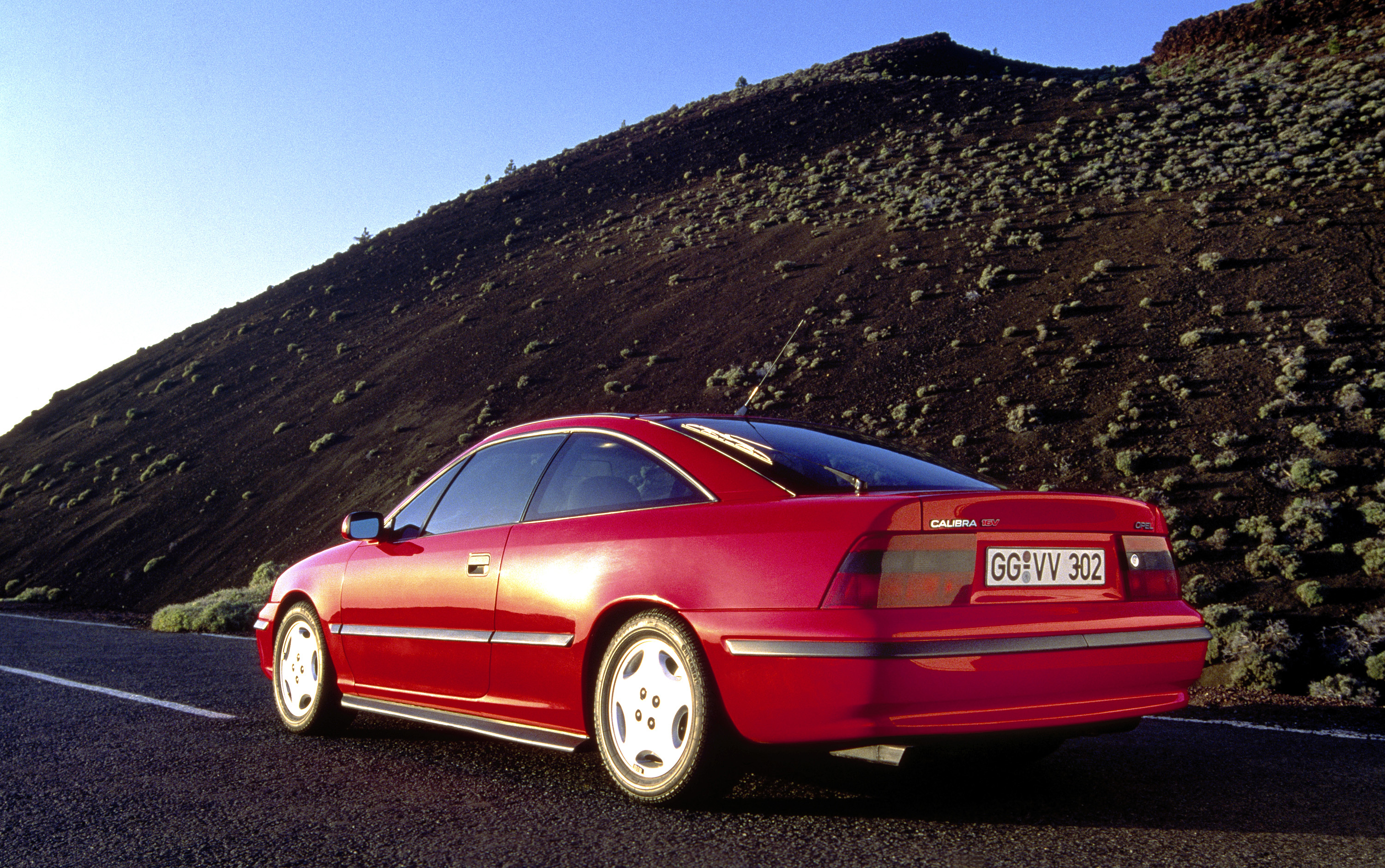
Nowadays, there aren't many Opel Calibras left on the streets, but it's possible to find some on the used car market with prices starting at around €3,000. And many of them can already be considered "historic"; after all, what more could one expect from a car that had such an important characteristic as the title of best in the world?
by Autonews



Nenhum comentário:
Postar um comentário