TOYOTA
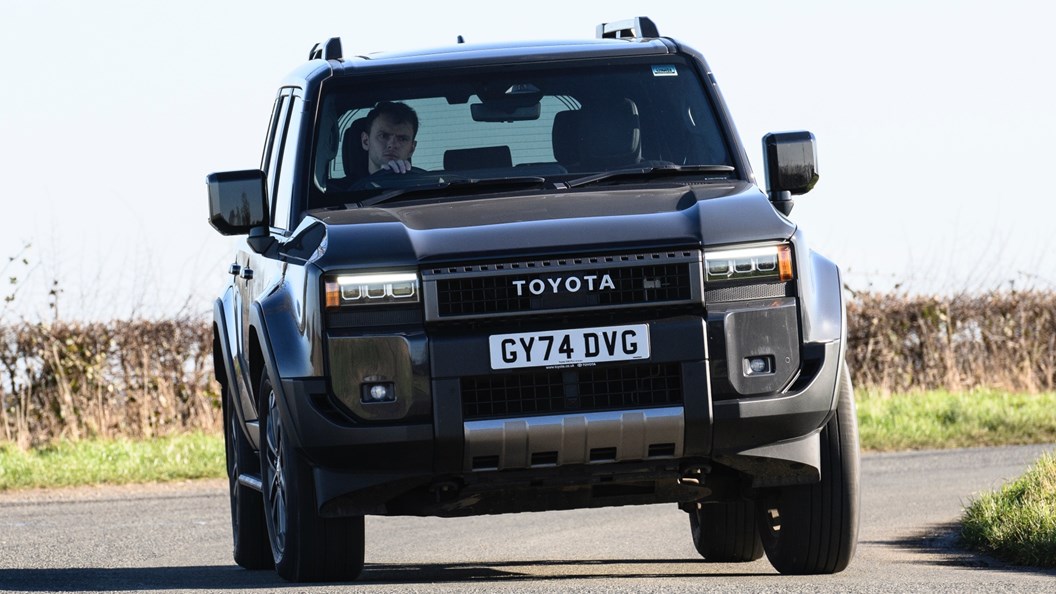
Test: Toyota Land Cruiser 2.8 D-4D
Want to drive over extremely difficult terrain in a comfortable top-of-the-range sedan? You think it's impossible? Toyota thinks otherwise.
Right at the beginning, we have a question for you: which Toyota model has been produced the longest? Most of you probably thought it was the Corolla. Wrong! Although you're not far from the truth. The Corolla is in second place, because it went on sale in 1966. However, the longest-selling Toyota car is the Land Cruiser, which is also the fifth longest-selling car in the world. It premiered in 1951 under the name Toyota BJ, and under its current name it arrived on the market in 1954.
Before us is a car that has been with us for 72 years. And for all these decades, it has gone through a difficult path and learned a lot. The Land Cruiser is an icon.Sadly, the launch engine is a carry-over from the old model and Toyota Hilux. It’s a 2.8-litre turbodiesel that puts out just 201bhp and a stout 369Ib ft of torque. There is a new turbo and eight-speed automatic gearbox that help trim two whole seconds off a comparable old Land Cruiser’s 0-62mph time.
That said, 0-62mph in 10.9 seconds is pretty sluggish in 2025, especially if you’re talking £70k+ SUVs. it’s not like the big four-pot is frugal, either. Official WLTP economy is 26.4mpg, and I saw 24mpg after a week of mixed driving, albeit with lots of urban work. A mild-hybrid petrol is coming soon, but this will be aimed at boosting performance and refinement rather than efficiency. More importantly, the Land Cruiser can tow a braked trailer up to 3500kg in weight, and wade through up to 700mm of water.
Toyota has worked hard to better isolate the diesel up front and it shows. You still hear a distant clatter, yet it’s quieter and transmits fewer vibrations through to the controls. Even so, it’s not a patch on the six-cylinder diesels in rivals for smoothness or power. It certainly sounds more pickup than posh SUV when pushed, and performance is similar, too. The 0-62mph time doesn’t quite tell the full story as I found there was adequate performance for 95% of scenarios and snappier responses than the old Land Cruiser.
Besides, this isn’t something you’ll want to get going quickly. Like a Mercedes G-Class (or pickup truck), the front suspension is a lot better at dealing with road imperfections than the back, and you’re aware of the Land Cruiser’s lofty centre of gravity and your tall perch. Grip levels feel plenty high enough given the plentiful body roll and slower responses of this compared to the Defender, and the Land Cruiser might as well be a Porsche Cayenne compared to the ponderous Ineos Grenadier.
The steering feels well judged in weight and ratio given the chassis’s capabilities, and precision is good. Stability control kicks in well before the tyres lose their purchase on the road. Whereas the old Land Cruiser’s ride fell to pieces when you introduced big alloy wheels, the new model remains comfortable. There is a bit of knobbliness over crumbling roads, and you’re certainly aware of that live rear axle twisting independently of the frame over bumps, but it’s way better than a Grenadier or Wrangler. Unsurprisingly, the independently air-sprung Defender is better than all of them.
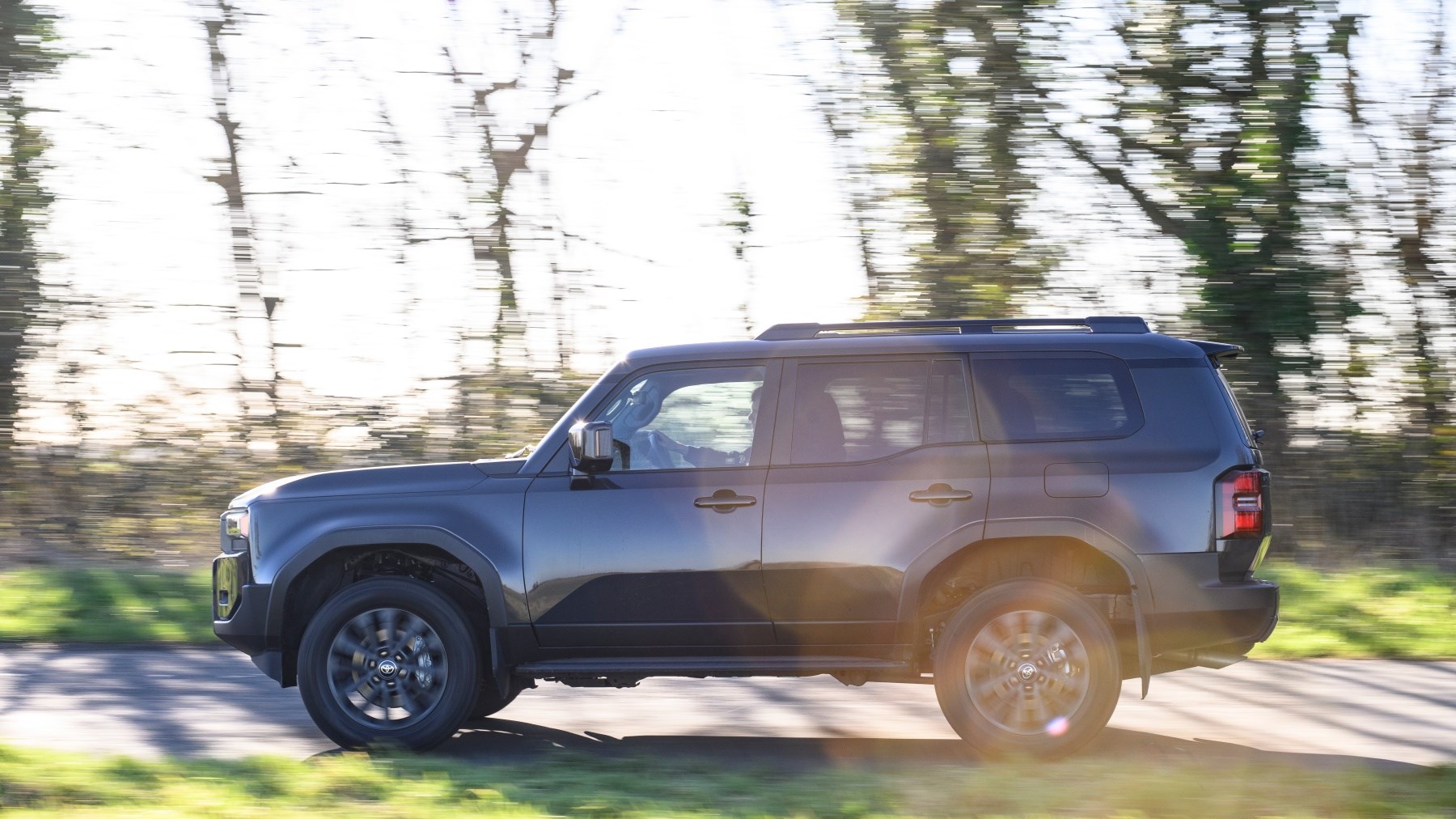
None of this has come at the expense of the Land Cruiser’s off-roading ability, which is more impressive than ever. With loads of ground clearance and minimal overhangs you’re unlikely to catch a bumper, while off-roading, and it’s one of the most capable 4x4s on the market.
Initial impressions are much better than before. There are more soft-touch plastics, squishy pads to protect your elbows and knees, larger, higher-definition screens and lots of quality buttons, knobs and switches. You certainly don’t have to take your gloves off to change temperature or off-road mode. You might want to, though. A heated steering wheel and four heated, ventilated seats come as standard, and you can guarantee the heater has been tested in Arctic conditions.
Even so, there is perhaps a bit more flex to some of the plastics around the transmission tunnel and heater controls than I’d like. A Defender feels classier while a Range Rover is more luxurious, although the Land Cruiser is more pleasant inside than a Wrangler, Grenadier or any pickup out there.
Toyota’s current infotainment system is a big step on from what came before. It’s easier to navigate, more responsive and looks sharper, with Land Rover’s system looking better whilst performing similarly well. It’s a similar story with the digital driver’s display.
It’s certainly more spacious than a G-Class for rear seat passengers, if not a Defender 130. Six-footers will be happy on row two’s reclining bench, and should go in the easily accessed row three for short journeys. Boot space is 566 litres in five-seat mode, 130 litres if all three rows are erected.
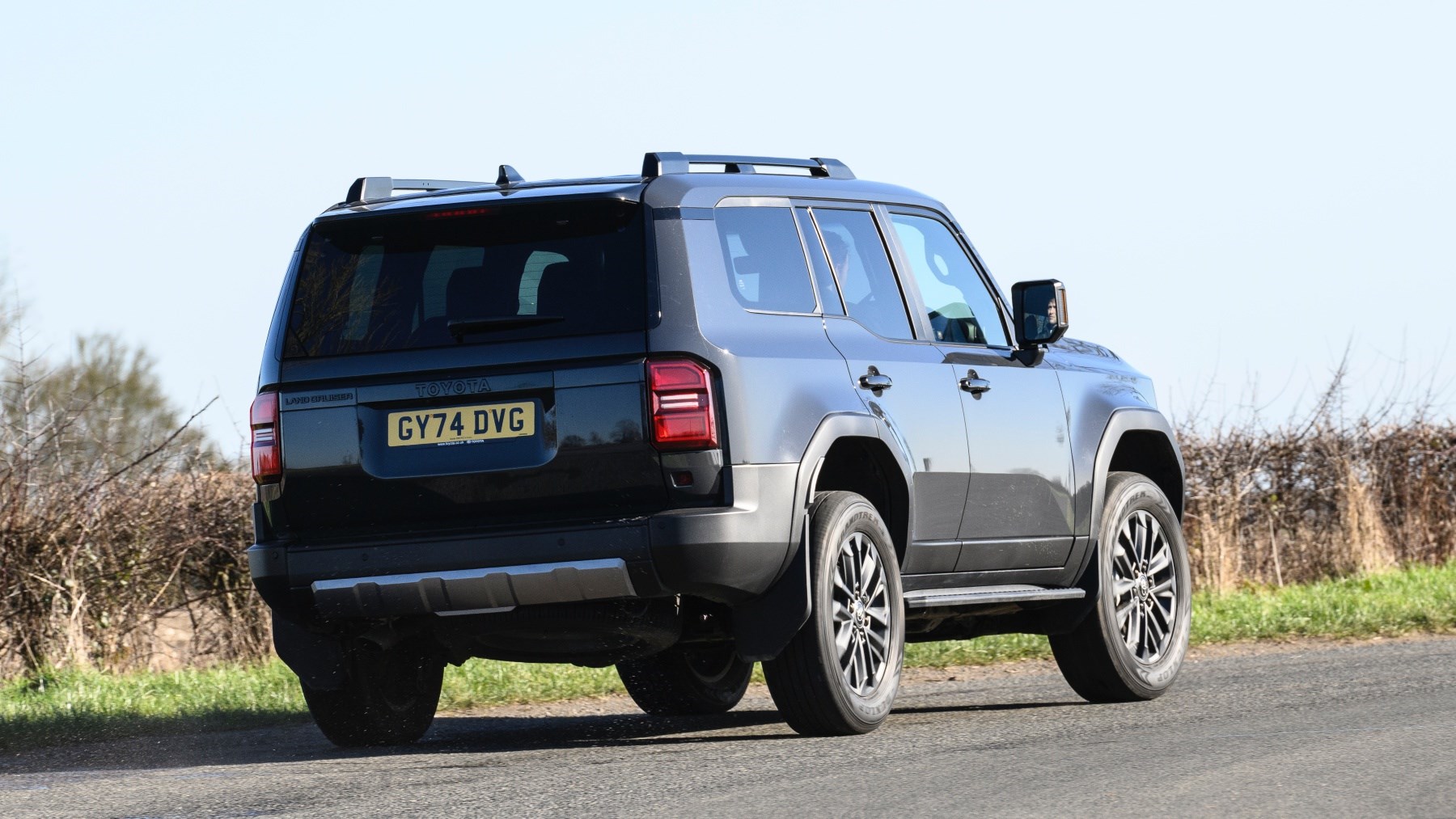
Verdict...If you’re after an SUV-shaped style statement that’ll spend most of its time on Tarmac, you should stick with a Land Rover Defender. Although the Land Cruiser is greatly improved, it can’t beat the Landy for refinement, comfort, performance and perceived quality, despite costing a fair bit more.
However, if you need a genuinely capable 4×4 that’ll probably outlast you and will have bombproof reliability, the Land Cruiser would be my pick. Toyota has polished it enough to make it far more pleasant on-road without harming its off-road ability, and the interior feels a lot plusher.
Autonews



Nenhum comentário:
Postar um comentário