AUTONEWS
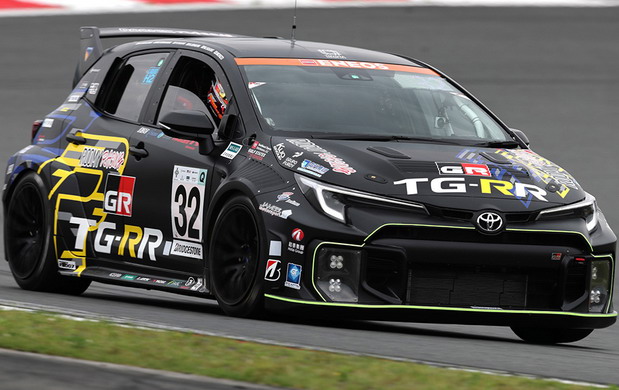
Will Toyota introduce a liquid hydrogen engine into production in the near future?
The world's largest car manufacturer has made a significant step forward in the practical application of liquid hydrogen as an ecological fuel for vehicles.
The largest Japanese and world car manufacturer, Toyota, made another technological step forward last weekend that could bring it a lot of profit in the future and change the global vehicle industry.
Over the weekend, a Toyota prototype called the "Corolla H2 Concept" with an internal combustion engine powered by liquid hydrogen completed 468 laps of four and a half kilometers during a 24-hour race, a result almost equal to that of classic gasoline-powered vehicles.
According to RTS, Toyota has participated in endurance races, which are held on a track at the foot of the volcanic Mount Fuji, with hydrogen-powered machines in recent years. Initially, it was hydrogen in gaseous form, which takes up a lot of space, which is why its car had to carry a bulky tank and stop frequently and for a long time to fill it.
However, from 2023 onwards, Toyota will compete with a vehicle, the first of its kind in the world, whose fuel is liquid hydrogen, which requires a significantly smaller tank than the same element in gaseous form.
Historic success...However, this unusual, innovative Toyota vehicle failed to complete more than 358 laps last year and the year before last. This is due to several technical difficulties posed by the use of hydrogen in liquid form, the most serious of which is the following: in order to turn this tasteless, colorless and odorless gas into a liquid and keep it in that state, a very low temperature of at least minus 253 Celsius is required, and such cold fuel quickly destroys the pipe that pumps it into the engine. Therefore, in the previous few races, the Toyota vehicle was forced to spend several hours in the mechanic's shop to have the fuel pump replaced.
This time, it seems, Toyota engineers managed to save the pump, among other things by implementing a system that automatically regulates the amount of fuel injected in accordance with the engine power required by the driver. So, not only did the liquid hydrogen Corolla not drop out of the race, but the fuel pump did not have to be replaced even once during the exhausting road battle in which 60 four-wheelers took part. Moreover, the black vehicle took a solid 41st place in the competition of pure gasoline-powered racing cars.
Interestingly, the first 40 laps of the race were personally driven by the company's president, sixty-nine-year-old Akio Toyoda, who is himself a passionate driver who has been participating in various competitions behind the wheels of his famous company's prototypes for years.
Numerous advantages...Liquid hydrogen and the engines that burn it have several environmental and economic advantages: not only are carbon dioxide emissions zero and nitrogen oxide emissions minimal, but they also open up the possibility that internal combustion engines, or rather the numerous technologies that have gradually been woven around them over the past hundred years, can remain in use, thus avoiding major, expensive technological shifts to electric vehicles.
The survival of the internal combustion engine would also mean the survival of the characteristic roar and revving that are dear to many fans of auto racing and powerful machines in general, and which have been eliminated by quiet electric power units.
In addition, liquid hydrogen, although it seems to require heavier equipment than gas, is safer in the sense that devices that maintain pressure are not needed to prevent the gas from expanding rapidly, or causing an explosion.
Toyota, whose feat of constructing liquid hydrogen vehicles has been hailed by the Japanese media as a major new contribution to achieving a carbon-neutral society, expects to increase the usefulness, or rather the efficiency, of this type of fuel and engine by about a fifth in the future, and then apply it in the mass production of trucks and construction machinery.
It should be noted that Toyota has been cooperating with companies from other fields for some time now in order to develop the infrastructure for storing and transporting hydrogen as quickly and efficiently as possible. The giant also hopes that in the future hydrogen could be extracted from geothermal sources in Japan itself, thus achieving self-sufficiency in fuel supply for the first time in the history of the domestic automotive industry.
The country's largest exporter and the driving force of the entire Japanese economy, Toyota, thus continues to work on implementing the philosophy of Aki Toyoda, who has long wholeheartedly advocated the simultaneous development of multiple drive technologies, including internal combustion engines fueled by hydrogen, rather than focusing exclusively on electric vehicles.
Major Drawbacks...However, there is no doubt that major technical challenges remain. One is that liquid hydrogen, while more space-efficient than gaseous hydrogen, itself requires a large tank due to its low density, or, alternatively, very frequent refilling of a standard-sized tank.
Also, since, despite the thermal insulation, due to the much higher outside temperature, the cold liquid hydrogen inevitably gradually heats up and turns into a gas, this practically means that a vehicle that is parked for several days is doomed to lose a good part of its fuel through evaporation even though it is not moving at all (unless some kind of constant cooling system is installed in it). This is not a problem when it comes to racing, because the filled liquid hydrogen is consumed immediately and quickly, but it is quite a difficulty when it comes to ordinary passenger cars and the way they are used.
Therefore, it is not surprising that Toyota engineers are talking about the possible use of liquid hydrogen in trucks and construction machines, since these allow the installation of larger tanks and cooling systems.
However, we should not be pessimistic and disqualify (liquid) hydrogen from the story of passenger cars, because it would not be the first time that Toyota, or some other vehicle manufacturer, has solved a certain technical problem that seems physically insurmountable.
Autonews



Nenhum comentário:
Postar um comentário