DOSSIER
SUZUKI
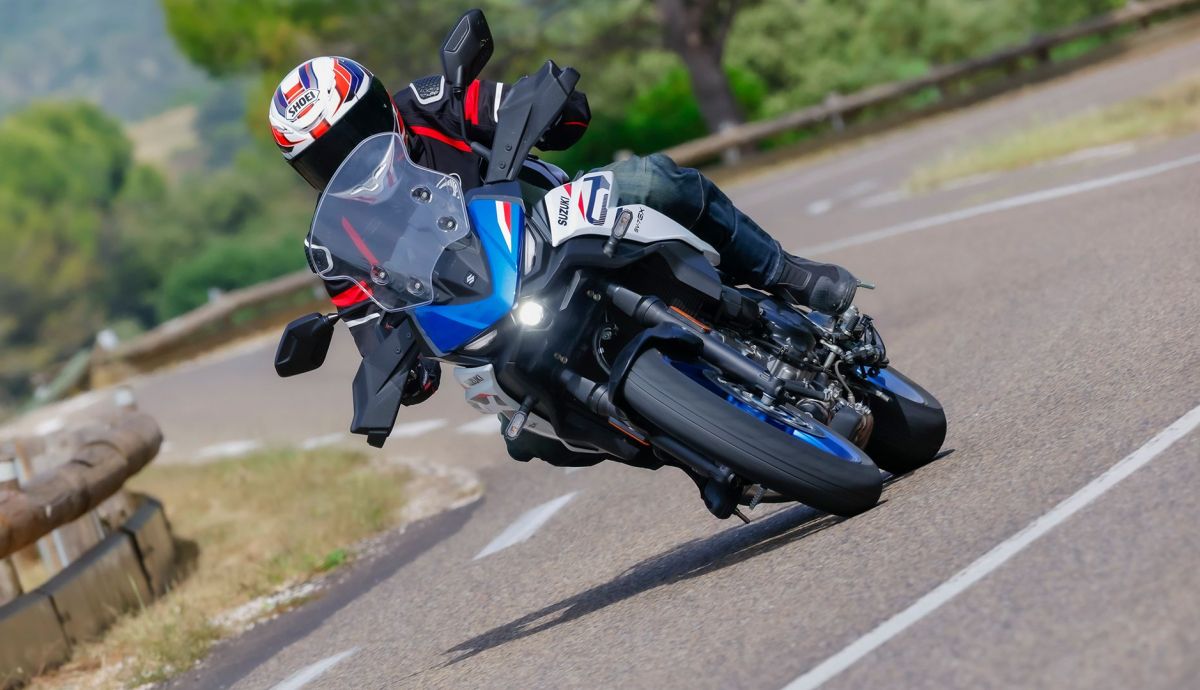
Suzuki SV-7GX
Just when it seemed Suzuki was set to retire its renowned 650cc V-twin engine—the same one powering the SV650 naked bike and the V-Strom 650—the brand launched the SV-7GX (technical specifications available at this link). This motorcycle brings back one of the best middleweight engines on the market, demonstrating Suzuki's continued confidence in the powerplant and its desire to offer something different.
The entry of Chinese manufacturers into the market has had a significant impact. For starters, the V-twin engine gives these bikes a distinctive character that competitors lack: most rivals use parallel-twin configurations with 270-degree crankshafts. Then there is the price; the company made a massive effort to keep the cost around €8,000.
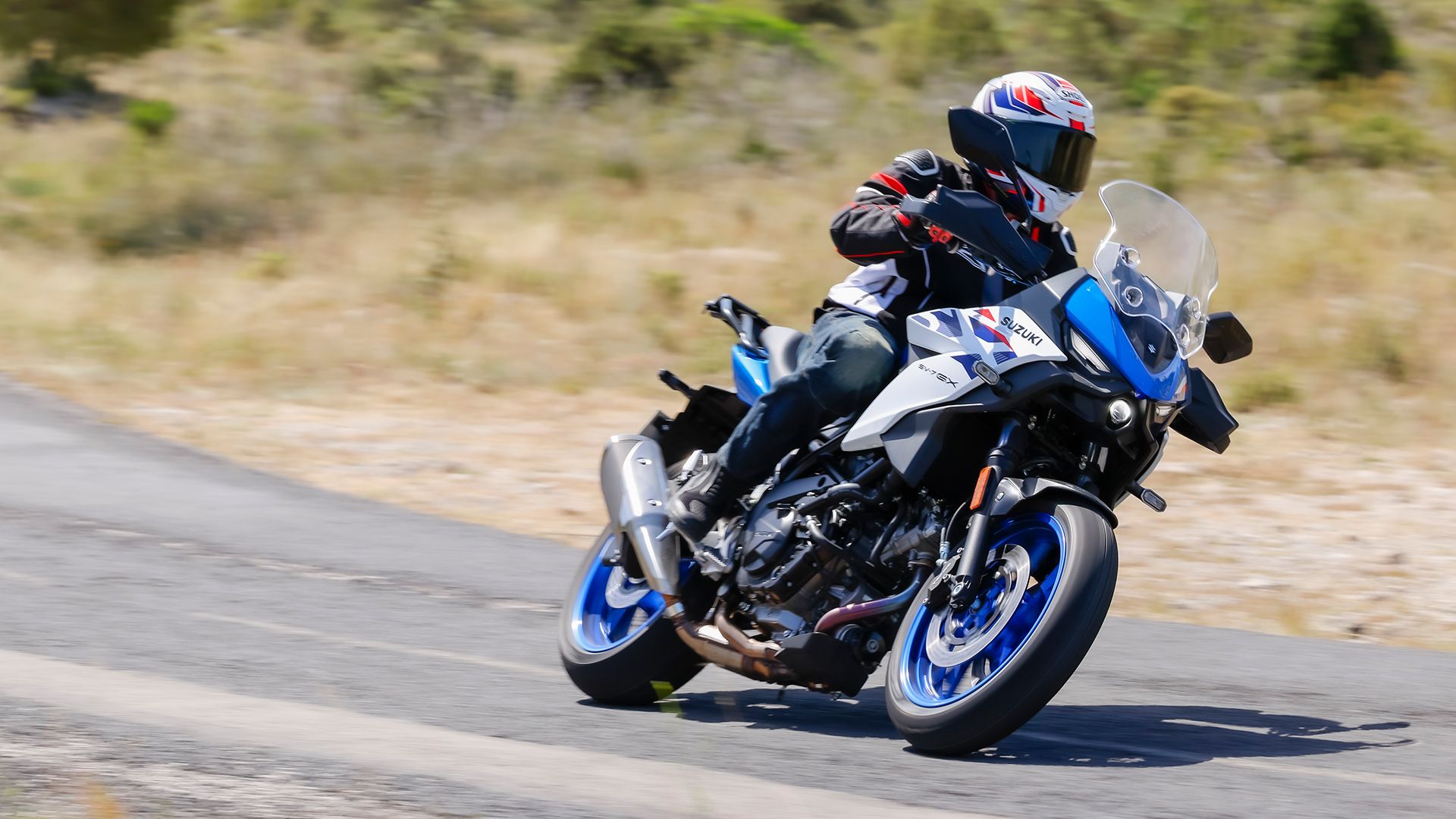
Suzuki invited us to Montpellier, France, for our first test ride. I admit I was eager to see how this engine would perform under the mandatory Euro 5+ emissions standards. It is an engine that has always impressed me with its sound, ride feel, performance, reliability, and fuel economy.
Before sharing my impressions, I’ll look at the new features that set this model apart. While it is true that—to keep the price down—they omitted a six-axis IMU, installed a windshield that requires tools to adjust between its three positions, and didn't even offer cruise control as an option, the electronics have been updated to modernize a mechanical system that debuted 27 years ago.
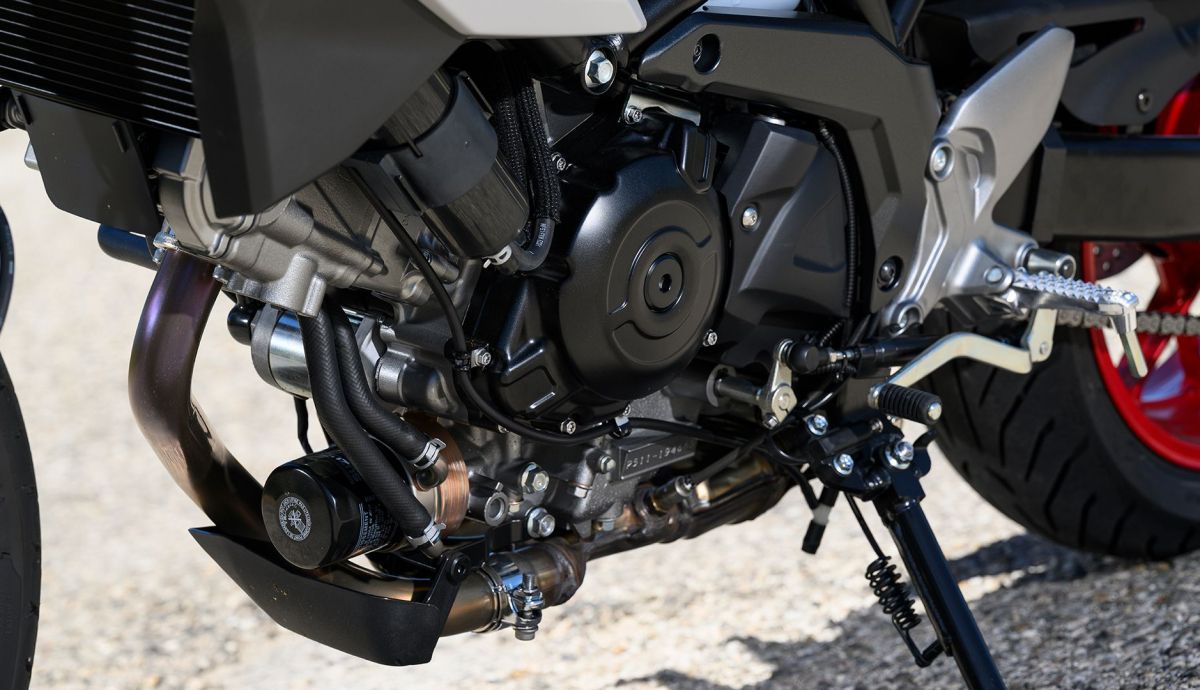
A legendary engine... Fortunately, the new Suzuki SV-7GX retains the iconic 645cc, 90-degree V-twin engine. Featuring double overhead cams and four valves per cylinder, this engine boasts a track record of reliability spanning more than a quarter of a century. To meet Euro 5+ emission standards and align with the market trend toward computerized motorcycle management, engineers in Hamamatsu have updated the engine's management system and intake.
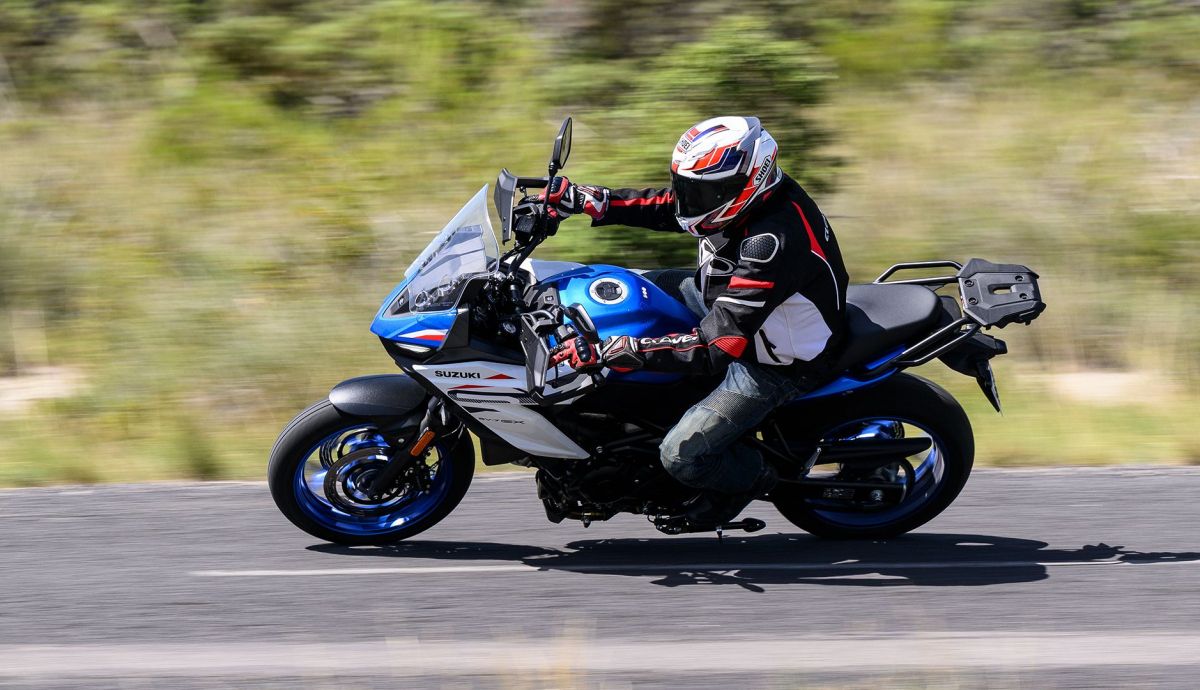
The key innovation is the adoption of a Ride-by-Wire electronic throttle system. With its introduction, fuel injection maps have been completely redesigned, and internal components—such as the flywheel and transmission gears—have been modified to meet the new electronic requirements.
Despite the constraints of strict Euro 5+ regulations, the engine maintains optimal performance, boasting a peak output of 73 hp at 8,500 rpm and 64 Nm of torque at 6,800 rpm. True to its mechanical heritage, the engine block continues to feature SCEM electrochemical treatment on the cylinder liners to minimize friction and optimize heat dissipation, alongside specialized pistons with L-shaped rings and under-piston oil jet cooling. Ignition is now handled by a dual-iridium-spark-plug system per cylinder, ensuring ultra-efficient combustion across the entire rev range.
The engine design was strategically conceived to optimize the motorcycle's ergonomics. The SV-7GX utilizes a downdraft air intake system, meaning the airbox is located directly beneath the fuel tank. Choosing this solution—rather than placing the airbox under the seat—reduces the space between the seat and the fuel tank. Consequently, even though the rider's seat is 10 mm thicker than that of Suzuki's naked model for added comfort, the seat height remains an accessible 795 mm.
The riding position falls between that of the V-Strom 650 and the SV 650: less upright than the former, yet less forward-leaning than the latter. It features a tapered aluminum handlebar that is 740 mm wide and positioned 17 mm higher and 24 mm closer to the rider compared to the SV650's.
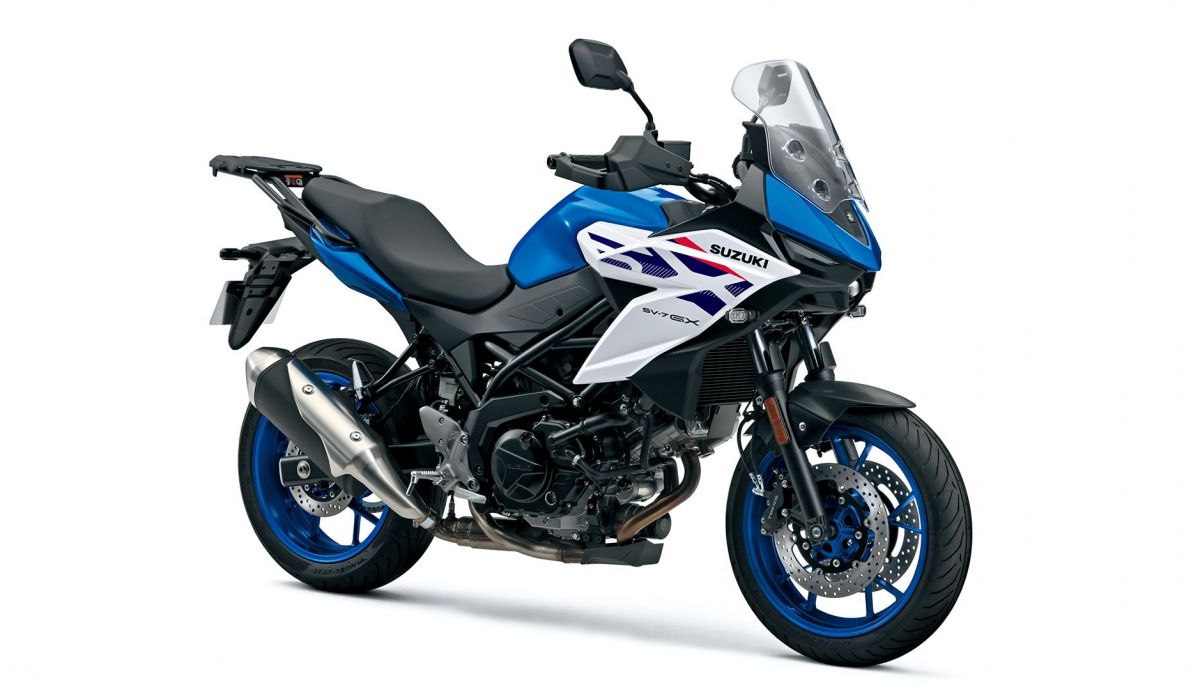
Passenger comfort has also been improved. The seat is 20% thicker thanks to an extra 20 mm of foam, and the subframe—welded to the main frame just like on the SV (from which it inherits its engine and chassis components)—has been modified to incorporate a sturdy, standard-issue luggage rack. Consequently, the passenger benefits from generously sized, ergonomic grab handles and a durable plastic base for mounting a sizable top case.
Finally, regarding load-carrying capacity, it is worth noting the bungee cord attachment points on the rear rack; this rack is designed to sit flush with the rear seat, allowing for the secure transport of bulky items. As for the motorcycle's overall design, the emphasis on rear-end functionality contrasts sharply with the aggressive, sporty front end; the front and rear views look like those of two completely different bikes.
Electronics...The introduction of ride-by-wire throttle technology paves the way for integrating the brand's intelligent rider-assist systems. This is the Suzuki Intelligent Ride System (SIRS), an electronic coordinator that enhances both safety and performance on the Suzuki SV-7GX. Already found on the Japanese manufacturer's high-end models, the SIRS control unit manages the Suzuki Drive Mode Selector (SDMS), traction control, the bidirectional quick-shifter, the Easy Start system, and the Low RPM Assist function.
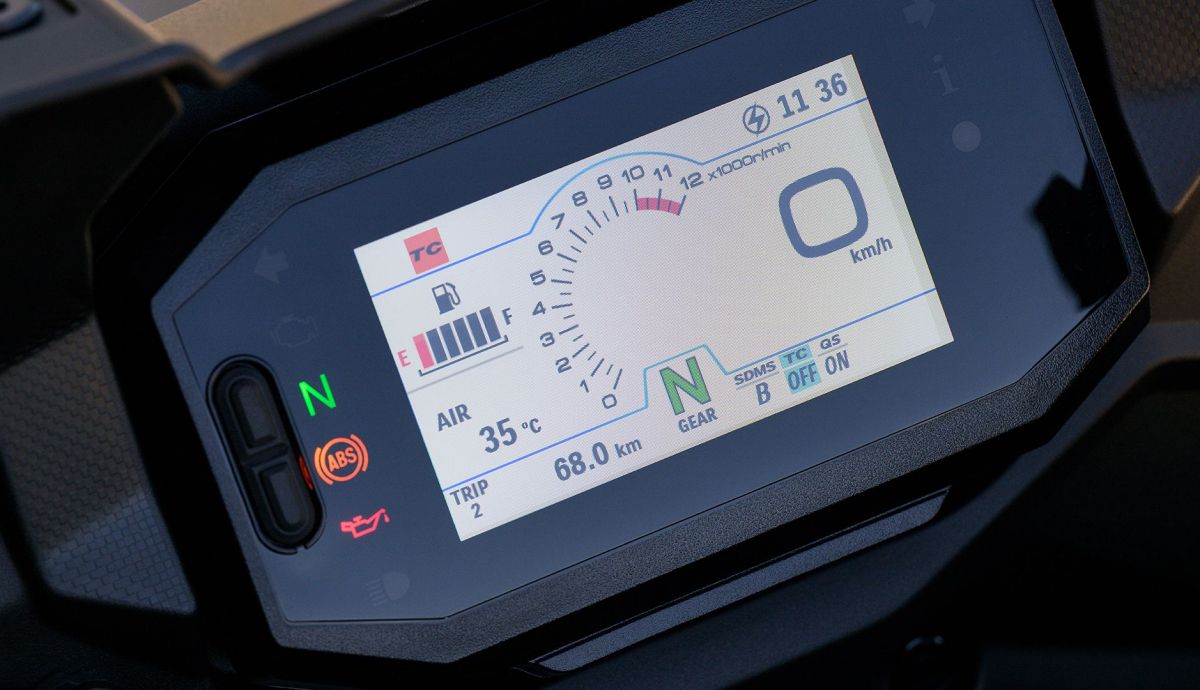
The traction control system (STCS) offers three levels of intervention, with the option to switch it off completely—even while riding. Like the ABS, the system does not rely on an Inertial Measurement Unit (IMU), meaning its operation is unaffected by the motorcycle's lean angle; this solution was designed to keep costs down without compromising safety. The equipment is complemented by a practical two-way Quick Shift system, allowing for upshifts above 2,000 rpm and downshifts from 1,700 rpm without using the clutch. Ultimately, this technology makes riding the motorcycle even easier, especially for those transitioning from the world of scooters.
The Easy Start system allows the engine to be started with a simple touch of a button, without needing to hold it down until the engine fires up. Additionally, the Low RPM Assist makes it virtually impossible for the bike to stall when pulling away, as it automatically increases engine speed.
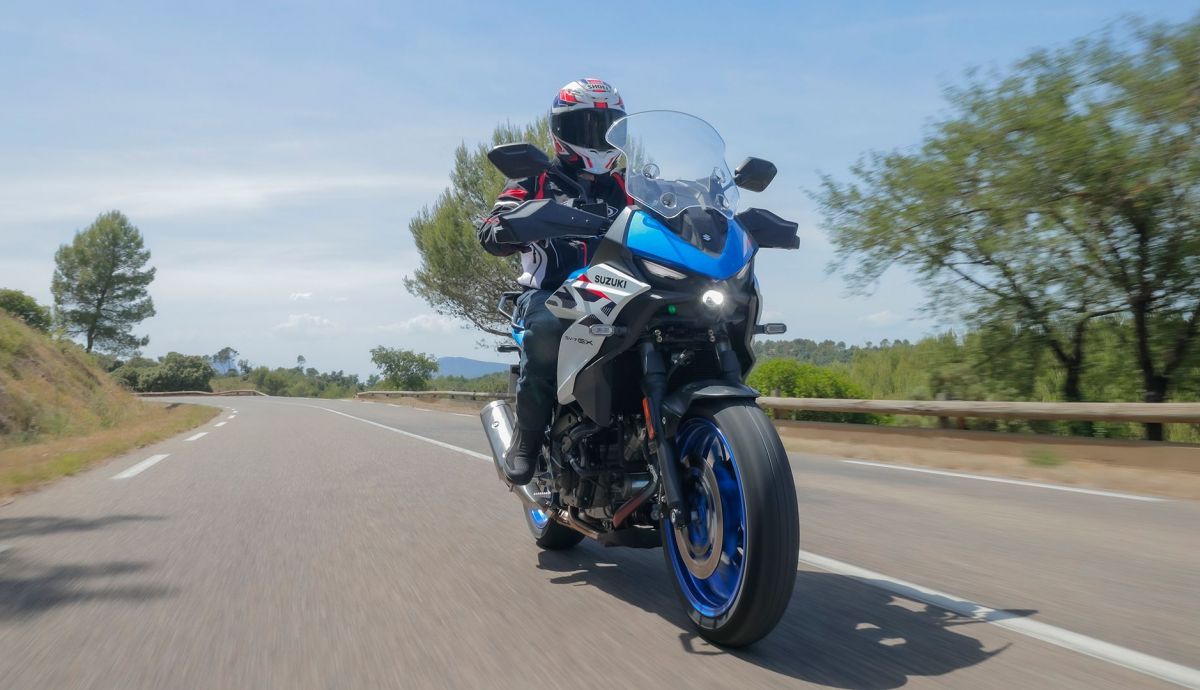
Regarding the chassis, Suzuki employs a steel trellis frame integrated with the welded subframe found on its SV 650 naked model. This setup provides a blend of torsional rigidity and flexibility, offering an ideal balance for riding with a full load without compromising sporty handling.
The suspension setup prioritizes shock absorption over sporty performance. The front features a conventional, non-adjustable telescopic fork with 41 mm diameter tubes and 125 mm of travel. The rear utilizes a central monoshock with a linkage system—adjustable only for spring preload across seven positions—mounted on a tubular steel swingarm.
The braking system consists of dual 290 mm floating discs with axially mounted four-piston calipers (the SV had two), supplemented by a 240 mm rear disc, all combined with standard ABS.
With a full 17.4-liter tank, the motorcycle weighs 223.8 kg in running order (211 kg dry, including all fluids except fuel). Contact with the road is handled by Pirelli Angel GT II tires—touring tires that, as they have demonstrated to me more than once, leave nothing to be desired regarding grip during spirited riding.
All vehicle parameter management and telemetry data are centralized on a new 4.2-inch color TFT display, inherited from other models in the brand's lineup. This dashboard features an automatic light sensor to switch between day mode (white background) and night mode (black background) and also incorporates a small anti-glare visor.
Via the Suzuki Ride Connect+ app and a Bluetooth connection, the TFT display adapts its interface to provide turn-by-turn navigation, graphic map displays, real-time traffic alerts, and localized weather warnings. The system also adds entertainment features, such as call notifications, a calendar, and a detailed smartphone log that stores fuel consumption, trip history, and the last parking location. However, there is no mention of music control via the display if you are listening to music through your helmet.
Next to the instrument panel, there is a high-output USB-C port (5V/3A) designed to charge mobile devices or external navigation systems, should you be dissatisfied with the arrow-based directions provided by the Suzuki app.
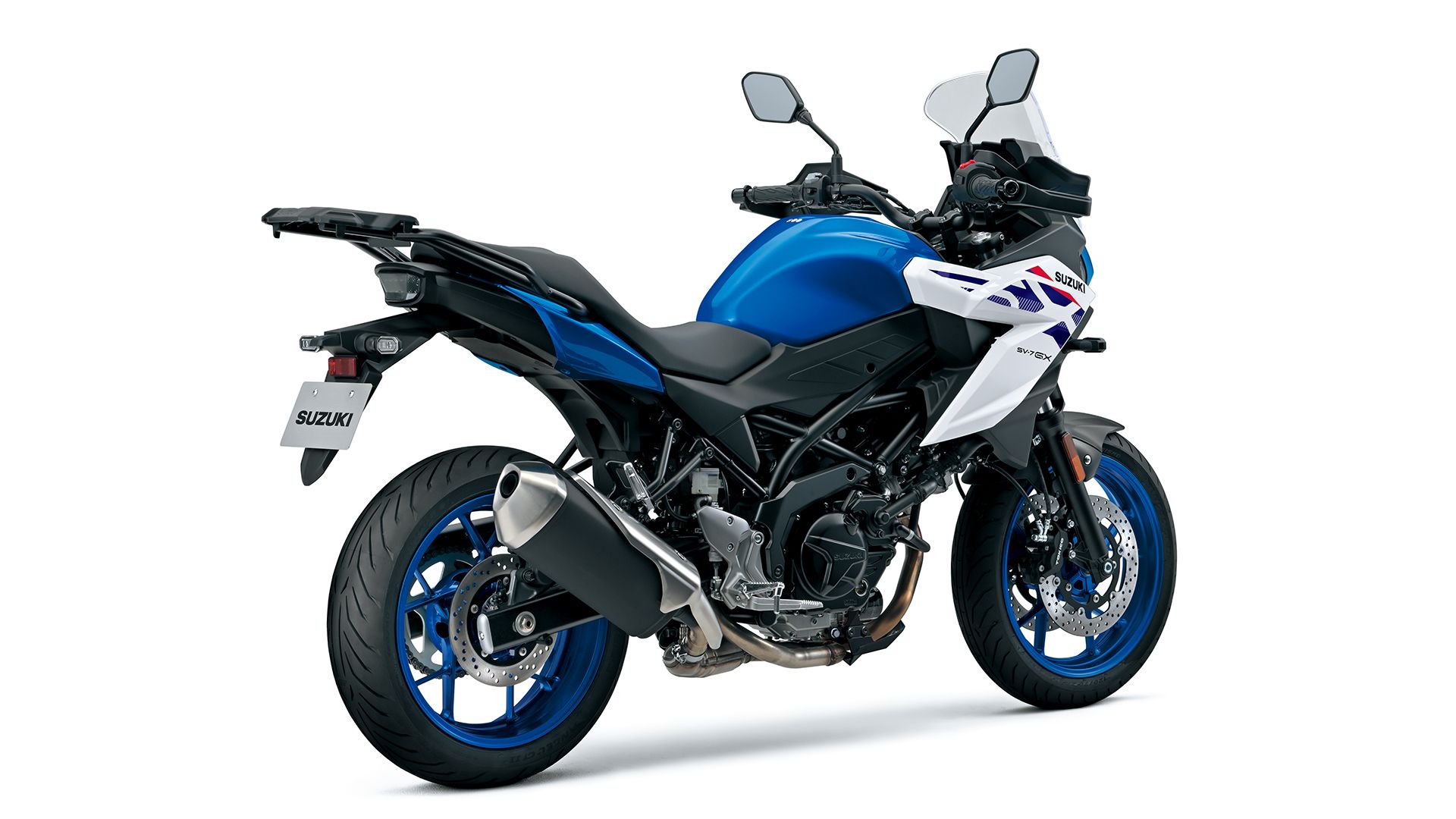
Dynamically, the Suzuki SV-7GX stands out for its ease of handling. It is a sensible motorcycle that—while its front-end design catches the eye of sportbike enthusiasts—is perfect for daily use.
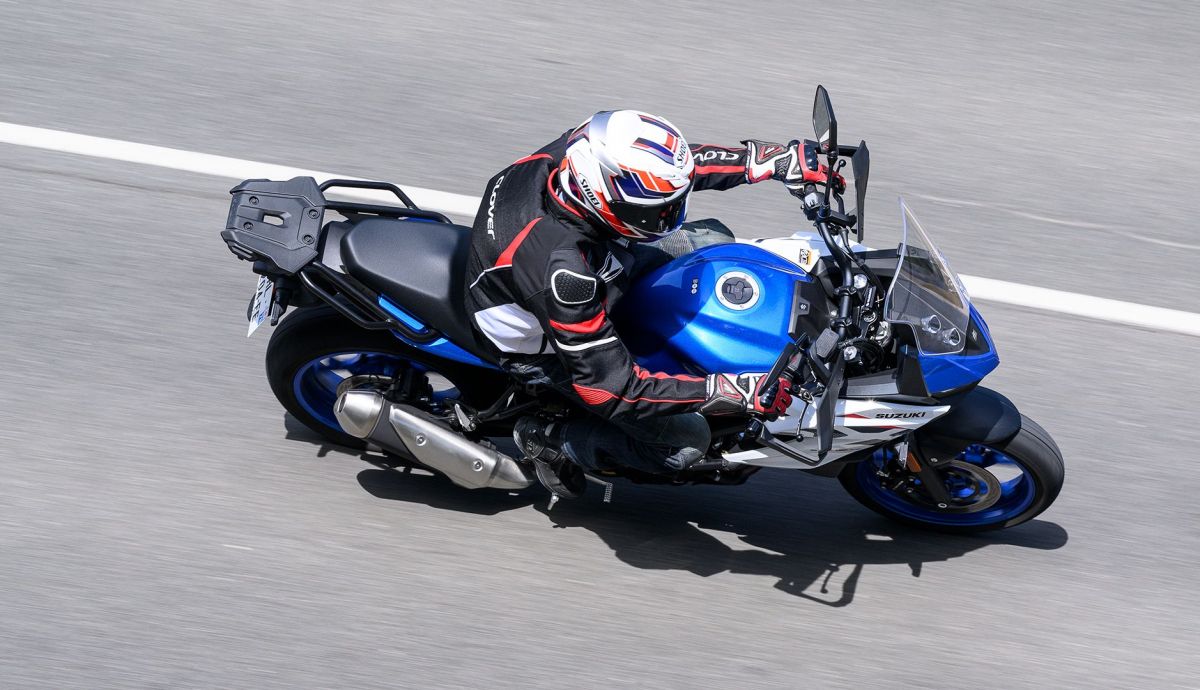
Overall ergonomics are impressive, thanks to the comfort and support of the plush seat. However, taller riders (myself included, at 1.80m with long legs) will notice that the footpegs are positioned quite high and slightly rearward, forcing the knees to bend. The short distance between the seat and the footpegs dictated the design of a narrow, moderately high seat (795 mm); this allows riders of any stature to ride comfortably in the city, while the high footpegs add a sporty touch, preventing scraping on winding roads during weekend rides.
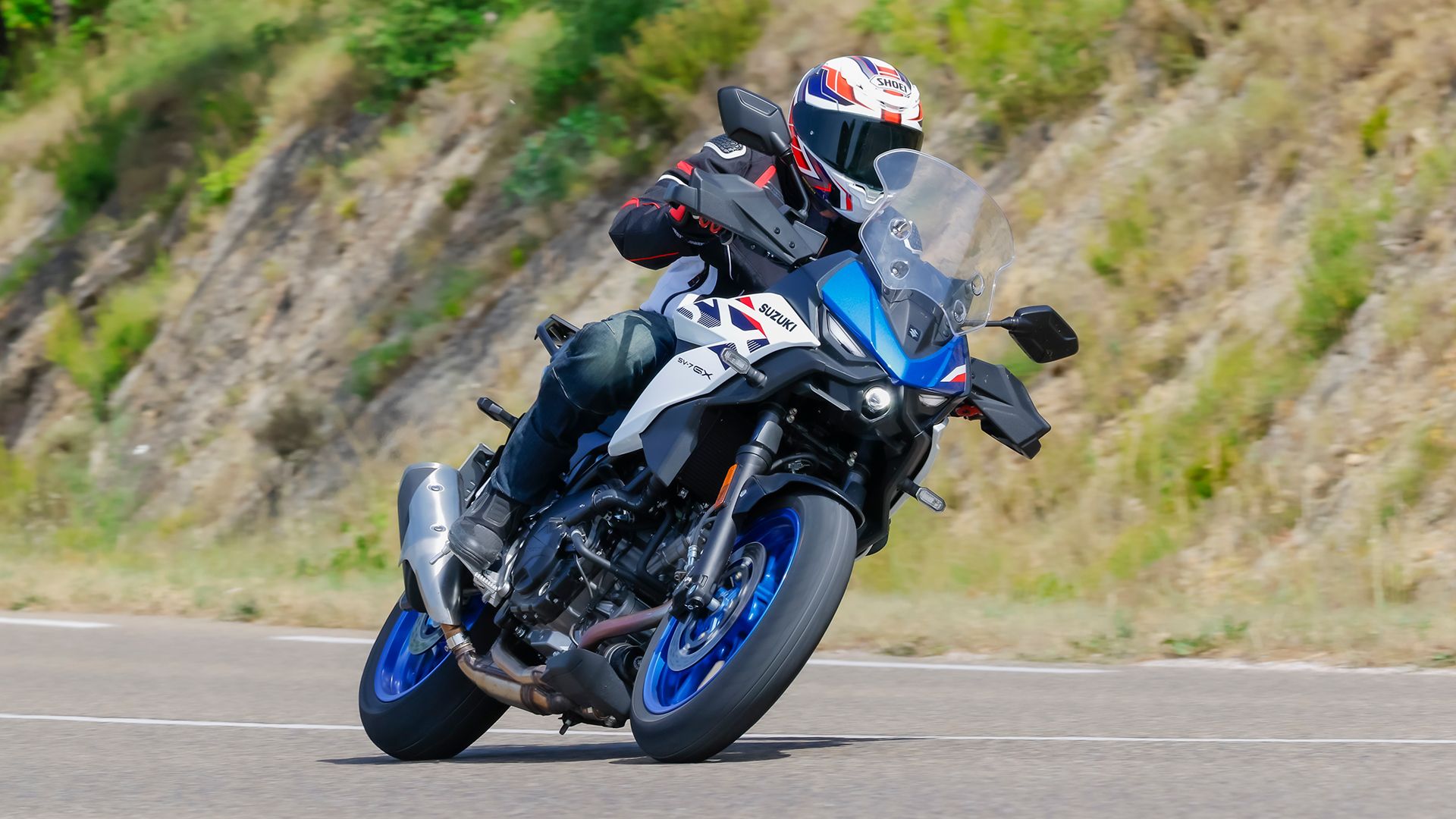
The wind protection provided by the front fairing is remarkable at any speed, with no trace of turbulence—even after testing the fairing at two different height settings, an adjustment that does, however, require the somewhat tedious use of tools. In terms of the engine, the ever-reliable V-twin retains its proverbial flexibility, paired with very relaxed highway gearing: at 4,000 rpm, you are doing 100 km/h; at 4,500 rpm, 110 km/h; and at a comfortable 5,200 rpm, you reach 120 km/h. The SIRS electronic management system is impeccably simple, allowing you to switch between the three engine modes (A, B, and C) at any time, even with the throttle slightly open.
The real limit for sporty riding is set by the suspension setup. Despite featuring a rear linkage system that provides progressive damping, the overall package feels unbalanced. The conventional fork is excessively soft, with little damping on both compression and rebound, and offers no adjustability.
At the rear, the shock absorber uses a notably stiff spring—a solution the engineers justify as necessary for handling heavy loads or passengers, but one that compromises ride quality compared to the stability of a V-Strom.
Regarding the brakes, although improvements have been made over the SV 650, the lack of suspension-controlled damping is even more noticeable. The front brake bite is impressive thanks to its powerful performance and, above all, the excellent feel at the lever, which encourages late braking given the tires' good grip. It is a very enjoyable bike to ride smoothly on good asphalt, but on uneven surfaces, the rear end feels stiff if you are a light rider (I weigh 68 kg).
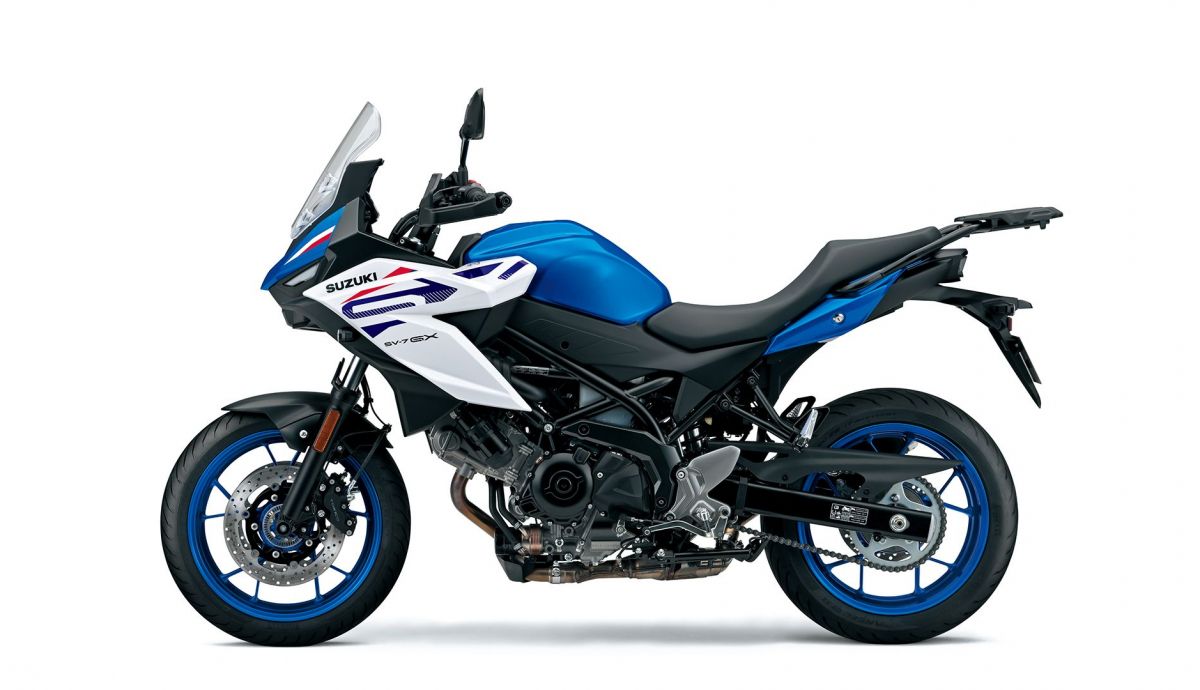
At a relaxed pace, the bike handles gracefully, but as soon as you push for sporty riding, weight transfer compromises handling, making the bike feel somewhat clumsy due to a lack of precision. With minor adjustments to the front and rear suspension, the dual-purpose nature of the bike would have been truly complete and realistic; however, recognizing that their primary customers would be urban and interurban riders, they opted for this specific approach. This allowed them to better position the price in the face of growing demand for motorcycles from China. The SV-7GX starts at €7,999 for the solid "Gloss White" version, rising to €8,300 for the three other versions featuring pearlescent, matte, or two-tone paintwork. Orders are already being accepted, but initial deliveries will not take place until September.
by Autonews


Nenhum comentário:
Postar um comentário