KARMA
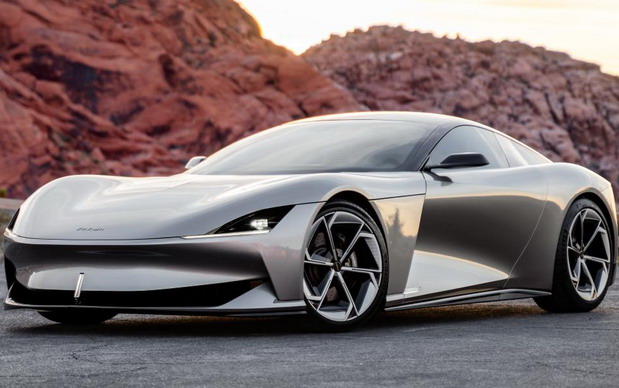
Karma’s new hypercar will use a factorial battery
Karma Automotive, the company that emerged from the remnants of Fisker Automotive, recently finished production of its Revero model and is now turning its attention to a much more ambitious project.
In late 2023, the American brand unveiled the Kaveya, an electric coupe that competes with hypercars, and to bring it to life, it is teaming up with a local solid-state battery manufacturer.
That partner is Factorial, a solid-state battery company that has close ties to several global OEMs, including Mercedes-Benz, Hyundai, KIA, and Stellantis. Their technology will form the basis of Karma’s new electric platform, which will debut in the Kaveya.
Technical specifications for the battery pack are not yet known, but Factorial’s proprietary FEST (Factorial Electrolyte System Technology) solid-state design is designed to be compatible with current lithium-ion battery production lines.
Up to 80 percent of the same manufacturing equipment can be reused, which could dramatically reduce costs and speed up implementation. For a small-scale manufacturer like Karma, that’s a key advantage.
Karma President and CEO Marques McCammon said last year that Karma delayed the launch of the Kaveya because “it didn’t yet see a clear path to fully delivering the uncompromising driving experience that is expected from an American ultra-luxury vehicle company.”
Thanks to the partnership with Factorial, the solid-state battery will offer better efficiency and longer driving range compared to traditional lithium-ion batteries. When the Kaveya was first introduced, it was supposed to use a 120 kWh pack with a range of more than 402 kilometers. Most likely, the new solid-state pack will be smaller and offer a longer range.
"Launching our first U.S. passenger vehicle program with Karma is a significant milestone for Factorial. FEST is built to measure, and this milestone not only highlights the power and performance that solid-state technology can deliver, but also underscores the global leadership of U.S. technology innovators. High-performance luxury vehicles require cutting-edge innovation, and this collaboration demonstrates what's possible when performance leads," said CEO Siyu Huang.
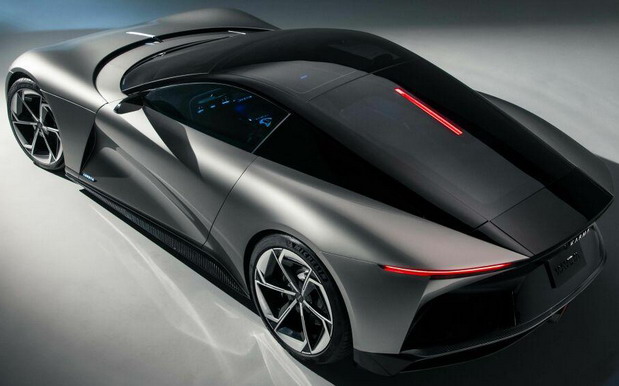
Karma has already outlined some of its performance goals for the Kaveya. The two electric motors will combine to produce a combined output of 1,196 horsepower and 1,720 Nm of torque. That should be enough to propel the car from zero to 62 mph in under 3 seconds, with a top speed in excess of 180 mph.
Factorial Energy is a US startup developing next-generation solid-state batteries, primarily focused on electric vehicles (EVs). Its technology promises to solve the biggest bottlenecks of current EVs: limited range, slow charging times, and fire risks.
Key technologies...The company works with two main platforms(below):
-FEST® (Factorial Electrolyte System Technology): A "quasi-solid-state" battery that uses a solid polymer electrolyte and a metallic lithium anode. It is compatible with up to 80% of existing lithium-ion battery manufacturing equipment, facilitating large-scale production.
-Solstice™: An all-solid-state technology developed in partnership with Mercedes-Benz, designed to be even lighter and safer.
-Gammatron™: An AI/Machine Learning-based platform used to accelerate the development of new materials and optimize cell health.
Factory Energy...Performance and advantages(below):
-Giant Range: In real-world tests, a Mercedes-Benz EQS prototype equipped with Factorial cells traveled over 1,200 km (745 miles) on a single charge.
-High Energy Density: Reaches approximately 375-391 Wh/kg, significantly higher than the 250-300 Wh/kg of conventional batteries.
-Fast Charging: Can charge from 15% to 90% in just 18 minutes.
-Durability: Smaller prototypes have already demonstrated resistance for over 2,000 charge cycles, which can double the average lifespan of an electric car.
Partnerships and Launch...Factorial has investments from industry giants, including Stellantis (owner of Jeep, Dodge, and RAM), Mercedes-Benz, and the Hyundai/Kia group.
Dodge Charger Daytona: Should be one of the first vehicles to test the technology in a demonstration fleet in 2026.
Karma Kaveya: The Karma Automotive supercar is scheduled to launch in 2027 using FEST® batteries.
Autonews



Nenhum comentário:
Postar um comentário