JEEP
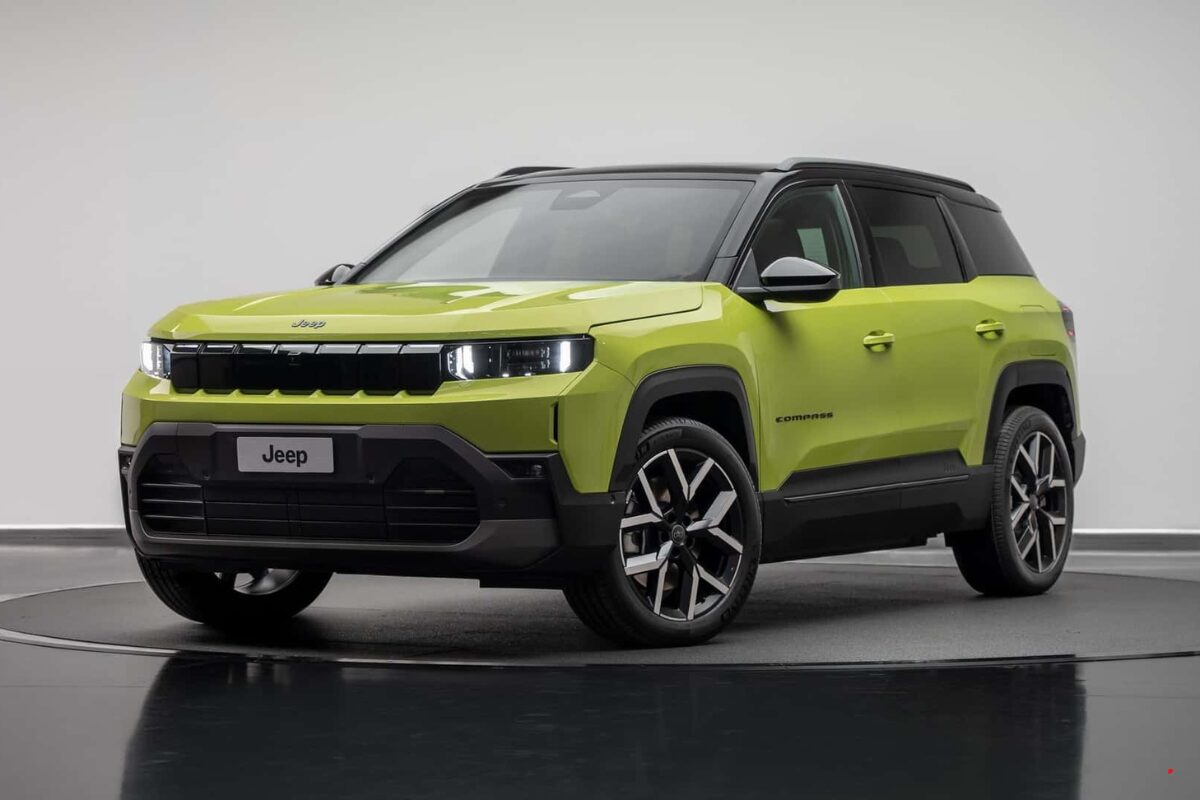
Why did Jeep hit the mark and launch the best Compass ever?
Jeep has revealed the third generation of the Compass, one of its most popular models in Europe, produced at the Stellantis group's factory in Melfi, Italy, where the Jeep Renegade is also produced and where a crossover and a premium sedan from DS will be joined later this year, in addition to the Lancia Gamma, the future top-of-the-line model of the Italian brand. The third generation of the Compass has no shortage of advantages, starting with a generous increase in dimensions compared to the previous model, with the new Compass being 14.8 cm longer (4.552 m), 8.5 cm wider (1.904 m), 2.3 cm taller (1.652 m) and, most importantly, enjoying 15.9 cm more in the wheelbase (2.795 m). And because Jeep always has to ensure that its vehicles enjoy a certain off-road capability, the new SUV boasts a ground clearance of 200 mm.
Designed on the STLA Medium platform, the same one used by the Peugeot 3008, the new Jeep SUV displays attractive and modern lines, but without abandoning the typical characteristics of this North American manufacturer from Stellantis, with emphasis on the traditional front grille with seven elements (closed to improve aerodynamics), now slimmer and in conjunction with the new optical groups, which debut a distinct luminous signature. The air intakes at the front, the widened fenders and the vertical rear reinforce the robust look of the model, which abandons the 4×4 transmission, except for the electric version with two motors and more powerful, which will arrive later.
The most affordable Compass will continue to be the e-Hybrid, a mild hybrid that gains power, rising from 130 hp to 145 hp. The turbocharged 1.5-liter four-cylinder gasoline engine has been replaced by the renewed 1.2 Turbo three-cylinder, which raises the power to 136 hp. Then, the combustion engine is assisted in accelerations and overtaking by a 29 hp 48V electric unit (the previous generation only provided 20 hp), which is powered by a small battery with 0.89 kWh gross (0.43 kWh usable). However, despite the new Compass being more powerful and using a more efficient gearbox (dual-clutch automatic), it still announces slightly higher consumption (5.9 l/100km instead of 5.6) compared to the previous generation.
In February, along with deliveries of the first Compass e-Hybrid units, Jeep will also begin placing the first 100% electric Compass vehicles in the hands of customers. The brand will sell two battery-powered versions of the SUV, with the first to arrive offering front-wheel drive, 231 hp, and an 80 kWh battery (77 kWh usable), which recharges at 160 kW in direct current (DC) and 22 kW in alternating current (AC). This version claims a range of 500 km on a full charge and announces a total weight of 2198 kg. Later, a second electric version will appear, with two motors (one per axle) to ensure all-wheel drive and a total of 375 hp. This version has a larger battery, with a total capacity of 97 kWh, which allows it to claim a range close to 650 km.
Later, another version of the Compass will be introduced, probably one of the most interesting for fleet owners and companies. We are referring to the plug-in hybrid (PHEV) which, in this 3rd generation, has a powertrain that delivers 223 hp, extracted from a gasoline engine (a 1.6-liter turbocharged four-cylinder) that provides 150 hp, to which is associated an electric unit with 125 hp. The total power places the new PHEV somewhere between the two versions of the 2nd generation Compass, which delivered 190 hp and 239 hp, respectively. However, the great evolution in the PHEV version of the new Compass occurs in terms of battery, which is reflected in the range it ensures when powered exclusively by the electric motor. With a capacity of 17.9 kWh, much larger than the 11.4 kWh of the previous generation's battery, the new SUV announces 90 km of range in electric mode, more than double the 37 km of the Compass PHEV that it has now replaced.
Behind the wheel, the new Compass proved pleasant to drive, both in the 145 hp e-Hybrid version and in the 100% electric version with a single 213 hp motor and a 74 kWh battery. The comfort level is good and it's noticeable that it has been adjusted to please European drivers, as the handling is efficient and doesn't suffer from the increased ground clearance, nor is it hampered by the greater weight in the battery version, which is compensated for by the lower center of gravity due to the battery. The cabin is pleasing in terms of materials and finishes, but the most interesting aspect is the legroom for rear passengers. Inside, there's plenty of space to store small items, and the 541-liter trunk in the back satisfies most needs. The Compass e-Hybrid 145 hp is offered at prices starting from €38,950, while the 100% electric version with 213 hp requires an investment starting at €49,750.
Autonews


Nenhum comentário:
Postar um comentário