PEUGEOT
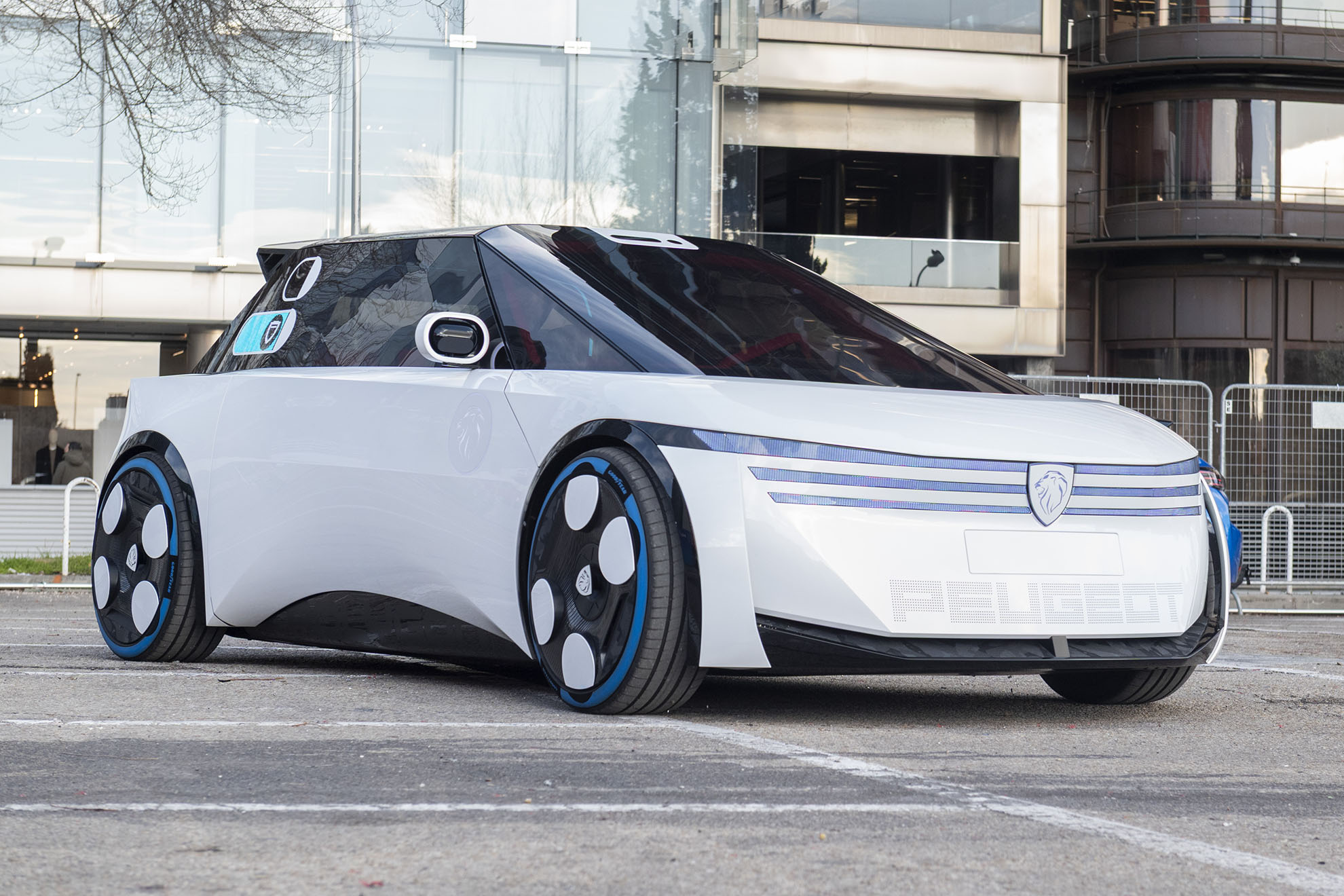
Why is the revolutionary Polygon Concept the future of Peugeot?
Madrid has become the epicenter of the automotive future with the arrival of the Peugeot Polygon Concept at the Castellana 73 parking lot, next to the Nuevos Ministerios. This prototype, presented a few weeks ago at the Brussels Motor Show, where it captivated everyone's attention, is now beginning its European tour in the Spanish capital. Until January 25th, anyone passing through the area could see it, but not as closely as we did, who had the opportunity to go further: we took a test drive.
It was a closed environment, but it allowed us to observe how the first steps of what will be its true revolution are taking shape: the Hypersquare steering wheel, which will go into production in the brand's next models from 2027 onwards, most likely serving as a test platform for the next generation of the Peugeot 208.
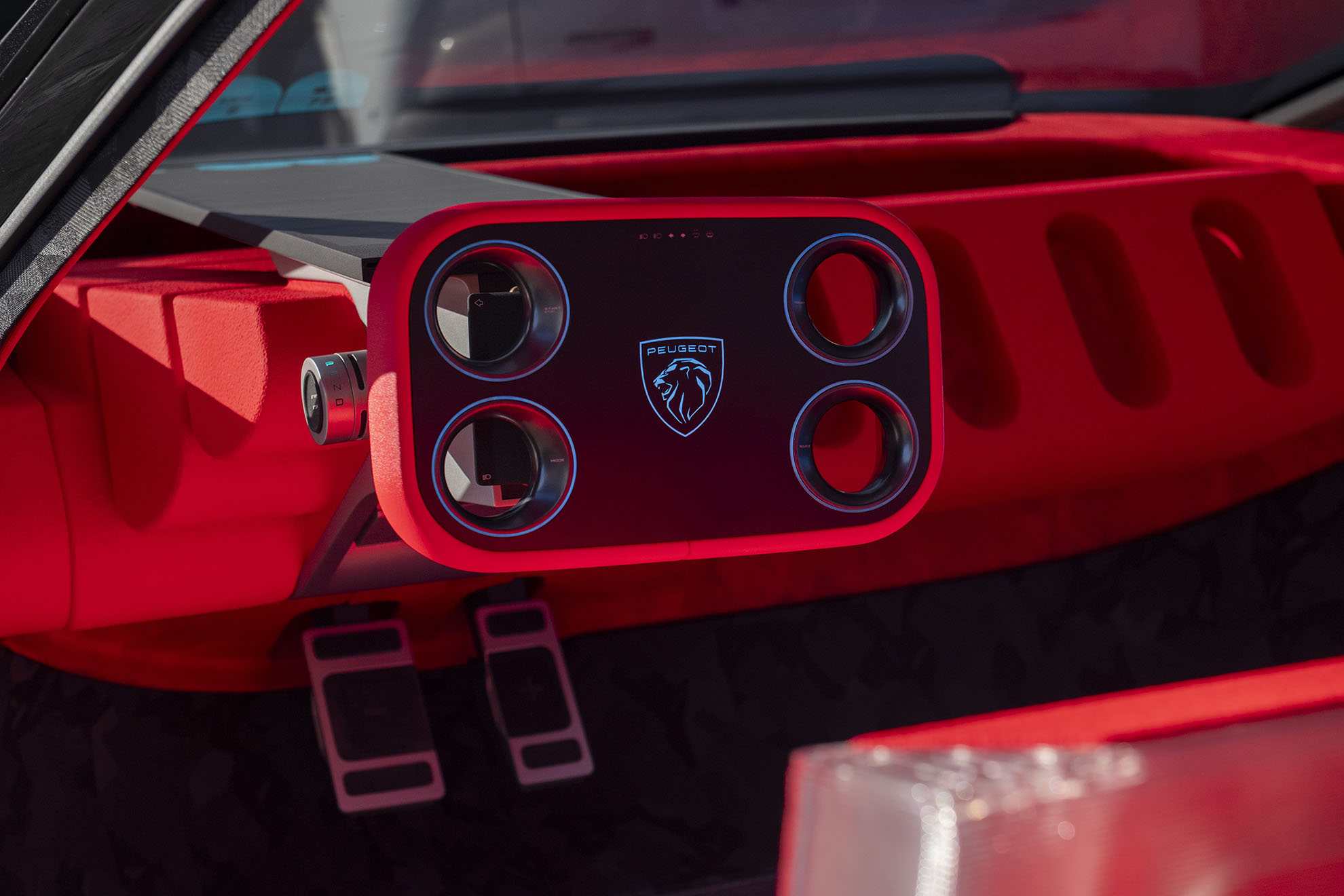
Let's talk about the real star: the Hypersquare. Although Peugeot has already revolutionized the concept of driving position with the i-Cockpit, introduced in 2012 in the 208, where the flat and compact steering wheel was a key element, this prototype redefines the concept once again. Just look at it: it's square! And although it maintains rounded corners, it seems that Peugeot is determined to abandon the traditional circular steering wheel (will the steering wheel be next?).
Joking aside, this design is not trivial, as the company guarantees that it is the best way to fully explore what will be its true innovation: Steer-by-Wire steering, which eliminates any mechanical link between the steering wheel and the wheels. This technology has already debuted in the Lexus RZ, but Peugeot now claims to be the first high-volume manufacturer to offer it, promising incredible agility. In theory, the system varies and adjusts the steering ratio according to speed: maximum for slow maneuvers and precise on the highway, allowing only 170 degrees of rotation to each side and making the need to constantly turn the steering wheel completely obsolete.
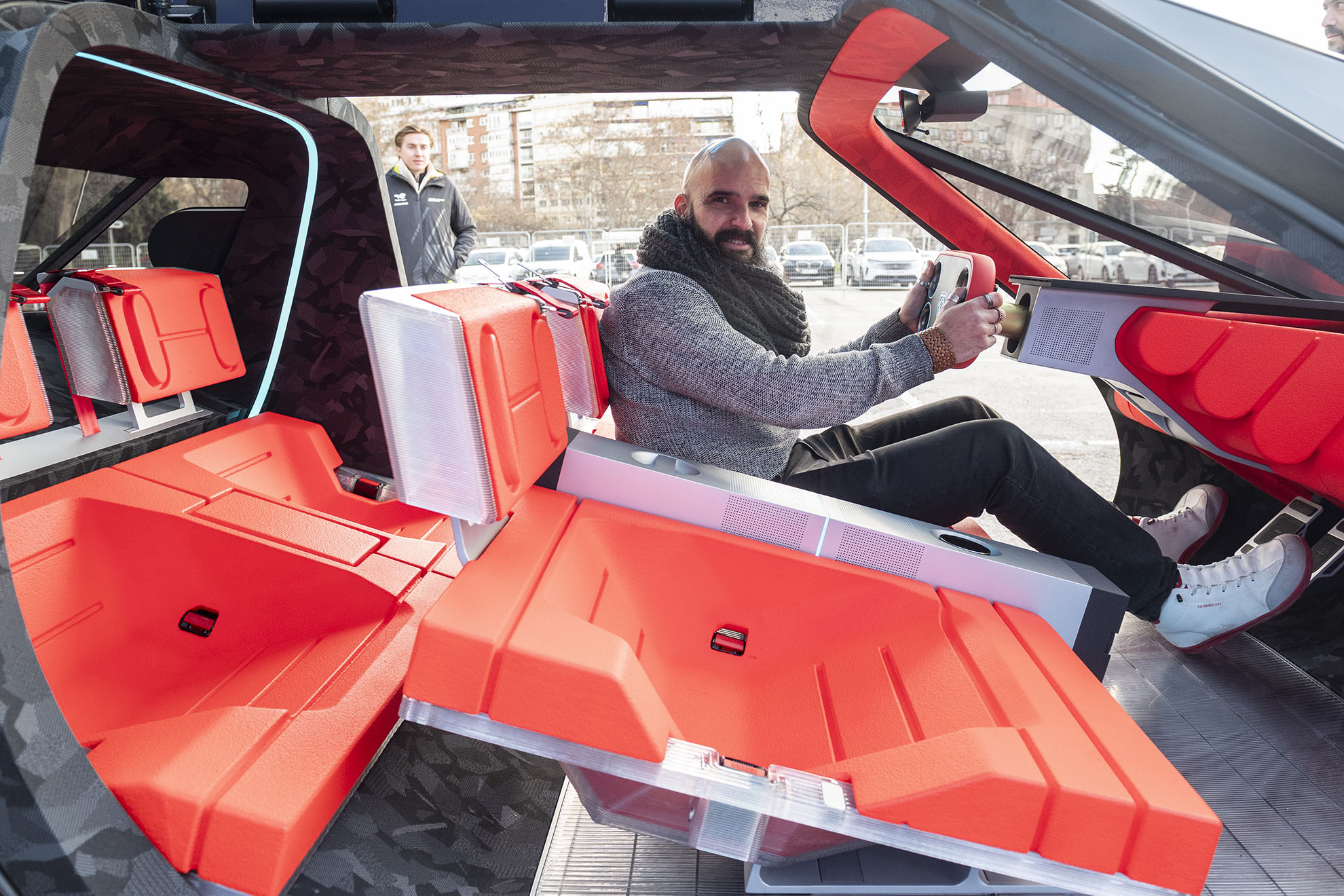
Despite the avant-garde design of the seats, the foam is comfortable (image above)--Autonews
But theory is one thing; practice, another. I was lucky enough to test it in the designated parking area and, moreover, compare it directly with a Peugeot 208. Although it was almost faster on foot, speed wasn't the main issue, but rather agility. Once in the Polygon Concept with the Hypersquare in hand (literally), the acceleration from a standstill already reveals a difference: a simple touch on the steering wheel and the car turns; it's much more direct. But it was during U-turns that I noticed this most intensely, as simply turning the steering wheel vertically (from the horizontal) was enough to feel the car respond instantly, without needing to let go or make endless turns, quite unlike the 208, where you feel that typical mechanical lag.
Here, it's as if the car reads your mind. The controls in the corners (four circular modules) fit perfectly under your fingers, for lights, turn signals or whatever, without you needing to take your palms off the rectangular panel (it seems strange not to say ring). The cherry on top is the slalom, where the curves become simple touches, in the best Formula 1 style.
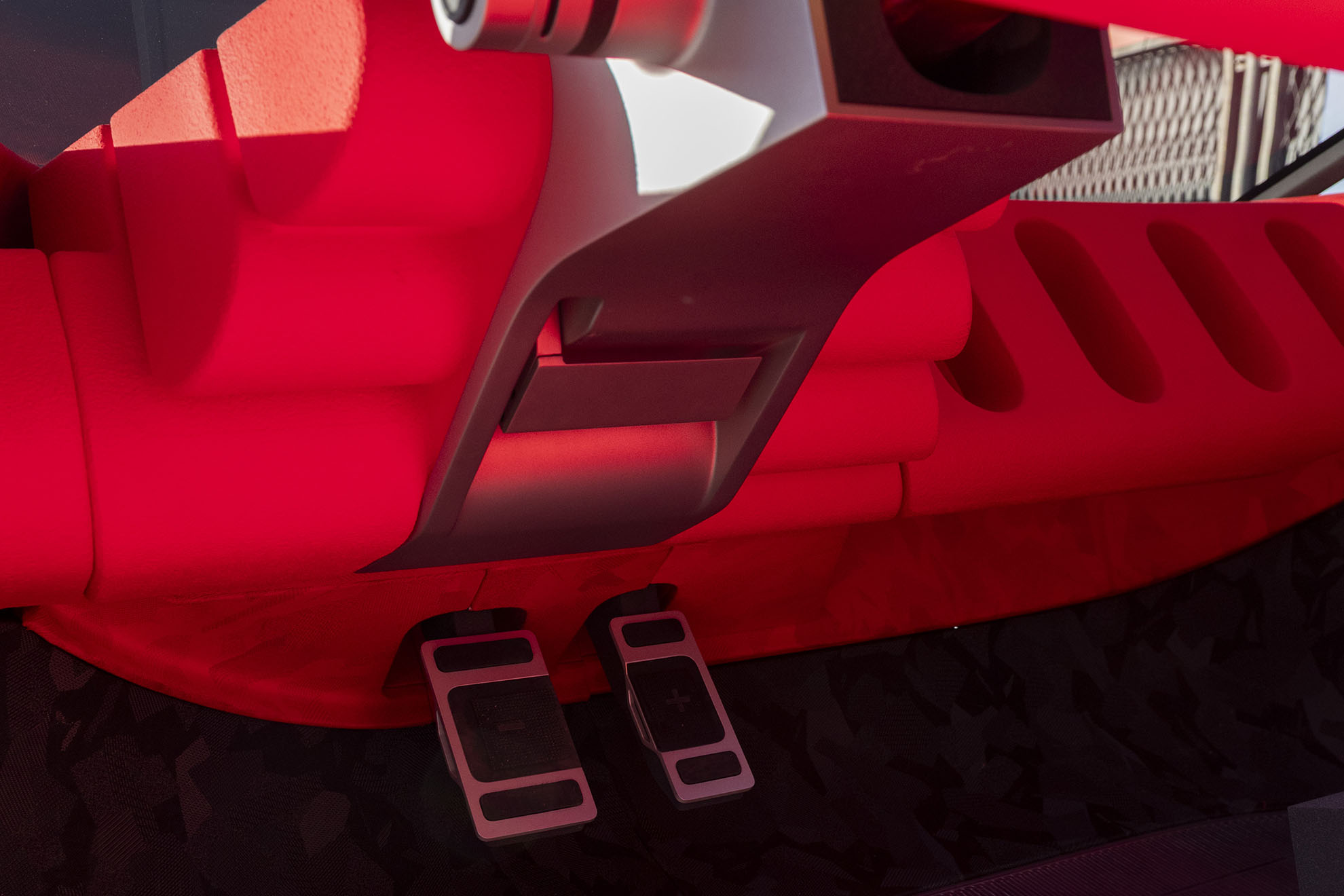
This technology, borrowed from the aerospace industry, is not mere propaganda, as Peugeot will equip a production model with it in 2027, probably the successor to the 208 or a city car. For Peugeot, it is crucial to rescue the "driving pleasure" in electric vehicles, where range sometimes overshadows emotion. Polygon demonstrates that both are possible.
Exterior design: light is paramount...Although we have already reviewed this model before, the Polygon Concept truly shines in person. First, its new claw-shaped lighting signature (using micro-LED technology) is horizontal and features animations even when the car is stationary. Second, the butterfly-style doors add a touch of distinction and facilitate access, although these features are not present in the final production model. And third, the Goodyear tires with laser-etched sidewalls add a personal touch, changing color to reflect the car's mood.
The finishing touch on a vehicle that, incidentally, measures less than 4 meters but looks infinitely larger, is a C-pillar with another micro-LED screen that displays the charging status without needing to open the door, making it perfect for public parking lots.
Although Peugeot has redefined the steering wheel in the driving position, this aspect is also noticeable in the overall concept. The French brand is saying goodbye, for now, to screens. Here, another micro-LED panel located behind the Hypersquare projects all the necessary information onto the windshield, creating a monitor 24 cm wide by 74 cm high — equivalent to a 31-inch screen — so you don't have to take your eyes off the road.
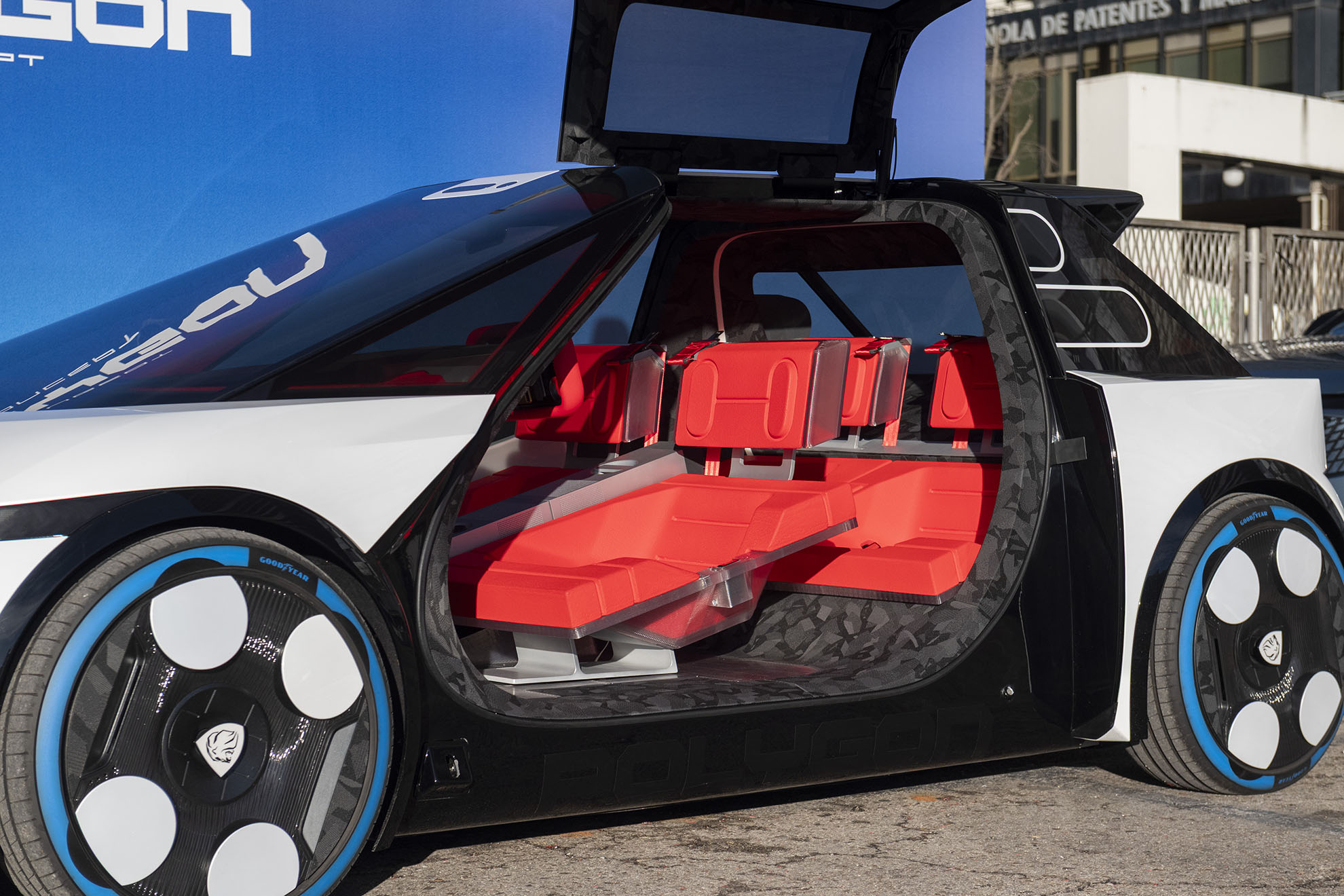
The seats, 3D printed from recycled R-PET plastic by the Spanish company Nagami, are one-piece and upholstered with an innovative Sixinch foam that, incidentally, proved to be very comfortable in this first test. The fabric of the floor, ceiling and doors comes from recycled Peugeot seats, while the interior paint incorporates rubber from used tires.
Like other French brands, Peugeot is committed to a circular future. Fewer parts mean greater lightness, efficiency and ease of recycling at the end of the car's life. The Hypersquare can be swapped in minutes for one of a different color and even material, as can the hubcaps and seat foam. In addition, it is a practical car, since the interior is full of attachment points to organize and hang all your personal belongings.
In 2026, with Chinese manufacturers flooding the market with affordable electric vehicles, Peugeot needs to recover the success that made it famous with models like the 205, the 206 and, more recently, the 208. The Polygon concept is the chosen canvas to offer a different future without abandoning its French heritage: design, cutting-edge technology, sustainability and, above all, a return to its dynamic essence, the same essence that will be anticipated later this year with the new Peugeot e-208 GTI. This concept combines electrification with fun, key elements to win over young urbanites who see the car as a personal accessory, and not just as a means of transport.
by Autonews


Nenhum comentário:
Postar um comentário