AUTONEWS
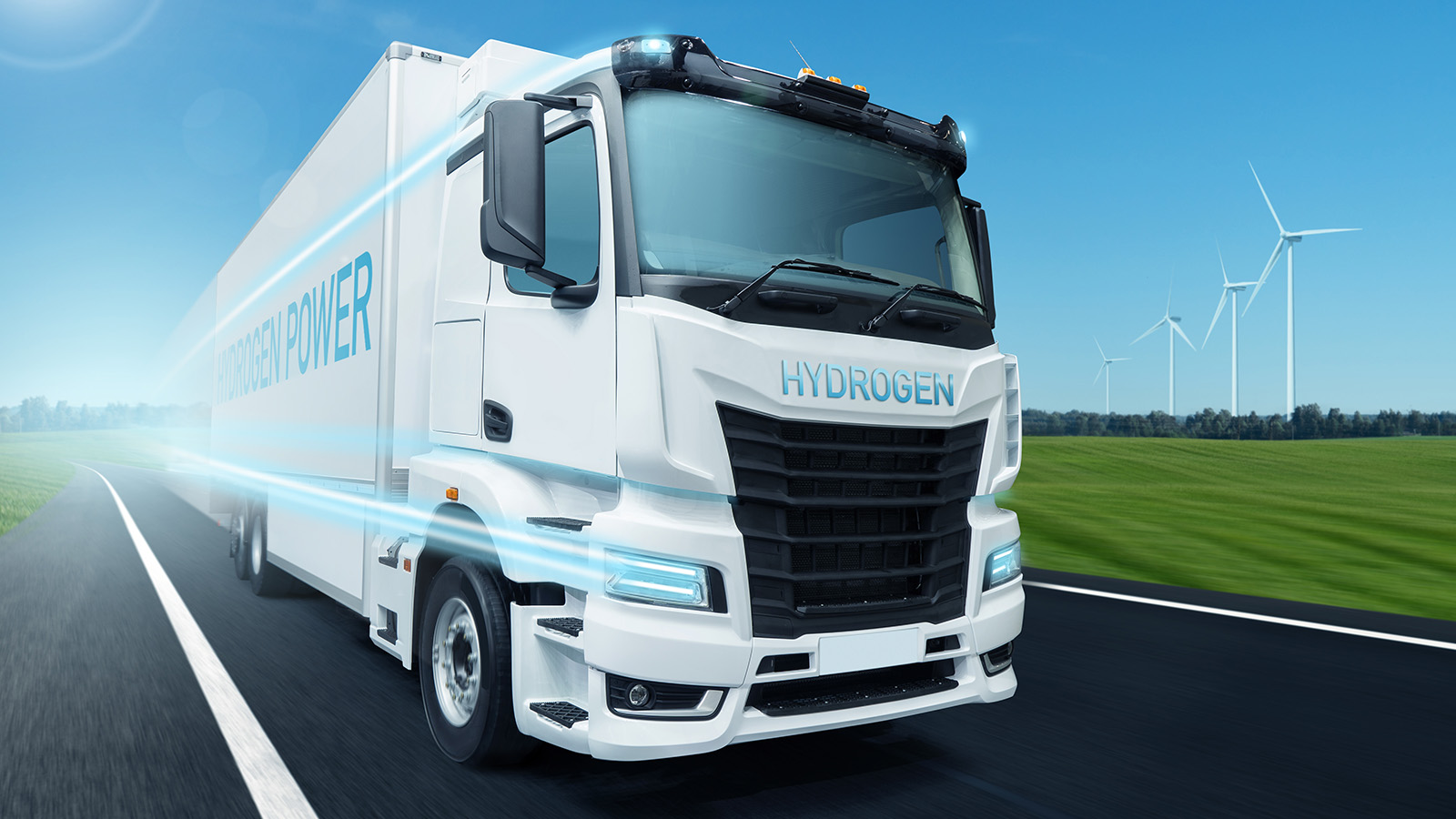
Weather and latitude drive up green hydrogen costs for Nordic heavy transport, analysis finds
Green hydrogen produced using solar and wind power would be cheaper to produce at more southerly latitudes than in the Nordic region, according to a study from Linköping University. The results can be used as a basis for building a European network of refueling stations that supply locally produced green hydrogen.
"When it comes to transport, there's currently a strong focus on battery power. But I don't believe in a single solution. Many different methods are needed to achieve emission targets. Green hydrogen has great potential, as hydrogen can store large amounts of energy and the only emission is water," says Ou Tang, professor of production economics at Linköping University.
The European Union has identified green hydrogen as one of the keys to reducing fossil emissions from transport in Europe. They estimate that as much as 50% of the transport sector's energy needs could be met by green hydrogen by 2050. For hydrogen to be classified as green, it must be produced by wind or solar power.
However, hydrogen currently only covers a small fraction of energy demand, and 95% of Europe's hydrogen is produced using fossil fuels. Ambitions are high, but the road ahead is long. And getting more heavy hydrogen-powered vehicles onto the roads is not as straightforward as it might seem.
"It's what you might call a 'chicken-and-egg' dilemma. If haulage companies and others are to buy hydrogen-powered vehicles, there need to be refueling stations that make it easy to use the vehicles. But on the other hand, more vehicles are needed for prices per vehicle to fall and for more people to buy them, which in turn would stimulate the expansion of refueling stations," says Tang.
In the new study, published in the journal Transportation Research Part E: Logistics and Transportation Review, he has analyzed the costs of locally produced green hydrogen in different parts of Europe up to 2050.
What Tang found was that in countries at more southerly latitudes, such as Malta, Portugal and Spain, the cost of local green hydrogen production would be lower, as conditions for solar energy in particular are more favorable. In Nordic countries such as Sweden, Finland and Norway, the cost would be the highest of all the countries surveyed, mainly due to the lack of sunlight. Two Nordic countries that stand out, however, are Denmark and Iceland, where production would be cheaper thanks to stronger winds.
The European Union has identified green hydrogen as one of the keys to reducing fossil emissions from transport in Europe. They estimate that as much as 50% of the transport sector's energy needs could be met by green hydrogen by 2050. For hydrogen to be classified as green, it must be produced by wind or solar power.
However, hydrogen currently only covers a small fraction of energy demand, and 95% of Europe's hydrogen is produced using fossil fuels. Ambitions are high, but the road ahead is long. And getting more heavy hydrogen-powered vehicles onto the roads is not as straightforward as it might seem.
"It's what you might call a 'chicken-and-egg' dilemma. If haulage companies and others are to buy hydrogen-powered vehicles, there need to be refueling stations that make it easy to use the vehicles. But on the other hand, more vehicles are needed for prices per vehicle to fall and for more people to buy them, which in turn would stimulate the expansion of refueling stations," says Tang.
In the new study, published in the journal Transportation Research Part E: Logistics and Transportation Review, he has analyzed the costs of locally produced green hydrogen in different parts of Europe up to 2050.
What Tang found was that in countries at more southerly latitudes, such as Malta, Portugal and Spain, the cost of local green hydrogen production would be lower, as conditions for solar energy in particular are more favorable. In Nordic countries such as Sweden, Finland and Norway, the cost would be the highest of all the countries surveyed, mainly due to the lack of sunlight. Two Nordic countries that stand out, however, are Denmark and Iceland, where production would be cheaper thanks to stronger winds.
Regional cost factors (below)
Latitude and solar radiation: The lack of sunlight in countries like Sweden, Finland, and Norway raises production costs compared to lower latitudes (e.g., Spain and Portugal), where solar conditions are ideal for powering electrolyzers.
Nordic exceptions: Denmark and Iceland have more competitive costs within the region due to their high wind energy potential, which compensates for lower solar radiation.
Climate volatility: Weather fluctuations require more robust infrastructure or the use of batteries to stabilize production, which can reduce costs by up to 18% as battery prices fall.
Market Outlook (LCOH) -- see below:
The levelized cost of hydrogen (LCOH) in Europe is estimated to average €7.5/kg in 2024, with a projected drop to €4.5/kg by 2050. In the Nordic countries, the current cost for refueling stations ranges from €3.5 to €7.2/kg, a value considered competitive compared to other EU regions without government subsidies.
Despite climate challenges, connection to the electricity grid (instead of isolated systems) could change this scenario for countries like Sweden, which have electricity surpluses, although the "color" of hydrogen could be questioned if the source includes nuclear or fossil fuels.
Weather and latitude drive up green hydrogen costs? Weather and geographical latitude significantly increase green hydrogen production costs by dictating the efficiency of renewable energy inputs, specifically solar and wind. Southern, sun-rich regions like Spain, Portugal, and Brazil offer lower production costs, while high-latitude Nordic countries face higher costs due to limited sunlight.
Key drivers of cost differentiation(below):
Latitude & Solar/Wind Variability: Inadequate sunlight at high latitudes (e.g., Norway, Sweden) reduces solar-based hydrogen efficiency. Conversely, regions closer to the equator, such as Northeast Brazil, benefit from high solar radiation, yielding lower levelized costs.
Weather-Dependent Power Costs: Wind-based production is more variable than solar, resulting in higher, more volatile costs (ranging from $3.44 to $71.60/kg) in some studies compared to stable, high-intensity solar areas.
Regional Disparities: While Nordic countries face higher, sun-limited production costs, specialized wind resources can offer cheaper alternatives in specific areas like Denmark and Iceland.
Climate-Induced Impacts: Future climate change poses a risk, with over 20% of near-term green hydrogen projects facing cost increases due to volatile, climate-driven renewable resource changes. To mitigate these, integrating localized, high-efficiency renewable sources and managing storage to compensate for intermittent weather is crucial for reducing the cost of green hydrogen, which currently ranges from $2.28 to $7.39/kg
Provided by Linköping University



Nenhum comentário:
Postar um comentário