AUTONEWS
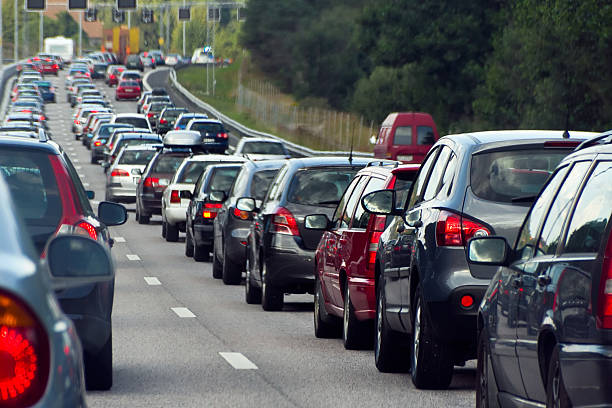
Usage-based car insurance can improve driver safety
Drivers whose car insurance rates are based on data of their driving habits and who then also got tips about improving them were less likely to speed, brake hard, or rapidly accelerate than those who didn't participate in the program, according to a recent test by a team from the Perelman School of Medicine at the University of Pennsylvania. Their work was published in Accident Analysis & Prevention.
Speeding declined by up to 13%, and hard braking and rapid acceleration declined by up to 25%. In addition, drivers continued their improved habits after the incentives ended.
"Insurance companies are happy to give discounts to customers who drive safer because it means they will have fewer crash claims later on," said lead author Jeffrey Ebert, Ph.D., director of Behavioral Science in the Penn Medicine Nudge Unit.
In a nation with more than 6 million vehicle crashes leading to 2 million injuries each year, Ebert said that if everyone were to enroll in a program like what they tested, there could be 300,000 fewer crashes and 100,000 fewer injuries.
Testing a program informed by driver habits...Every major auto insurer offers a usage-based insurance (UBI) program, and one in four United States drivers opts in. These programs typically use a smartphone app to measure the amount of driving and risky behaviors like hard braking and handheld phone use. Insurers use this to estimate a driver's crash risk and then provide an insurance quote. Safer drivers get cheaper quotes.
In addition to the promise of saving money if they drive safer, drivers get feedback from the app on how they are doing and tips for improving even further.
"All of this should make usage-based insurance customers safer drivers—and earlier research found evidence that it does," said Ebert. "But we wanted to definitively test this and ways to strengthen programs."
Testing three alternative programs...Ebert and his colleagues wanted to see if the potential safety benefits of programs could be enhanced by helping drivers focus on one area for improvement at a time.
"Behavior change is difficult and takes time," Ebert said. "We were concerned that standard insurance apps overwhelm drivers with too much feedback, making it hard to even know where to start."
They set up a nationwide randomized trial of three programs, all of which offered up to $100 based on how safely participants drove overall:
Standard feedback: Drivers received weekly text messages with feedback scores and tips for four different behaviors: speeding, phone use, hard braking, and rapid acceleration.
Assigned goal: Feedback and tips focused on one behavior picked by an algorithm. Drivers were texted weekly improvement goals for the selected behavior.
Chosen goal: Feedback and tips focused on one behavior chosen by the driver. The driver set their own weekly improvement goals for the behavior.
There was also a "control" group that did not receive feedback, tips, or the $100 incentive.
The programs lasted 12 weeks. Drivers continued to be monitored for another six weeks to see if any changes in behavior remained.

All programs equally effective...Drivers in the three programs improved their overall safety scores, reducing their rates of speeding, hard braking, and rapid acceleration. All three programs were similarly effective, according to the group's analysis. And they noted that these drivers retained safe habits even after the programs ended.
One safety area where there wasn't measured improvement was phone use while driving. Past research by many of the same researchers showed success when they focused specifically on reducing phone use, whether that was through cash incentives won or lost by the week or by making it a "game" where points and a leaderboard were involved.
The researchers think drivers failed to change in this area because the scores given for phone use were too generous due to default settings in the telematics app the researchers used to simulate the program.
"The average participant was basically told by the program that they had an 'A' grade for phone use despite handling their phone 6% of the time. Given how dangerous this is, the average should have been a 'C.' Drivers likely ignored this behavior and focused on improving in the other areas they considered more important," Ebert explained.
A chance to 'do even better'...The researchers were encouraged by what they saw in their analysis, with Ebert saying that applying other proven insights from behavioral science could make "it possible to do even better."
"For example, we have seen before that giving drivers small, weekly rewards can be much more motivating than one big reward at the end of a 12-week program," Ebert said.
Based on their research, Ebert and his colleagues are optimistic that as more drivers turn to usage-based insurance, there will be safer driving on the road overall, with fewer crashes to handle, and cheaper policies for drivers.
Usage-based insurance (UBI) improves driver safety by reducing risky behaviors through real-time monitoring and financial incentives. Research published in January 2026 indicates that drivers in UBI programs reduced speeding by up to 13% and hard braking by 25%.
Behavioral impact and safety...UBI uses telemetry to transform insurance from a passive cost into an active safety tool:
Direct feedback: Apps provide scores and tips after each trip, increasing the driver's situational awareness.
Accident reduction: If all US drivers joined, it is estimated that there would be 300,000 fewer collisions and 100,000 fewer injuries per year.
Lasting habits: Studies show that drivers tend to maintain safe behaviors even after incentive periods end.
Commercial fleets: By 2026, fleets using AI and telemetry will have reduced accident rates by more than 70% over 30-month periods.
Operation and risk metrics(below):
Telemetry systems (via app or OBD device) monitor critical variables to determine the premium value:
Monitored metric impact on risk
Speed high speeds increase the severity of accidents.
Hard braking indicator of lack of safe following distance.
Mobile phone use dangerous distraction; monitored by UBI apps.
Time driving at night is considered higher risk.
Challenges and limitations in 2026
Although effective, the model faces significant barriers to universal adoption(below):
Privacy: Concerns about sharing location data and intimate habits with insurers.
Selective effectiveness: Some 2026 studies noted that mobile phone use did not improve significantly with standard UBI feedback alone.
Fluctuating costs: approximately 40% of users may see increases in rates if their data reveals consistent risky habits.
Want to know which insurance companies in Brazil already offer "pay as you drive" options with discounts activated through telematics?
Provided by Perelman School of Medicine at the University of Pennsylvania




Nenhum comentário:
Postar um comentário