AUTONEWS
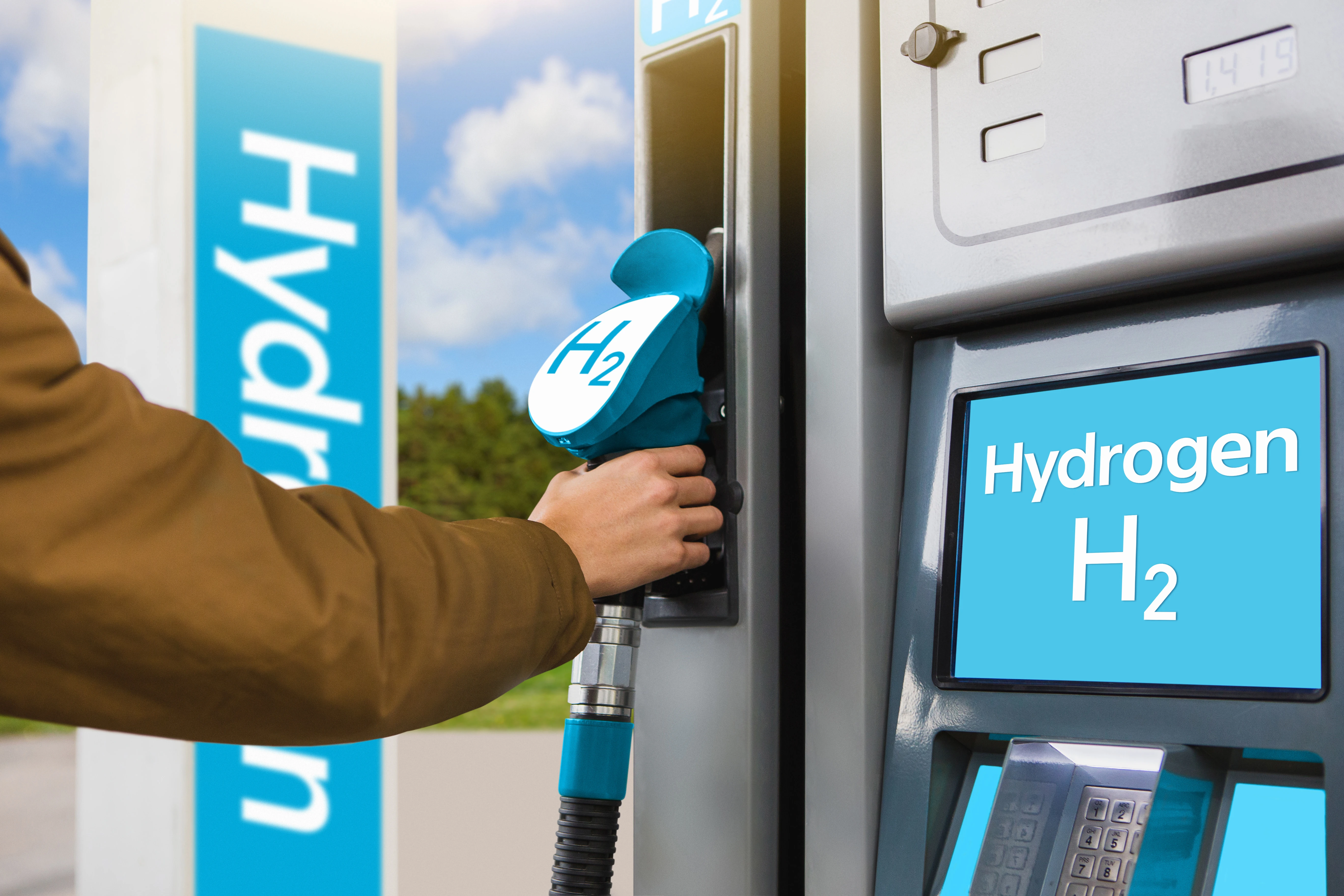
Engineers tackle pre-ignition challenges in hydrogen-fueled engines
Engineers at Southwest Research Institute (SwRI) have developed a reliable testing methodology to study stochastic pre-ignition (SPI) in hydrogen-fueled internal combustion engines (H2-ICEs), offering the automotive industry tools to address challenges associated with hydrogen fuel and advance cleaner engine technologies.
Pre-ignition, where unintentional combustion occurs before spark timing, is disruptive and sometimes detrimental to engine performance and durability. While hydrogen's low ignition threshold is a suspected SPI factor, SwRI explored whether lubricant autoignition contributes to SPI in H2-ICEs.
"H2-ICEs experience pre-ignition at higher frequencies than spark-ignited gasoline engines, although the events are milder compared to the intense SPI events observed in SI gasoline ICEs, which can cause severe mechanical damage," said Dr. Vickey Kalaskar, lead engineer with SwRI's Powertrain Systems Engineering Department.
"The research conducted demonstrates that while additive chemistry appears to be the dominant driver for gasoline engine SPI, lubricant oil volatility and compression ratio are driving influences for hydrogen-fueled pre-ignition events."
Through the course of this research, SwRI engineers developed a new testing methodology, which provides insight into lubricant-initiated SPI in H2-ICEs and supports further work, such as refining SPI quantification methods, exploring mitigation strategies and evaluating commercial lubricants.
These efforts demonstrated advancements in H₂-ICE systems research with innovations such as SwRI's fully functional H2-ICE Class-8 truck. SwRI is also partnering with the University of Texas at San Antonio to integrate machine learning and AI for real-time pre-ignition detection in H2-ICEs.
Pre-ignition occurs when unprompted combustion happens inside an engine before the prescribed spark timing. These abnormal, uncontrolled and random combustion events can degrade engine performance and compromise its mechanical integrity. Hydrogen-powered internal combustion engines are prone to pre-ignitions because of hydrogen’s very low threshold for ignition.

“Many of the same reasons that hydrogen is such an attractive, clean alternative to traditional fuels make it more prone to pre-ignition,” said Dr. Abdullah U. Bajwa, a research engineer with SwRI’s Powertrain Engineering Division. “Hydrogen is more flammable and can ignite very easily.”
According to Bajwa, variables such as engine surface and air temperatures, residual gases, and oil droplets may contribute to hydrogen pre-ignition. This makes the phenomena hard to isolate and control and needs to be addressed for the wide-scale adoption of hydrogen fuel in internal combustion engines.
The Connect project brings together a multidisciplinary team of experts in hydrogen engine technology, machine learning and real-time diagnostic systems. Bajwa, SwRI Manager Ryan Williams and SwRI Lead Engineer Vickey Kalaskar will work with Dr. Yuanxiong Guo, associate professor in the UT San Antonio College of AI, Cyber and Computing, and Dr. Yanmin Gong, associate professor in the university’s Klesse College of Engineering and Integrated Design. Together, they will lead a team to solve the issues associated with H2-ICE pre-ignition.
The team is developing methods to detect pre-ignitions in real-time. The researchers will first use laboratory-grade sensors to obtain engine cylinder pressure data to identify normal and abnormal combustion events. After the cycling data has been obtained, the team will use machine learning to identify signatures for the pre-ignition and normal cycles. This information will be used to create pre-ignition detection AI models that use data from cost-effective, commercially available production sensors.
“This project introduces advanced machine learning tools that will complement SwRI’s traditional signal processing approaches in ICE research,” Bajwa said. “It also provides the university team with an exciting new application domain in real-time H₂ combustion system diagnostics. Together, we will be able to share our respective knowledge and resources with one another to potentially help solve an important H2-ICE challenge.”
Kalaskar and his team will present their findings at the 2025 IAV Symposium on Pre-ignition, Auto-ignition, Reactivity and Knock (SPARK) on Dec. 2, 2025, in Detroit.
Provided by Southwest Research Institute


Nenhum comentário:
Postar um comentário