MERCEDES-BENZ
MB-AMG CLE 53 review
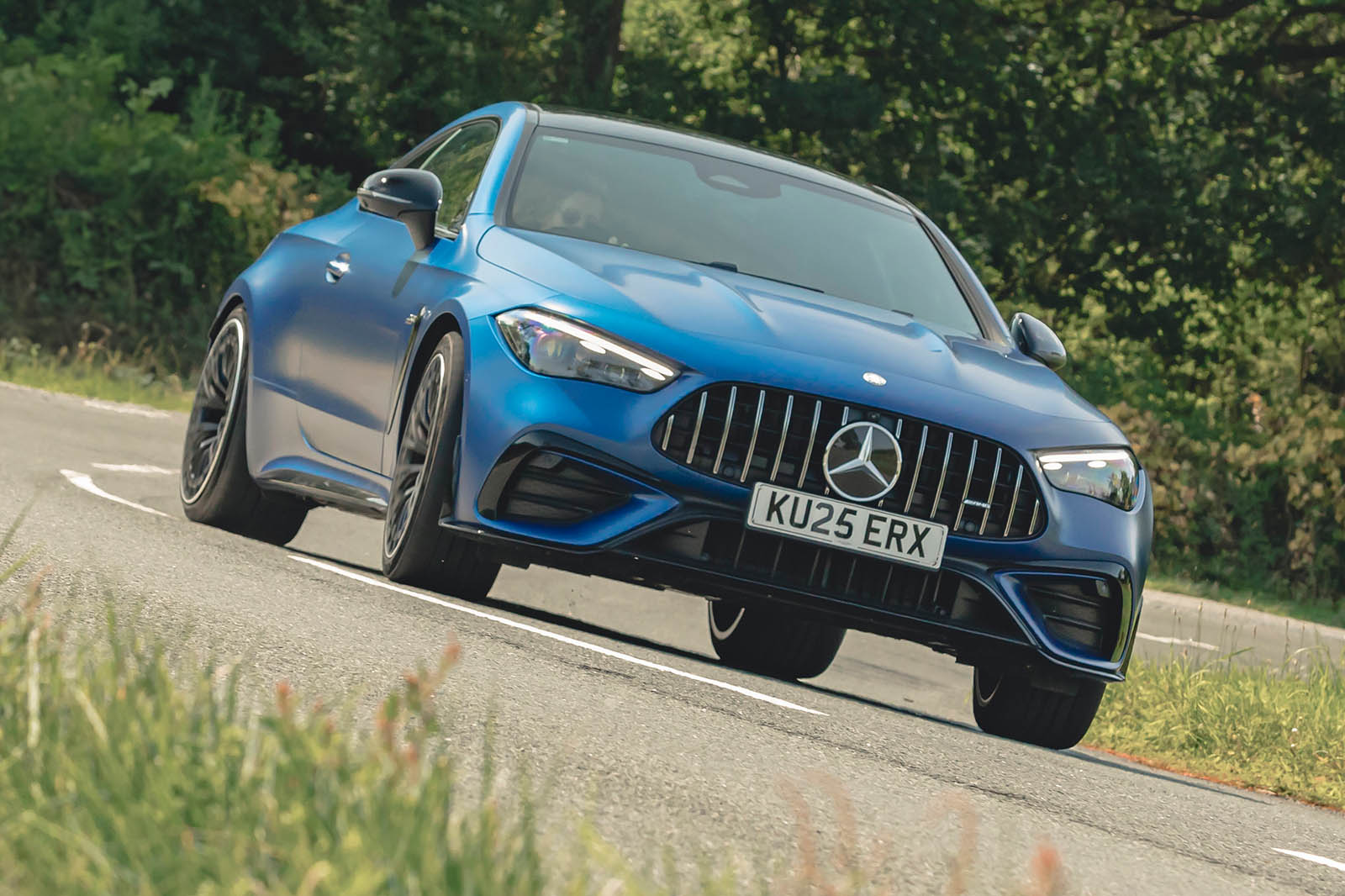
Amid a line-up that now consists mostly of very complicated plug-in hybrids, this mild-hybrid Mercedes-AMG CLE 53 is looking like the most ‘classic’ AMG, with a big engine up front, only mild hybridisation, and a wide body hiding a configurable four-wheel drive system. Being the 53, rather than a 63, it’s only an AMG-lite; but the wide arches and technical specification suggest otherwise.
Until the even more extreme, V8-powered CLE 63 arrives, this tops the CLE range. It has already impressed us in a long-term test, but we have never run the numbers on it. The arrival of a car fitted with the Pro Performance Package on Mercedes’ press fleet is a good opportunity to do so.
The CLE has been on sale for a few years now, but to recap; it effectively reprises the formula of the old CLK coupé, in that it replaces the coupé and cabriolet versions of both the C-Class and the E-Class by mixing and matching components from both saloons.
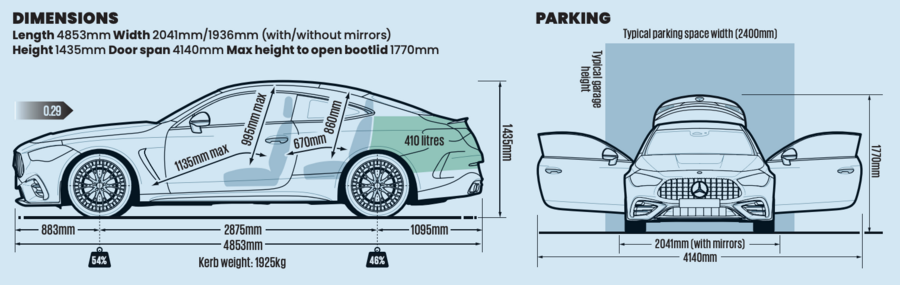
With that said, the CLE is more C-Class than E-Class adjacent, being just shorter than the smaller saloon (4853mm versus 4927mm) and having the same dashboard. However, the C-Class was conceived to take only four-cylinder engines, so the CLE uses some of the E-Class’s front structure to accommodate longitudinal six-pots.
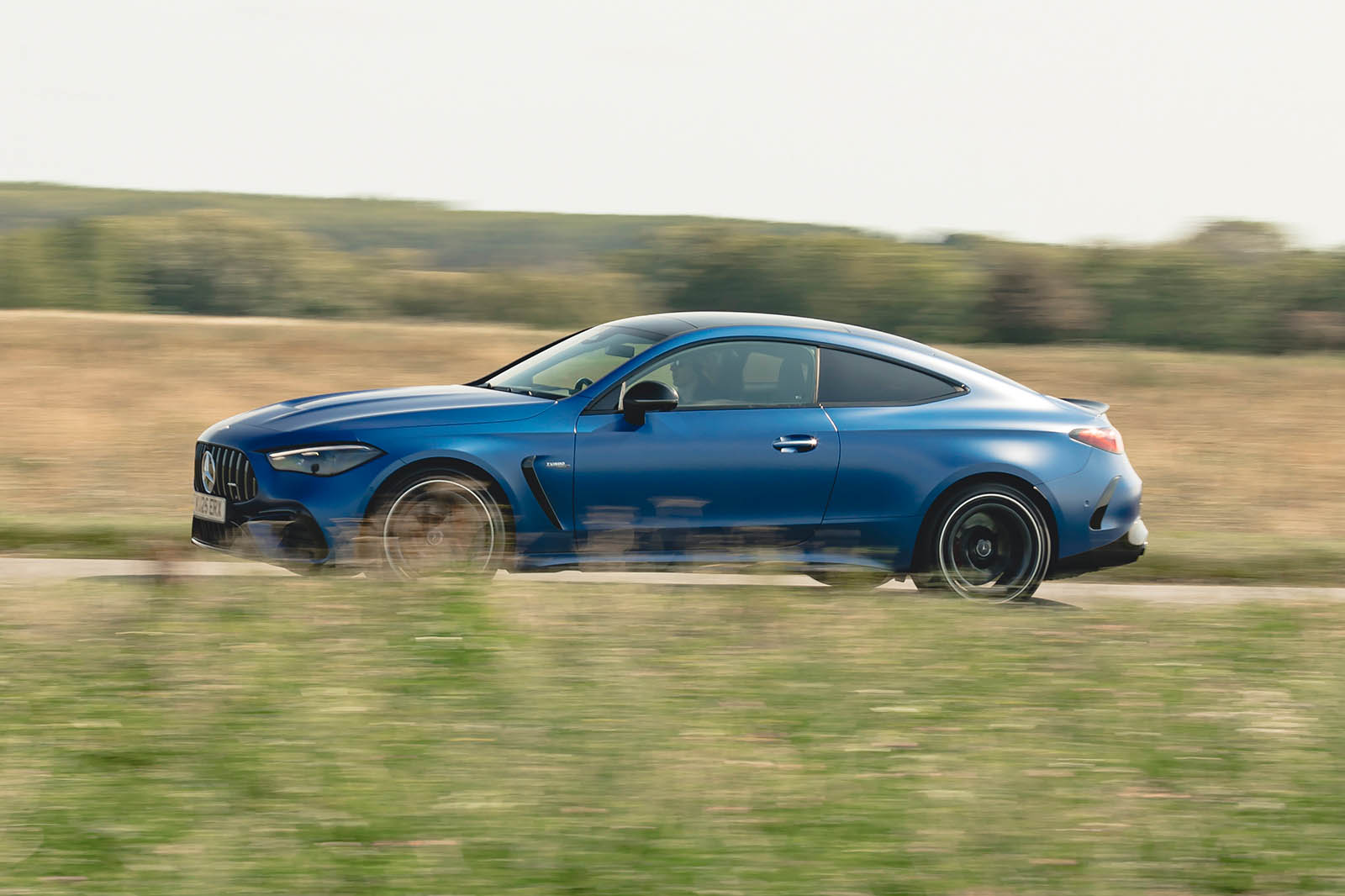
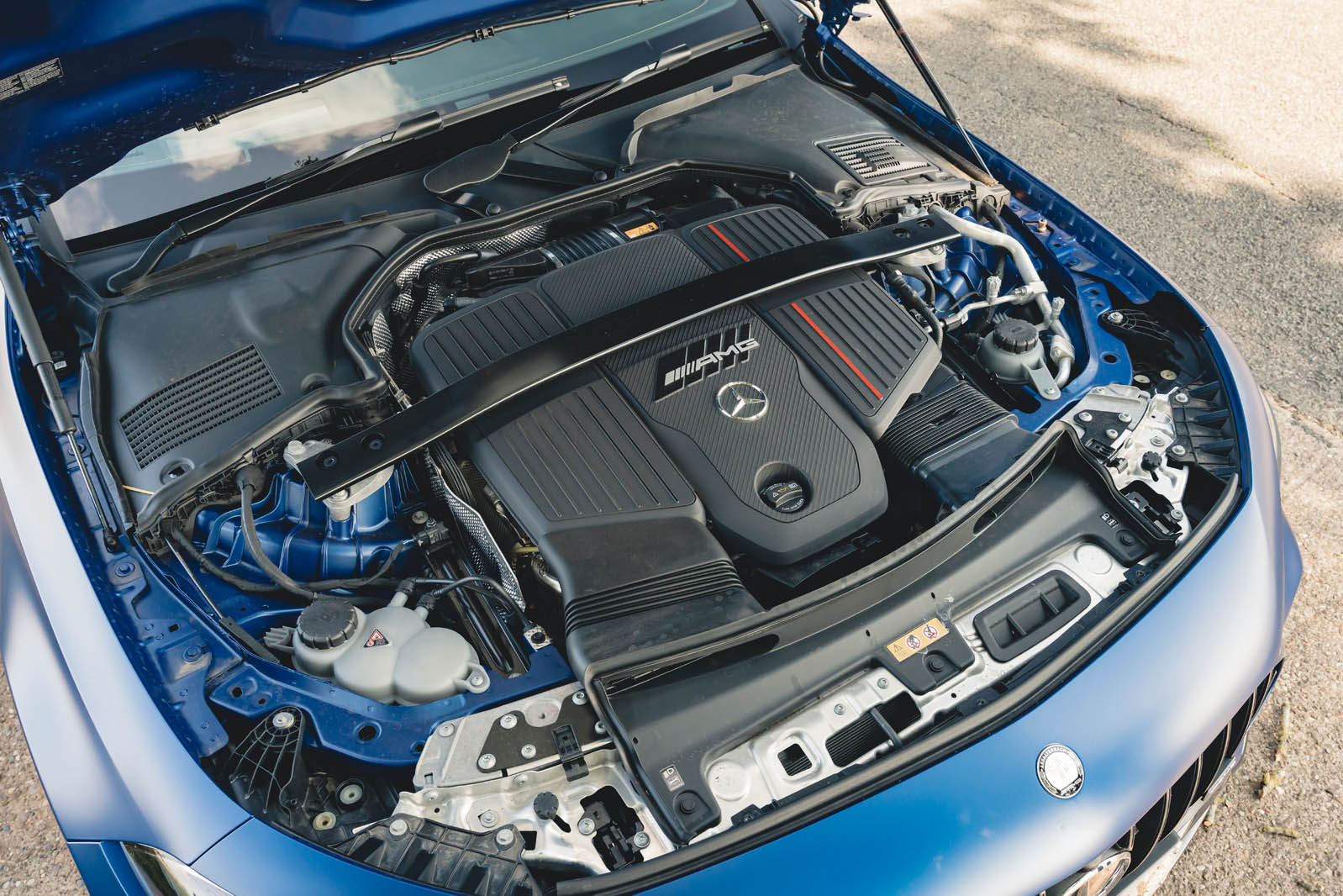
The regular CLE is available with four-cylinder petrol and diesel engines and even a plug-in hybrid, as well as that straight six. Codenamed M 256M, it’s a development of the 3.0-litre straight six that has been appearing in Mercedes for a few years. It’s boosted in various ways: primarily by a twin-scroll turbo, with a 48V motor in the gearbox helping with start/stop duties and at low revs.
The CLE 53 has effectively the same engine but with an additional electric compressor that runs off the 48V system and builds boost at low revs while the exhaust gas turbo (which itself produces more boost) fills its lungs. This is a largely standard Merc engine, then, rather than a hand-built AMG-specific one.
The same is true for the gearbox. Mercedes talks in its literature about the MCT and TCT gearboxes. Both are its own nine-speed automatic, but the TCT has a conventional torque converter, while the MCT has a multi-plate start-up clutch. The latter tends to be used only in the 63 AMGs, so the CLE 53 has the standard torque-converter unit.
On the chassis side, the AMG 53 is the only CLE in the UK to get adaptive dampers and four-wheel steering. The steering has a speed-sensitive variable ratio, and fully variable 4Matic four-wheel drive is standard.
Where the AMG 53 and 43 used to use a standard body, this CLE 53 (just like the E 53) gets significantly wider arches: 58mm at the front and 75mm at the back. Of course, there are more aggressive bumpers and diffusers as well.
That’s taken one step further with our test car’s Pro Performance Package, which adds a spoiler lip on the bootlid, extra trim on the rear air vents, and additional underbody aero devices. For its £7500 price tag, it also adds a more rear-biased four-wheel-drive mode, a driver-selectable fully rear-wheel-drive mode, active engine mounts, bucket seats and additional carbonfibre interior trim.
As with electrification, the German premium brands have wrestled with the integration of digital tech into their interiors. All have embraced it, but often at the expense of appealing design and usability.
Mercedes has arguably struck the best balance in its C-Class- and E-Class-based cars. There is, of course, a large centre screen but, sitting on the slope of the centre console, it seems better integrated than the more heavy-handed applications in BMWs and Audis. It leaves room for design flourishes elsewhere, like the jet-engine air vents and flowing trim strips, too.
Even though the CLE 53 is only the sub-AMG, it has all the chassis hardware you would expect from a top-flight performance car in this class, with a fully variable four- wheel drive system, the wide body, variable-ratio four-wheel steering and adaptive dampers.
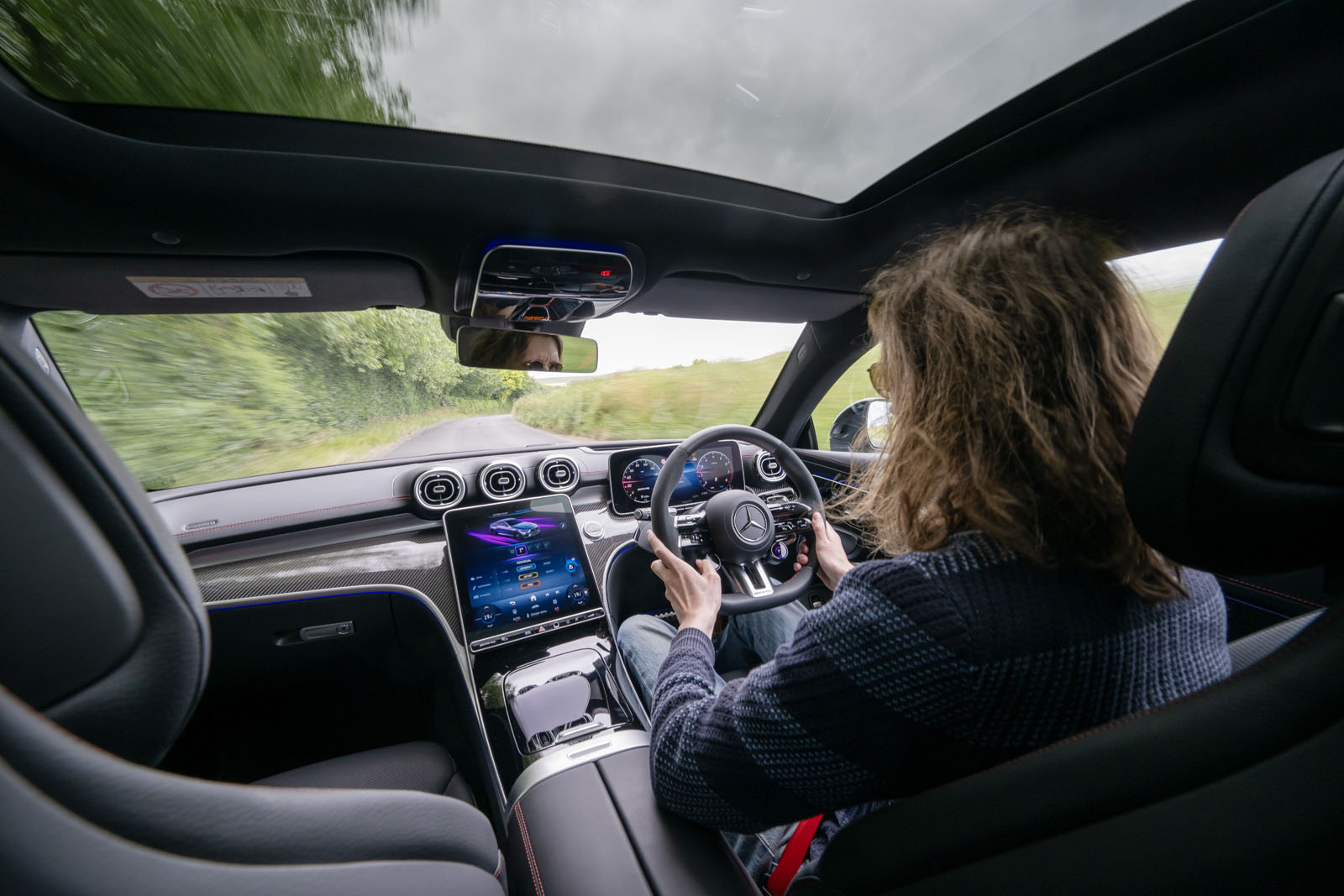
The software itself works very well, despite the heavily curtailed button count. The touchscreen responds instantly and is logical to navigate. The home screen is mainly dedicated to the navigation system (which is very up-to-date and worth using over Google Maps or Waze) but contains permanent controls for the media and the climate control. Mercedes also has among the best voice control systems we’ve found.
Material quality around the cabin remains hit and miss. The leather is soft, the carbonfibre is convincing, and the laser-cut metal speaker grilles for the excellent Burmester sound system could do a decent job on a block of parmesan. All of this contrasts with the loose touchscreen bezel, the scratchy plastic on the lower dash, and the risibly cheap-feeling piece of plastic that makes up the cupholders and centre console for the rear seats, however. We also detected a slight buzz from the driver’s side door card or our test car.
The Pro Performance Package replaces the car’s wood trim with carbonfibre and adds a part-carbonfibre steering wheel, but most importantly replaces the standard seats with ‘AMG Performance seats’, which lower the driving position significantly, addressing one of our complaints with the standard car.
For all its visual bravado, and far superior power-to-weight ratio than its key rivals (230bhp per tonne versus 186bhp per tonne for the Audi S5 and 212bhp per tonne for the BMW M440i), the CLE 53 proved only marginally quicker. Even up to 100mph, the CLE doesn’t pull out much of a lead – certainly not as much as you might expect.
Where it does have a slight advantage is in-gear, as evidenced by the quicker 30-70mph time in fourth, and the ease with which it pulls in high gears from low revs. Mercedes’ mild-hybrid application of both a small motor in the gearbox and an electrically assisted turbocharger does appear to be very effective at giving this engine enormous flexibility. It could easily make do with fewer gears. The AMG turned out to be heavier on the proving ground scales than quoted, but so did the Audi; and they have fairly similar gearing, albeit spread over a different number of gears.
The CLE 53 is still a very fast car, of course. It is more cultured than violent, which suits it just fine. Mercedes’ performance-flavoured straight six sounds deeper and less stressed than Audi’s V6, somewhere between the ultra-smooth B58 straight six of the BMW M440i and its gravellier S58 relation in the M4. At idle, you have to look at the tacho to be able to tell whether the engine is running – it is near-silent.
At maximum attack, the nine-speed torque converter can’t match the crispness of the fastest dual-clutch transmissions, and its responses to the paddles can be slightly delayed. In daily operation, though, it works together with the mild-hybrid system to give effortless, smooth progress. A conventional automatic really was the right choice here, although the ZF eight-speeder in BMWs shows that shift speed and refinement needn’t be enemies of each other.
Braking performance in the dry from the four-piston calipers proved strong, with no notable fade and reassuring pedal feel. The brakes are nicely progressive in normal operation too, despite blending in some light regenerative braking for the mild-hybrid system.
At maximum attack, the nine-speed torque converter can’t match the crispness of the fastest dual-clutch transmissions, and its responses to the paddles can be slightly delayed. In daily operation, though, it works together with the mild-hybrid system to give effortless, smooth progress. A conventional automatic really was the right choice here, although the ZF eight-speeder in BMWs shows that shift speed and refinement needn’t be enemies of each other.
Braking performance in the dry from the four-piston calipers proved strong, with no notable fade and reassuring pedal feel. The brakes are nicely progressive in normal operation too, despite blending in some light regenerative braking for the mild-hybrid system.
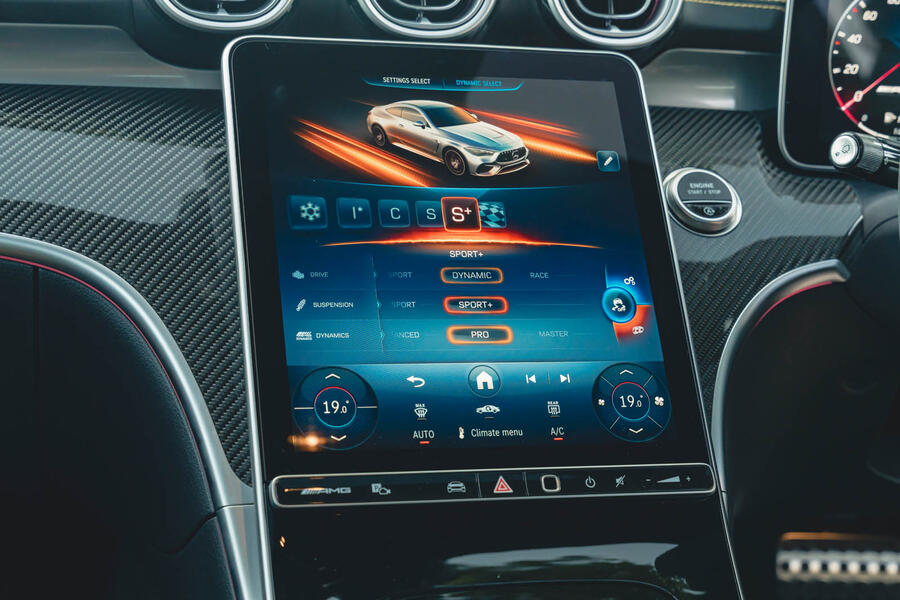
And it feels like the genuine article, up to a point. As with a BMW M car, there is a huge amount of configurability in the drive modes, and we like how AMG lets you navigate these. You access the parameter matrix on the centre screen via the AMG shortcut button. In this menu, you can configure an individual mode, which can then be easily called up using the right satellite dial on the steering wheel.
Meanwhile, the right satellite control lets you quickly adjust two parameters of your choosing. In practice, your first few weeks with the car will be spent narrowing down which modes are useful. We tended to stick with Comfort mode for suspension on the road, because even in the softest mode the ride is taut and flat rather than particularly compliant, without appearing to run out of wheel travel on bumpy roads.
There is no separate setting for the steering, however, with Mercedes opting instead to give you just a single flavour – one that has become quite characteristic for AMGs in recent years. It is a technically complex system, with both a variable-ratio rack and 2.5deg of rear steering. It’s a credit to the tuning work, then, that it requires no great amount of familiarisation from the driver. Despite there being less than two turns lock to lock, it feels relatively calm off-centre, gathering pace gradually. Even so, mapping the steering articulation and feedback onto so few rotations means they inevitably become compressed, the result of which is that feel and progression are slightly compromised.
The CLE took 57.4m to stop from 70mph in the wet, however, which was notably longer than the Audi S5 (51.3m), despite wearing similarly performance-oriented tyres.
The final choice to make is for the car’s ‘AMG Dynamics’ electronic torque-vectoring system, with no fewer than four modes: Basic, Advanced, Pro and Master. Master is only enabled with the Pro Performance Package. This influences both the four-wheel drive system and the traction and stability control, but even in very slippery conditions the differences are very subtle – much more so than on BMW M cars, where 4WD mode is quite steady and 4WD Sport is much more rear-biased. Even in Master mode, it remains conservative: get on the throttle very hard out of a tight corner in the dry and there is a satisfying – if short – moment of yaw, whereas an M4 xDrive (or even an M440i) would launch itself into a full- blown powerslide.
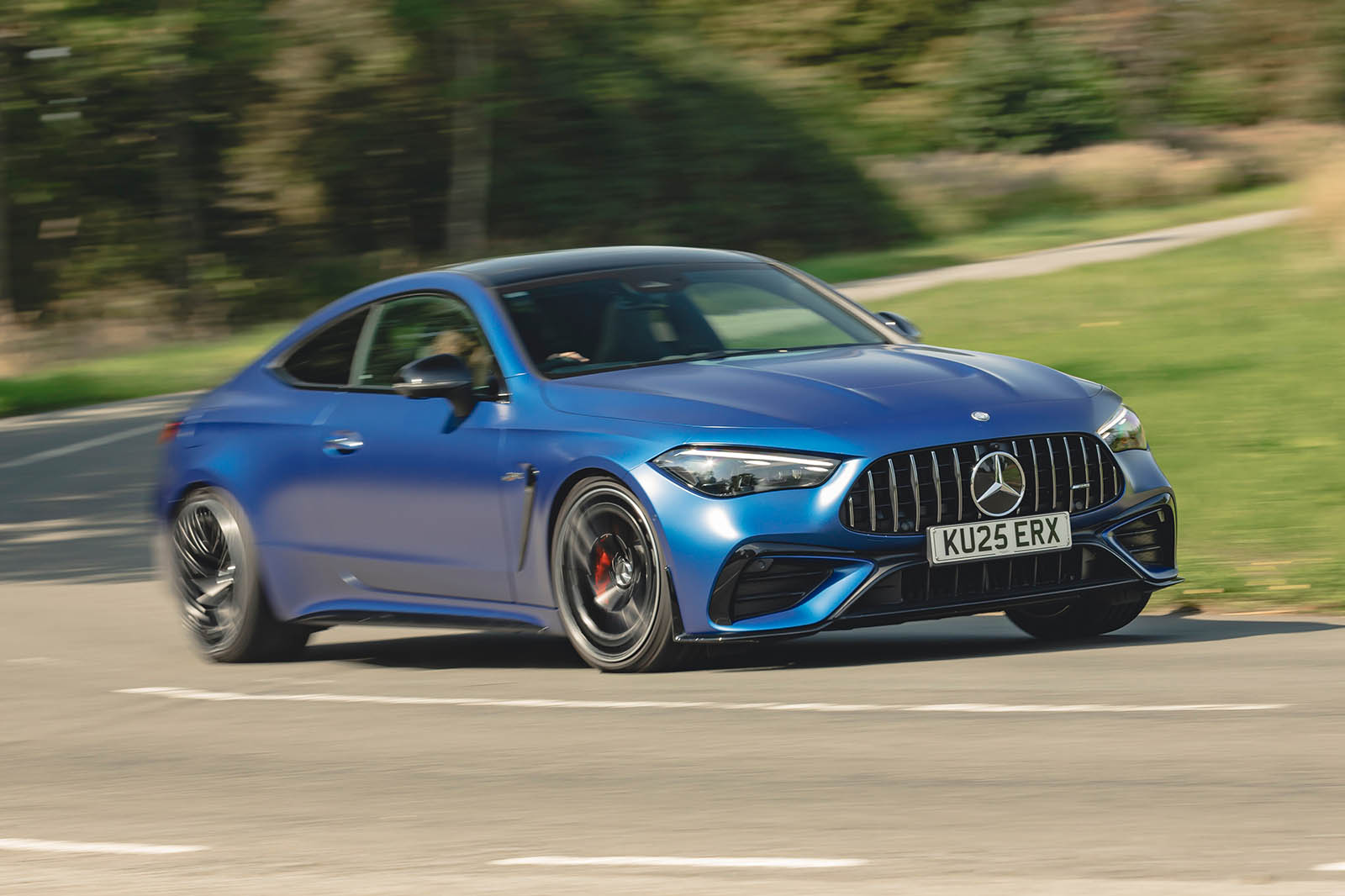
It’s when you engage drift mode that you realise this grip-and-go character is not solely a result of the torque distribution. Drift mode is also exclusive to the Pro Performance Package and is a slightly sensationalist name for rear-wheel-drive mode. Unlike on M cars, it’s a faff to engage and not something you can quickly toggle on before your favourite well-sighted left-hander. And, even with the front driveshafts out of action, traction remains incredibly strong, and the CLE 53 is much more likely to understeer than oversteer. The tyre selection undoubtedly plays a role here: with a 265-section at the front and a 295-section at the rear, they are much more aggressively staggered than on the BMW and Audi rivals. The 54:46 weight distribution is front-heavier than you might expect, but it is the same as on the M4 CS (albeit with 265kg more overall), and more balanced than on the Audi S5.
The CLE took 57.4m to stop from 70mph in the wet, however, which was notably longer than the Audi S5 (51.3m), despite wearing similarly performance-oriented tyres.
Even though the CLE 53 is only the sub-AMG, it has all the chassis hardware you would expect from a top-flight performance car in this class, with a fully variable four- wheel drive system, the wide body, variable-ratio four-wheel steering and adaptive dampers.
And it feels like the genuine article, up to a point. As with a BMW M car, there is a huge amount of configurability in the drive modes, and we like how AMG lets you navigate these. You access the parameter matrix on the centre screen via the AMG shortcut button. In this menu, you can configure an individual mode, which can then be easily called up using the right satellite dial on the steering wheel.
Meanwhile, the right satellite control lets you quickly adjust two parameters of your choosing. In practice, your first few weeks with the car will be spent narrowing down which modes are useful. We tended to stick with Comfort mode for suspension on the road, because even in the softest mode the ride is taut and flat rather than particularly compliant, without appearing to run out of wheel travel on bumpy roads.
There is no separate setting for the steering, however, with Mercedes opting instead to give you just a single flavour – one that has become quite characteristic for AMGs in recent years. It is a technically complex system, with both a variable-ratio rack and 2.5deg of rear steering. It’s a credit to the tuning work, then, that it requires no great amount of familiarisation from the driver. Despite there being less than two turns lock to lock, it feels relatively calm off-centre, gathering pace gradually. Even so, mapping the steering articulation and feedback onto so few rotations means they inevitably become compressed, the result of which is that feel and progression are slightly compromised.
The final choice to make is for the car’s ‘AMG Dynamics’ electronic torque-vectoring system, with no fewer than four modes: Basic, Advanced, Pro and Master. Master is only enabled with the Pro Performance Package. This influences both the four-wheel drive system and the traction and stability control, but even in very slippery conditions the differences are very subtle – much more so than on BMW M cars, where 4WD mode is quite steady and 4WD Sport is much more rear-biased. Even in Master mode, it remains conservative: get on the throttle very hard out of a tight corner in the dry and there is a satisfying – if short – moment of yaw, whereas an M4 xDrive (or even an M440i) would launch itself into a full- blown powerslide.
It’s when you engage drift mode that you realise this grip-and-go character is not solely a result of the torque distribution. Drift mode is also exclusive to the Pro Performance Package and is a slightly sensationalist name for rear-wheel-drive mode. Unlike on M cars, it’s a faff to engage and not something you can quickly toggle on before your favourite well-sighted left-hander. And, even with the front driveshafts out of action, traction remains incredibly strong, and the CLE 53 is much more likely to understeer than oversteer. The tyre selection undoubtedly plays a role here: with a 265-section at the front and a 295-section at the rear, they are much more aggressively staggered than on the BMW and Audi rivals. The 54:46 weight distribution is front-heavier than you might expect, but it is the same as on the M4 CS (albeit with 265kg more overall), and more balanced than on the Audi S5.
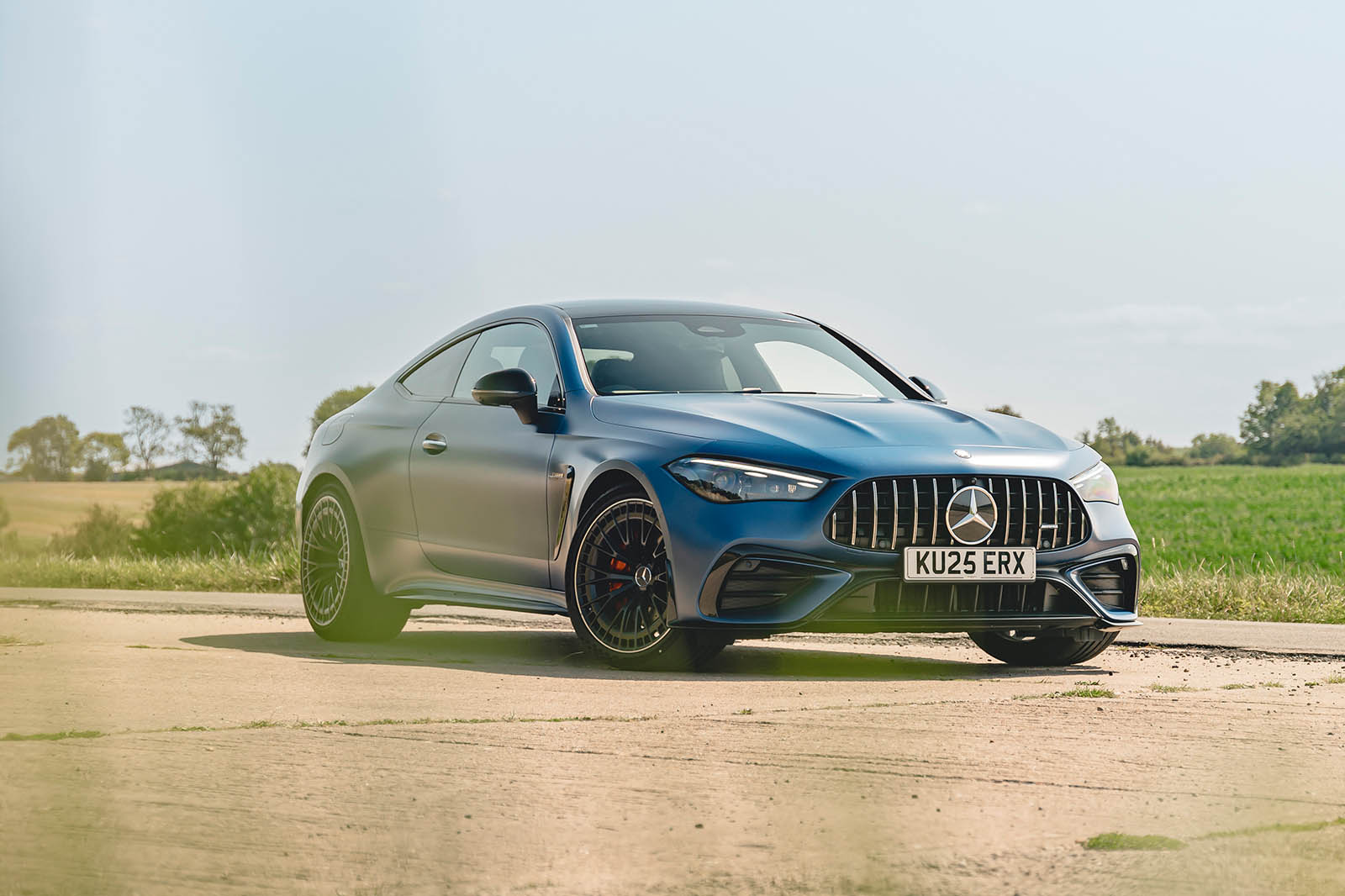
VERDICT: With its wide body, chassis tech and power, the CLE 53 is clearly positioned above the BMW M440i, Audi S5 and Mercedes’ own C43; but it’s not as fast as an M4 or the upcoming Audi RS5 and CLE 63. For those who think that the performance of top-flight coupés has got out of hand, it would seem an appealing compromise of real-world performance, comfort, usability and value.
It’s a good niche to dive into and results in a car with plenty of performance and a good deal of grip and handling smarts. It manages its digital technology better than rivals, too.
The execution of its chassis set-up isn’t perfect and there are some interior quality niggles unbefitting of the price. Overall, though, the CLE 53 is a very effective fast road car with buckets of presence.
Moreover, while four-seat onvertibles may have fallen out of fashion, the CLE 53 Cabrio is a reminder of why such models can be such appealing driving machines. Given this car isn't an out-and-out high performance machine, its slighly softer focus suits the more laid-back charms of open air motoring. Especially when the sun is shining.
Autonews


Nenhum comentário:
Postar um comentário