TOYOTA
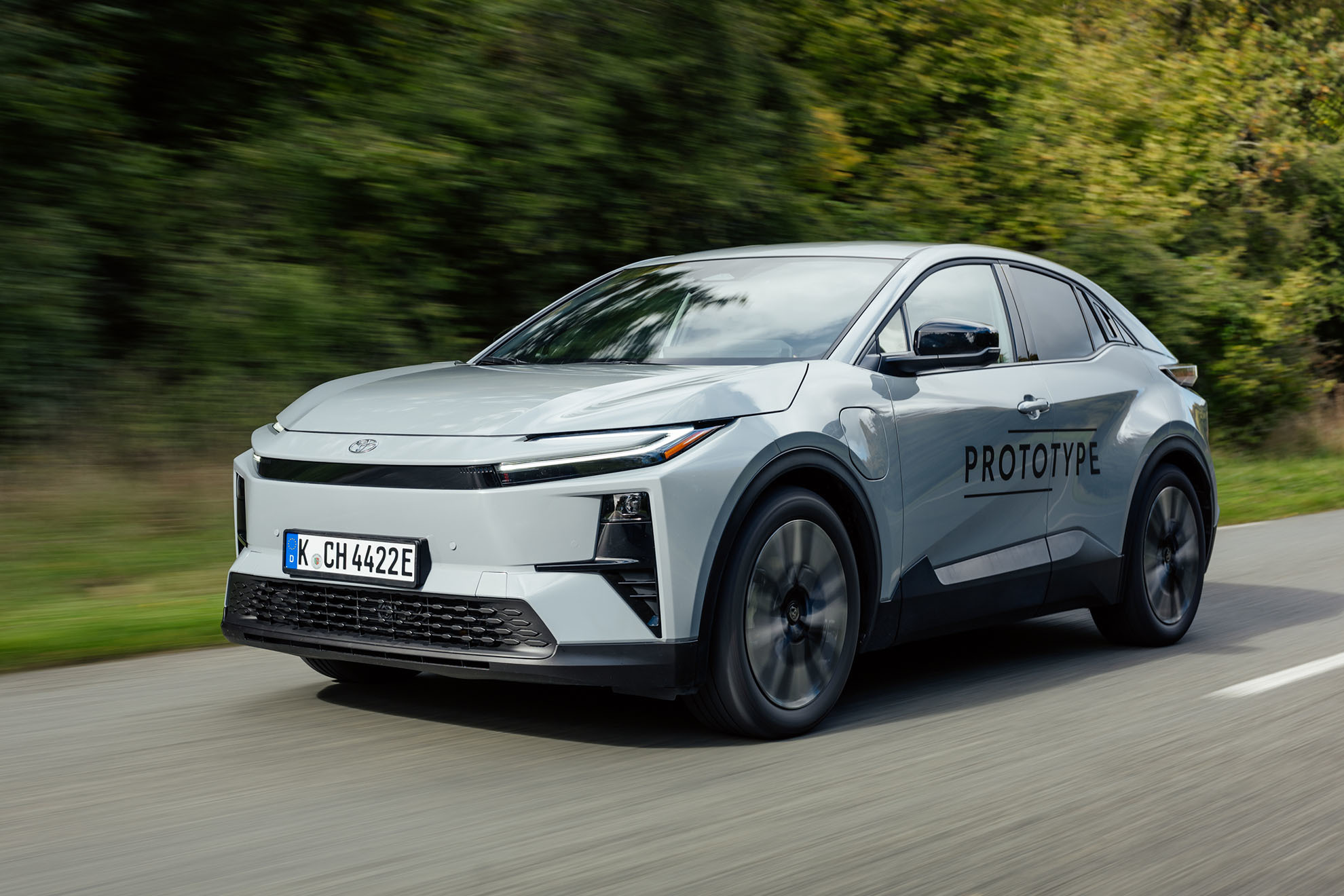
C-HR+: the electric SUV with which Toyota aims to change the current landscape
For years, Toyota has faced constant criticism for its apparent slowness in adopting full electrification. Although the Japanese brand has become a benchmark in hybridization, having put no less than 34 million vehicles on the road to date, the reality is that it has not yet had the opportunity to embrace what appears to be the future of the sector.
However, the brand has adopted a deliberately cautious strategy based on technological diversification: with the aforementioned hybrids, plug-in hybrids, and even hydrogen vehicles, where it has already sold nearly 30,000 units worldwide. This pragmatic approach has allowed it to adapt to new global demands, but especially in Europe, where emissions regulations are pushing all manufacturers towards zero-emission mobility.
With this backdrop, Toyota has just revealed the new C-HR. A model that will coexist with the current C-HR Hybrid and C-HR PHEV, in what is undoubtedly its most ambitious step within its all-electric lineup. It will also take over from the current bZ4X, which has seen an exponential increase in popularity over the past 12 months. While both will coexist, the commercial aspirations and positioning of each will be clearly differentiated, placing much greater emphasis on the protagonist of these lines.
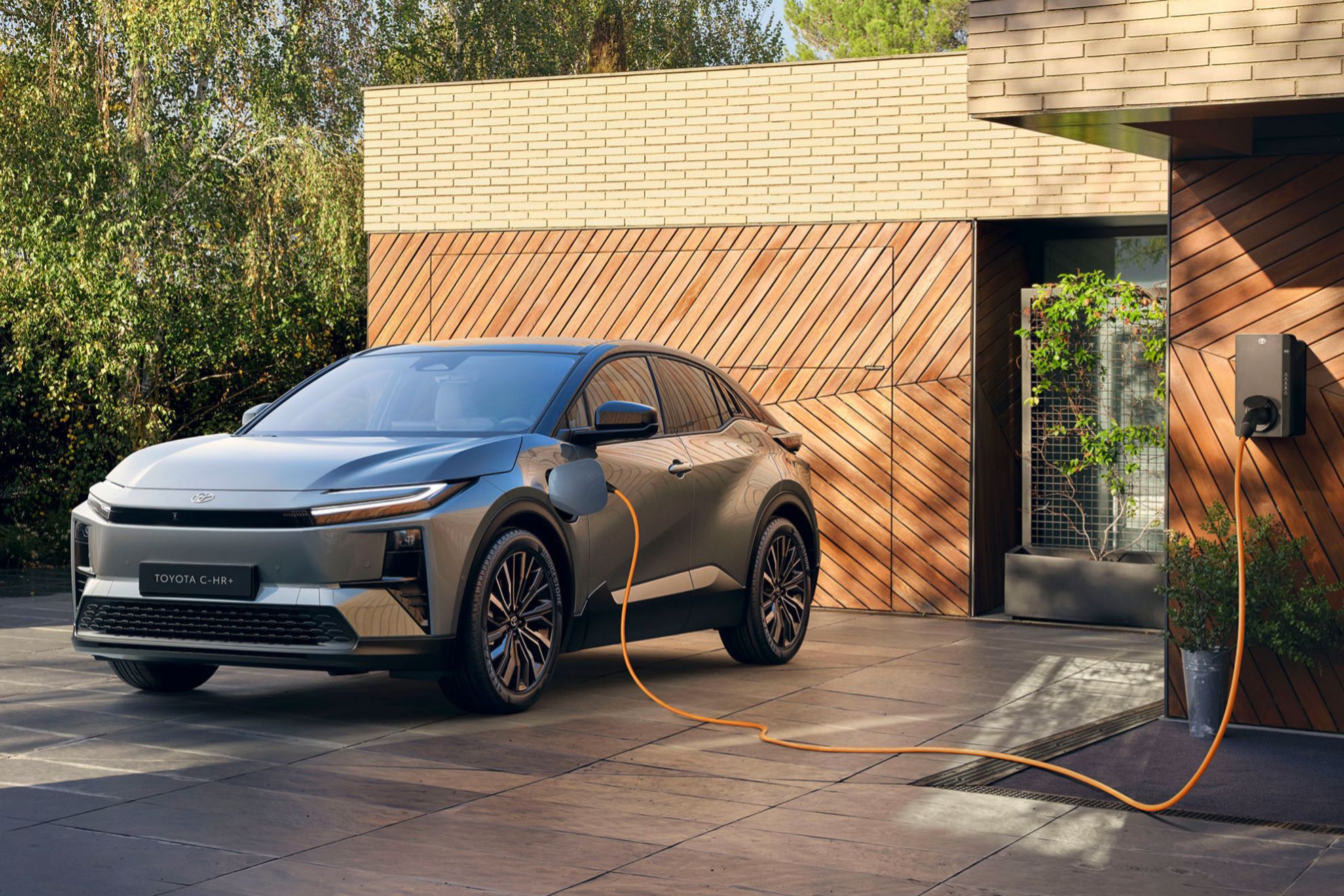
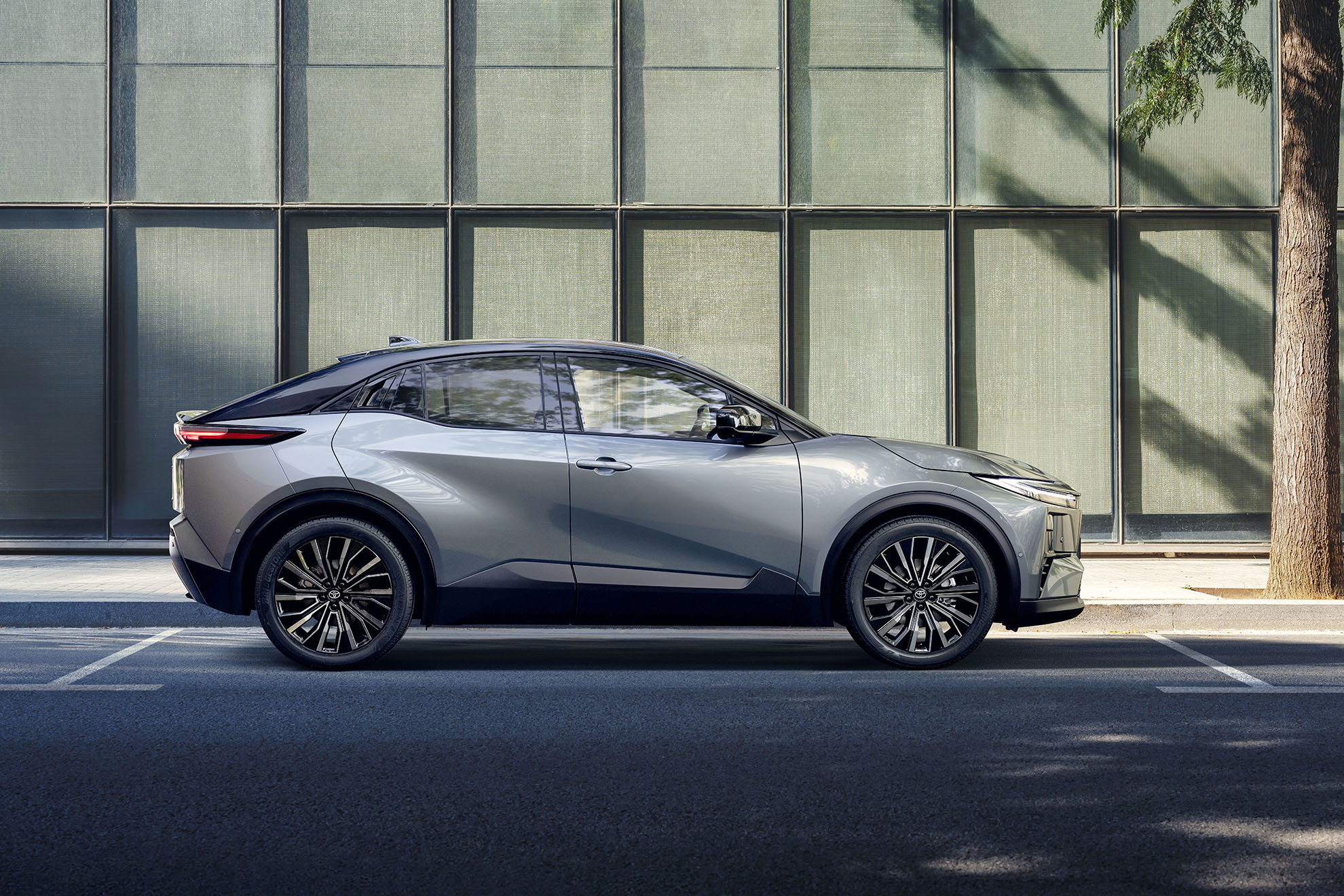
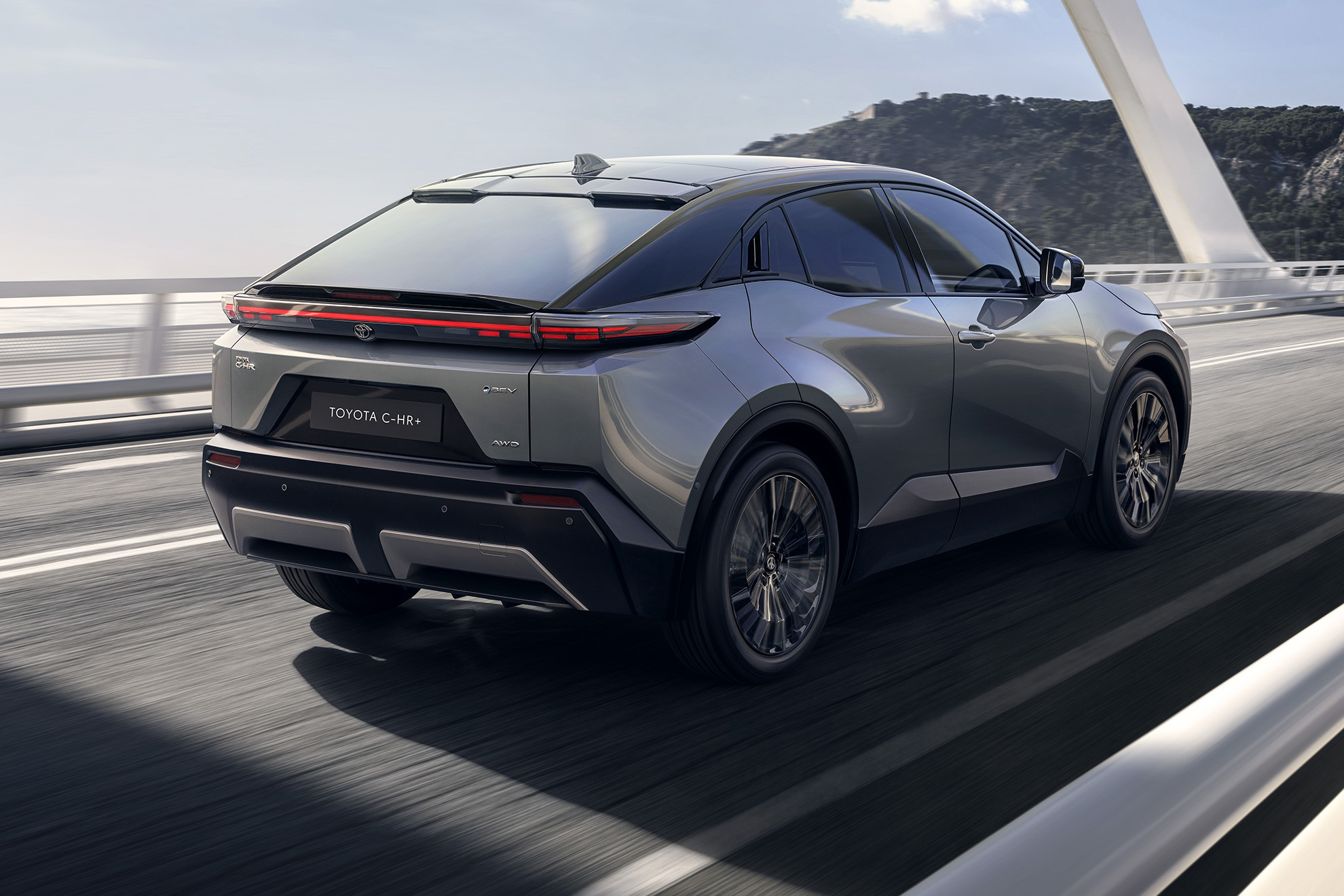
More fluid and elegant design...The styling has been one of the C-HR's main attractions since its original launch, and although this version was developed based on the electrification concept of the bZ4X, it maintains the style of its combustion-powered electrified counterparts. We're talking, of course, about that coupe design with a pronounced roofline that accentuates its dynamic silhouette, complemented by features such as a tapered front end and a squared-off rear end.
This sporty silhouette is accentuated by integrated grab handles on the C-pillar, wheels up to 20 inches (on the tallest version), and other details such as stylized headlights, a pointed front end, rounded wheel arches, and a rear spoiler that optimizes airflow. Aerodynamics has been one of the car's foundations; thanks to various solutions, its Cd is just 0.26, one of the lowest for an SUV.
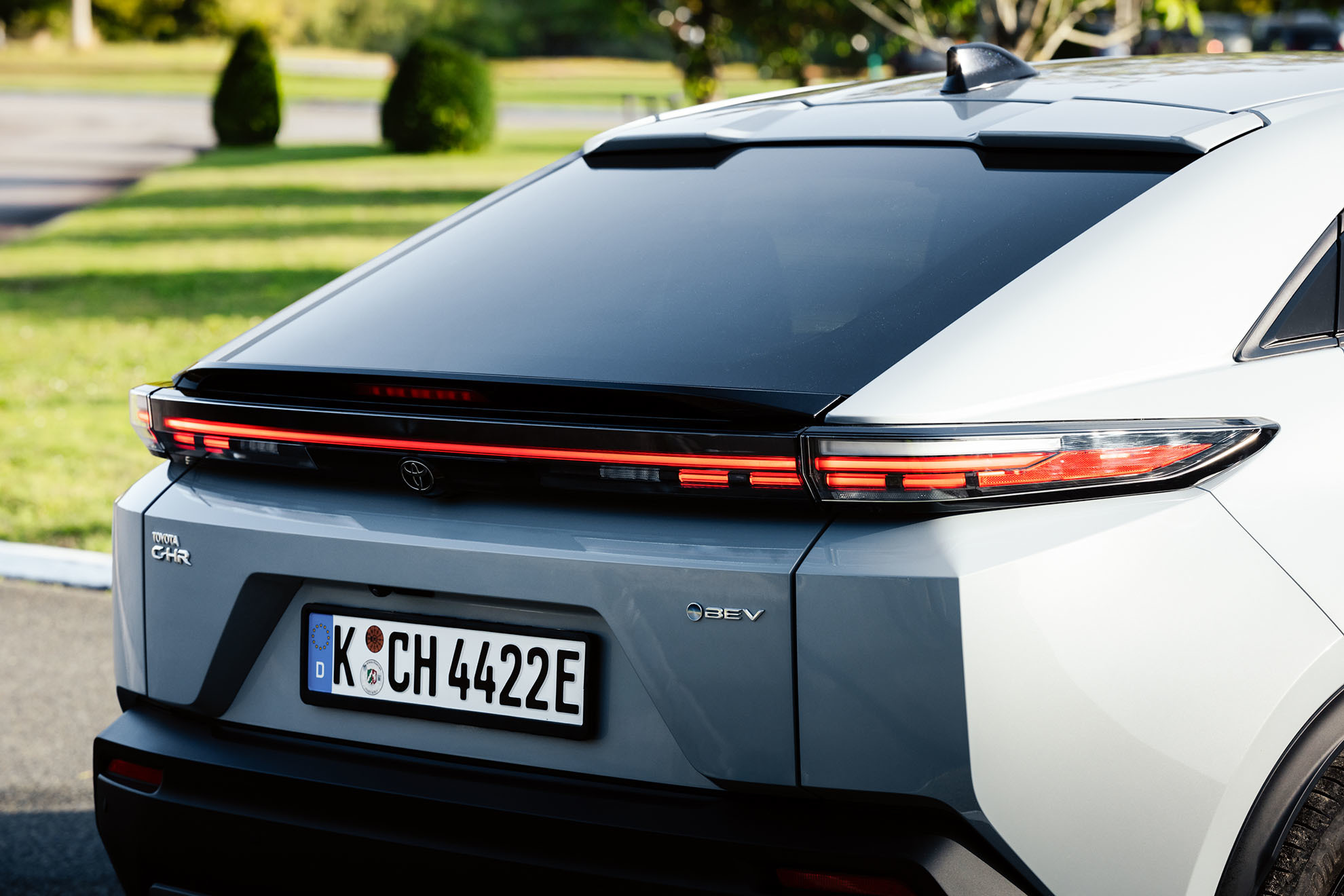
In fact, overall, the dimensions of this C-HR+ grow slightly compared to the current model, increasing its length by 16 cm to 4.52 meters, while increasing its width and height by 3 and 4 centimeters, respectively.
These dimensions have a very positive impact on an interior where the wheelbase has also been increased by 11 cm, thus alleviating one of the model's main drawbacks: space. Because from the outset, the C-HR was designed for adult occupants, leaving the rear seats in the background. But now, with this extra boost (pun intended), the C-HR+ feels more comfortable.
We found this with the exposed model, where both headroom and, especially, knee room are much more generous, allowing two people of average height to fit without much difficulty and even feel less cramped when looking out the now larger windows. Perhaps the excessively bent knee position is the reason for our criticism, but coming from where we come from, that doesn't matter.
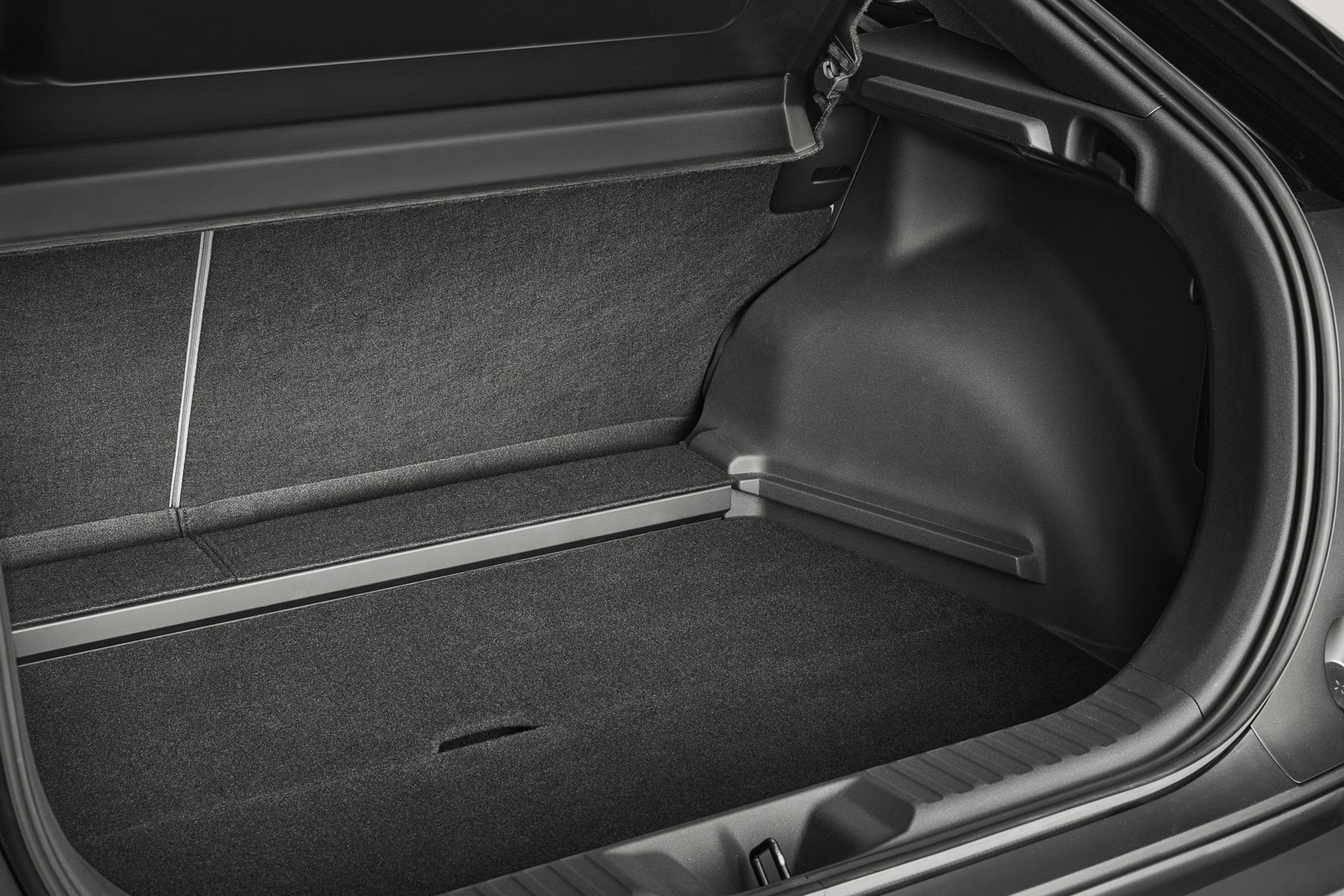
Another aspect that has improved is the trunk capacity, which now grows to 416 liters. While it may seem small compared to some of its main competitors, it represents an increase of 106 liters over the current C-HR PHEV. Numbers aside, the actual feel is very good, with regular, square shapes, as well as the possibility of positioning the floor at two heights and, moreover, in a segmented manner.
With a round steering wheel...Up front, Toyota hasn't lost sight of the driver, and the dashboard adopts a wraparound design that looks directly at them. The perceived quality is quite high, with soft, well-integrated materials, although the highlight is the round steering wheel. We say this because the driving position inherits the design of the bZ4X itself, and its luxury cousin, the Lexus RZ, integrates a rudder-style steering wheel.
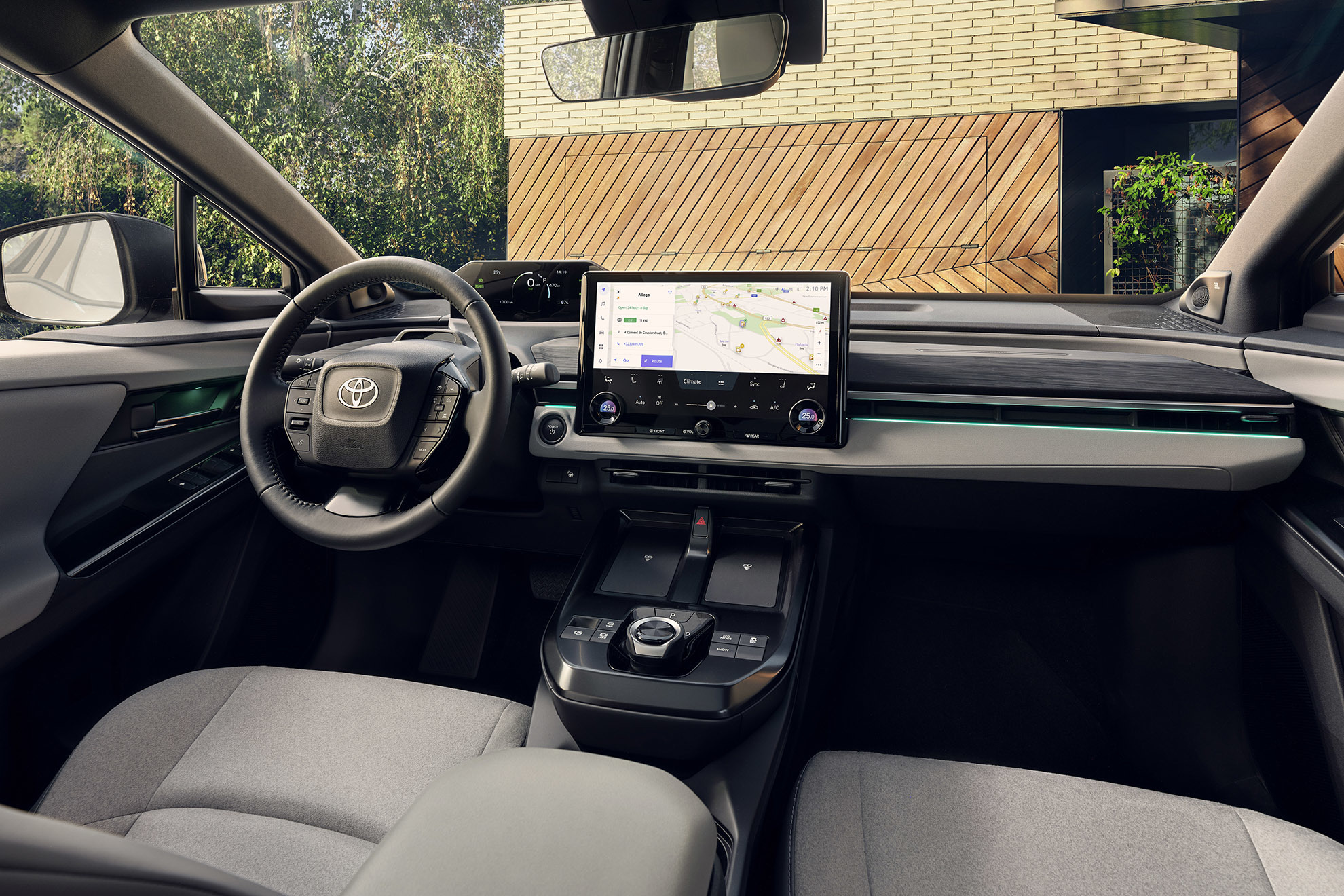
Furthermore, digitalization is very present in both the raised 7-inch instrument panel, in the style of the Peugeot i-Cockpit, and the 14-inch central monitor, similar to that of the latest Lexus NX and RX. This, in addition to offering climate control dials, is compatible with wireless Apple CarPlay and Android Auto, adding to a connected and updated environment. In terms of space, the lack of a glove box stands out, as the climate control extends from one side to the other. However, in the central compartment, the C-HR+ includes a fairly deep trunk, with a capacity of 9 liters.
In terms of performance, the new C-HR Electric is offered with two powertrain configurations, logically based on the e-TNGA platform, which ensure balanced performance. The brand itself hasn't ruled out future expansion with the arrival of a more affordable platform with a smaller battery (already available in other markets), which will, of course, depend on market trends.
While this scenario is still unknown, what we can now order from Toyota is a front-wheel-drive C-HR+, equipped with a 227 hp (167 kW) and 268 Nm electric motor, powered by energy stored in a 77 kWh battery, with a range of up to 609 km.
Those seeking more performance can opt for the C-HR+ with all-wheel drive (AWD), which adds a second motor to the rear axle, resulting in a combined output of 343 hp (252 kW) and a range of up to 500 km. Compared to the bZ4X, this model offers improved performance in both models and, most importantly, up to 15% lower energy consumption.
In terms of charging, both support 150 kW fast charging, which means 10-80% in 25 minutes. AC charging is limited to 11 kW, and the most powerful one increases it to 22 kW. They also integrate a heat pump as standard, while battery thermal management can save up to 10 minutes of charging time in -10°C conditions if the cells are pre-conditioned effectively.
Technology and safety at the highest level...In terms of safety, the SUV features the Toyota Safety Sense package, which includes assistance systems such as blind spot detection, dynamic high beam adjustment, and parking sensors with automatic braking. Added to this are innovations such as Safe Exit Assist, which alerts you when opening the door if it detects cyclists or vehicles approaching from behind. The Spirit trim level adds advanced features such as Front Cross Traffic Alert, Lane Change Assist, and a 360° camera for easier maneuvering.
Furthermore, the commitment to quality is reflected in the battery warranty, which ensures that it maintains at least 70% of its capacity for up to 10 years or one million kilometers (the standard battery life is 8 years or 160,000 km), demonstrating Toyota's confidence in the durability of its electric technology.
Although the first units will be delivered to customers in March, Toyota has already opened orders through its official dealership network. As for the price, this is likely one of the model's key points, although the company didn't want to complicate matters and has combined a trim level with each engine.
We say this because the front-wheel drive option is available on the Advance trim level, while the AWD option is only available on the Spirit. Overall, pricing starts at €36,500 for the first trim and goes up to €44,000 for the second. Note that these prices only include the trade discount, which means that if all government aid, where available (especially MOVES), plus financing, is applied, the C-HR+ Advance could cost less than €27,000, which is a very reasonable price for a vehicle of this size.
Autonews




Nenhum comentário:
Postar um comentário