RENAULT
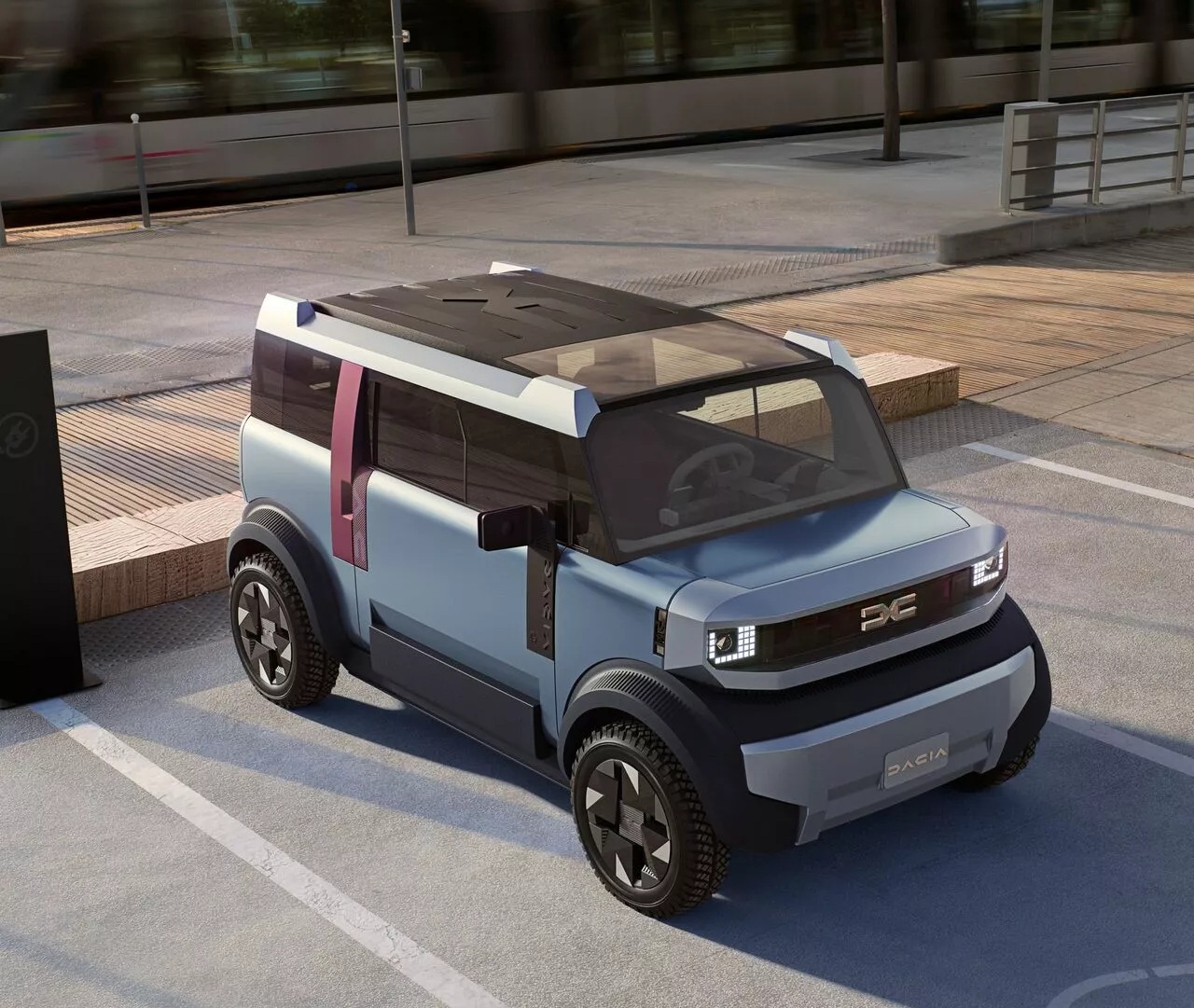
Renault's Dacia reveals hipster EV will be Able to outshine Tesla's Model 3 in Europe?
Dacia has unveiled the Hipster, a compact electric car concept expected to cost under €15,000. At less than half the price of Tesla’s entry-level Model 3 RWD, the model shows Renault’s effort to make electric mobility more affordable across Europe.
Renault’s budget brand Dacia has introduced the Hipster Concept, a small all-electric city car designed with affordability in mind. Expected to cost less than €15,000, it would be priced at less than half of Tesla’s entry-level Model 3 RWD. The Tesla standard trim currently sells for about €40,000 in Denmark, Europe’s most affordable market for Tesla.
The Hipster is built for simplicity and cost efficiency. It is shorter and lighter than most city cars on the road today, measuring just three meters in length and weighing under 800 kg. According to Reuters, the electric mini car is expected to reach a top speed of around 90 km/h and cover about 150 km per charge. This would cover the typical city driving, which averages 40 km a day, going by Dacia’s analysis.
To keep production costs low, the prototype features canvas seats, manual windows, minimal electronics, and door straps instead of traditional handles.
Revealed on Monday, October 10, the Hipster could move into production if the European Union approves a new vehicle class for light weight cars. Dacia CEO Katrin Adt, who joined the company from Mercedes-Benz, described the concept as a vision for ‘local, affordable, and everyday mobility.’ She noted that Dacia is ready to take the next step once EU approval is granted.
Eco-friendly driving...Pragmatic and minimalist design, Starkle®* exterior protection, a lightweight structure that consumes less energy and weighs less than 800 kg: the Hipster Concept aims to offer the lowest carbon footprint for a four-seater vehicle. *containing up to 20% recycled polypropylene
Simple and iconic...With a robust and distinctive look, cubic volume, and straight windows that maximize interior space, every detail expresses its functional simplicity. More than just style, it's a guarantee: safety, everyday practicality, and on-board comfort in an instantly recognizable design.
Other EV industry leaders like Renault and Stellantis have also been urging the EU to create a light vehicle category similar to Japan’s Kei cars. If eventually approved, it will simplify the safety requirements for smaller EVs, helping automakers cut costs and make electric vehicles more accessible.
If greenlit, the Hipster could be built in Europe, also countering the growing wave of low-cost Chinese EVs entering the market. While Tesla continues to dominate higher segments, brands like Dacia are positioning themselves to lead the next phase of affordable, compact electric mobility in Europe.
From the company that gave us the Duster and Bigster comes the … Hipster. Dacia has unveiled another car with a quirky name, and its ambitious mission is to “invent the popular electric car of tomorrow.” The latest concept from the Renault-owned brand completely ditches swoopy shapes in favor of an ultra-angular design aimed at maximizing interior space.
You can’t immediately tell from these images just how tiny this car is. At only 118.1 inches (three meters) long, it’s significantly shorter than a kei car. Speaking of which, the Hipster evokes a futuristic Honda N-Box but in an even smaller package. It stands just 60 inches (1.53 meters) tall, 61 inches (1.55 meters) wide, and weighs under 1,764 pounds (800 kilograms).
Despite its tiny footprint, Dacia claims the diminutive EV has four proper seats and even a small cargo compartment, though it only holds 2.5 cubic feet (70 liters). Fold the rear bench, however, and capacity jumps to a respectable 17.6 cubic feet (500 liters).
Dacia said the cabin has been "optimised to offer exceptional space" in spite of the Hipster's diminutive footprint, highlighting the vertical sides, wide door openings and tilting front bench seat as some of the headline space-saving elements.
Also contributing are the sliding glass windows, which avoid the need for bulky mechanisms and allow for an armrest within the width of the door – and the lack of an integrated infotainment system.
Dacia has instead equipped the Hipster with a smartphone mount in line with its cost-saving 'bring your own device' ethos - which extends to the car being unlocked using an app, rather than a physical key.
Meanwhile, the rear light clusters are mounted behind the upper portion of the split tailgate and so don’t need their own glass covers, while the exterior door handles have been replaced by a strap.
While the Hipster is equipped with the bare minimum equipment it needs for daily city driving, it does feature 11 of Dacia's 'YouClip' accessory mounts throughout the cabin, which can host kit including Bluetooth speakers, cupholders, armrests and extra lights.
The concept is driveable and finished to a level that’s close to what could be expected of a near-production prototype, but Dacia bosses wouldn't commit to a potential launch date, with the car’s viability ultimately contingent on a hospitable legislative environment.
Durand said: “I hope we will find a way through the regulation, through all the aspects. There is also an industrial risk: are we sure that there are enough customers to buy it, and is it still a field that is really our specialty?
"There are questions to solve, but this car is feasible. We are not far [away]: we have some regulation problems to solve and some answers to come from the regulators, but there is no big reason why it shouldn't be feasible at the right price, the right weight, the right everything."
The battery’s capacity isn’t specified, but given the car’s petite size and impressively low weight, the Hipster clearly isn’t lugging around a hefty pack. Dacia says there’s enough range for everyday use, requiring just two recharges per week.
Autonews

:strip_icc()/i.s3.glbimg.com/v1/AUTH_cf9d035bf26b4646b105bd958f32089d/internal_photos/bs/2021/e/R/gSPPBXTC6dO3lVwwNT7g/catsvaii.jpg)


Nenhum comentário:
Postar um comentário