MERCEDES-BENZ
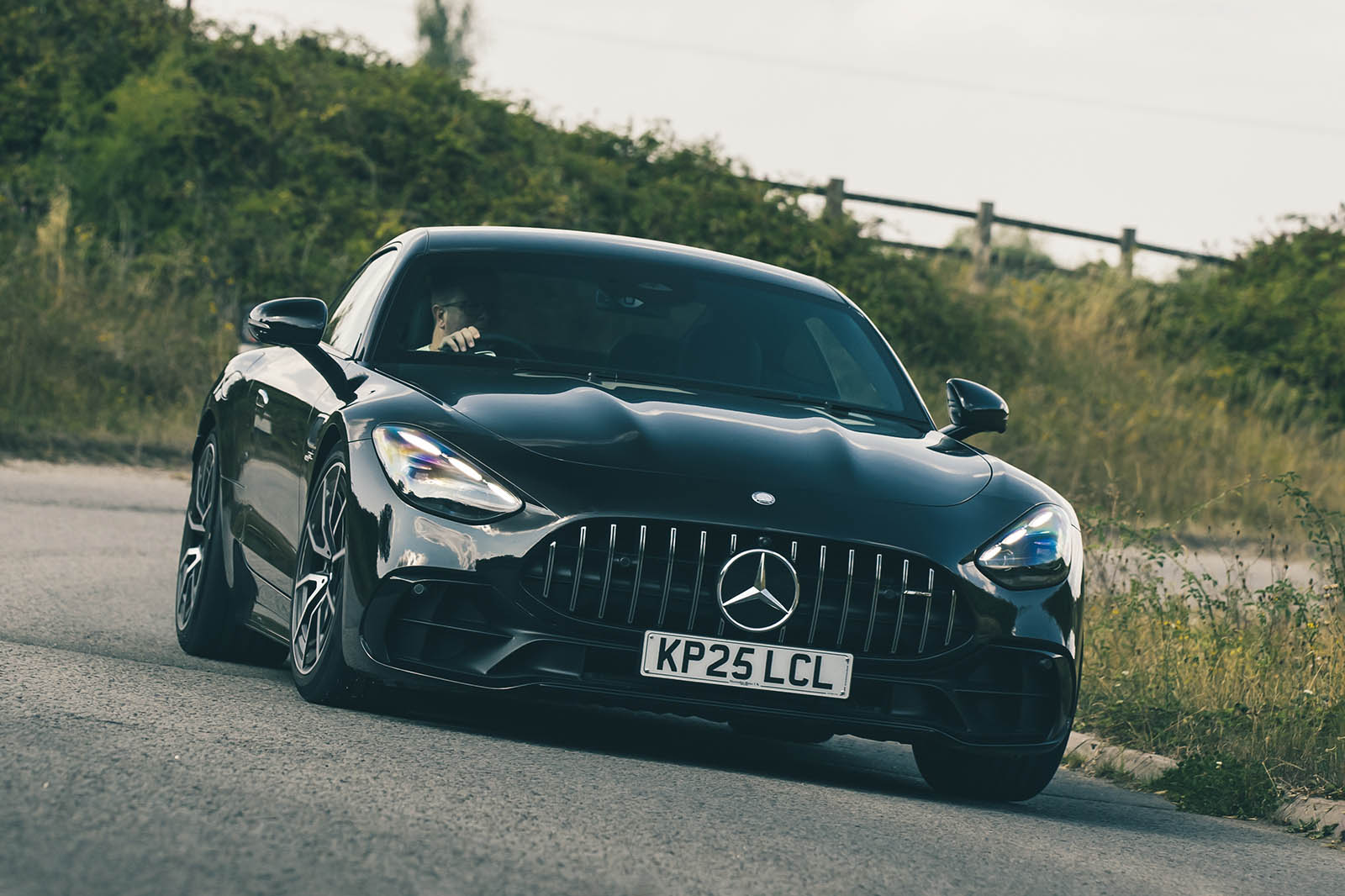
Mercedes-AMG GT 43 review
After so much power and complexity, then, yin follows yang: the new Mercedes-AMG GT 43 dumps not only the four-wheel drive system but also the active anti-roll suspension, four-wheel steering and the electronic torque-vectoring rear differential of its variously more powerful siblings. It becomes the only purely rear-driven AMG GT in the showroom range.
But it also – and rather more controversially where AMG’s customer base is concerned – swaps the 4.0-litre twin-turbo V8 for four-cylinder turbo power. So can a £100,000, entry-level Mercedes-AMG sports car that may seem, at least to some, to be missing a bank of cylinders convince as a driver’s car? Could the ‘less is more’ mantra have an unlikely new hero?
Built on a new spaceframe chassis made of aluminium, magnesium, steel and carbonfibre composite, the current Mercedes-AMG GT inherited almost nothing from its direct predecessor.
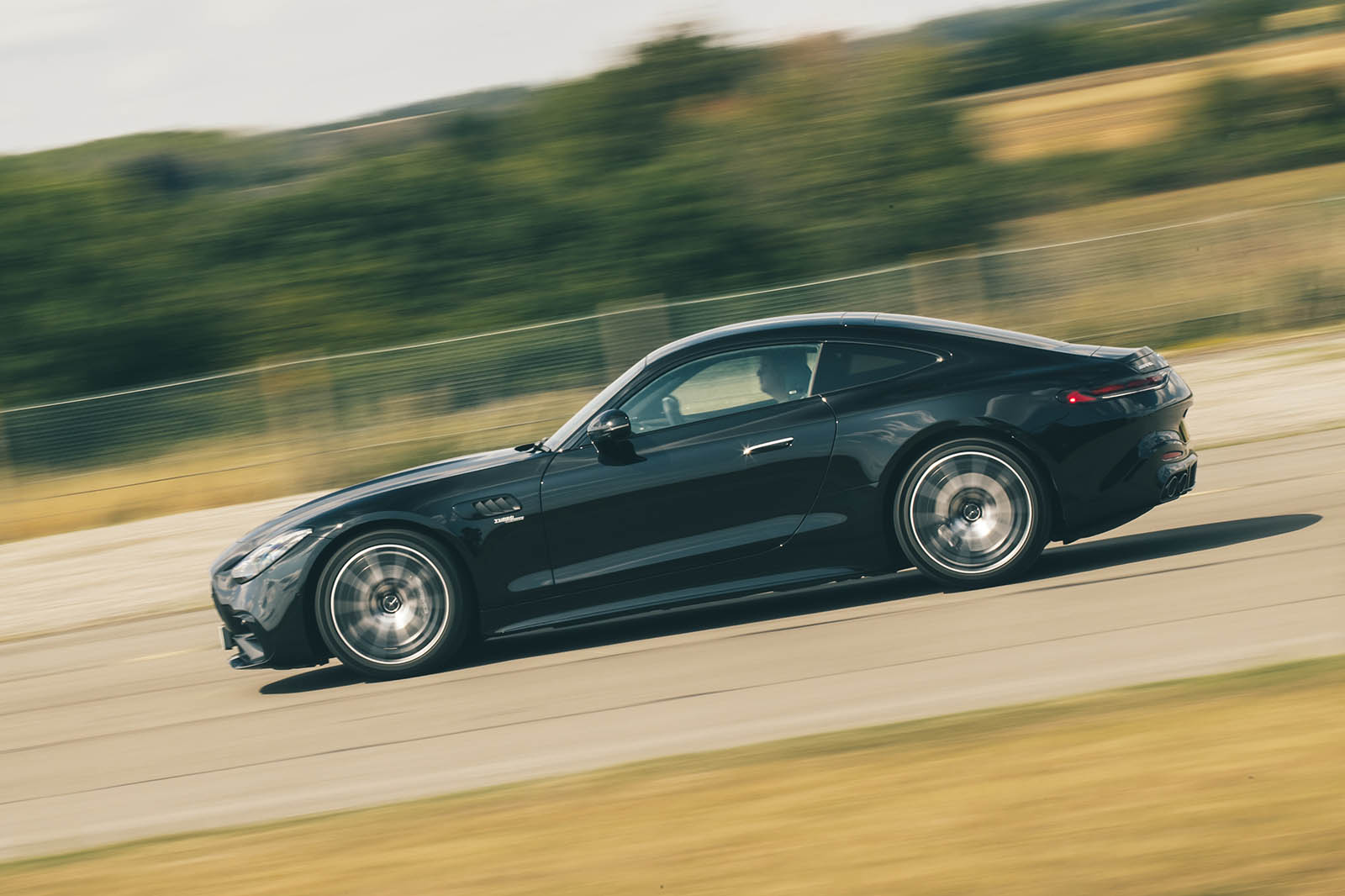
Customer feedback led its maker to move from a strict two-seat to a 2+2 cabin layout, and then to add more than 180mm in length to the car. As we reflected when we road tested the GT 63 V8 version last year, something of the first-generation model’s compactness and distinctive cabin-rear silhouette was lost – even if the gain in overall usability may prove to be worthwhile as far as some customers are concerned.
Despite becoming the new entry-level GT, then, the GT 43 has a claim to be considered the boldest model in the range – but that’s more because of what it lacks than what it has. Having been conditioned to expect purely rear-wheel-drive cars (the first-generation GT and the SLS before that), AMG regulars may well be attracted by this car’s rear-driven layout.
Elsewhere, in eschewing the interconnected, pump-driven ‘AMG Active Ride Control’ dampers of the GT 63 and running simpler adaptive dampers and conventional anti-roll bars instead, the GT 43 is only really following the existing GT 55’s configuration in some ways. It goes further still in others, though, by chucking out the GT 55’s four-wheel steering and torque-vectoring locking rear differential, too.
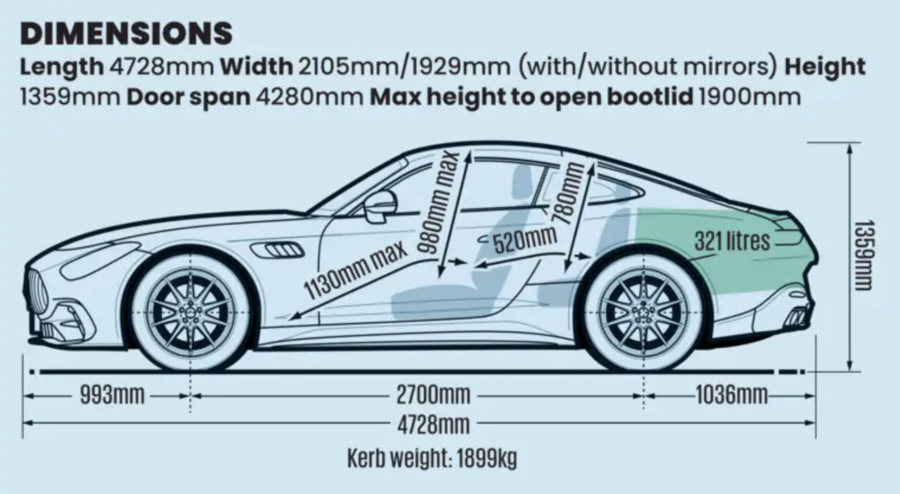
Horiba MIRA’s weighbridge was unavailable for us to verify kerb weight. According to Affalterbach’s own figures, however, all of those jettisoned mechanicals combined with the lighter engine are worth a weight saving of almost 150kg for the GT 43. That puts it at just under 1.9 tonnes in running order – although that is hardly light.
Mercedes-AMG has clearly sought to make the GT a four-seat option that only very rarely carries any more than two occupants, although that is precisely the position that the likes of the Porsche 911, Ferrari Amalfi-nee-Roma, and Aston Martin DB12 occupy. And the GT, just like them, has a pair of rear chairs big enough to throw holdalls, coats and shopping bags into – and, very occasionally, to accommodate one very modestly sized passenger, uncomfortably and, for their sake, for a short distance only.
The sizable lift back boot, with its very considerable volume of cargo (675 litres) once you fold the rear seatbacks, is certainly a practicality selling point, however, and it would facilitate touring much better than so many rivals.
Up front, this entry-level model, which we tested without a single fitted option, wants for neither equipment nor a sense of luxury. That said, the plasticky tactile feel of some fittings leaves a little to be desired given the price.
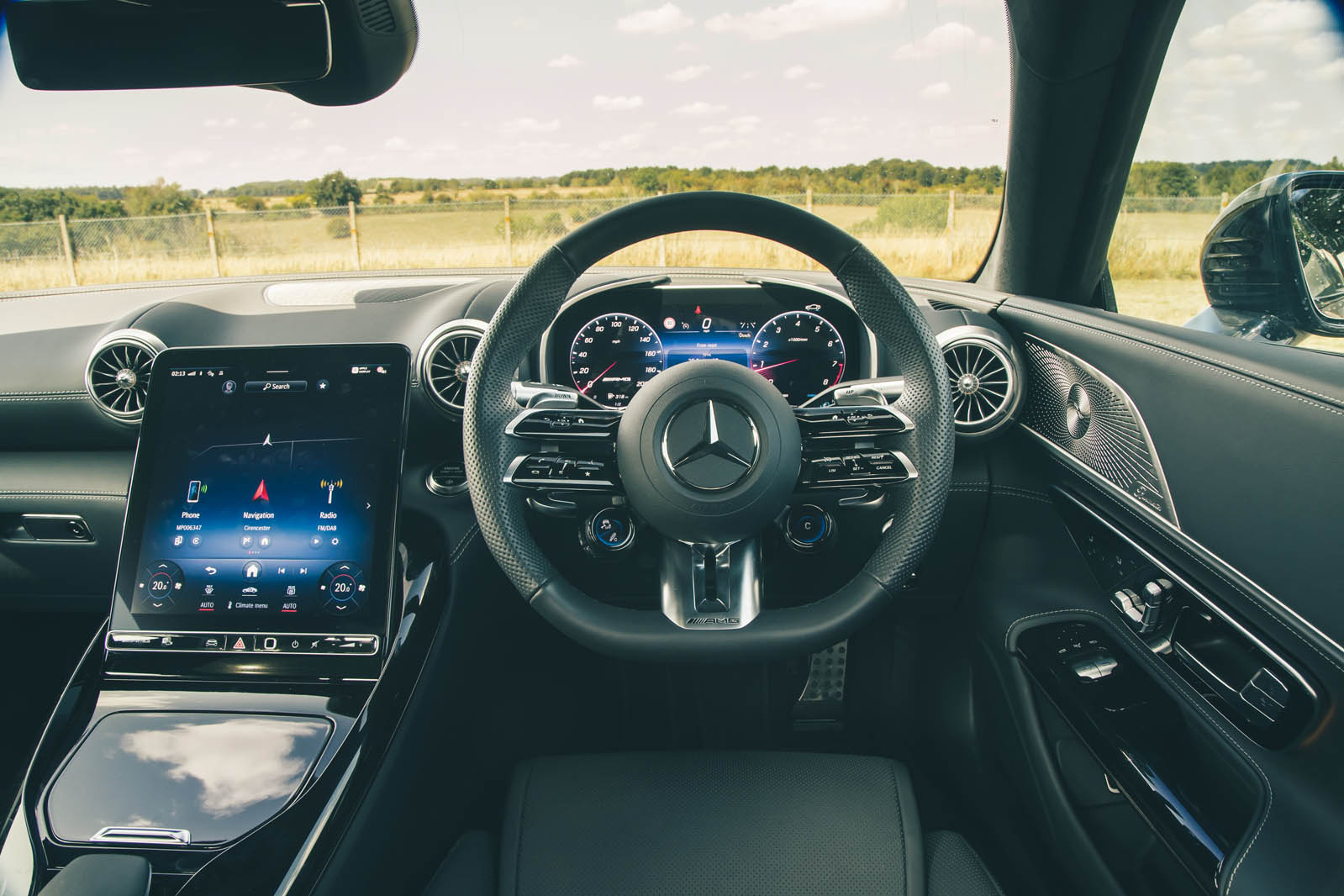
Mercedes’ standard seats are comfortable, and they provide good adjustability and support. The driving position is suitably low and straight, and there are plenty of user-configurable physical controls close at hand for the car’s key dynamic systems.
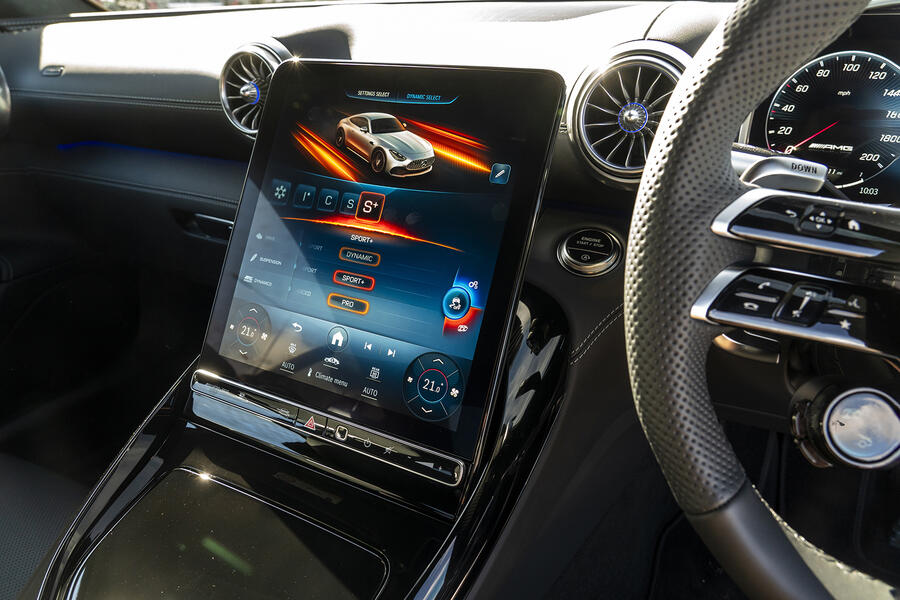
There’s a widely configurable digital instrument screen, along with cursor controllers on the steering wheel spokes for both the 11.9in portrait-oriented multimedia display (a little domineering, but offering good usability) and the trip computer, of which we particularly approve.
Outright punching power is really the antithesis of what this GT derivative is positioned for. Significantly more people will find fault with how this car performs, rather than how hard it goes.
Although the car lacks the Race driving mode of the GT V8s, it retains ‘Race Start’ launch control and so gets off the line with plenty of urgency. The timing gear recorded 0-60mph in 4.5sec (probably only a couple of tenths outside of Mercedes’ own claim) and a standing quarter mile in 13.0sec flat. Our figures suggest that, in matching conditions, a Corvette Stingray, Lotus Emira V6 SE and a basic 911 Carrera – all rivals costing around £100,000 – would all be slightly quicker, but only the Corvette would do so by any margin worth commenting on.
Under its bonnet sits AMG’s ‘M139’ 2.0-litre four-cylinder engine, built to the venerated ‘one-man-one-engine’ principals as the famous V8s and borrowed from, among other cars, the A45 S hot hatchback. The engine uses an electric turbocharger and mild-hybrid starter-generator-based electric assistance (worth up to 14bhp), and it produces peak outputs of 416bhp and 369lb ft.
The four-cylinder engine is certainly no disgrace to this car, but it’s no particular invitation to enjoyment. The problem, to those who perceive one, won’t simply be that it sounds relatively flat and gruff compared with a multi-cylinder engine, more that it lacks some smoothness, richness and linearity in the way it responds.
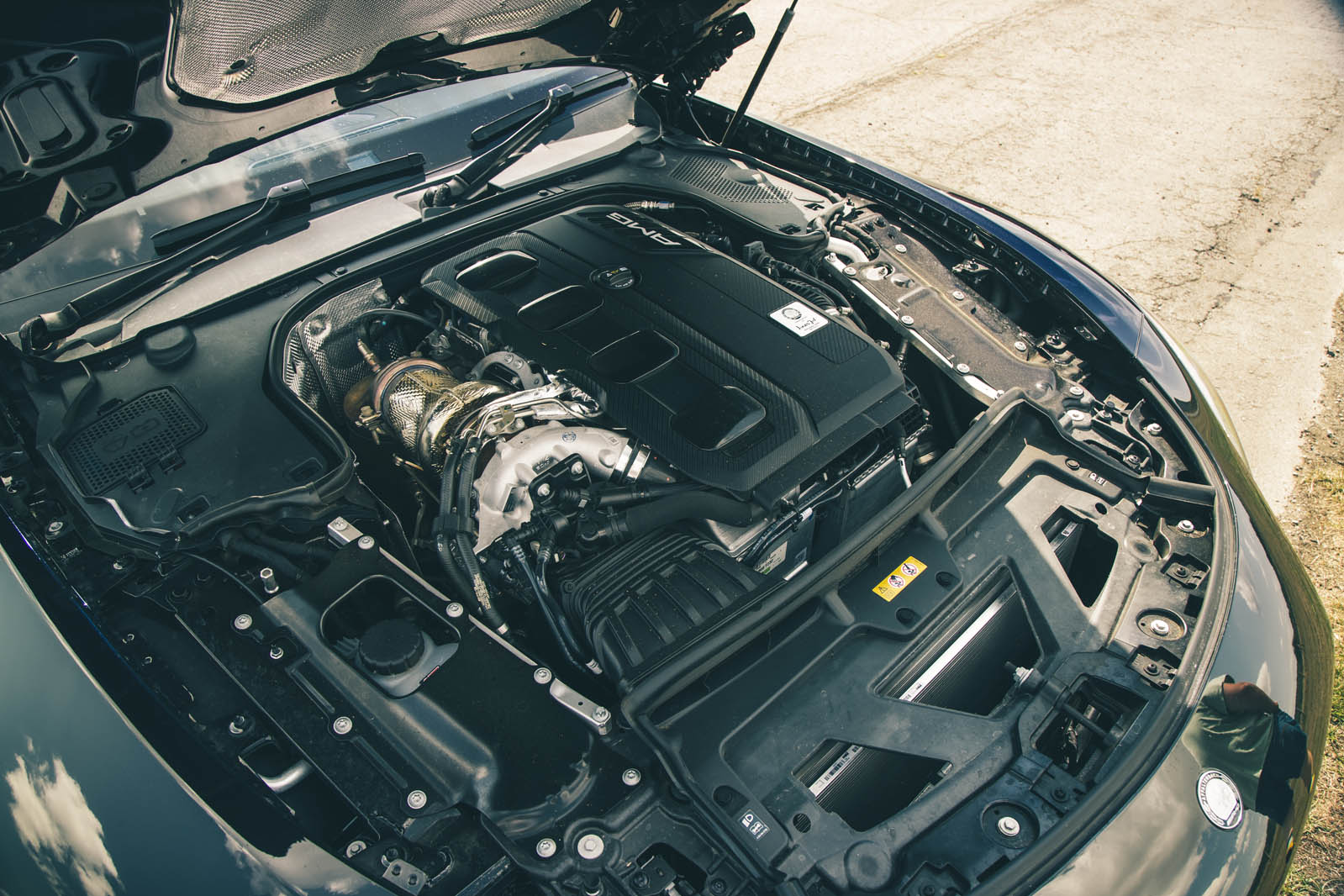
The four-cylinder engine is certainly no disgrace to this car, but it’s no particular invitation to enjoyment. The problem, to those who perceive one, won’t simply be that it sounds relatively flat and gruff compared with a multi-cylinder engine, more that it lacks some smoothness, richness and linearity in the way it responds.
The mild-hybrid system covers for a little turbo latency at low revs, but it doesn’t do much to fashion an indulgent-feeling riposte when you want just a little flavour of the performance on tap. The four-cylinder unit really only knows one route to top-level potency, and that is to work hard, at full boost. It does, though, rev quite freely for an engine of its kind and isn’t without whistling dramatic persona.
The nine-speed semi-automatic gearbox shifts quickly in manual mode and smoothly on the run, but it occasionally trips over itself with a shunt or clunk on engagement or disengagement at low speeds.
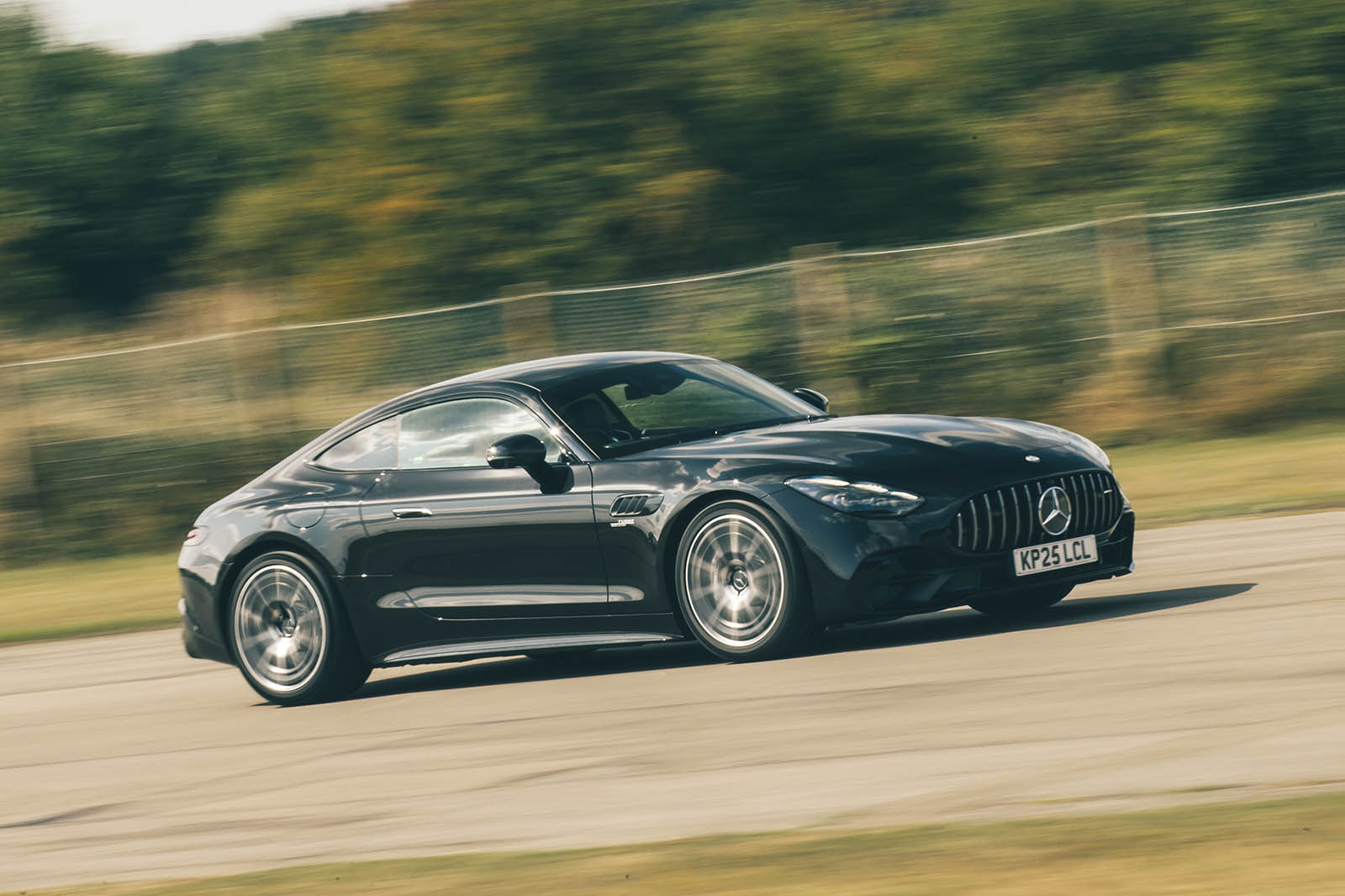
VEREDICT: Mercedes-AMG has, funnily enough, taken away the Drift driving mode of V8-powered GTs for the GT 43. That is something of an irony, because this car has a much better and more naturally balanced and adjustable chassis than those of its siblings.
There’s no mechanical locking differential here, so the GT 43 relies on AMG’s brake-based torque vectoring to apportion drive forces across both sides of its rear axle – a task that it accomplishes most effectively in the Pro setting of its electronic stability control.
On its standard 20in wheels, our test car had more than enough mechanical grip and body control to turn in quickly and carry plenty of speed through apices – but there was not so much of the former that its 416bhp wouldn’t unstick the rear wheels, and introduce some entertaining slip angle, from the apex onwards.
Unlike in the GT 63, there is no sense of conflict in this car’s dynamic character when driven quickly on circuit; there is no need to decide, in advance, whether you want it to be fast and contained or loose and playful. The GT 43 can do both within the space of a few corners, and choosing between those different characters as you go is half of the fun.
Autonews



Nenhum comentário:
Postar um comentário