JEEP
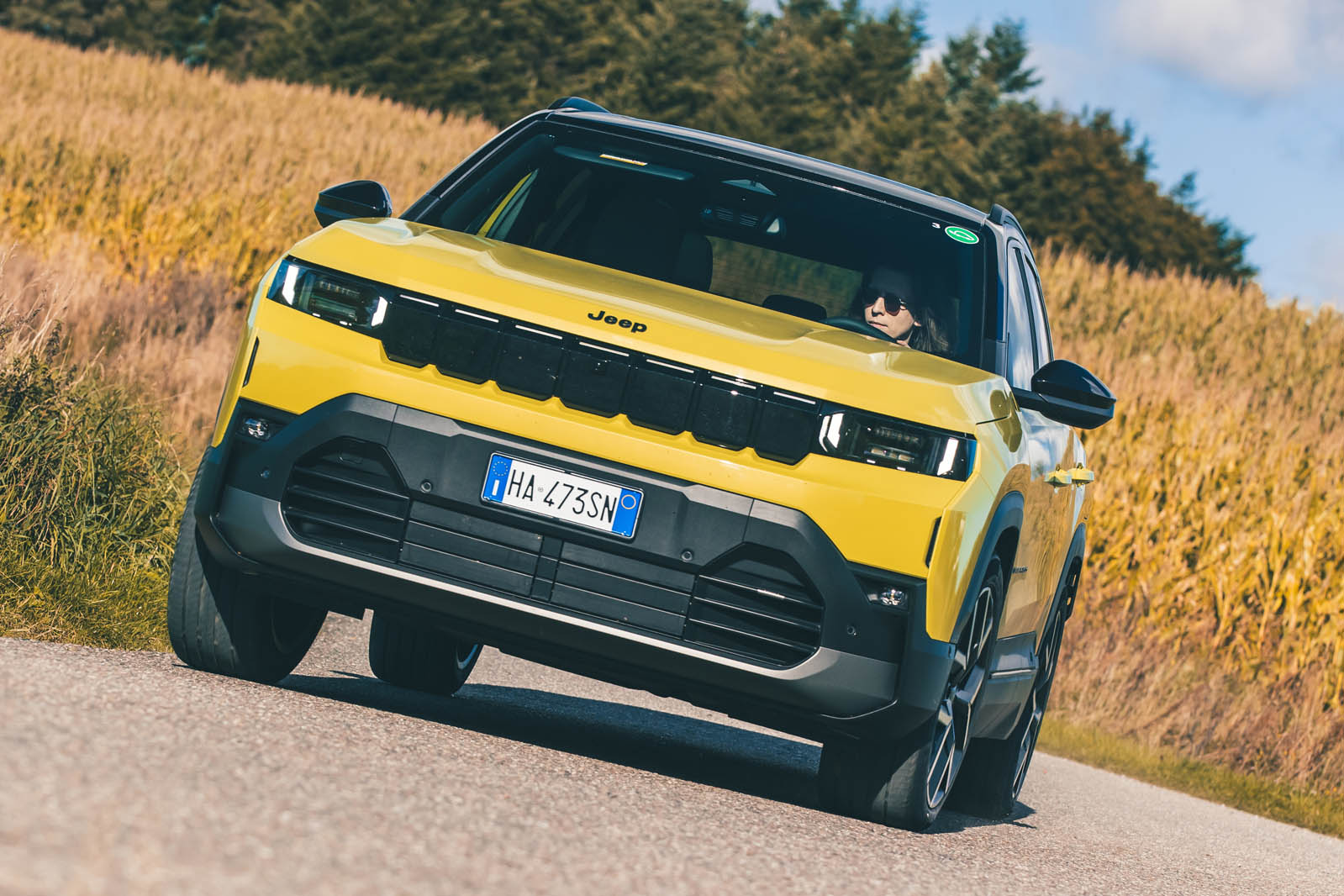
Jeep Compass review
The new Jeep Compass walks a thin line, because brand values can be cruel.
If you’re going to try to honour them, you had better do it faultlessly, lest the enthusiasts pour scorn over your latest product. A Mercedes that isn’t built like a nuclear bunker? Blasphemy! A Ferrari that isn’t the sharpest drive in its class? Humbug!
Yet abandoning them entirely while still selling the idea can work out remarkably well. BMW clearly has few regrets about making the 1 Series front-wheel drive and a neatly styled miniature electric crossover with a single driven axle won Jeep a Car of the Year trophy for the Avenger. Its European sales skyrocketed.
The all-American off-road brand is ready to repeat the trick with the third generation of the Compass. Whereas the previous one was loosely based on a platform with its roots in the Fiat Grande Punto, the new one is a product of the 2020s Stellantis machine.
Take one not-so-American do-it-all platform (STLA Medium, in this case, as previously seen under the new-shape Peugeot 3008, Vauxhall Grandland and Citroën C5 Aircross), add some butch styling complete with a seven-slot grille and plenty of Willys Jeep-themed ‘Easter eggs’ and, hey presto, 2026 Car of the Year. Or at least that’s the theory.
Use of that platform means the Compass will, in time, come with a range of hybrid and electric powertrains.
On the electric side, it is launched with a 73.7kWh battery and a single 211bhp motor at the front. A dual-motor version with an additional 177bhp motor on the rear axle will follow, and it stands to reason that a long-range version with 97kWh and 227bhp will too.
On the hybrid side, there will be two choices. The first uses the familiar 1.2-litre turbo petrol triple with a six-speed dual-clutch gearbox that hides a small electric motor. As well as not needing to be plugged in, this version in £3480 cheaper than the EV. There will also be a plug-in hybrid with a 1.6-litre four-cylinder.
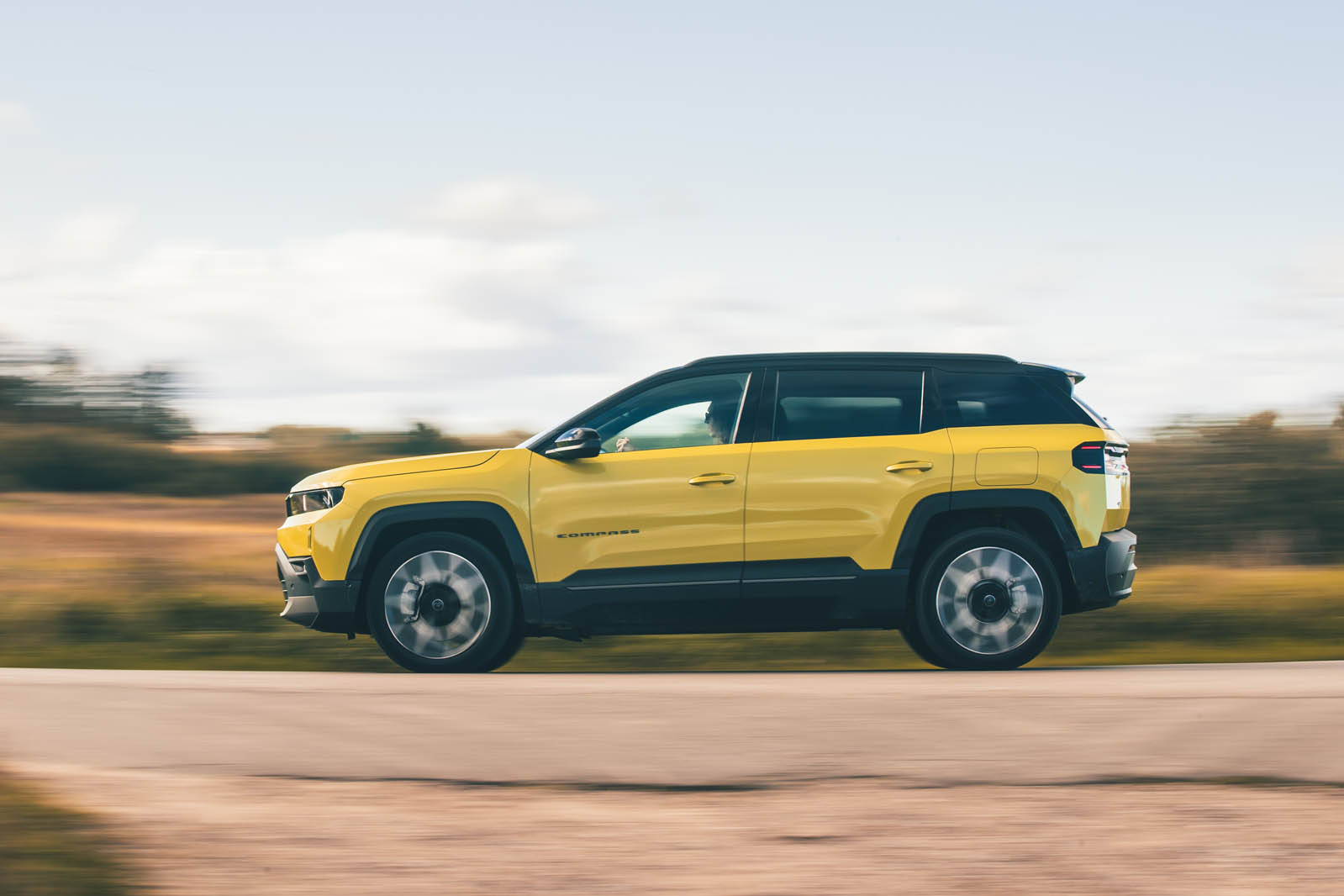
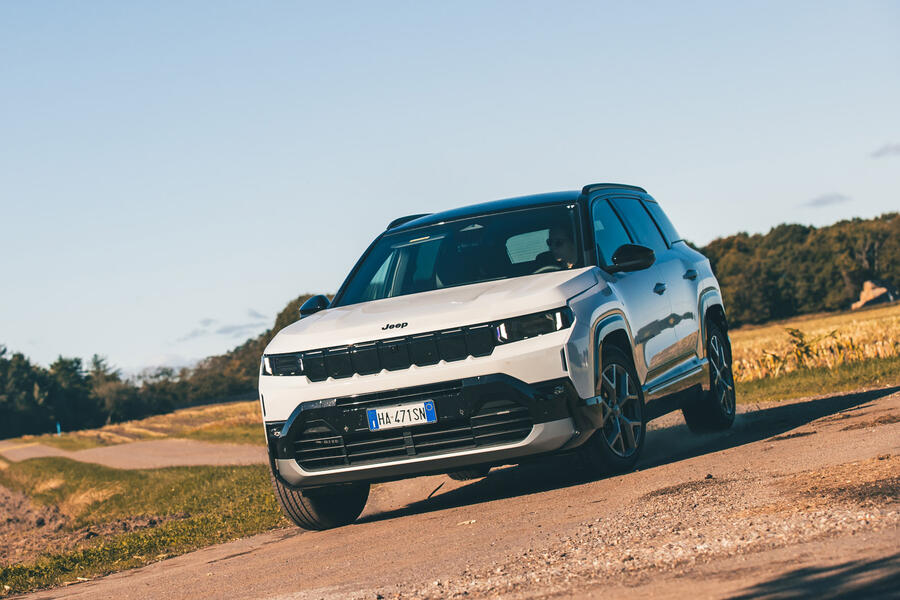
So far, we’ve driven the single-motor EV and the hybrid triple. From the outside, the two Compasses look all but identical. The typical Jeep seven-slot grille is equally vestigial, but the hybrid a small real grille underneath. At the back, you have to duck down and look under the bumper to see the exhaust. The keen observer will then spot another difference: while the EV has a multi-link rear axle, the e-Hybrid makes do with a torsion beam.
Of course, despite the model's mechanical similarities to its siblings, Jeep’s engineers will tell you that plenty of calibration work goes on behind the big-ticket hardware. Then again, Stellantis stuff has a habit of feeling quite samey.
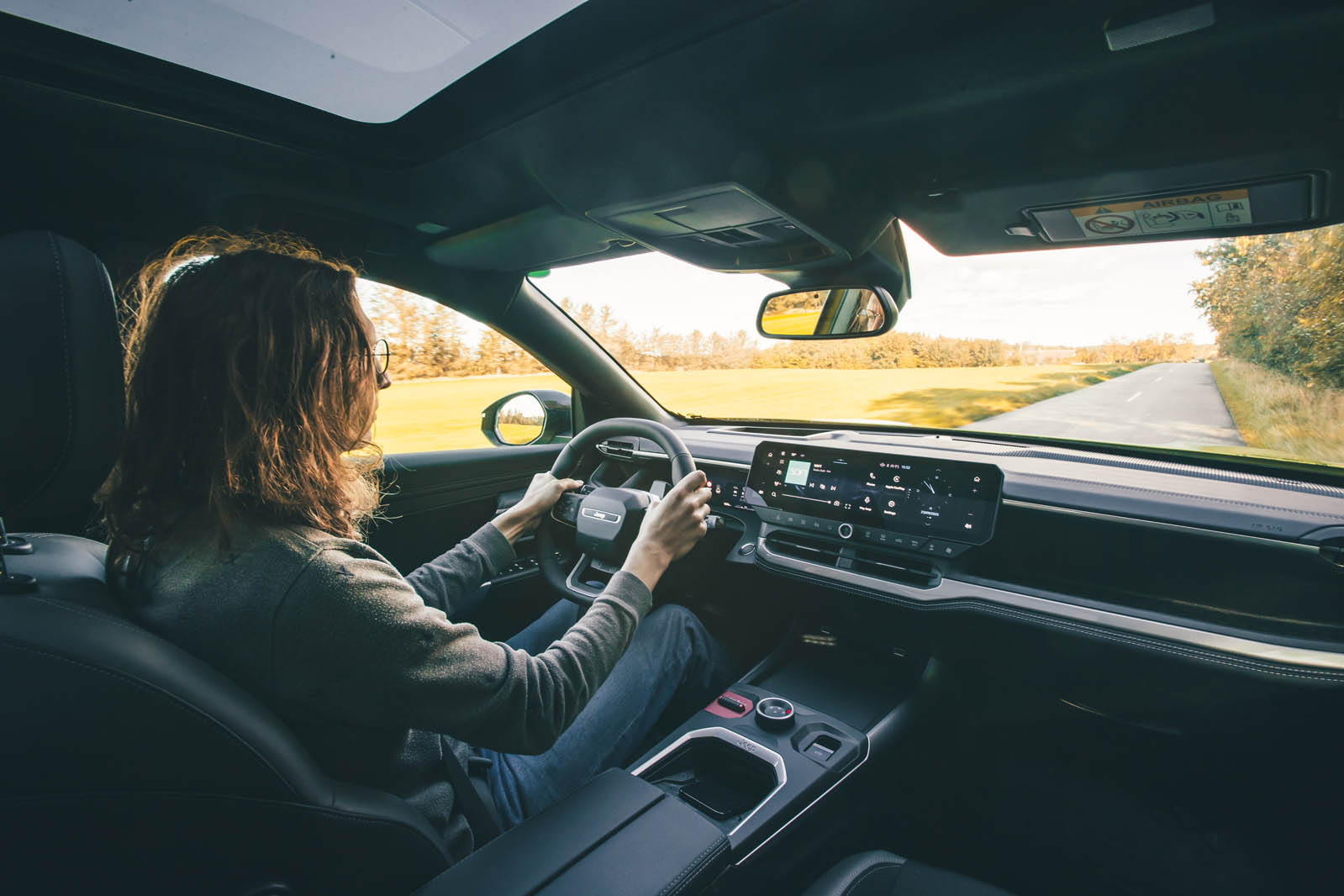
As we noted with the C5 Aircross, for these bigger cars there seems to be more variation in switchgear than in the smaller ones. The steering wheel buttons are unique to the Compass, as is the drive mode selector. It also swaps the universal drive selector toggle for a rotary one.
I tried both the basic manual seats and the fancier electric ones and weirdly found the standard ones more comfortable, since they don’t have the hard massage elements in them. Unlike in the 3008, the angle of the seat base supports your thighs quite well.
Rear leg room is similar to what you find in the Skoda Elroq, albeit with a high floor and a curiously short base and upright backrest.
At 550 litres, boot space in both the EV and hybrid is closer to that of the Enyaq (585 litres).
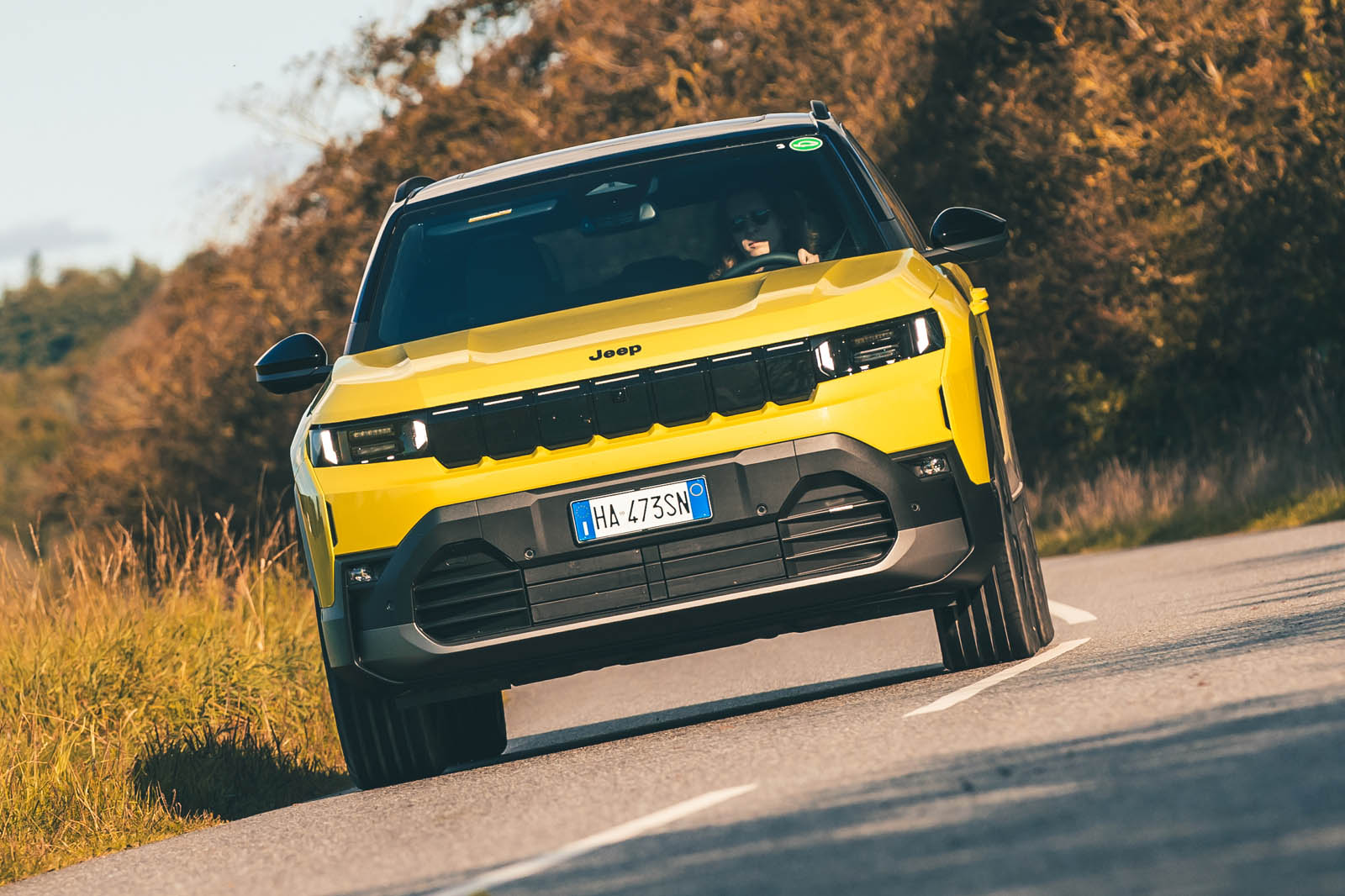
You wouldn’t choose the Compass for how it drives, though. It has next to no distinguishing features in that respect. The EV’s 0-62mph time is an unremarkable 8.5sec, because 211bhp stops being a lot when faced with 2.2 tonnes of weight.
It has steering-wheel paddles as well as a button to toggle one-pedal driving, so no complaints there.
The hybrid and the EV may be hard to tell apart from the outside, but there’s no doubt that the hybrid provides the inferior driving experience. While 141bhp for 1667kg doesn’t make for a horrendous power-to-weight ratio, 10.3sec to 62mph is pretty slow by modern standards. More than the outright performance, it’s the roughness of the engine and gearbox at low speed that grate, as well as the lazy responses out of town.
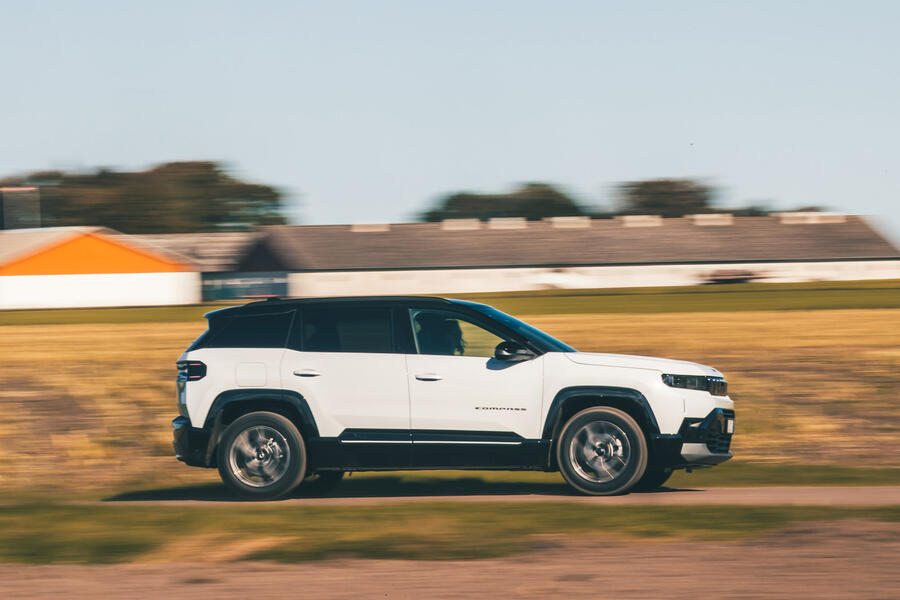
With just 0.9kWh of battery and 28bhp of motor power, this powertrain’s capacity for electric running is very limited in a heavy car. Let the engine rev out and it makes quite an appealing three-cylinder thrum, but it’s unlikely that people will drive it that way.
With entirely feel-free steering and modest grip from its Michelin e-Primacy tyres, you’re disinclined to chuck the Compass into a corner with any enthusiasm. On the EV, the suspension is neither here nor there: slightly too firm to be truly comfortable but also slightly underdamped over some big bumps.
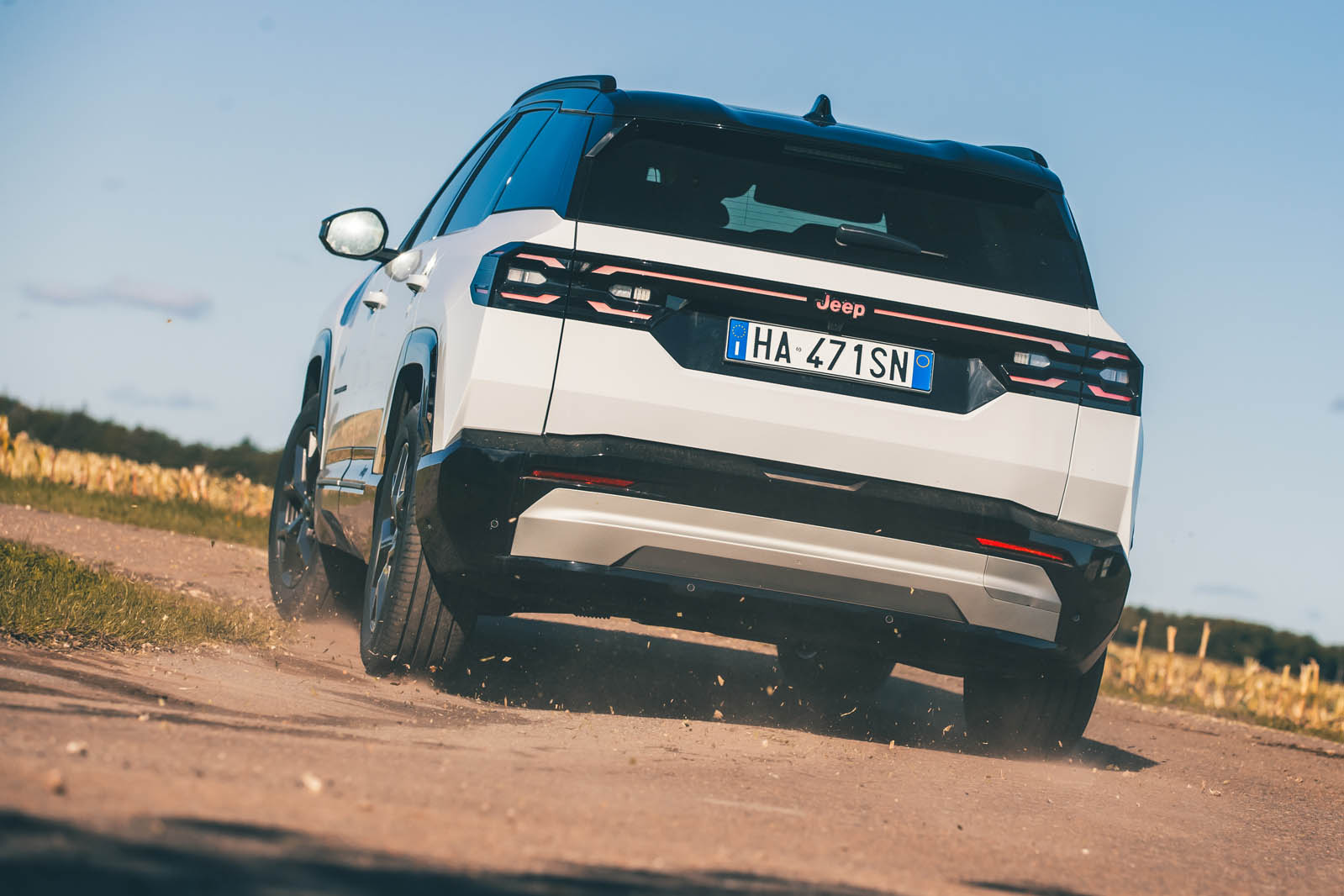
It might be the torsion beam, or it might be how it’s generally set up, but the e-Hybrid’s suspension feels less refined: It’s generally a bit firmer and feels thumpier around town.
Currently, the only Compass trim on sale is the First Edition, which is decently well equipped but still leaves the sunroof, premium sound system and upgraded active cruise control to option packs.
At first glance, the e-Hybrid is quite well priced: at £35,720, it undercuts hybrid versions of the Kia Sportage and Renault Austral. But given that the hybrid system isn’t contributing all that much, one might look to conventional petrol or mild-hybrid competitors – at which point automatic versions of the Sportage and Skoda Karoq would be more recommendable.
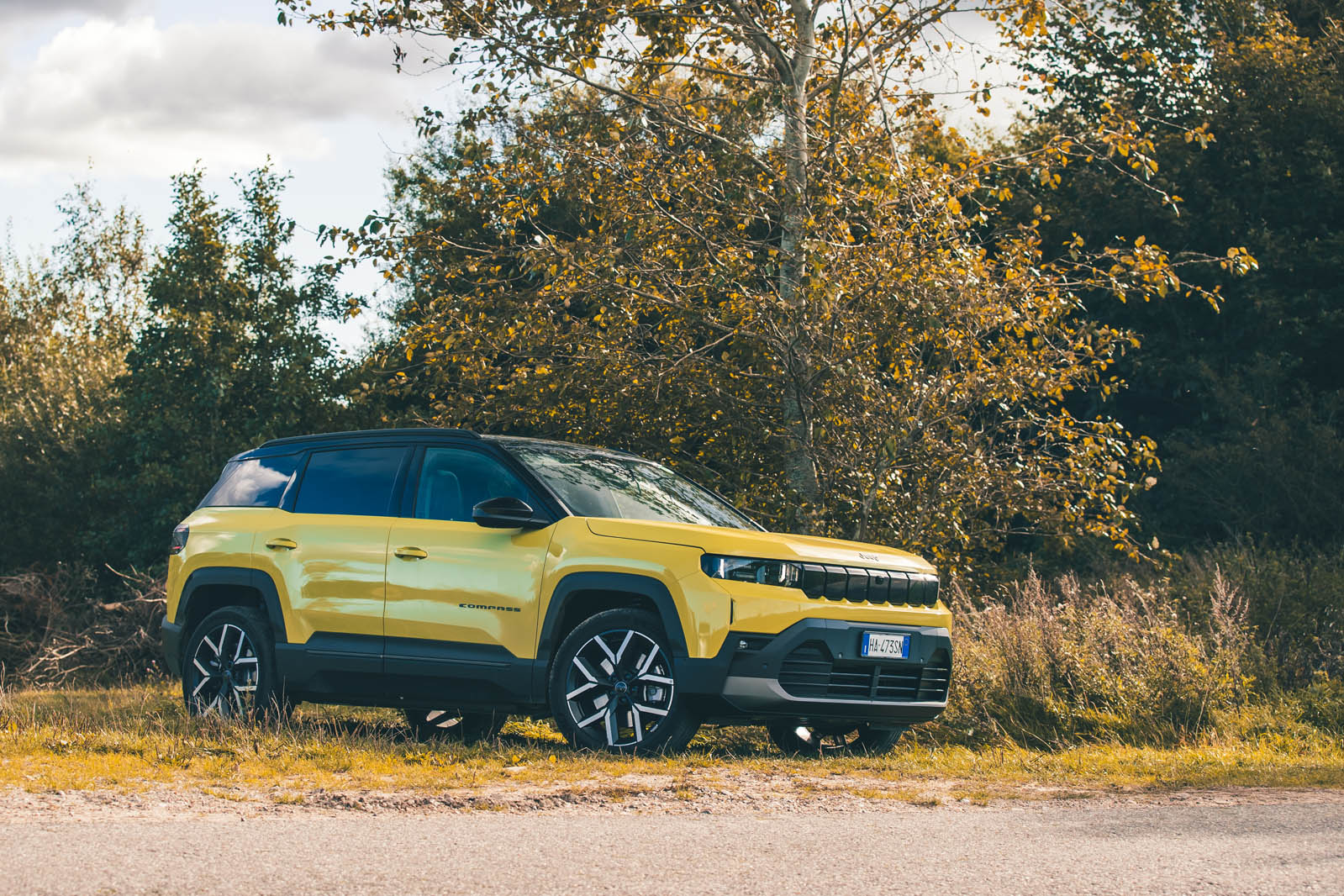
The EV costs from £39,200, which puts it about level with the Skoda Elroq, even though it’s a bigger car. That seems like a healthy positioning, because for all the ‘brand’ talk about adventure and capability in the press pack, the Compass EV feels like a competent but unremarkable option.
Autonews




Nenhum comentário:
Postar um comentário