HONDA
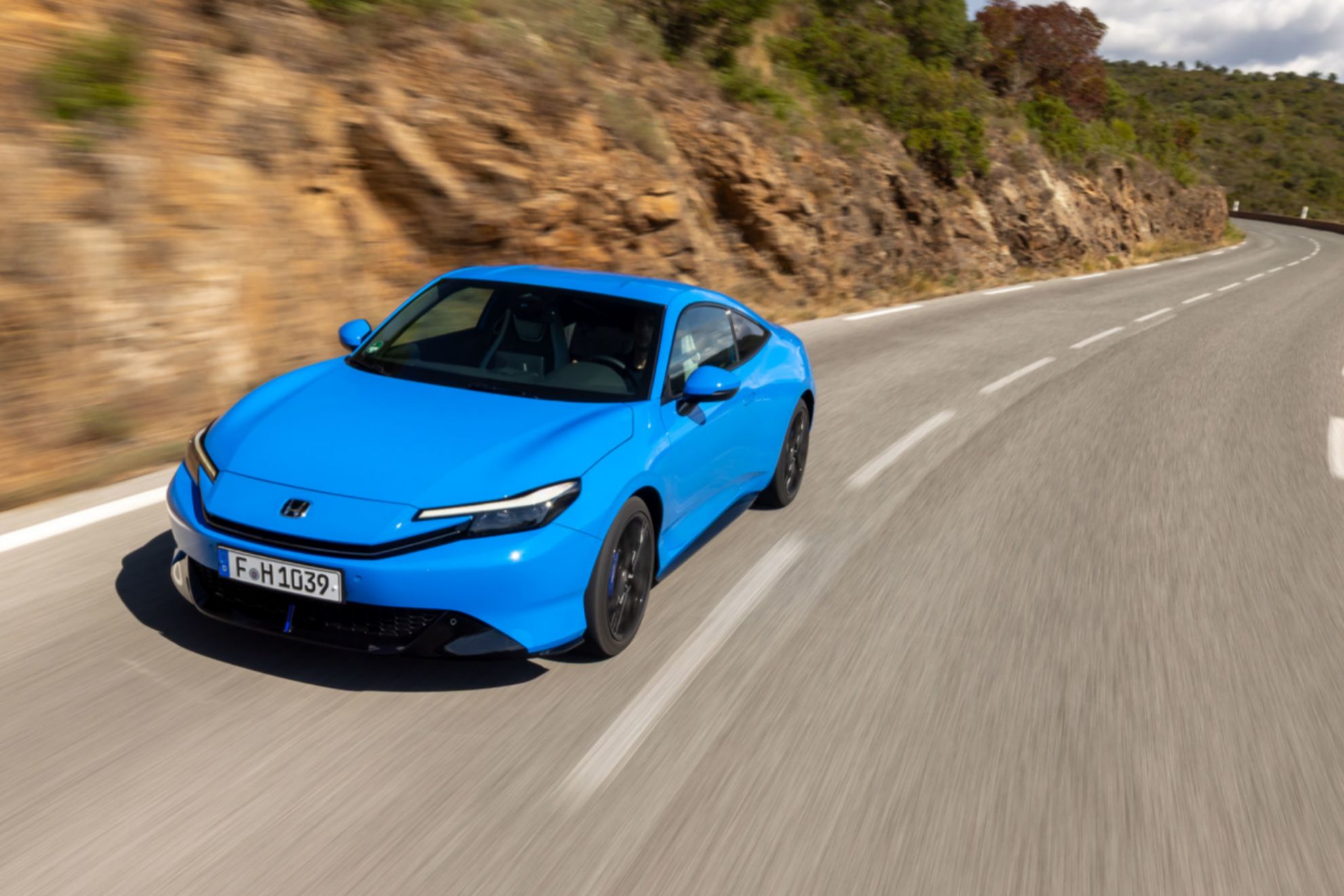
Prelude e:HEV---the Japanese coupe with surprising gear shifting and Civic Type R-like damping
Honda will launch the sixth generation of its Prelude next spring, a rather unusual car, both for being virtually unmatched (the Japanese brand is talking about the BMW 2 Series, if that's even the case) and for boasting some surprising features. We've already seen the car up close and even drove it in July at Goodwood (UK). It was a very short drive on the track, with former Formula 1 driver Tiago Monteiro in the passenger seat, advising us on the best way to approach each corner.
Now, however, it was time to stop playing driver and put ourselves in the shoes of someone looking for a different and fun coupe. We're not in the UK for this, but in Nice. Here, there are not only luxurious hotels overlooking the French Riviera, but also a network of winding roads where you can have fun behind the wheel, if you have the right car for it. And so, we began to suspect that the choice of this location was anything but accidental. Now, is the Prelude truly the agile and fun car these roads demand?
Ko Yamamoto (the Japanese brand's technical consultant) was determined to convince us of this, inundating us with a torrent of technical information about the car. It would be easy to think that this quiet engineer couldn't say anything more, but beyond "his theory," practice awaited us, and in that sense, we drew very clear conclusions.
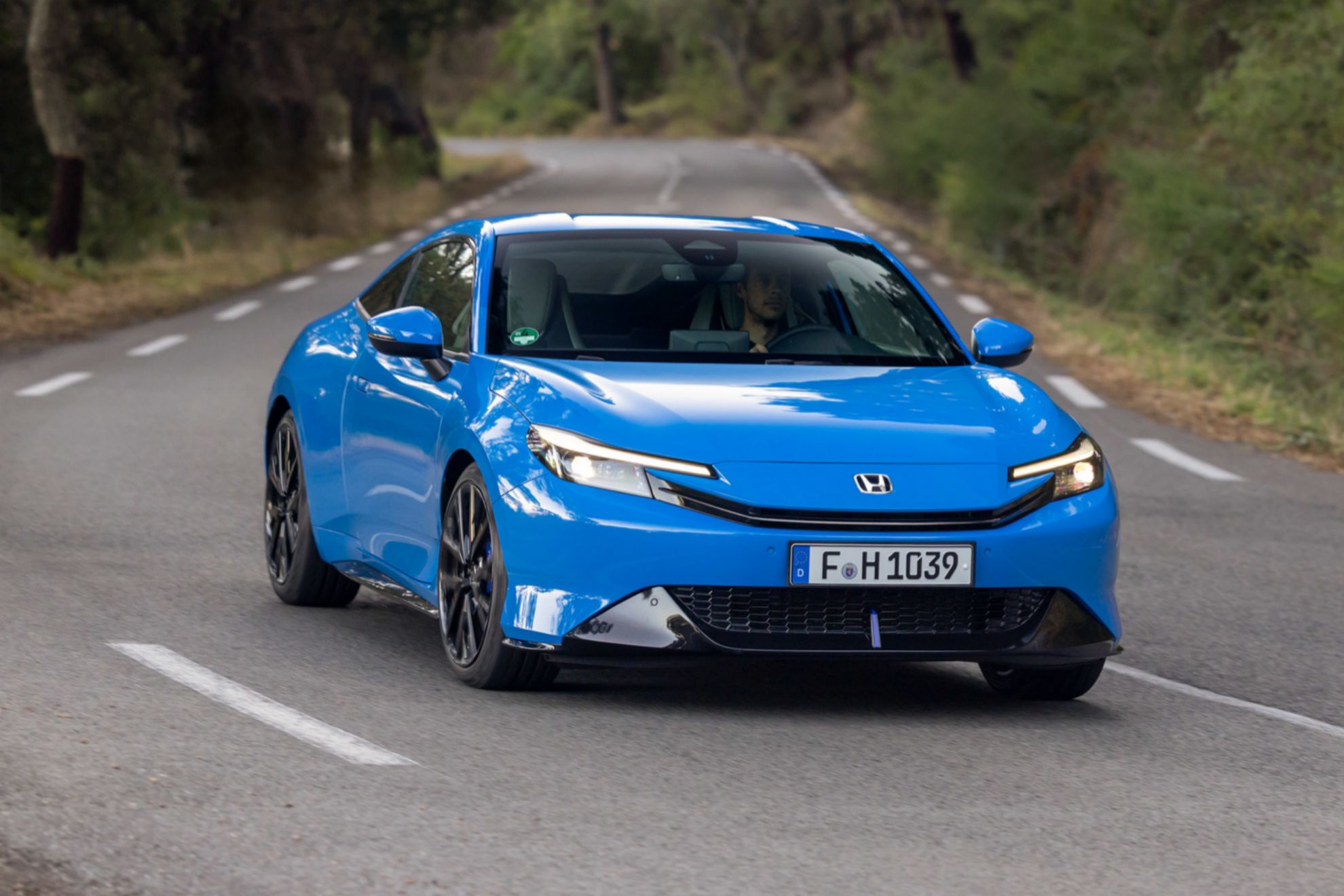
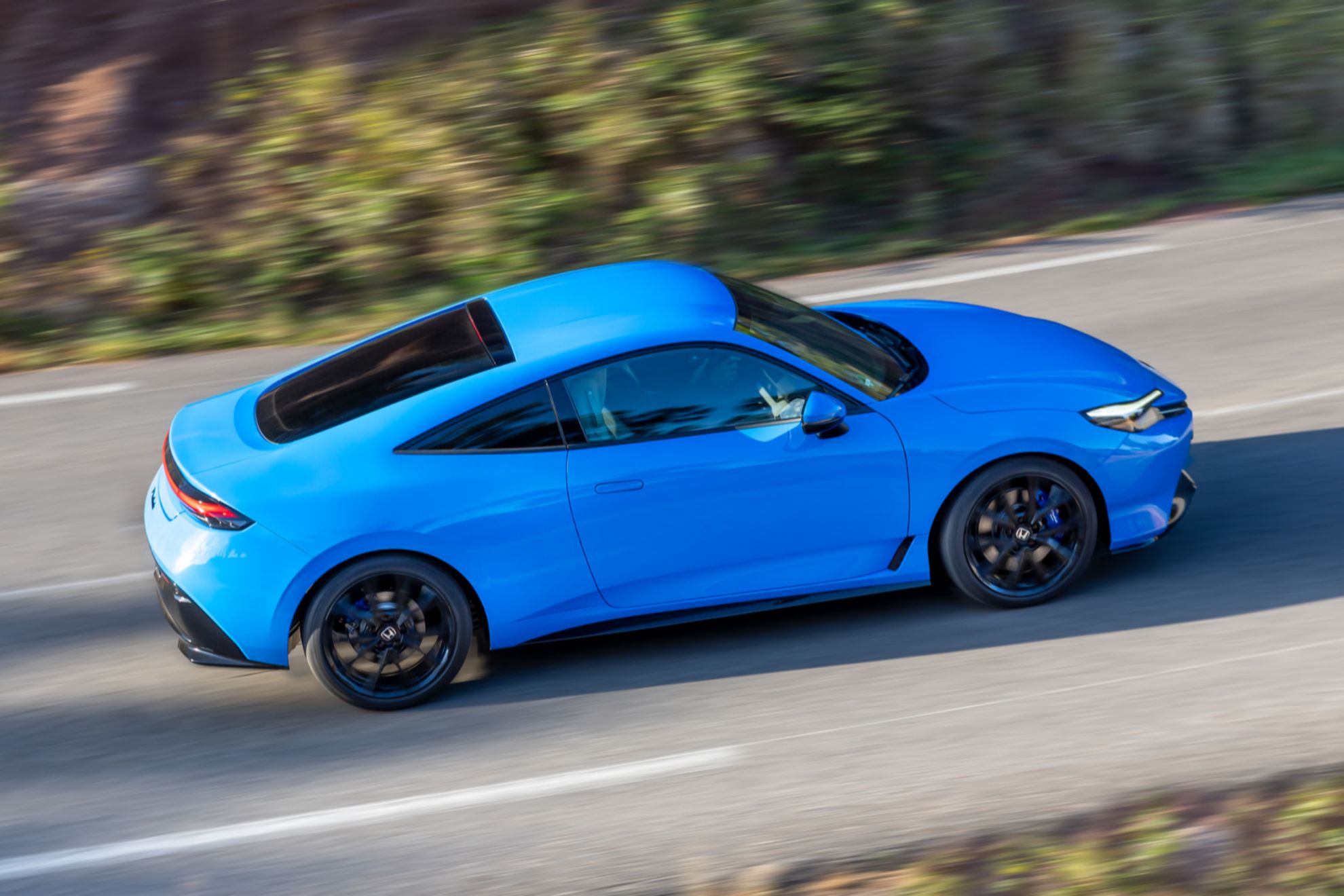
The Prelude e:HEV is a coupe measuring 4.51 meters long, 1.88 meters wide (without mirrors), and 1.35 meters high. In other words, it's not large, mainly because the engine compartment isn't as elongated as in other coupe models. It even seems a bit short in relation to the rest of the car. Tomoyuki Yamagami, the car's head of development, explained to us in the UK that the car had a simple, almost ultra-light silhouette (seen from the side, it really does look that way), which explains why even a small spoiler or any unnecessary element or crease that could hinder the smooth flow of wind over the sheet metal was eliminated.
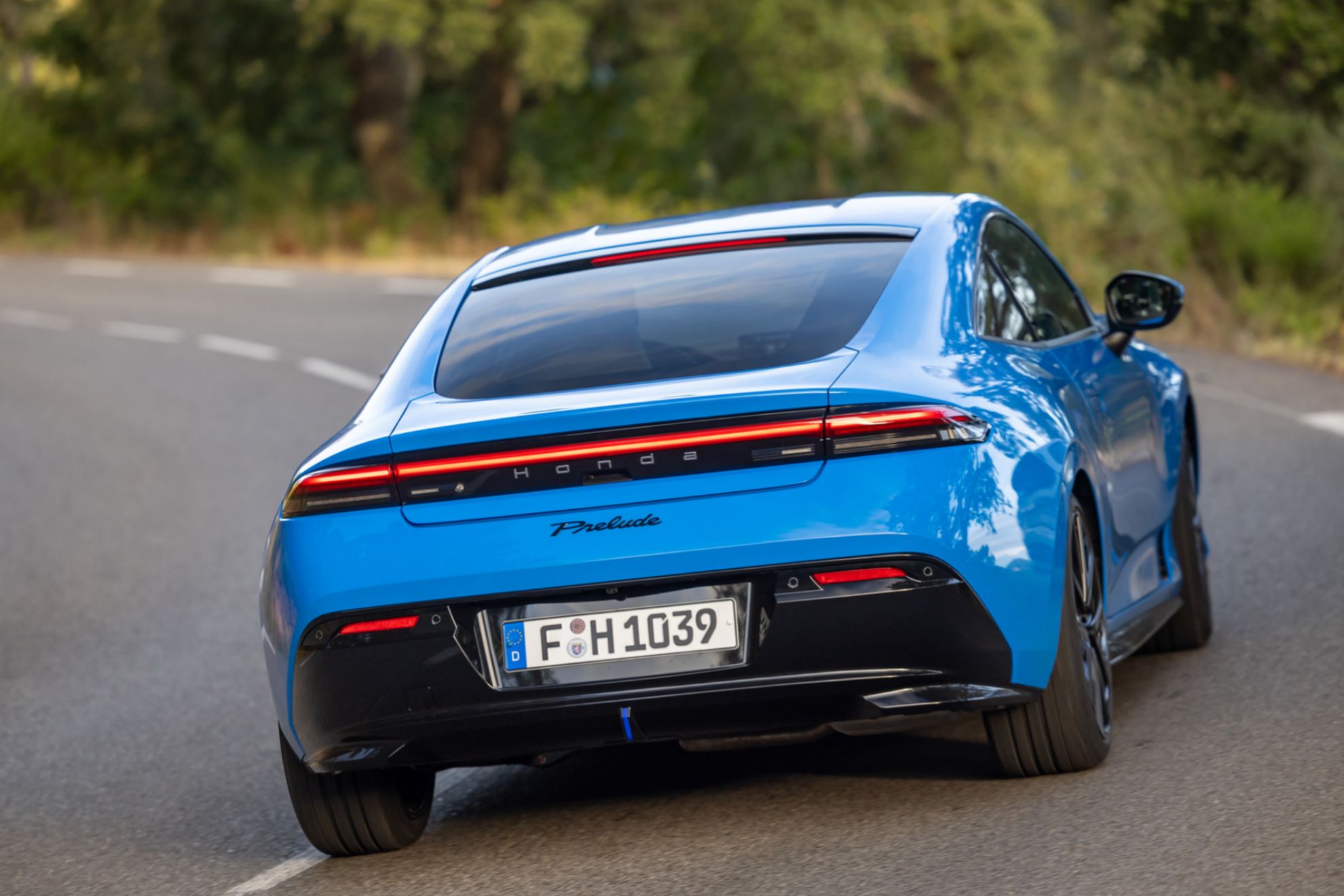
While it's attractive from the front (with a striking daytime running light above the main headlights), we almost like it better from the rear, where a thin LED strip on a thick black frame covers the car from side to side. The signature on the rear is also not missing, with the Honda lettering in a font very reminiscent of Porsche's, and the model name, Prelude, whose script also resembles that of the Taycan, Cayenne, 911... Coincidence? We'll leave that to your judgment.
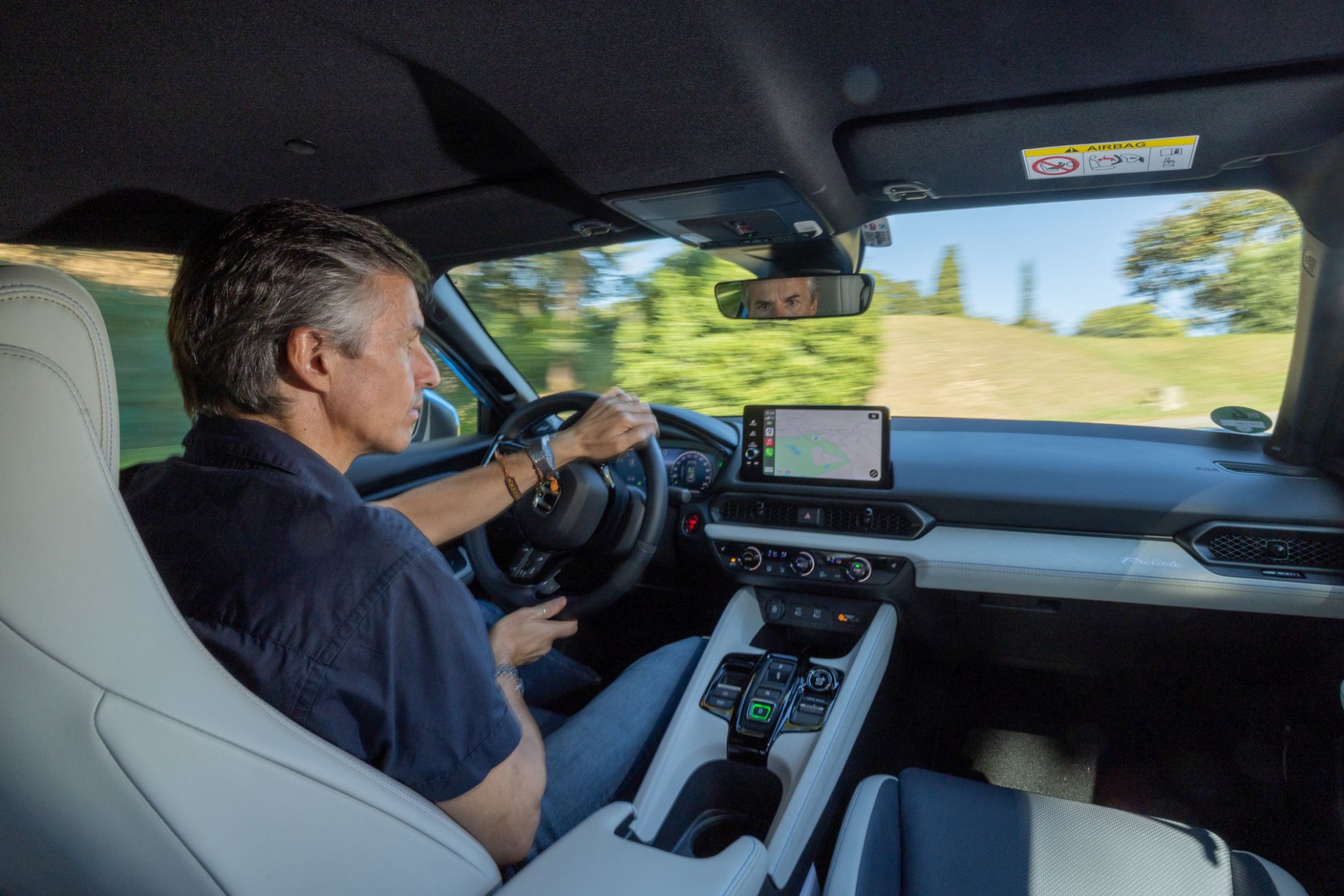
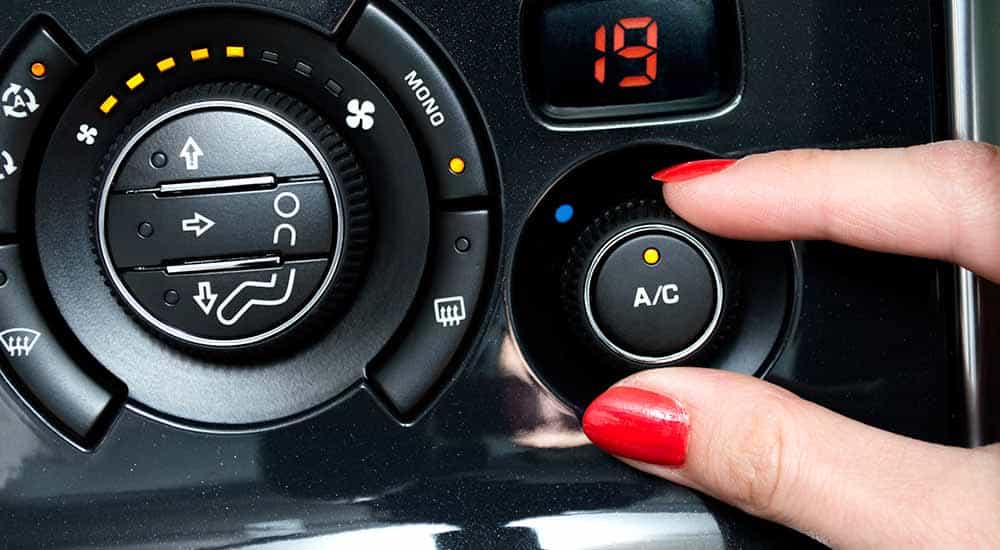
Inside, the design is pleasant and practical, with sufficient visual and tactile quality. There's no mindless minimalism (it has physical controls for the air conditioning, in addition to the usual steering wheel controls for cruise control, audio system, trip computer, and more), nor has it opted for the modern dual-screen design. Here, there's a clearly readable instrument panel and a 9" central screen. The latter isn't very large and breaks the simplicity of the lines by appearing as an additional element, but it's positioned at a good height to make reading the maps as easy as possible.
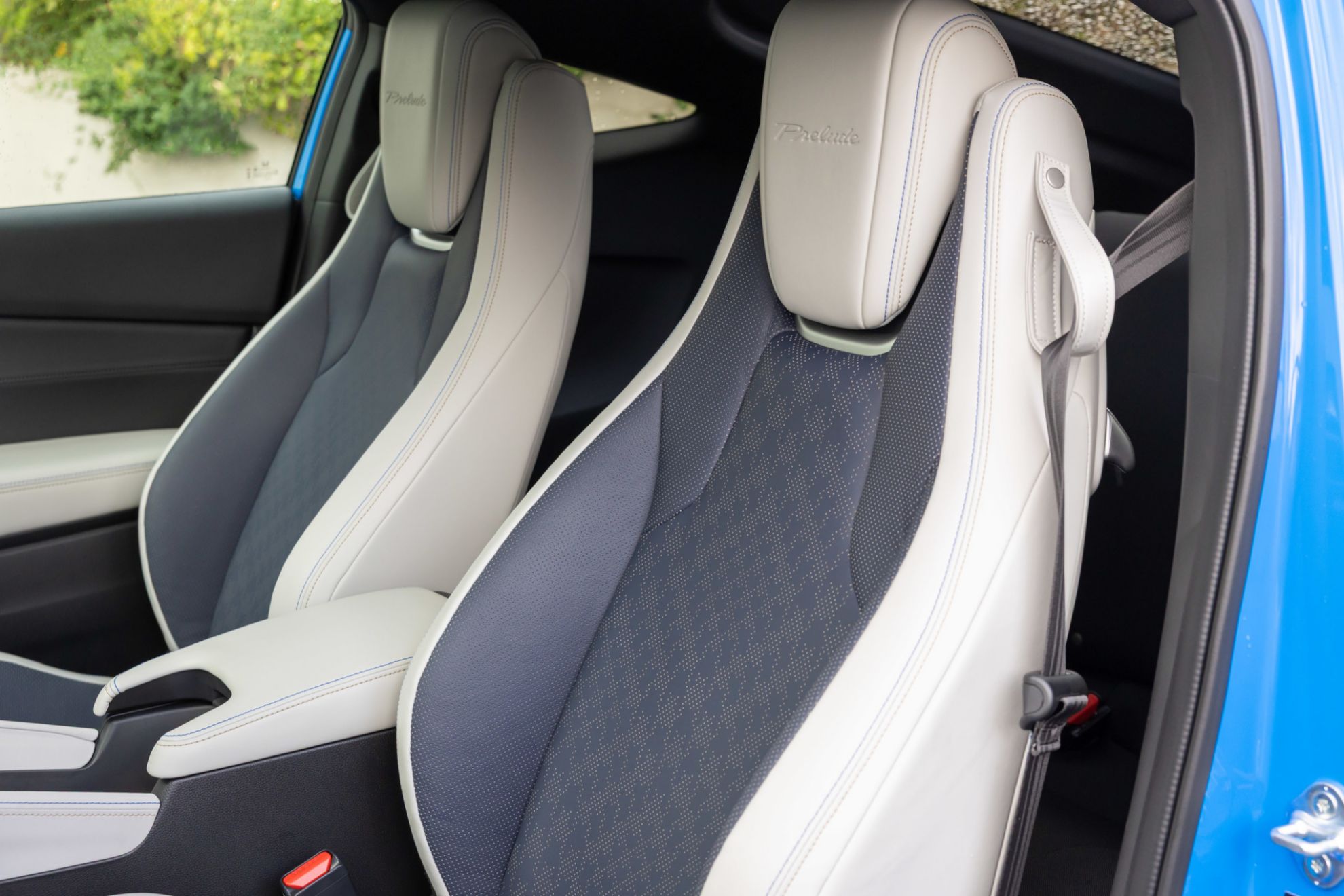
As for the seats, it depends...Honda surprised us by announcing that the seats on both sides are identical only in appearance: the driver's seat is firmer to give a sportier feel behind the wheel, and the passenger's seat uses softer foam (slightly; don't expect a huge difference) to make the ride a little more comfortable for our companion. And we guarantee that both rides are wonderful.
The Civic's engine...The engine is familiar from the Honda Civic. It uses a 143 hp combustion engine, coupled with two rear electric motors, although power is distributed only to the front axle. Total output is 186 hp and 315 Nm. The electrical system is powered by a lithium-ion battery of approximately 1 kWh located under the rear seats, which allows the car to travel in 100% electric mode, even for only a few meters. Yamamoto insisted that the performance and feature figures (it also achieves an acceleration time of 8.3 seconds and a top speed of 188 km/h) may seem a bit low for a car that promises sportiness. But he insisted that, for them, the sportiness generated by the overall package goes beyond mere numbers. What Yamamoto was talking about is what Yamagami (yes, it's easy to get confused with names) had already explained to us at Goodwood this summer: that sportiness comes from the combination of design, weight, mechanical response, and handling.
Focusing on these four points, it's true that the design conveys sportiness, though not radical, and, in any case, let's not overestimate the overall attractive shapes. As for weight, it weighs 1,480 kg, so its lightness also plays in its favor.
The mechanical response is much more complex, not so much how it pushes, but rather how it feels when pushed. The most interesting aspect here is the new Honda S+ Shift system, which transforms what could have been a boring transmission into a very fun solution.
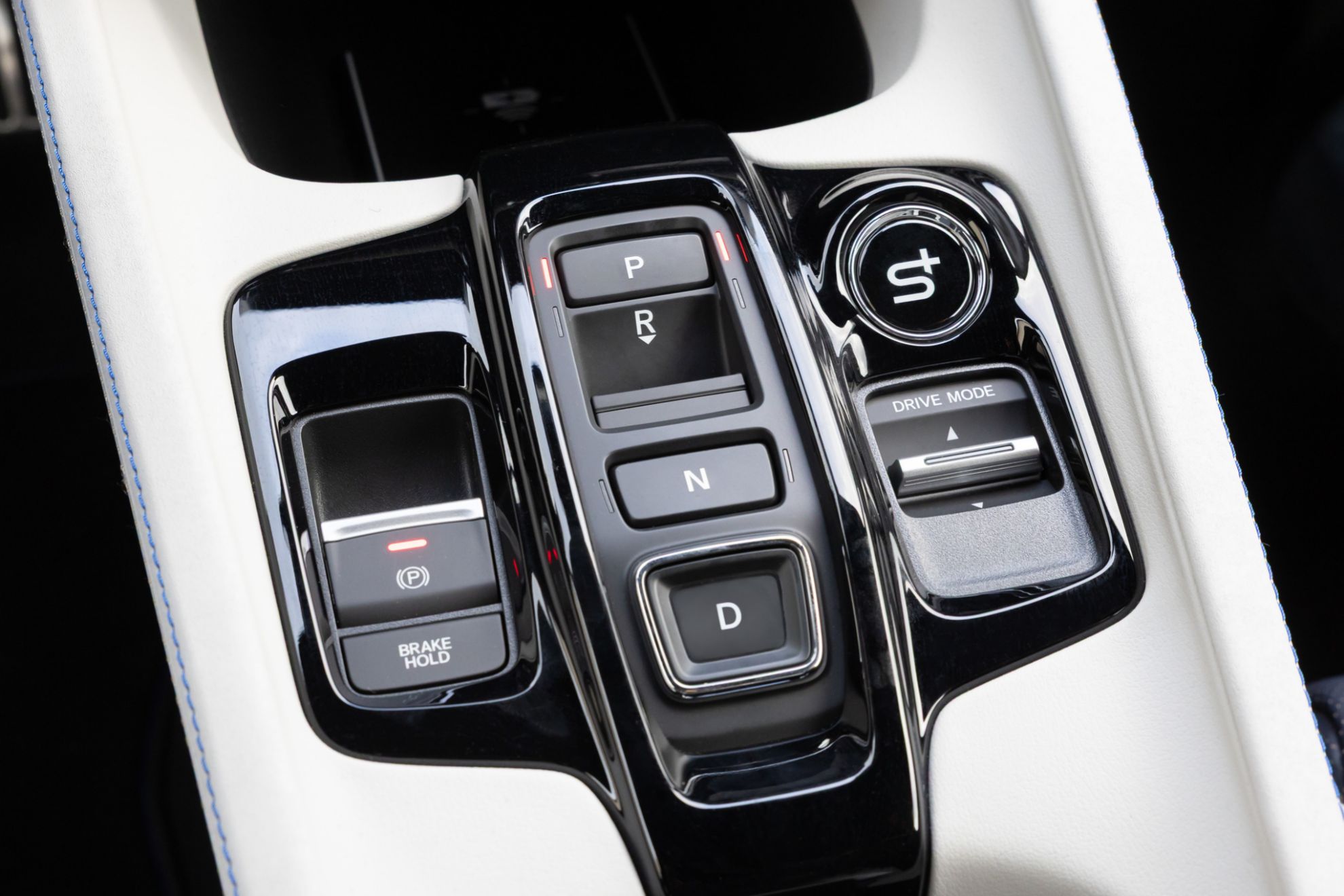
Its importance is reflected in the fact that it's controlled by a rather large button between the seats, next to the set of buttons that serves as the gear selector. It allows us to choose between Comfort, GT, and Sport modes, and allows us to operate the shifter using metal paddles (thankfully, not plastic) that offer precise operation, more typical of a six-figure sports car.
It's actually a single-speed gearbox, but when you accelerate to 6,000 rpm (where the fuel cut-off occurs) and shift into second, then third (simulating 8 gears), the engine revs up, and you hear a sound identical to that of a real gearbox, as well as feel a slight jolt in your back, greater or lesser depending on the gear you're in. Furthermore, downshifting produces a "double-clutch" effect. We've tested other single-speed cars, but they were all light years ahead of this Prelude when it came to simulating a real gearbox. In fact, if we hadn't known beforehand that it was a "virtual" gearbox, we never would have been able to tell by the feel. And besides, we couldn't stop thinking about how sporty this transmission was.
If, on the other hand, we want to slow down (in GT and Comfort modes), the paddles are used to adjust the regeneration. And not in three different stages, as is common in most electrified cars, but in six. This means we can constantly play with the paddles, as there are many stages between regenerative braking and thrust release, and there's always one that suits the specific situation we're in. Furthermore, the three driving modes, including one called "Individual" (selected via a physical control located next to the gear selector and the S+Shift button), have a significant impact on the car's personality.
They influence the appearance of the instrument panel, throttle response, sound, steering, adaptive cruise control (not selectable in Sport mode), and suspension firmness. And, once again, we emphasize that you don't need to be as sensitive as Fernando Alonso behind the wheel to notice the obvious differences.
Civic Type R Suspension...As for the suspension, we've already said enough about the same adaptive damping as the Civic Type R (which, remember, has 329 hp). It's not heavy, it doesn't cause discomfort when you need to suddenly overcome a bump, but it exudes extraordinary confidence. And that, added to the fact that the Prelude has a very short wheelbase (2,604 mm), has the brand's well-known Agile Handling Assist stability system and boasts very, very precise steering, results in the fun that Ko Yamamoto promised us.
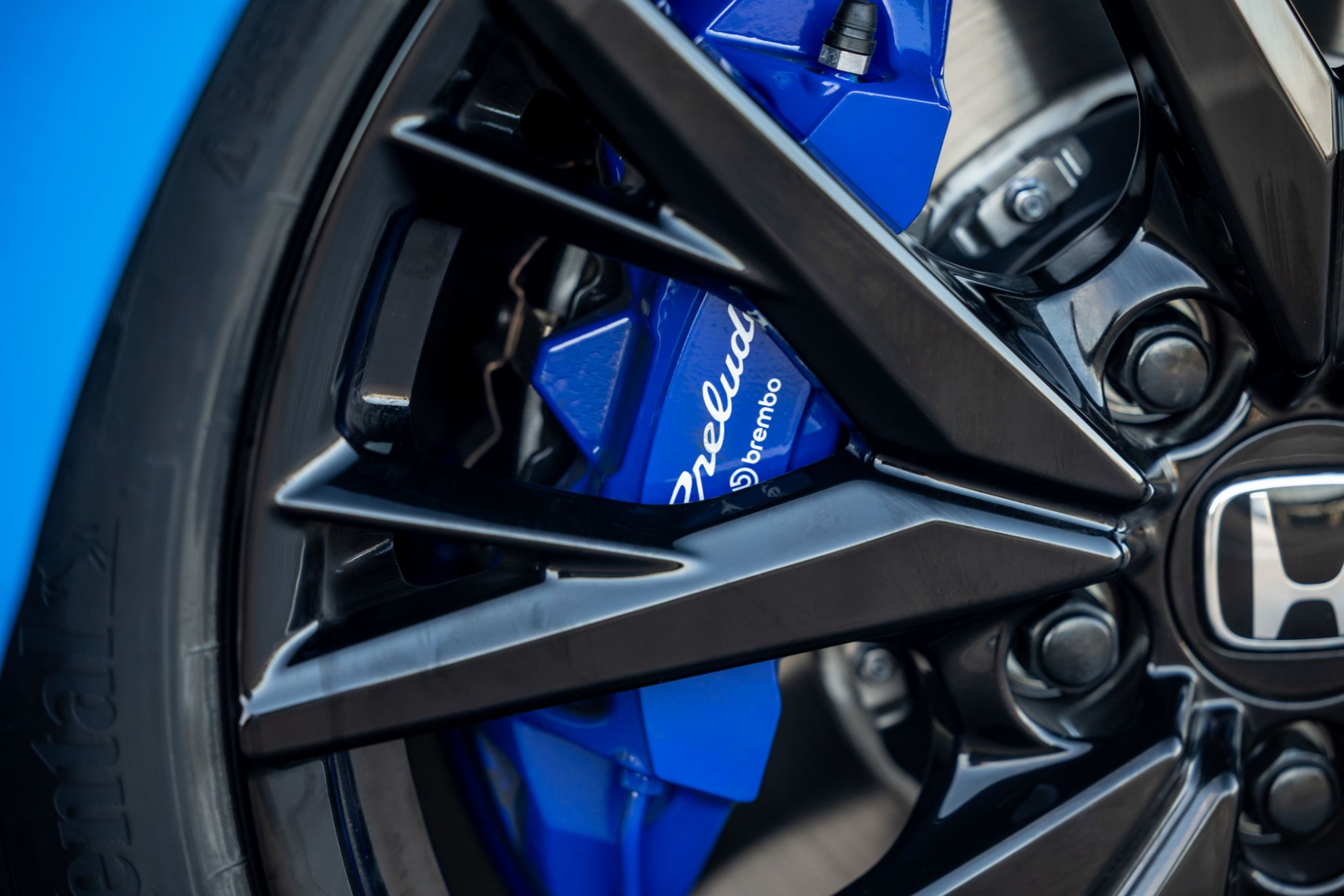
And what about braking? In this case, any doubts disappear as soon as speed increases, as it comes with a Brembo-designed system that also offers a very manageable feel.
With the 'Eco' label... You get the feeling that such a well-tuned chassis and the fact that it's so fun overshadow its other facet: the fact that the engine is a hybrid and promotes very low fuel consumption, in addition to earning the "Eco" label from the DGT (General Directorate of Motors). The excellent aerodynamics and adjusted weight mean that it officially achieves 5.2 l/100 km, although for us it would be closer to 7 liters, "if we were looking for something to please it every now and then."
We enjoyed all this until we arrived at the Nice airport parking lot, where we met Ko Yamamoto again. The Japanese engineer, after asking us if we'd noticed the gearshift paddles were metal and not plastic, asked again if we thought the car had enough power. We said yes. And the man seemed satisfied.
As for the price, it's €49,500 for its only version (Advance), which includes a good arsenal of ADAS features, plus steel pedals, partial leather seats, a rearview camera with guidance lines, and BOSE speakers...
Autonews



Nenhum comentário:
Postar um comentário