BUGATTI
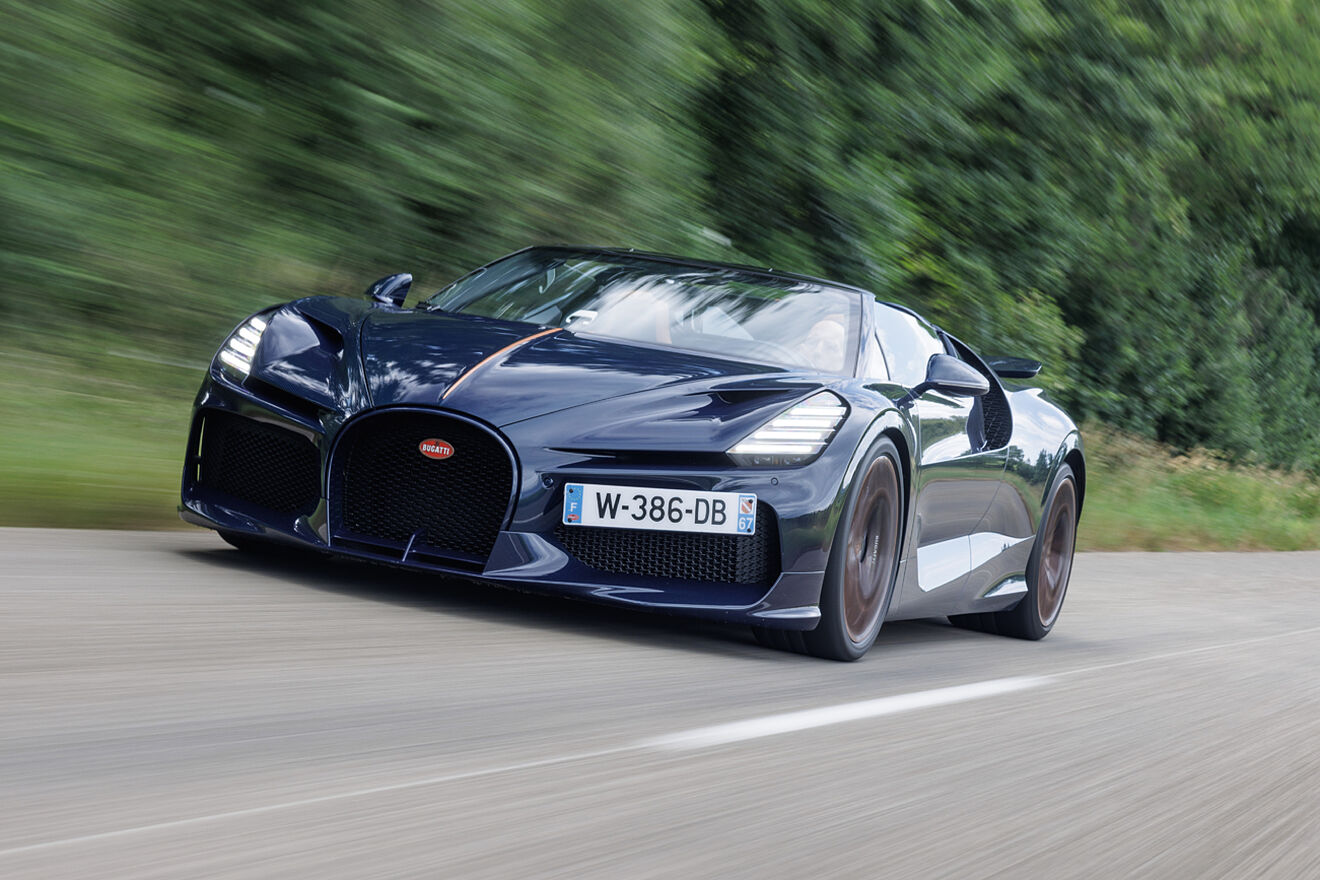
Bugatti Mistral: one of the most fascinating and exclusive roadsters in history
The Mistral is a strong, cold wind that blows between southern France, the Balearic Islands, and Corsica, but fortunately, there's no trace of that strong breeze here, just outside the sleepy medieval village of Molsheim (whose earliest references date back to the 9th century), where we have the rare opportunity to drive the latest version of the Bugatti Chiron.
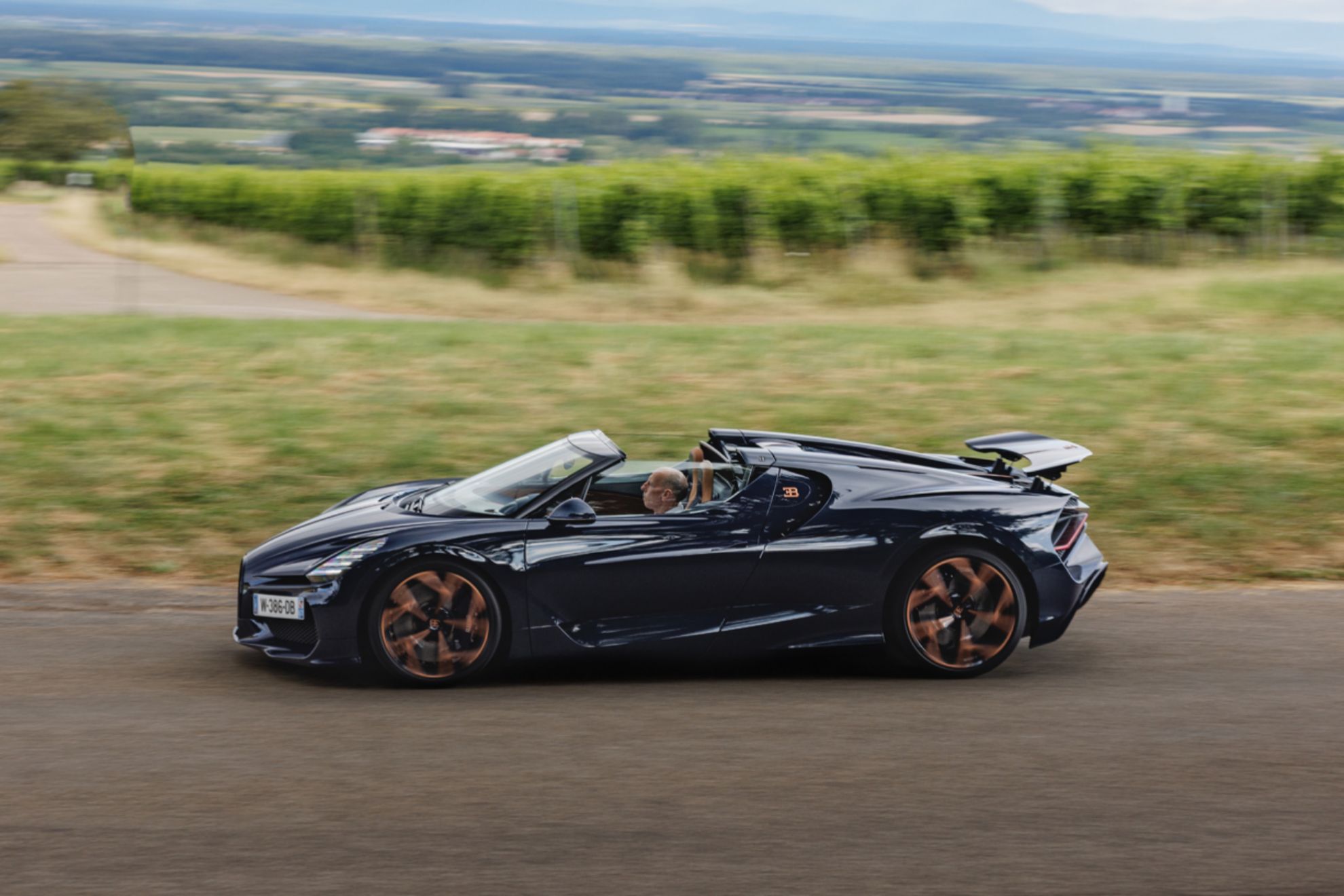
In the automotive world, Bugatti is always synonymous with superlatives. There's not a single model from the brand, based on France's northwestern border with Germany, that doesn't hold at least one record, a tradition that dates back over 100 years, when Ettore Bugatti built his first cars. Under the aegis of Italian Romano Artioli, the artisanal manufacturer was reborn in the 1990s, but its current momentum began when the Volkswagen Group acquired it at the turn of the millennium and launched the Veyron. And now that the Wolfsburg era has come to an end—with Bugatti in the hands of Mate Rimac, the Croatian genius who founded the brand with his surname—Mistral is also saying goodbye with some records.
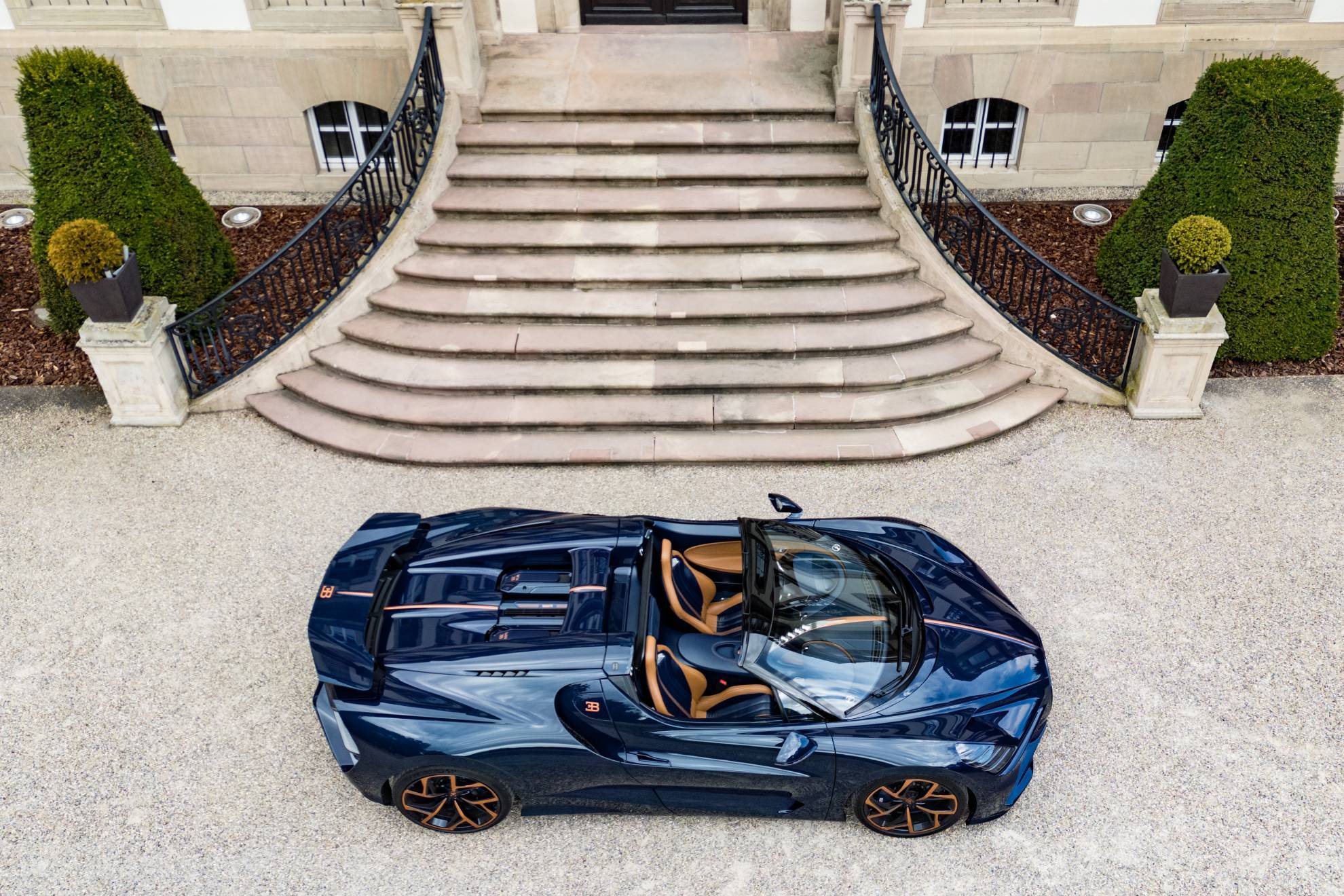
There's always a sense of solemnity when approaching a quad bike with the Bugatti logo emblazoned on the horseshoe-shaped grille and a rear-mounted W16 engine (it debuted in the Veyron in 2005 and is now being discontinued). In the Veyron/Chiron models, it achieved incredibly high performance levels over 20 years, creating intoxicating sensations, almost always experienced in the left lane of the highway. The 1,600 hp of this eight-liter masterpiece, brimming with power and precision engineering, is unparalleled, as are the speeds it can reach: 380 km/h (230 mph) in normal mode or up to 420 km/h (260 mph) with the "Holy Grail" (i.e., a second key), as happened at the Bugatti test track late last year, where factory driver Andy Wallace reached 453.9 km/h (280 mph), setting a new world record. No other convertible is as fast as the Mistral.
Today, nothing quite as spectacular will happen in this dynamic experience, which, without the sacred key, will be fueled by adrenaline. We're not exactly on the high-speed circuits of the Nürburgring, Miramas, or Nardò, but in Molsheim, and instead of closed test tracks, the rural roads of Alsace and the foothills of the Vosges Mountains eagerly await the car's low-flying passage. This suggests moderation on the accelerator, but also protects my most stubborn strands of hair.
Easy to drive... Although moderation can be difficult to achieve. Not only because the Mistral is as easy to drive as, say, a Mini (as long as you pay attention to its enormous turning circle and impressive width), but above all because of the magic of its 1,600 hp (the same number of Nm), which means that just the smell of shoe leather can propel the car above permitted speeds, even with a dutiful driver.
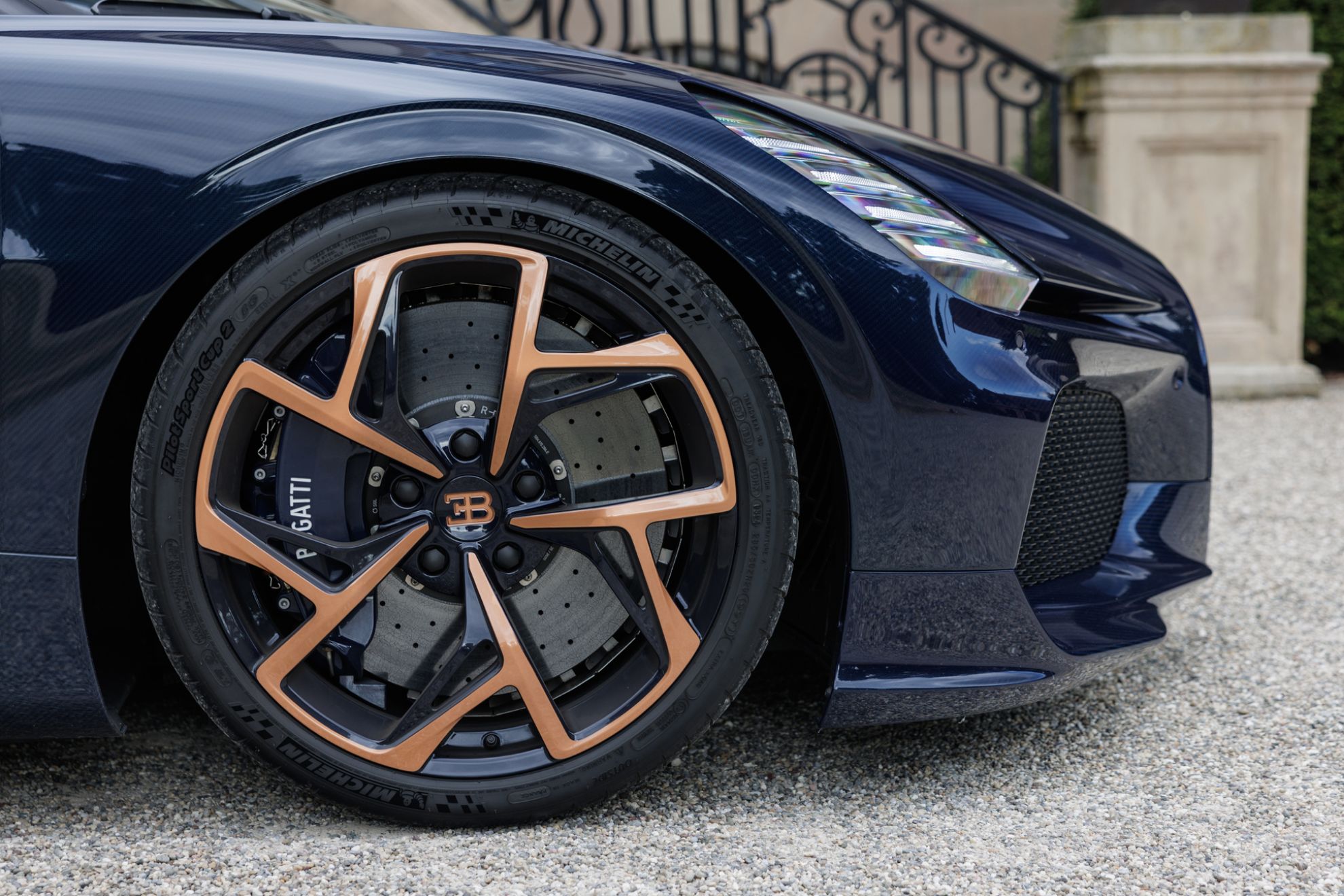
It's true that many of us have become accustomed to the explosive torque delivery of electric cars—thanks, Elon—but the W16 is of a completely different caliber. And while it's true that the magnetic rotors strike like a bolt of lightning seemingly out of nowhere, here the acceleration instigated by the kickdown (the floor of the accelerator pedal that activates the downshift of the "telepathic" seven-speed dual-clutch automatic transmission) feels more like a hammer to the gut with a resounding roar, catapulting the driver into another world. 2.5 seconds are enough for the 0-100 km/h sprint (already above the law, because on French back roads, the fun ends at 90 km/h). And I remember well how difficult those 13 seconds were for the speedometer needle to surpass 300 km/h when I drove the first Chiron in 2017 (and here it will take even less, 12).
As much as the Mistral seems capable of defying the limits of physics, it proves powerless when the weather turns bad. Because when it rains (and a roof is a good idea), drivers are advised not to exceed 160 km/h...and everything becomes less stratospheric. Not that a Mistral owner can't live with it: if it's just a passing shower, they can drive for a more relaxed time, but if the bad weather is here to stay, it's more normal for a Bugatti owner to have at least a dozen other cars in the garage better suited to such conditions. Or simply use their private jet.
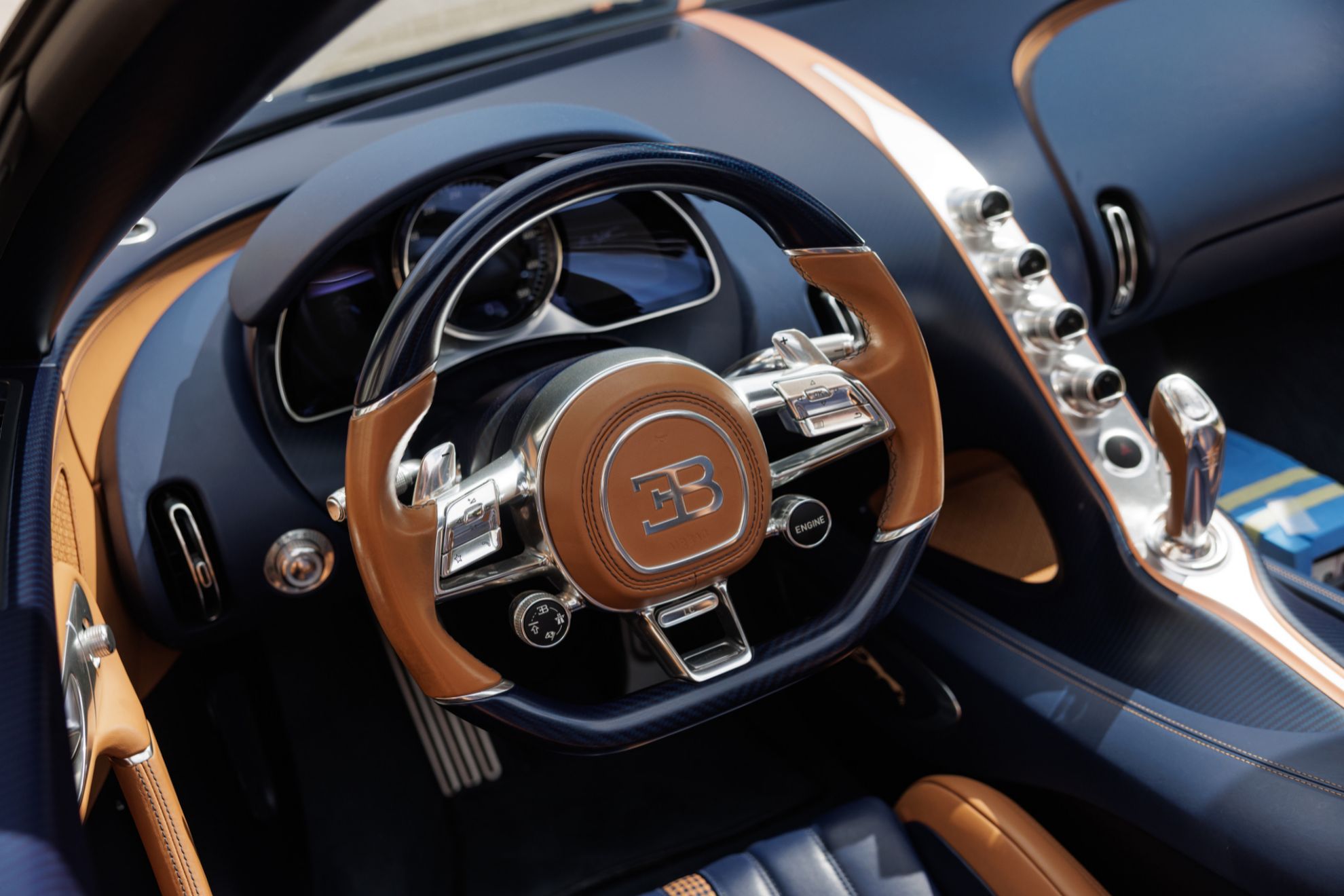
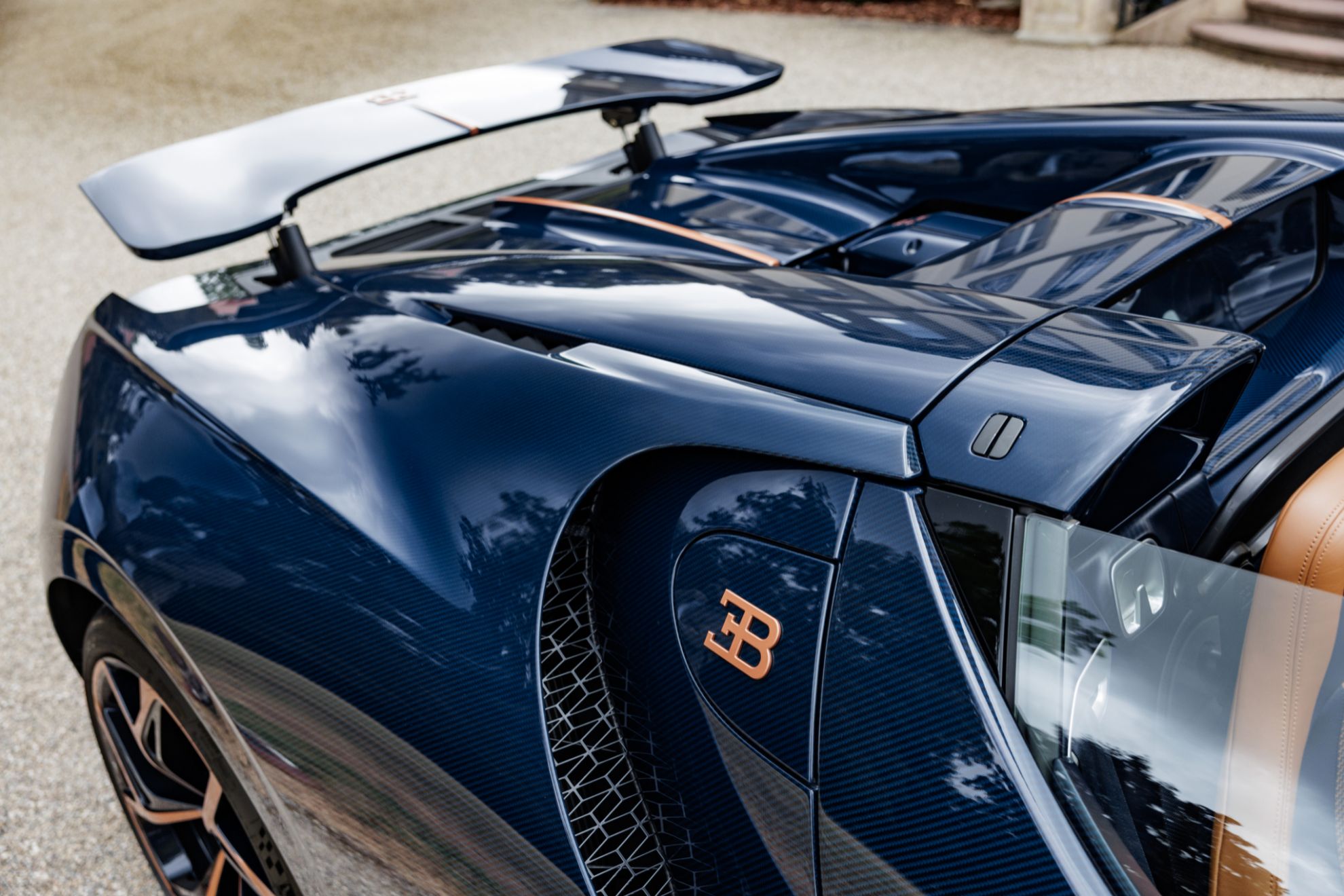
But it's not just the speed that makes this roadster so appealing. It's much more the way the Mistral achieves this, the way the engine practically explodes with power and propels us toward the horizon. And, above all, the sound. It's as if the entire Mediterranean were suddenly sucked into a giant whirlpool, so loud is the engine's gurgle as it sucks air (up to 70,000 liters per minute) through the vents carved into the carbon fiber just behind the headrests. The engine responds with a shrill fanfare that almost induces hearing and other senses loss. First with two turbos, and then, from 3,000 rpm, with four turbos, the initial whirlwinds shake even the most hardened eardrums. Until the apotheosis arrives soon after, when all 16 cylinders release their pressure through the exhaust valves with a powerful sigh that sounds like a mixture of relief and disappointment.
The best sound system...A car with an engine like this doesn't need an infotainment system, as it probably has the best sound system in the world. Not even the elephant, for which Rembrandt Bugatti (Ettore's younger brother) erected a statue from a block of aluminum, can keep up with such a roar, so it shrinks and transforms into a sculpture, immortalized in resin on the gear lever.
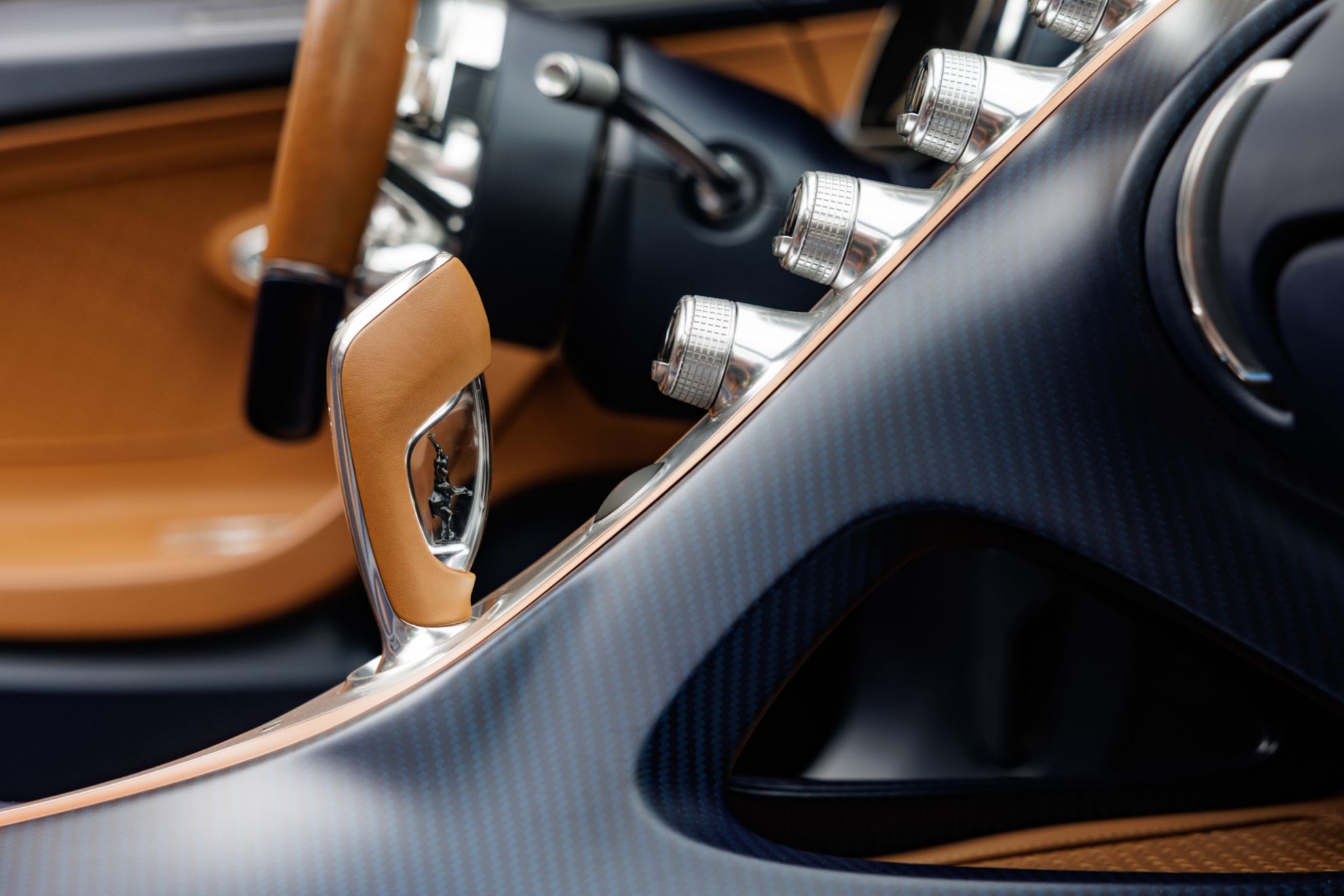
Typically, in supercars whose performance isn't as impressive, occupants are punished by a lack of comfort, traveling confined in gloomy cages or victims of the compromises imposed by a severely tuned Formula 1 chassis (forced to contemplate bare metal or dark carbon fiber), but the Mistral is an oasis of luxury in the midst of a desert storm. The highly contoured seats are more like armchairs, and the suspension manages to caress some occupants' backs even in the sportiest driving mode (Top Speed, where ground clearance is reduced from 115mm to 80mm at the front and 89mm at the rear). Exposed carbon fiber in shades of blue is accompanied by delicate leather and a metallic sheen throughout, as if the jewelers of Paris's exclusive Faubourg Saint Honoré had teamed up to fill a jewelry box.
And where others indulge in a banal center console covered in large screens, here a silver skeleton emerges between the seats, on which four dials rest like vertebrae, displaying the most discreet displays in the electrical industry. This is because only with the Tourbillion will Bugatti demonstrate its solution to resist digitalization and revive analog technology as an art form.
Naturally, near-insane performance, unparalleled 3D sound, and sumptuous luxury—none of this comes at a fair price. Even a Bentley Continental GTC or a Ferrari Portofino seem cheap compared to this Bugatti's price tag, which exceeds five million euros. And that's without counting the extras and gigantic customizations that quickly push the car's price tag to over a million.
It's not something that keeps billionaires born on the right side of the aisle awake at night, nor does it even make them frown. Proof of this is that, even before the first Mistral was handcrafted, the 99 units of its limited production had already been reserved for several months. And many of those late on the order list are now awaiting the Tourbillion's launch. Initially, only as a coupe, at least until the next perfect storm gathers over Molsheim.
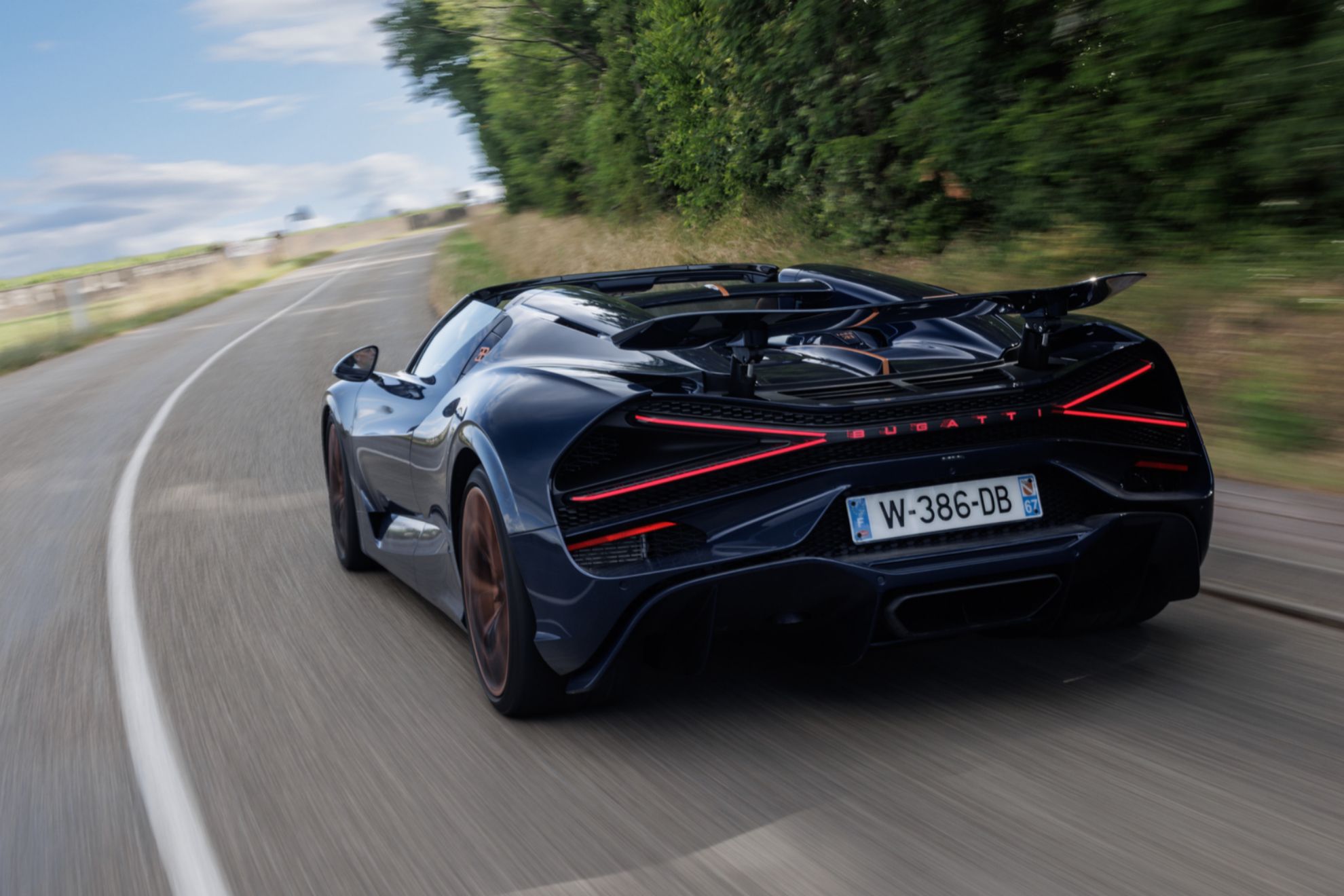
In short: saving the best for last is a common saying in this industry, but rarely has it been more apt than when describing the Mistral. Of course, the Chiron was already more of a work of art on wheels than a car, but with the Mistral, Bugatti's engineers have completed their masterpiece, as the acoustic charm of its unique engine is felt even more intensely in this roadster. Not to mention the wind speeds of 420 km/h, which raise the bar for the Tourbillion.
by Autonews


Nenhum comentário:
Postar um comentário