AUDI
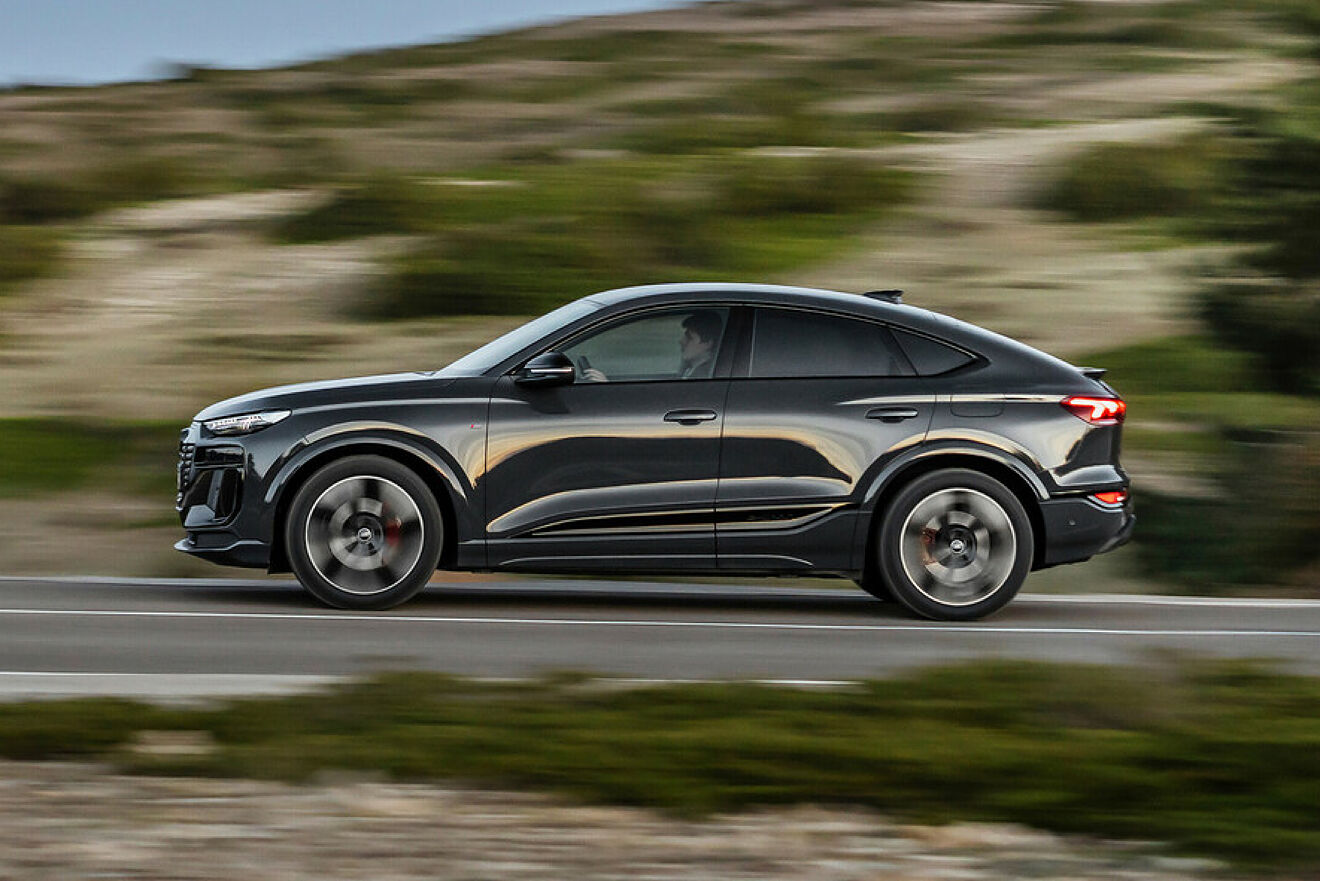
Audi Q6 Sportback e-tron Performance: the more logical side of a coupe
The Audi Q6 Sportback e-tron Performance doesn't seem like an SUV born to fill a catalog, although it might seem that way considering that a Q6 already existed and the coupe arrived as an accessory. In reality, it emerged as a "change" to give the existing model a design touch and aerodynamic tweaks, tempering it all with a price that, as is common with coupe versions, has skyrocketed.
The Q6 plays an important role for Audi as it was the first to debut the PPE platform, the 800-volt architecture developed with Porsche that also powers the new electric Macan. Audi positioned it as an electric alternative to the Q5 Sportback, although, since they are so similar (even in size), it seems somewhat difficult for them to coexist at the same time.
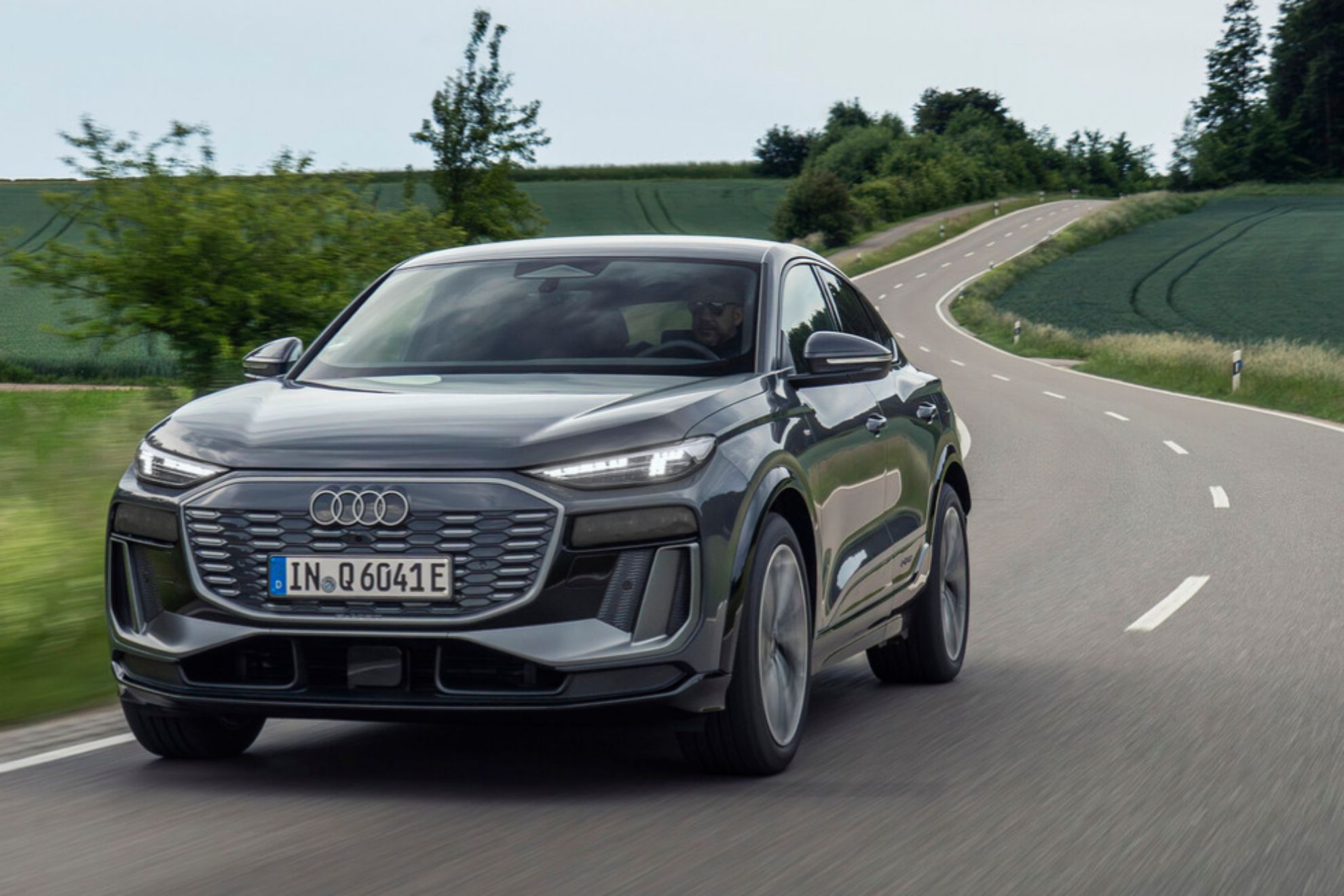
To further complicate matters, Audi decided at the time that even-numbered models would be electric and odd-numbered models would be fuel-powered, a strategy that lasted until sunset, and in the end, the names ended up getting mixed up. Thus, we have the Q6 Sportback, which, like it or not, bridges the gap between SUVs and "sporty" SUVs to compete head-to-head with models like the Mercedes EQE SUV.
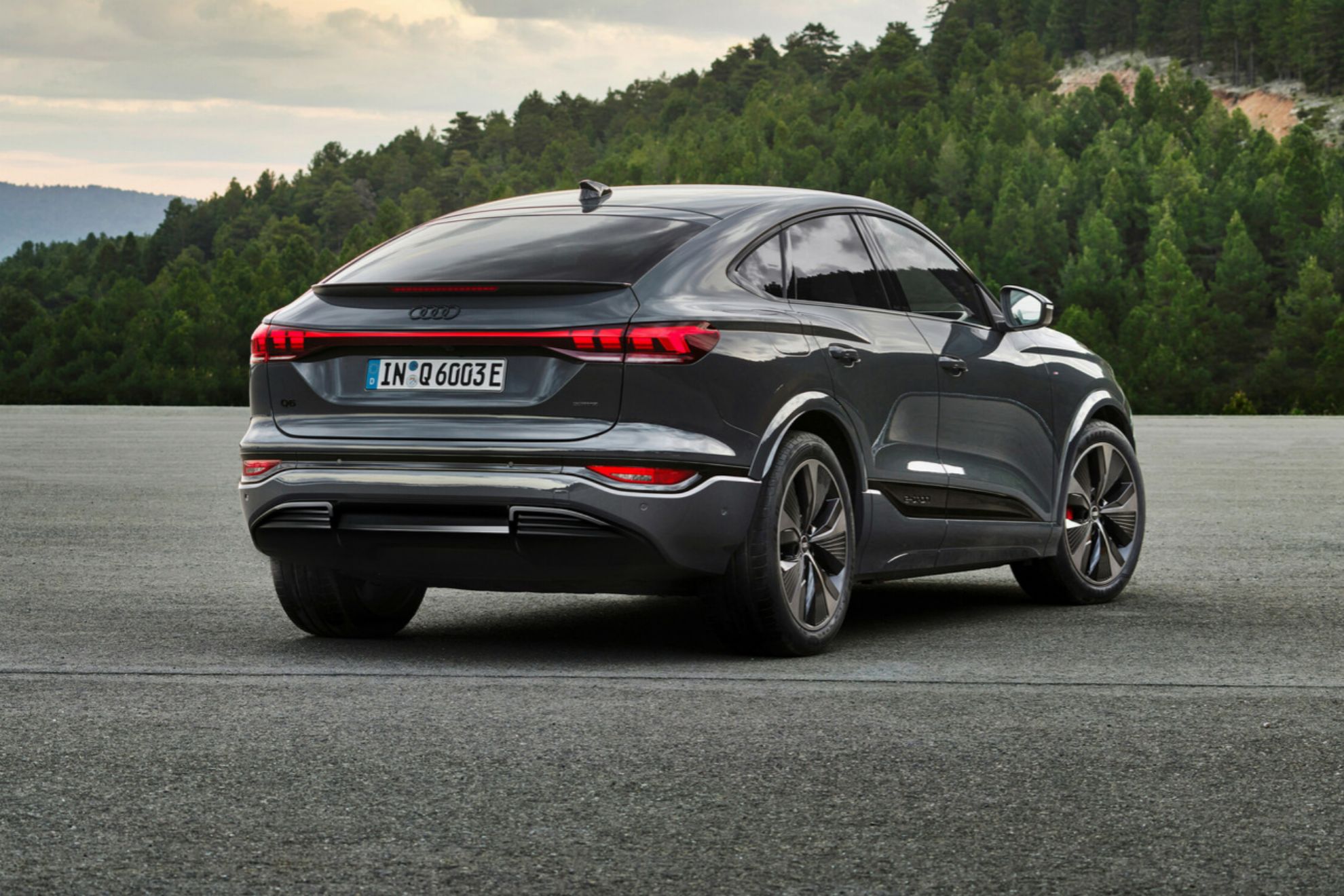
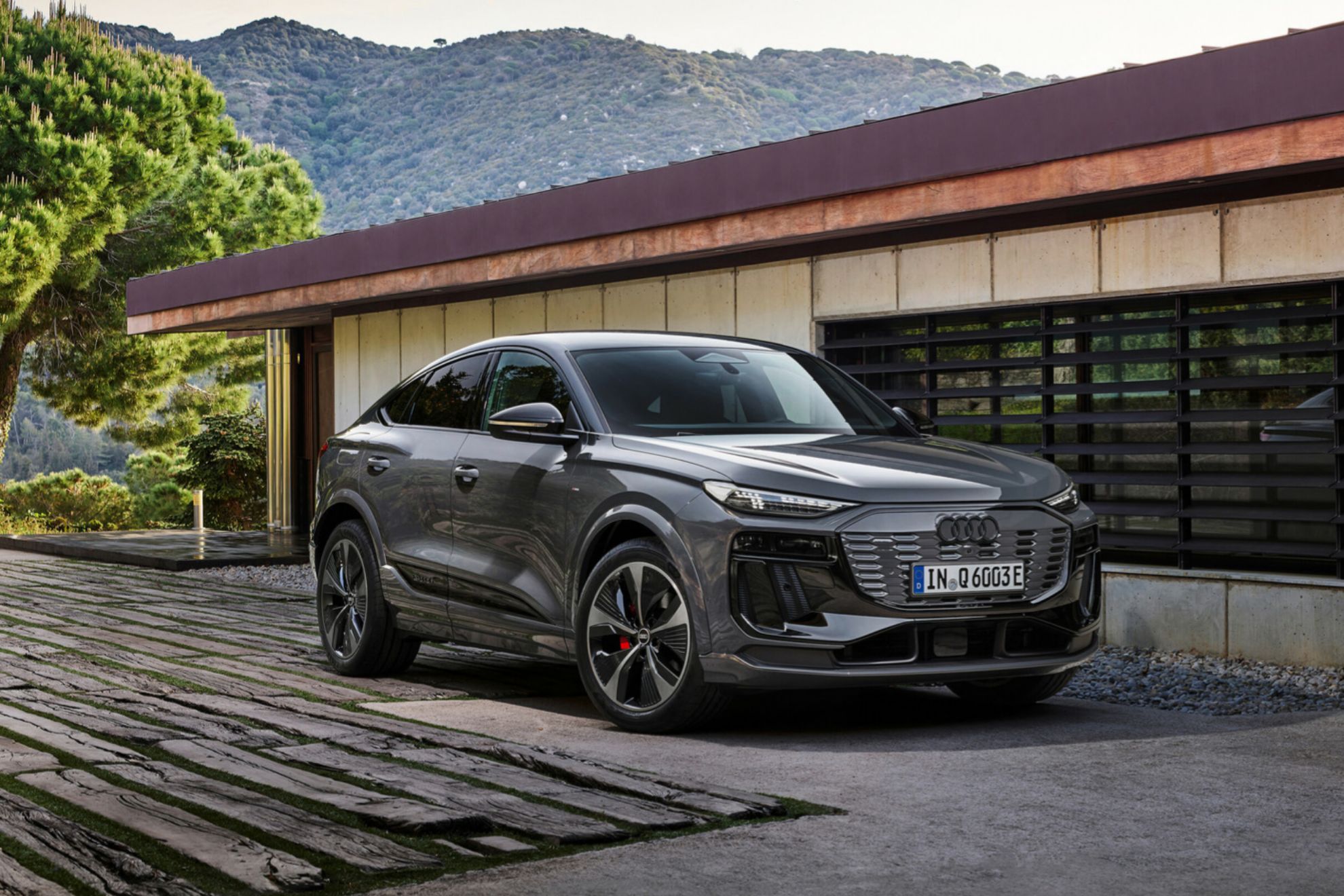
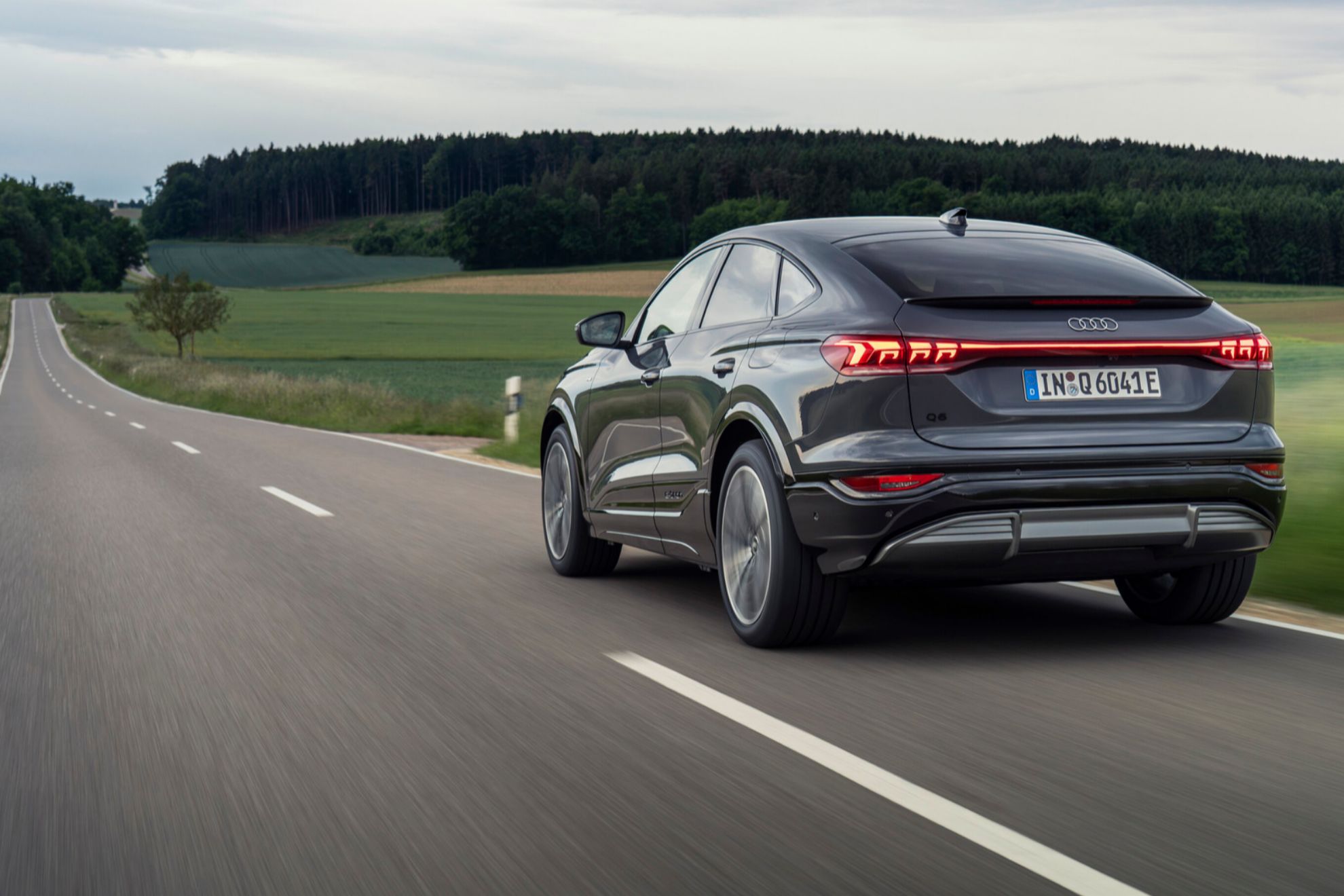
Seriously, when you see the Q6 Sportback e-tron in person, the first impression is that it looks enormous. In fact, it's more muscular than large, as at 4.77 meters long, 1.97 meters wide, and 1.67 meters tall (just 37 mm shorter than the standard Q6), it's large, but not enormous. The silhouette defined by these dimensions resembles an animal ready to pounce on its prey, which makes it appear more imposing, especially compared to rivals more characterized by straight lines. The positive side of this aesthetic (besides the good taste) is that the aerodynamic drag coefficient drops to 0.26, compared to 0.28 for the standard Q6. It may seem like a minor detail, but these two points add up to a few extra kilometers of approved range, which, in practice, is never a bad thing. Of course, the price for this aerodynamic gain is the loss of some trunk space, as we'll explain later.
Technology Showcase...Inside, the Q6 Sportback e-tron Performance showcases Audi's interior expertise, with large screens and impeccable resolution. The 11.9-inch driver's display offers extensive configuration possibilities. The 14.5-inch central display has a logical menu layout that makes it easy to access the physical air conditioning controls. And the 10.9" passenger display allows for entertainment, configuring details like navigation or music.
Everything in terms of ergonomics seems to be a success, with touch-sensitive controls on the steering wheel that respond very precisely with just a touch of a finger. Of course, this includes those that allow you to configure the Audi Virtual Cockpit (i.e., the dashboard), which forces Audi to keep the cruise control separate, under the turn signal lever, instead of integrating it into the steering wheel, as almost all brands already do.
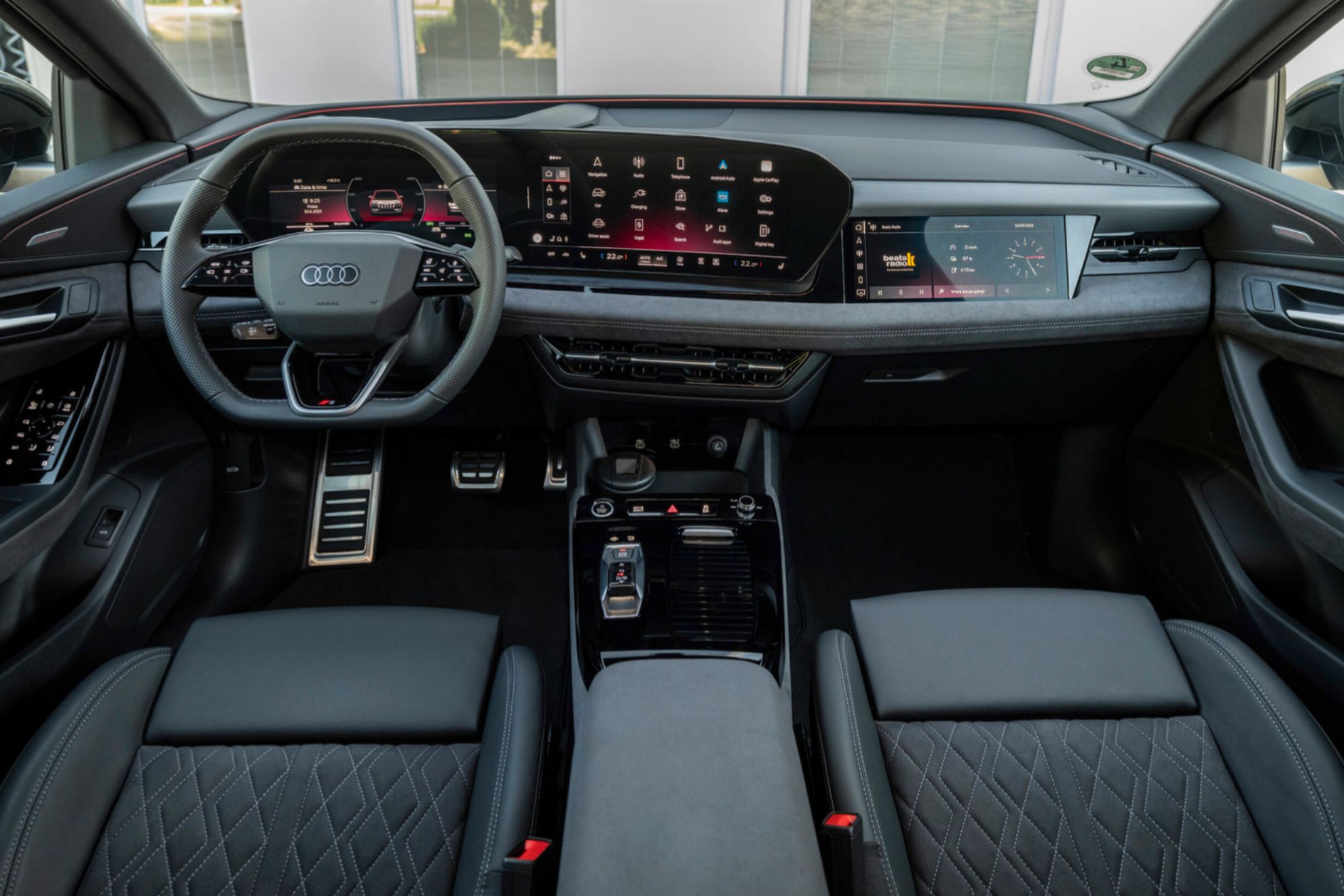
As for the materials, they combine flexible rubber, aluminum, and high-quality fittings, so you can look around and never lose sight of the feeling of being in a premium car. All with elegance, without coldness, and with a touch of high technology.
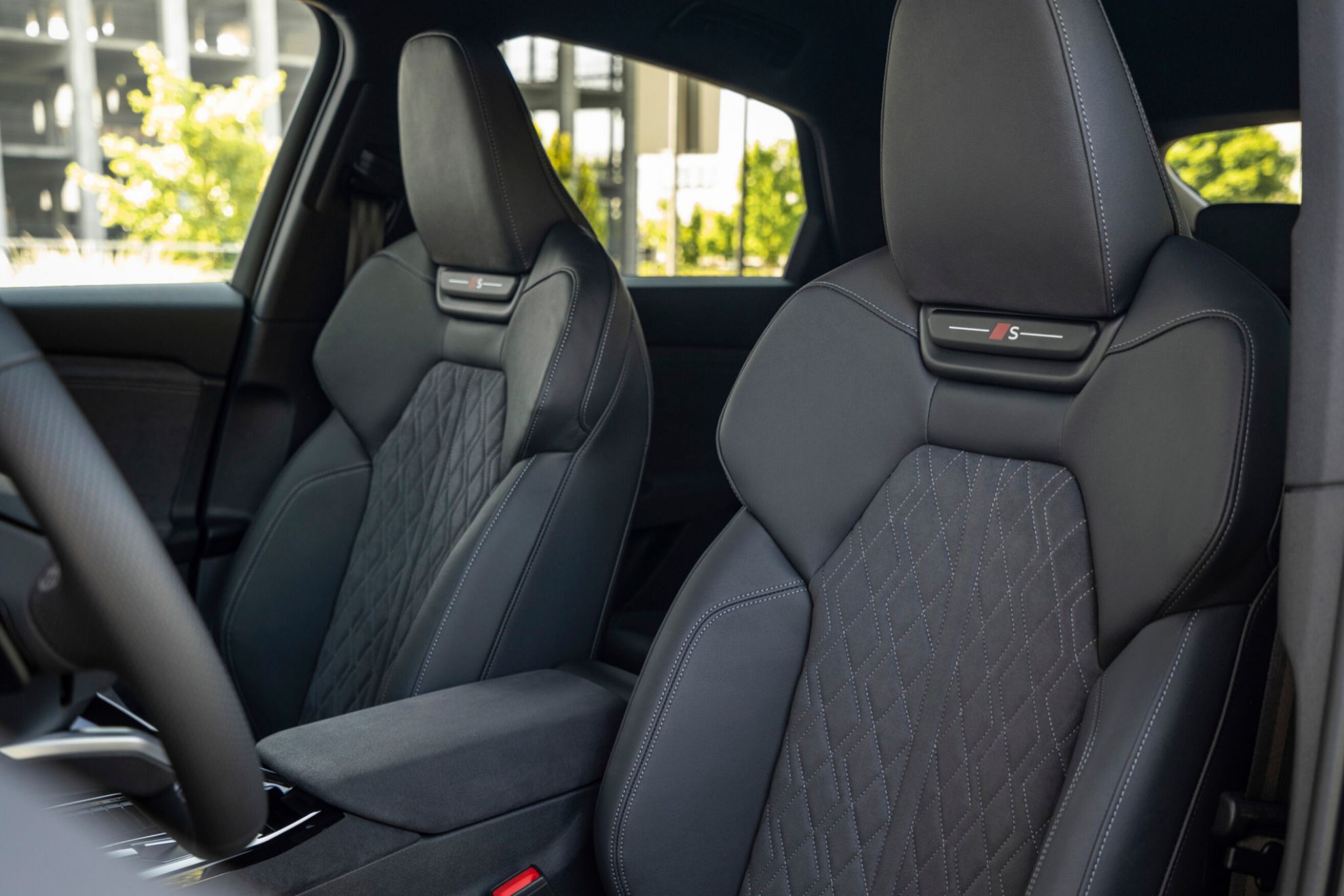
The front seats of this S Line version are a fine example of compromise. Let us explain: they have wide backrests, but offer good lateral support and integrated headrests that add a touch of sporty design that you'll fall in love with every time you see them when you get in the car.
In the rear, the space is surprisingly larger. than the photos suggest. A 1.81m adult (like this author) has three fingers' worth of space to the ceiling and four fingers' worth of space from the front seatbacks. The nearly flat floor allows even the middle passenger to travel without feeling restricted, and the three-zone climate control ensures a good thermal margin, avoiding temperature arguments with the front-row occupants.
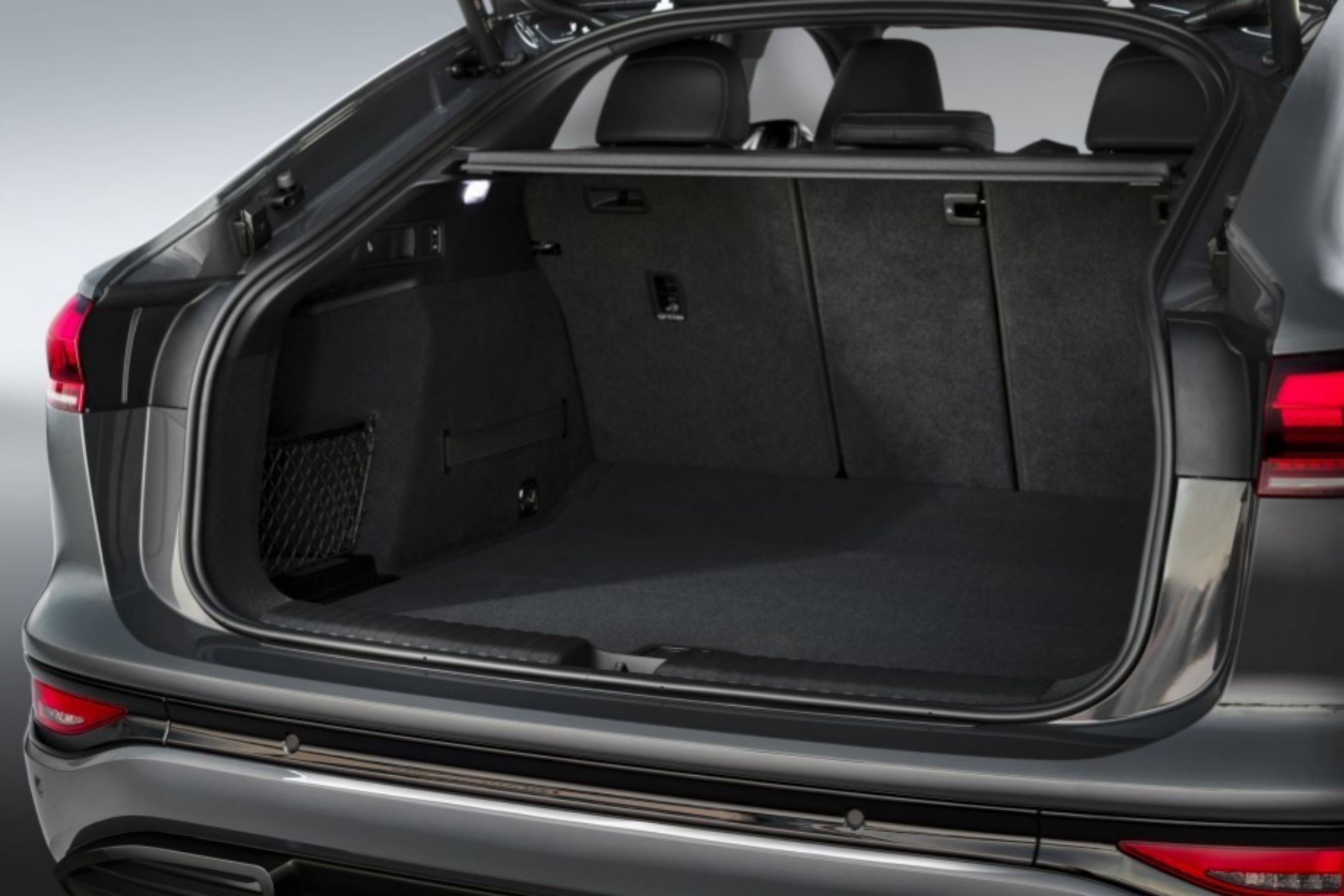
The Q6 Sportback's trunk capacity has been reduced compared to the Q6, dropping from 525 liters to 511 liters. In practice, it's still quite spacious, with the addition of a generous space under the cargo area that conceals the ability to accommodate a large backpack. With the seats folded down, capacity reaches 1,373 liters. And, as with any well-designed electric vehicle, there's a small 64-liter front trunk, ideal for keeping cables out of the way when storing luggage in the trunk.
Plenty of range...The Performance version maintains the most interesting formula, in our opinion: a single permanent magnet synchronous motor on the rear axle (made in Györ, Hungary), with 326 hp. It lacks a second motor and there's no all-wheel drive, which helps save weight and, again, results in greater range.
To achieve this, it relies on a battery that we can describe as enormous, with 100 kWh gross and 94.9 kWh usable. Enough to cover a certified distance of 654 km. But its range is also very good in real-world use, with four occupants and a full trunk on the highway, averaging less than 21 kWh/100 km over a 700 km drive. This means we could have traveled about 500 km without recharging. Adding the approximately 300 km we drove in the city (this time alone and without luggage), the final figure came to 20.5 km.
Fast charging is another strong point. With an 800 V architecture, it supports up to 270 kW, which means you can cover 132 km in just five minutes or go from 10% to 80% in about 22 minutes... if you can find a charger that offers that capacity. And if you can only find a 400 V charging point, the bank charging function kicks in, splitting the battery into two halves and charging in parallel at 135 kW each. An 11 kW charger is also included as standard, although a 22 kW charger can be ordered.
0 to 100 in 6.7 s...The Performance isn't aiming for records, but it's already impressive. It takes just 6.7 seconds to go from 0 to 100 km/h and can reach 210 km/h. Acceleration is linear, powerful, and with excellent recuperation. However, in the city and at low speeds, you need to get the hang of braking, because at such low speeds, you might feel like you miscalculated and braked harder than necessary.
The plastic paddles behind the steering wheel allow you to adjust the regenerative braking system in three stages (no braking, partial braking, and maximum braking). But if you want the Q6 Sportback e-tron to drive almost like a one-pedal car, you can also activate "B" mode by pushing the small gear selector lever back.
On the highway...The Q6 Sportback Performance's dynamics are more refined than you'd expect from an electric SUV of this size. The 255/50 R20 tires offer excellent balance, and the front-end steering is precise, with less understeer than is typical for such a large car. It's true that the weight is undeniable (approaching 2.3 tons), but the low center of gravity helps disguise it, and the car feels confident even on fast roads.
By the way, there are five driving modes: Dynamic, Comfort, Efficiency, Efficiency Plus, and Individual. You can already imagine how each one works, but we'll clarify that Efficiency Plus disables some graphics, reduces screen brightness, and operates at speeds up to 90 km/h. Individual allows you to adjust the steering, sound, assistants, and the Virtual Cockpit itself, but, curiously, not the engine performance.
The equipment package doesn't disappoint, with cameras monitoring the entire environment, Matrix LED headlights, heated seats in both rows (except the center seat), plenty of connectivity, and a full suite of state-of-the-art driving assistants. All for a price that, in this S line version, reaches 90,840 euros.
Autonews



Nenhum comentário:
Postar um comentário