AUTONEWS
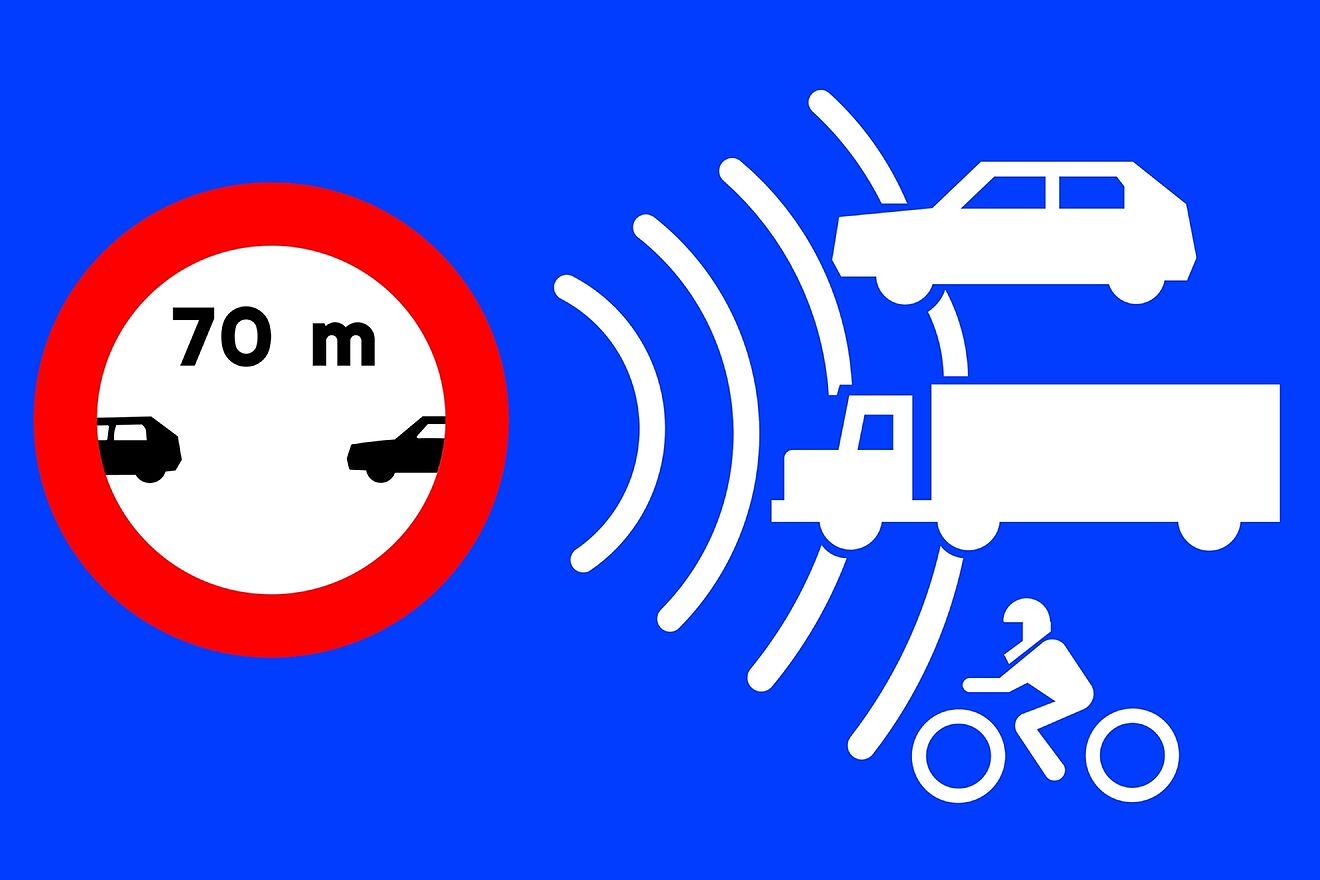
S991f: The new DGT sign that alarmed drivers in Spain
Shortly before the start of summer, the DGT's new sign catalog was released, eliminating some that had become obsolete, updating others (including those justified by gender), and introducing some new ones that drivers should start to understand because they are already being installed on Spanish roads.
During the holiday season, the General Directorate of Traffic (DGT) is promoting the new signs on its social media, and now it's the turn of the S991f sign. This new sign "indicates the existence of a device to control the minimum separation between vehicles at a point or section of a highway or motorway," according to the Department of Traffic's publication.
Its iconography shows the type of vehicle monitored for safe distance and the required separation, expressed in meters. It can incorporate additional information with signs at the top or bottom, including information such as the distance of the section where the safe distance will be monitored.
The problem (and importance) of safe distance...Safe distance is one of the safety elements least valued by drivers... because it's the most difficult to manage. The distance we must maintain from the vehicle in front varies constantly, depending on speed or road conditions.
Furthermore, it requires the driver to measure the distance by eye, which makes it very difficult...unless there are road markings (as is the case in some places) to control this distance to the centimeter. It is precisely in these areas that we notice most clearly... that we almost never respect it. It is also to be expected that the sections where this distance will be controlled will have markings as a guide for drivers...
The responses to the DGT publication also highlight another very viable possibility that could impact these situations: the emergence of a third vehicle that could interpose itself between two vehicles that are maintaining the required distance.
The importance of maintaining a safe distance is obvious: according to the DGT (General Directorate of Traffic), if we're traveling at 90 km/h, we need 70 meters to come to a complete stop, while at 100 km/h, this distance increases to 84 meters. On wet roads, Traffic estimates that this distance increases by... 70%!
Are there radars that monitor the safe distance?...The General Directorate of Traffic, in its various official publications, has not reported the existence of radars capable of measuring the safe distance between vehicles, although the technology exists.
The various radars and radars monitor speed, cell phone use, and seat belt use, but not the distance between vehicles. However, the fact that this sign appeared in the catalog makes it clear that the DGT plans to introduce them soon.
What is the fine for not maintaining the safe distance?...The Traffic Regulations establish the obligation to maintain a safe distance from the vehicle in front. This is provided for in Article 54: "Every driver of a vehicle traveling behind another vehicle must leave a clear space (safety distance) between them that allows them to stop, in the event of sudden braking, without colliding with the vehicle, taking into account, in particular, speed and braking and grip conditions."
The penalty for failing to maintain a safe distance is provided for in the Traffic, Motor Vehicle Circulation and Road Safety Law, which is 200 euros and four points on the license, and is classified as a serious misdemeanor.
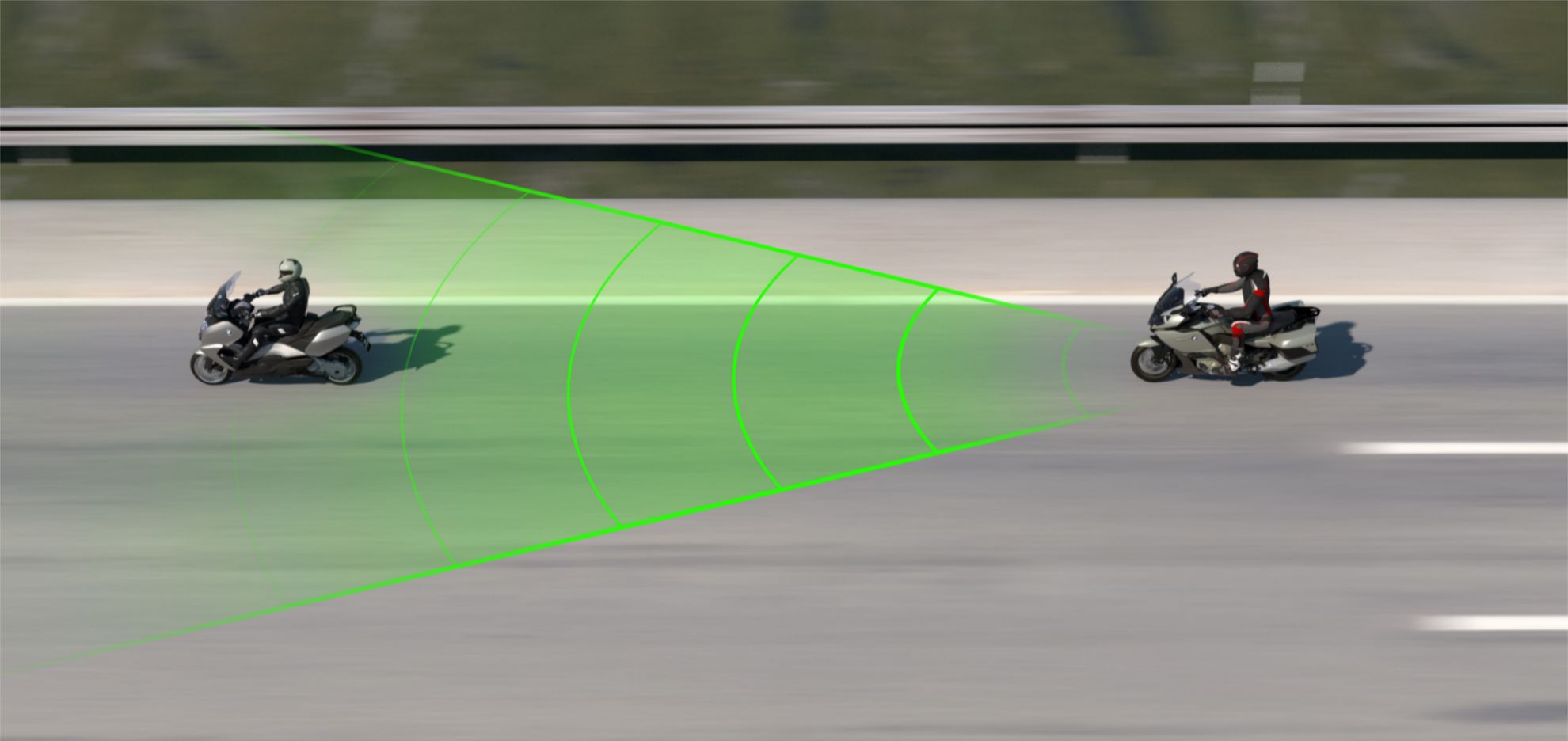
ADAS, to the rescue...The technology present in modern vehicles can help us maintain a safe distance... although it's not enough to avoid fines in situations indicated by the S991f sign.
Among the assistants that new vehicles must have (the famous ADAS) is intelligent cruise control, which automatically maintains the distance from the car in front... although this distance doesn't always have to be correct, nor does it correspond to that indicated by the S991f sign...
The most common 'trick' for calculating the safe distance (which the DGT itself refers to in its publications on the subject) is the two-second rule: leaving a gap corresponding to two seconds... but of course, this, again, depends on the speed and road conditions, and even the vehicle (not all brakes in the same way...).


Nenhum comentário:
Postar um comentário