AUTONEWS
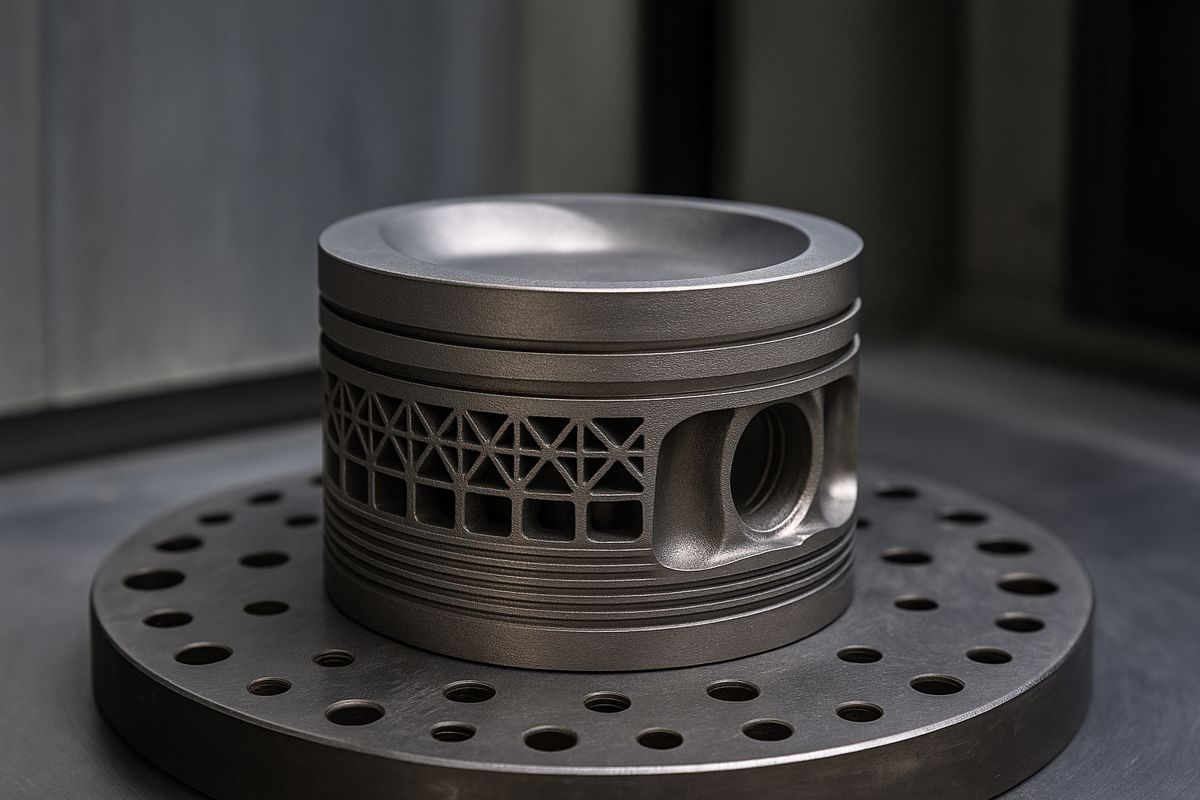
DuAlumin-3D breaks barriers in automotive and aerospace materials
The research team found that DuAlumin-3D outperforms traditional alloys, which are prone to cracking during laser powder bed fusion processing, while maintaining comparable heat characteristics. This advancement offers lightweighting solutions and reduces fuel costs.
"DuAlumin-3D performed exceptionally well in our evaluations," said lead ORNL researcher Alex Plotkowski. "While our research focused on its use in high-efficiency engines, it could also be used for lightweighting applications in aerospace and to optimize heat exchangers."
The ORNL-developed alloy exhibits superior strength and resistance to deformation at elevated temperatures, outperforming all known aluminum alloys.
From the labs of Oak Ridge National Laboratory to the engine bays and fuselages of the future, DuAlumin-3D is redefining what aluminum alloys can do.
This cutting-edge material isn't just another incremental tweak; it's a complete leap forward in additive manufacturing technology.
What Makes DuAlumin-3D Stand Out...Developed by scientists at ORNL, DuAlumin-3D boasts exceptional resistance to creep at elevated temperatures, surpassing all known aluminum alloys. Unlike conventional alloys, which tend to crack during laser powder bed fusion, DuAlumin-3D remains stable, enabling more complex and durable designs.
Tests show it retains more than half its strength even at 300–315°C and maintains microstructural stability up to 400°C. This is revolutionary for industries where heat is a formidable enemy—be it automotive engine blocks or aerospace structures.
Principal researcher Alex Plotkowski summarized: "DuAlumin-3D performed exceptionally well in our evaluations. While our research focused on its use in high-efficiency engines, it can also be used in lightweighting applications in the aerospace industry and to optimize heat exchangers."
The Advantage of Additive Manufacturing...Traditional aluminum alloys are difficult to process through additive manufacturing due to crack formation. DuAlumin-3D's unique formulation overcomes this challenge by employing dual reinforcement mechanisms: a dense nanoscale microstructure resulting from rapid solidification during printing, and precipitated phases introduced through heat treatment.
Plotkowski explained: "Aluminum alloys were a really interesting problem for us to work on... conventional alloys are challenging to process with additive manufacturing." This advancement means engineers can now print high-performance aluminum parts with much greater confidence in their durability and performance.

Proven in Engine Tests...ORNL didn't stop at the lab bench. Researchers 3D-printed DuAluminum pistons and subjected them to rigorous testing in four-cylinder engines. The results? Exceptional performance under severe thermal and mechanical loads.
Automotive giants are already taking notice. General Motors is working on applications for lightweight, high-efficiency V8 engines for medium-duty trucks, while Honda Performance Development is exploring other potential uses.
As Plotkowski noted, "There was a need for collaboration... ORNL can do this because we're bringing together this diverse skill set."
Industry Recognition...DuAluminum's debut did not go unnoticed. In 2022, ORNL, GM, and Beehive3D won the R&D 100 award—often called the "Oscars of Innovation"—for its extreme creep and fatigue resistance in high-temperature service. This recognition underscores the alloy's transformative potential and its readiness for real-world deployment.
Beyond Automotive....While the initial focus was on high-efficiency automotive engines, DuAlumin-3D's scope extends far beyond that. Aerospace applications are a natural fit, with the potential to replace heavier and more expensive titanium parts. The weight savings translate directly into lower fuel consumption and lower emissions.
Its exceptional thermal and mechanical properties also make it a strong candidate for heat exchangers and advanced components in clean energy systems.
Industry Implications...For investors, DuAlumin-3D offers a tangible path to market differentiation in sectors ranging from trucking to aviation. Policymakers can see it as a tool to achieve transportation emissions reductions through lightweight design. Materials engineers and manufacturers gain a new weapon to overcome the historical limitations of aluminum in additive manufacturing.
Looking to the future with confidence...DuAlumin-3D is more than a laboratory curiosity—it is a product with proven performance and the potential to become an industry standard. Combining light weight, strength, heat resistance, and printability, it addresses some of the most complex challenges facing today's industry.
With partners like GM and Honda on board and a track record of award-winning innovation, ORNL's alloy is poised to play a decisive role in the next generation of high-performance automotive and aerospace components.
Provided by Oak Ridge National Laboratory


Nenhum comentário:
Postar um comentário