AUTONEWS
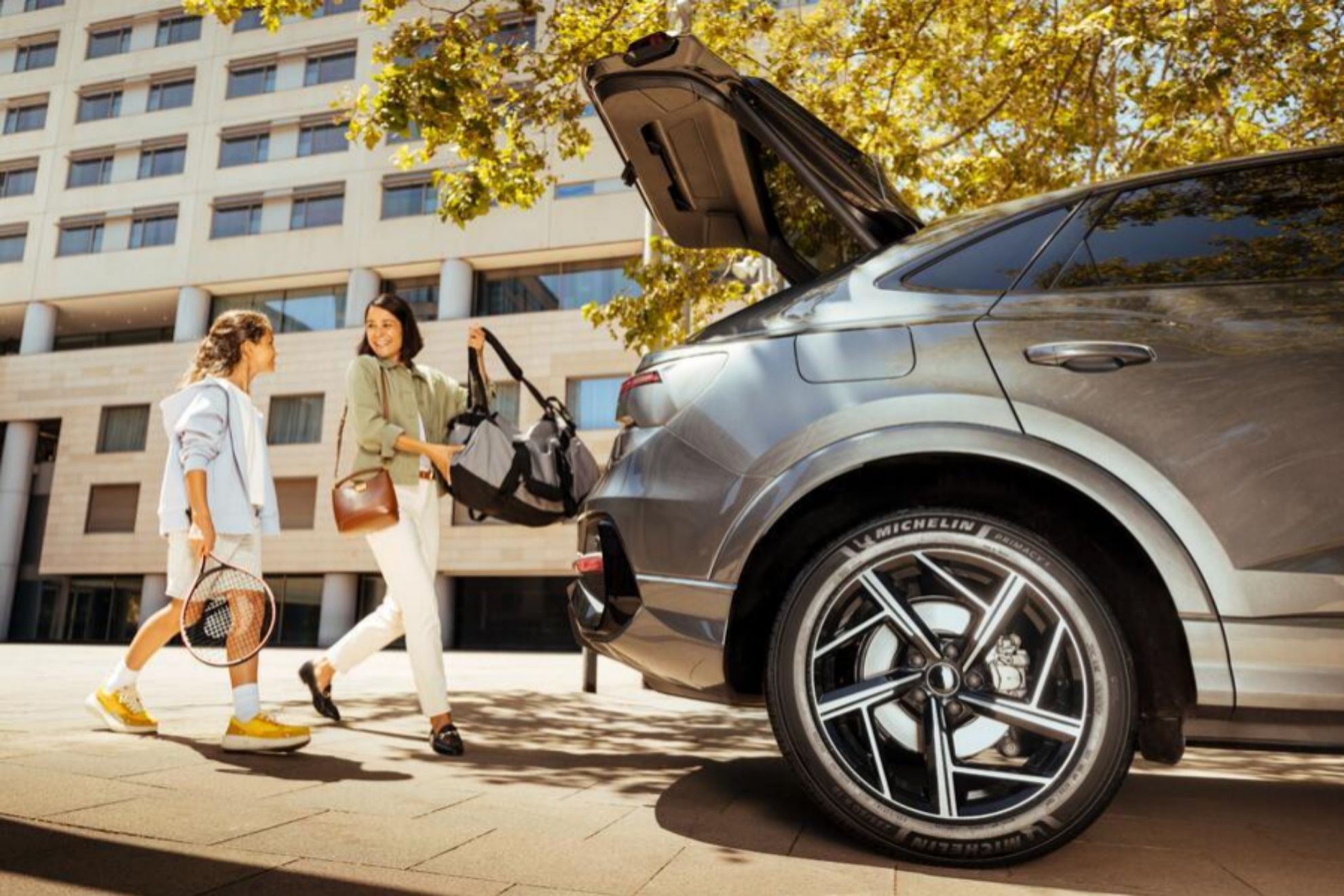
Primacy 5, Michelin's 'smartest' tire
The Valladolid factory, the newest of Michelin's four in Spain, began operations in 1973. More than half a century of experience allows it to develop a new tire or a new generation and overcome multiple challenges.
Improving a tire in one or two areas without compromising other performance is a feat; "but simultaneously improving durability, rolling resistance, comfort, and noise, while being more environmentally friendly and maintaining a high level of safety, requires experience and considerable investment in research and development," explains Bruno Arias, director of the Michelin Valladolid factory.
The Primacy 5 has been developed to adapt to the characteristics of sedans and SUVs, regardless of their propulsion system. It increases its durability compared to its predecessor by more than 18%, while maintaining a very high level of safety in wet conditions, both with new and worn tires, says Carlos Verduras, Michelin's Marketing Director.
Multiple advantages... Its longer lifespan, reduced noise, and improved fuel efficiency (-5% compared to the Michelin Primacy 4+) allow it to meet the needs of vehicles with any type of propulsion system.
The new tire features a new patented tread pattern design with an increased groove ratio (+13%) to allow for optimal water evacuation and uses state-of-the-art rubber compounds, which give it an A rating according to the European Label.
According to Javier Calonge, product manager, the Primacy 5 is 4% safer on wet surfaces when new. "Its longer lifespan (+18%) allows for more kilometers to be driven—around 7,000 km more than its predecessor—in complete safety, both on daily commutes and on long family trips."
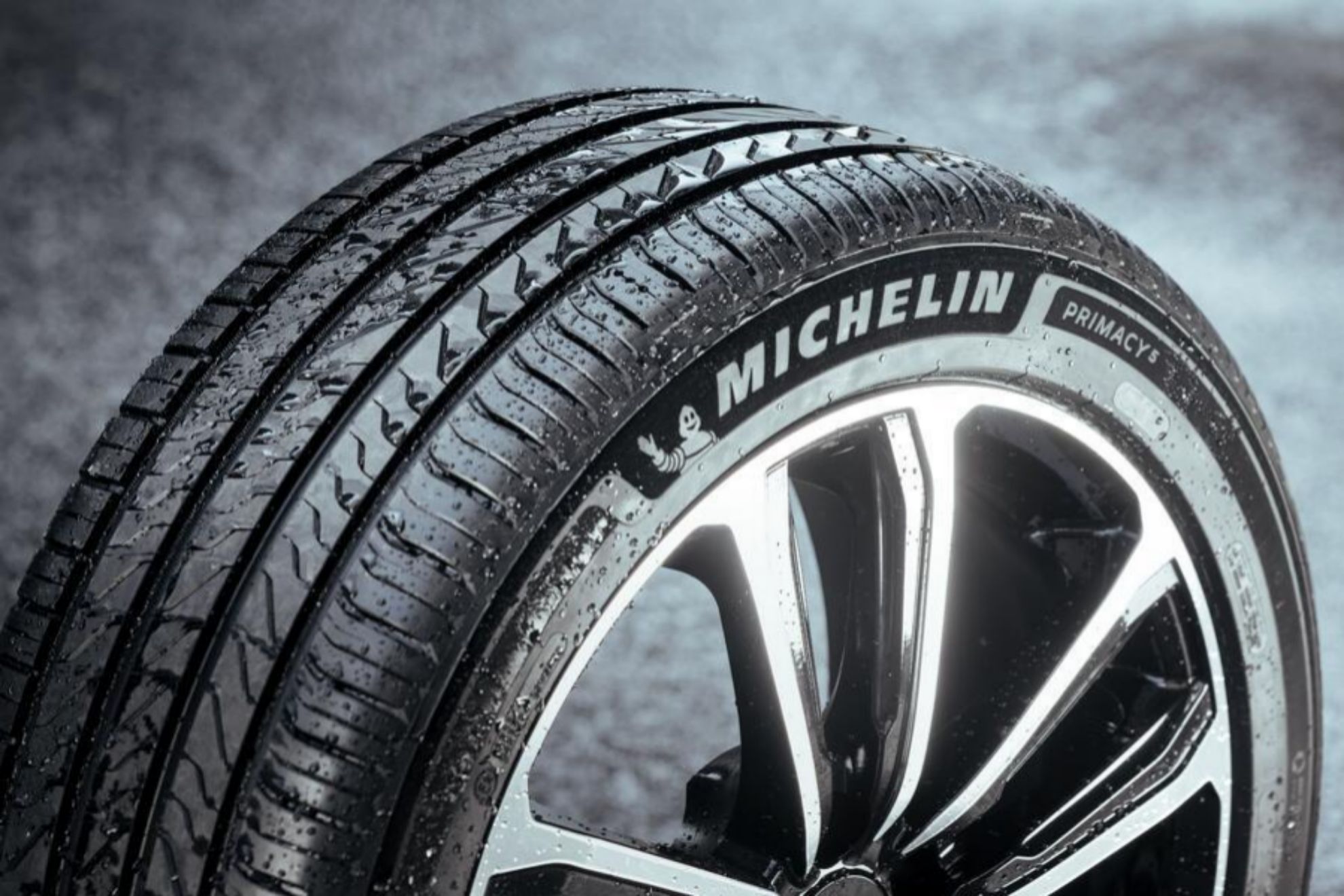
This increased lifespan is even more significant as many vehicles today are heavier and more demanding, directly impacting tire wear. With a high level of performance both with a new and worn tire, Primacy 5 can be used for longer, helping to reduce its environmental impact by 6% according to the tire's life cycle assessment (LCA).
Primacy 5 incorporates Michelin's expertise in reducing interior noise and optimizing comfort: the tread pattern design, along with optimized lug and sipe positioning for each dimension, allows the new Primacy 5 to achieve excellent exterior noise levels and comfort, as well as reduced noise levels in the passenger compartment.
The new Primacy 5 will be available in Europe in 88 sizes throughout 2025, for a total of 127 sizes by mid-2026. It will also be sold in other regions of the world, particularly in Asia.
A well-rounded day... In Valladolid, we saw how Michelin manufactures tires through an assembly process that includes casing preparation, tread manufacturing, and vulcanization. Semi-finished products and tires for agricultural vehicles, passenger cars, and truck retreads are produced there.
The plant employs 1,693 people and produces 100,000 tons of finished products and 200,000 tons of semi-finished products for distribution to other Michelin factories.
Michelin uses a higher percentage of natural rubber, as well as the integration of recycled carbon black, sunflower oil and bio-based resins, silica from rice husks, and even recycled steel. The Group is committed to incorporating sustainable materials into the development of its tires without compromising performance, ensuring that the environmental impact at every stage of the life cycle—design, manufacturing, transportation, use, and recycling—is not diminished.
Among them are the Primacy 5 and the all-season tire, the Crossclimate, with winter certification approved for snow, which eliminates the need for chains, but also responds to the needs of high temperatures.
A machine is used to make the casing, which is the inner part of the tire that gives it rigidity and support. By placing rubber coils on a rotating drum, the different layers that make up the casing are stacked, with adhesives or materials between them.
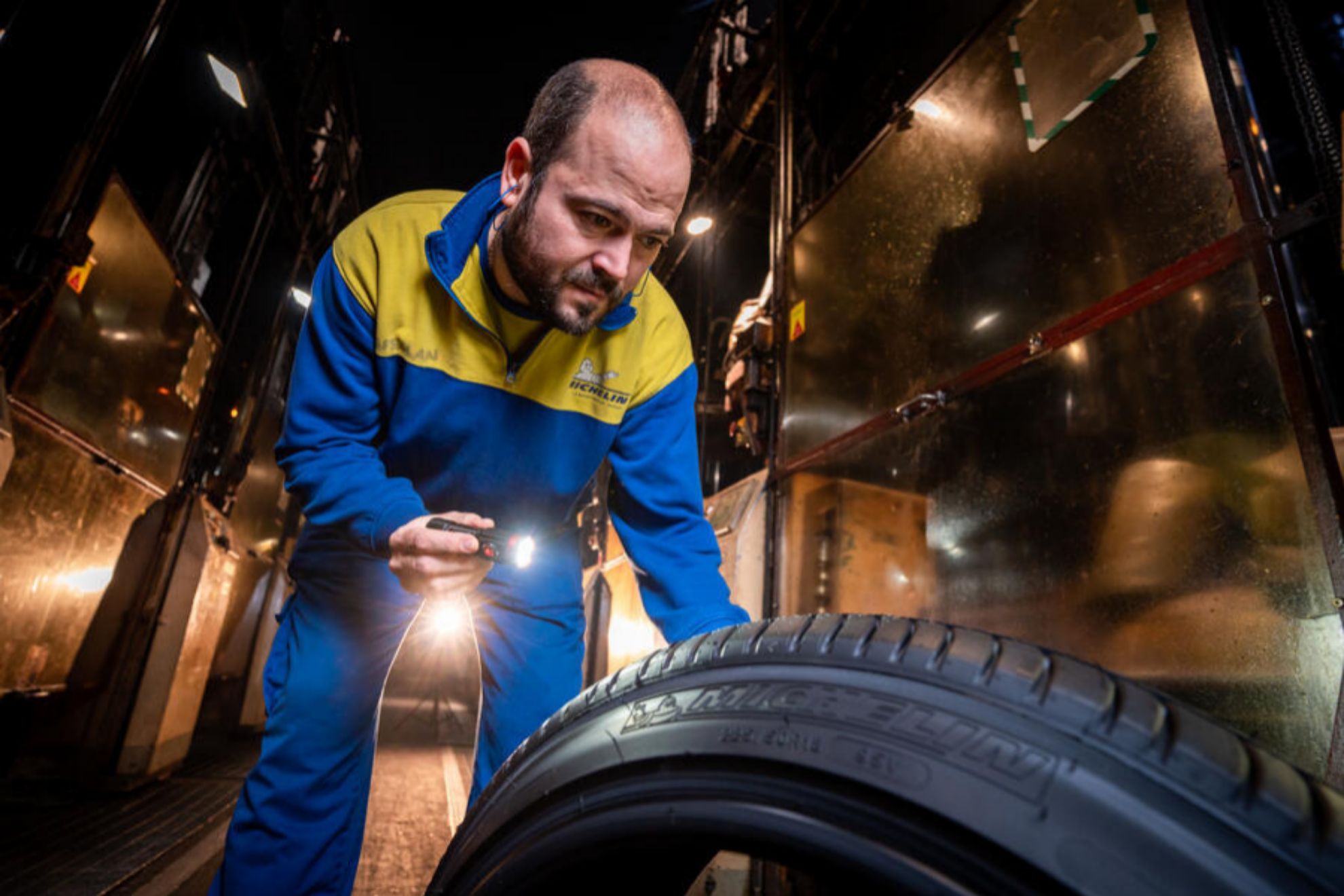
Human and artificial intelligence...In the manufacturing processes, each Michelin tire is individually inspected by a person, and AI (Artificial Intelligence) is used to further ensure that the product quality is adequate. Each casing is manufactured in 7 or 8 seconds, and thanks to Michelin's innovative capacity and the digitalization of its factories, a series of sensors have been implemented in the manufacturing process, which manage to capture 12 million data points in real time.
The tread is manufactured by rolling a rubber band into a specific shape, which is then placed over the prepared casing. This process is carried out on a metal cylinder.
The raw tire is placed into a cooking mold that bears the markings and tread patterns of the final tire. A membrane pushes the rubber to the bottom of the mold, and heat initiates the vulcanization process, where sulfur bonds with the rubber molecules, transforming it into an elastic and resistant rubber.
Exhaustive quality controls are carried out on both the casing and the tread, ensuring that the tires meet Michelin standards. Visual inspection systems, ultrasound, and destructive testing are used to verify tire quality.
The goal for 2050 is to manufacture tires with 100% renewable and recycled materials, maintaining tire performance while also reducing CO2 emissions. Among the materials used: orange peels, sunflower oil, rice, yogurt containers, and more.
Autonews


Nenhum comentário:
Postar um comentário