AUTONEWS
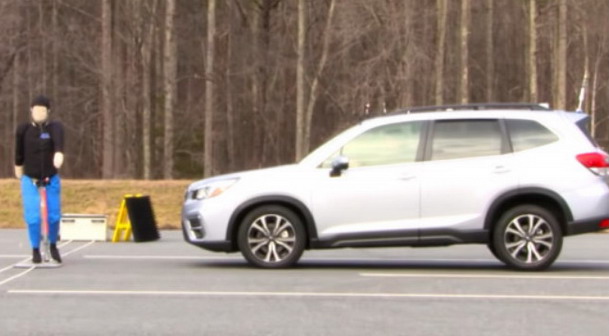
SUVs/Crossovers More Dangerous to Pedestrians Than Regular Passenger Cars
Pedestrians hit by SUVs/Crossovers or Pickup Trucks are significantly more likely to die than those hit by hatchbacks or sedans, new research shows.
The study, conducted by Imperial College and the London School of Hygiene and Tropical Medicine, compared data on traffic incidents involving SUVs/Crossovers, pickup trucks and vans on the one hand, and hatchbacks and sedans on the other.
An analysis of 682,509 incidents showed that an adult pedestrian's risk of death was 44 percent higher when hit by an SUV/Crossover or Pickup Truck compared to a regular passenger car. For a child aged 0 to 9, that risk increases to 130 percent.
The study estimates that 17 percent of adult pedestrian and cyclist deaths could be avoided if drivers swapped their SUVs/crossovers for lower-riding cars. That translates to 620 lives saved annually.
However, it should be noted that the study primarily focused on crashes in the US, where vehicles tend to be larger and heavier than in Europe. Four-fifths of the study’s comparisons of SUVs and regular passenger cars were from the US.
The European data is also affected by the lower proportion of SUVs/crossovers compared to the US. Consequently, the study estimates that eight percent of adult pedestrian and cyclist deaths in Europe could be avoided by switching to traditional passenger cars.
Despite these findings, the report warns against a complete ban on SUVs, noting that there is no universally accepted or legal definition of what constitutes an “SUV”.
Instead, it calls for action against the biggest risk factor—the high profile and blunt front end, which are typical of SUVs/crossovers and pickup trucks.
“The key mechanism underlying this increased risk appears to be the higher and more vertical front end profile of SUVs/crossovers and pickup trucks,” the study states. “This means that the victim is initially struck in the upper part of the body, the pelvis rather than the legs in the case of an adult, or the chest rather than the pelvis in the case of a child. This further means that the victim is more likely to be thrown forward onto the road rather than being carried on the hood of the vehicle.
These and other crash dynamics are associated with a higher proportion of upper body injuries (including the head, chest, and abdomen) and a more severe injury profile.”
Indeed, according to a 2024 study published in the journal Transportation Economics, increasing the height of a car’s front end by 10 centimeters increases the risk of pedestrian fatalities by 22 percent.
In the study, the authors found that in the case of a crash, pedestrians or cyclists struck by a SUV or LTV suffered more severe injuries than those hit by a passenger car. The odds of fatal injury increased by 44% for people of all ages struck by an SUV, compared with those hit by a passenger car. Among children the odds of fatal injury increased by 82%, and among children under the age of 10 it increased by 130%.
When looking at the likelihood of having a fatal or a serious injury, as compared to a slight injury, the likelihood increased by around a quarter (odds 24% higher in adults and 28% higher in children) for those hit by an SUV or LTV. These effects were all similar for both pedestrians and cyclists.
Previous research indicates that a key mechanism for this increased risk is likely to be the taller and blunter profile of the front end of SUVs and LTVs. A taller front end means that a pedestrian or cyclist is struck higher up on their body (e.g. the pelvis not the knees for an adult, or the head not the pelvis for a child). A taller and blunter front end also means that the pedestrian or cyclist is more likely to be thrown forward onto the road, at which point the striking vehicle may hit them a second time or roll over their body.
Of the 24 studies analysed, all were conducted in high- or middle-income countries, with the majority (16/24 studies) undertaken in the US. There were also studies from countries including the Netherlands, Germany and France, but none from the UK. Analyses that compared the studies from the US to the studies from the rest of the world showed broadly similar results, suggesting that the findings are relevant to other settings.
As SUVs become more common, there is an increase in their impact at the population level. At present, the authors estimate that the proportion of car crashes involving an SUV is around 45% in the USA and around 20% in Europe. If all SUVs were replaced with passenger cars, the number of pedestrians and cyclists killed in car crashes would decrease by an estimated 17% in the USA and by 8% in Europe. The number of child pedestrians and cyclists killed in car crashes would decrease by 27% in the USA and by 14% in Europe.
Elsa Robinson, who worked on the study as an MSc Public Health student at LSHTM, said: "Analysing over half a million crashes from countries from across the world tells us that SUVs and other similarly large vehicles are much more likely than traditional passenger cars to cause serious harm if they strike a pedestrian or cyclist.
“Our findings also highlight that these larger vehicles are particularly dangerous for children, especially young children. This could be because children are shorter in height, and are therefore more vulnerable to the risks of being hit by vehicles with a tall front end”. Anna Goodman, Assistant Professor at LSHTM and senior author of the study, said:
“Around the world, we have seen a huge increase in the sale of ever-larger cars. Previous research has found that this trend is substantially undermining progress towards net zero goals. Similarly, our findings indicate that this proliferation of larger vehicles threatens to undermine all the road safety gains being made on other fronts.
“Cities and countries around the world are starting to introduce measures to discourage the use of these large vehicles, and our study strengthens the road safety rationale for this.”
A limitation of the research is that the individual studies analysed relied on manufacturers’ classification of what constitutes a SUV or LTV as there is no agreed legal definition. The authors say that further research is needed into the unique characteristics of these vehicles and what makes them more dangerous to pedestrians and cyclists.
Mundoquatrorodas


Nenhum comentário:
Postar um comentário