AUTONEWS
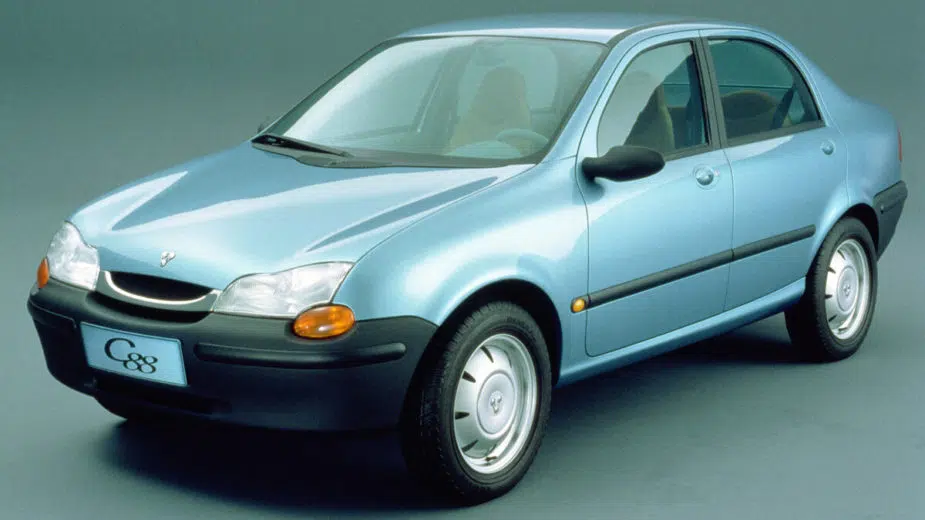
Porsche C88: the Dacia Logan from the renowned Porsche
You won't find the Porsche symbol anywhere, but trust me, you're looking at a real Porsche. Unveiled in 1994 at the Beijing Motor Show, the Porsche C88 was supposed to be for the Chinese more or less what the Beetle was for the Germans, a new “people's car”.
Looking at it, we'd say it looks more like a Dacia Logan of sorts — the C88 came out 10 years before the Romanian low-cost proposal with French genes. However, the C88 remained only in prototype status and would never see the light of day… How does a manufacturer like Porsche come up with a car like this, so far removed from the sports cars we are used to?
The sleeping giant... It was the first half of the 90s — there were no Porsche SUVs, no Panamera... In fact, Porsche at that time was an independent automaker that was going through serious difficulties. If in recent years we have seen the Stuttgart brand accumulate sales and profit records, in 1990, for example, it had only sold around 26 thousand cars.
Behind the scenes, work was already underway on what would be the brand's savior, the Boxster, but Wendelin Wiedeking, the CEO at the time, was looking for more business opportunities to return to profits. And that opportunity came from perhaps the most unlikely place of all: China.
Still far from being the economic giant it is today, in the 1990s the Chinese government set the goal of developing a national automobile industry, with its own development centers. One that was not dependent on the European and American car manufacturers that already produced in the country: Audi and Volkswagen, Peugeot and Citroën, and Jeep.
The Chinese government's plan had several phases, but the first was to invite 20 foreign automakers to design an experimental family vehicle for the Chinese people. According to what had been announced at the time, the winning project would reach the production line at the turn of the century, through a joint venture with FAW (First Automotive Works), a state-owned company.
In addition to Porsche, many brands responded to the Chinese invitation and, in some cases, such as Mercedes-Benz, we also got to know its prototype, the FCC (Family Car China).
Developed in record time... Porsche also accepted the challenge, or rather, Porsche Engineering Services. A not at all strange division developing projects for other brands. And at the time, there was a real need for projects, due to the lack of income from the Stuttgart builder. We've already talked about these and other "Porsches" here: Developing a small family car for the Chinese market wouldn't be something out of this world. It took just four months to shape the Porsche C88 — a record development time… There was even time to plan a model family that would cover the majority of the market. In the end, only the C88 would be released, precisely the top of the line of the family. As a step up, a three-door compact capable of carrying up to four passengers was planned, and a step above included a family of models with three and five doors, a station wagon and even a compact pickup truck.
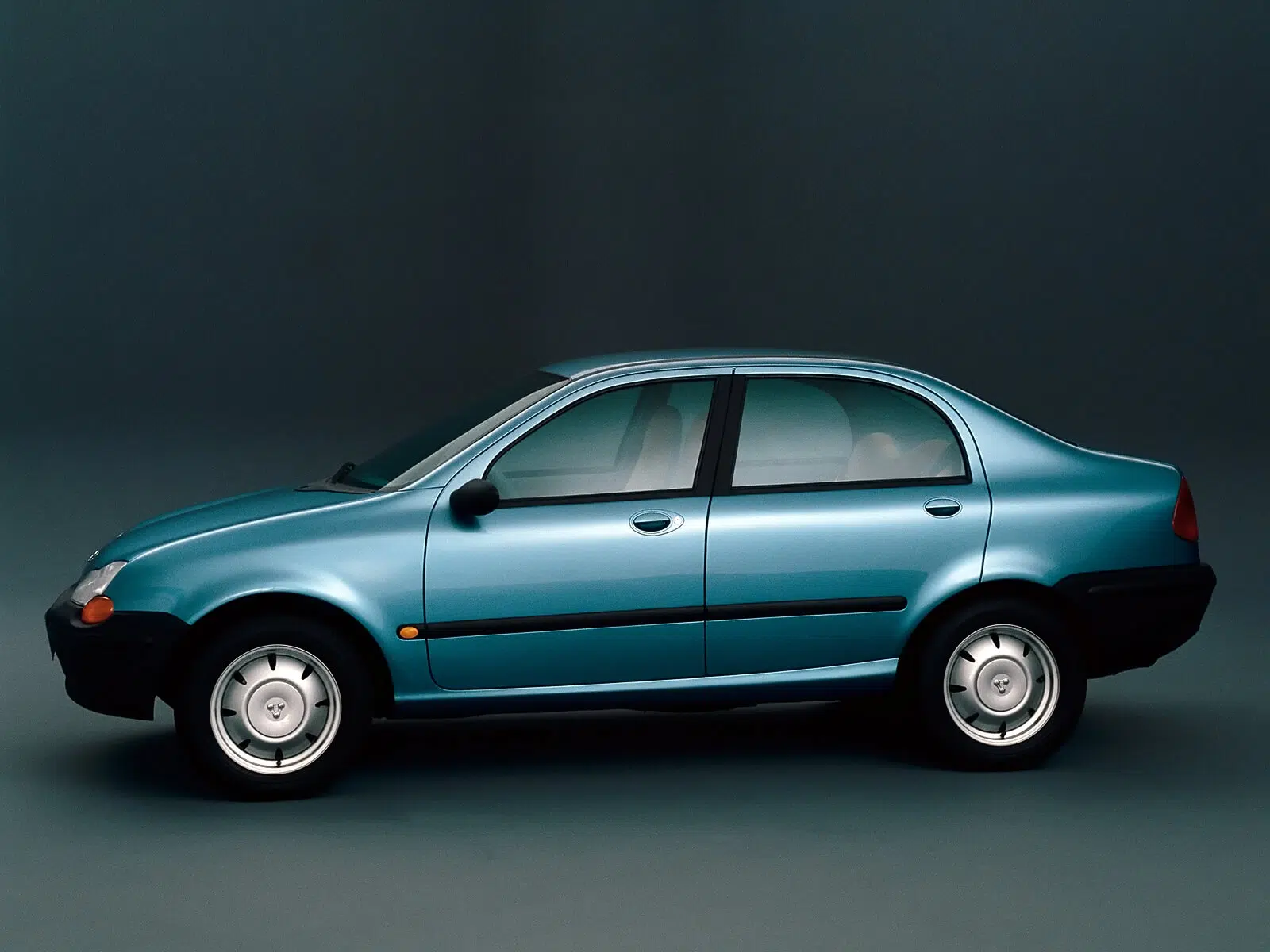
Although the C88 is the largest of them all, it is, today, a very compact car. It measures 4.03 m in length, 1.62 m in width and 1.42 m in height — on par with a current B-segment in length, but much narrower. The trunk had a capacity of 400 liters, which was a respectable value, even today.
Being the top of the line, the C88 customer would have access to “luxuries” such as front airbags and ABS. As an option, even a four-speed automatic transmission was available.
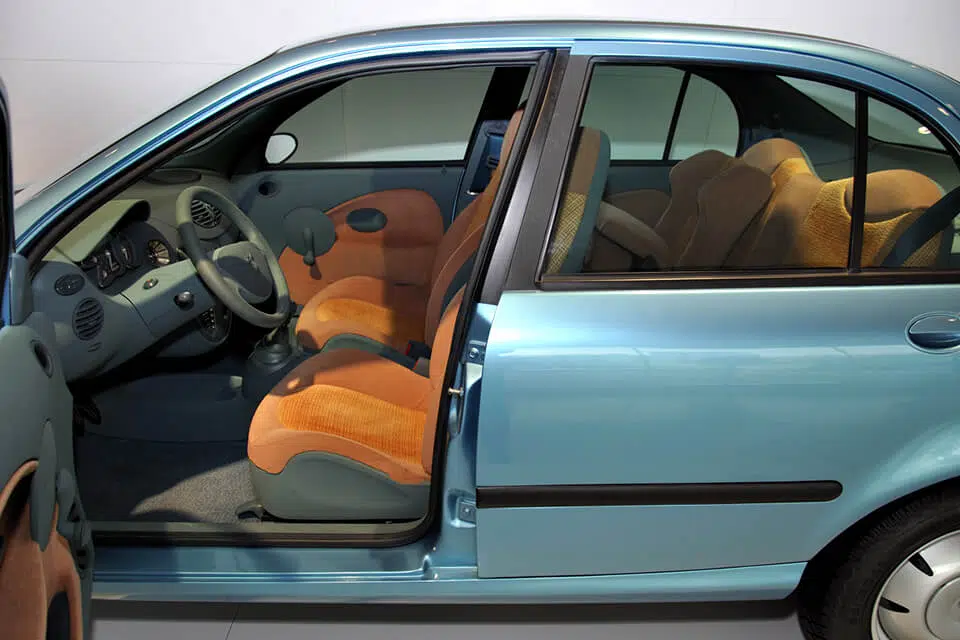
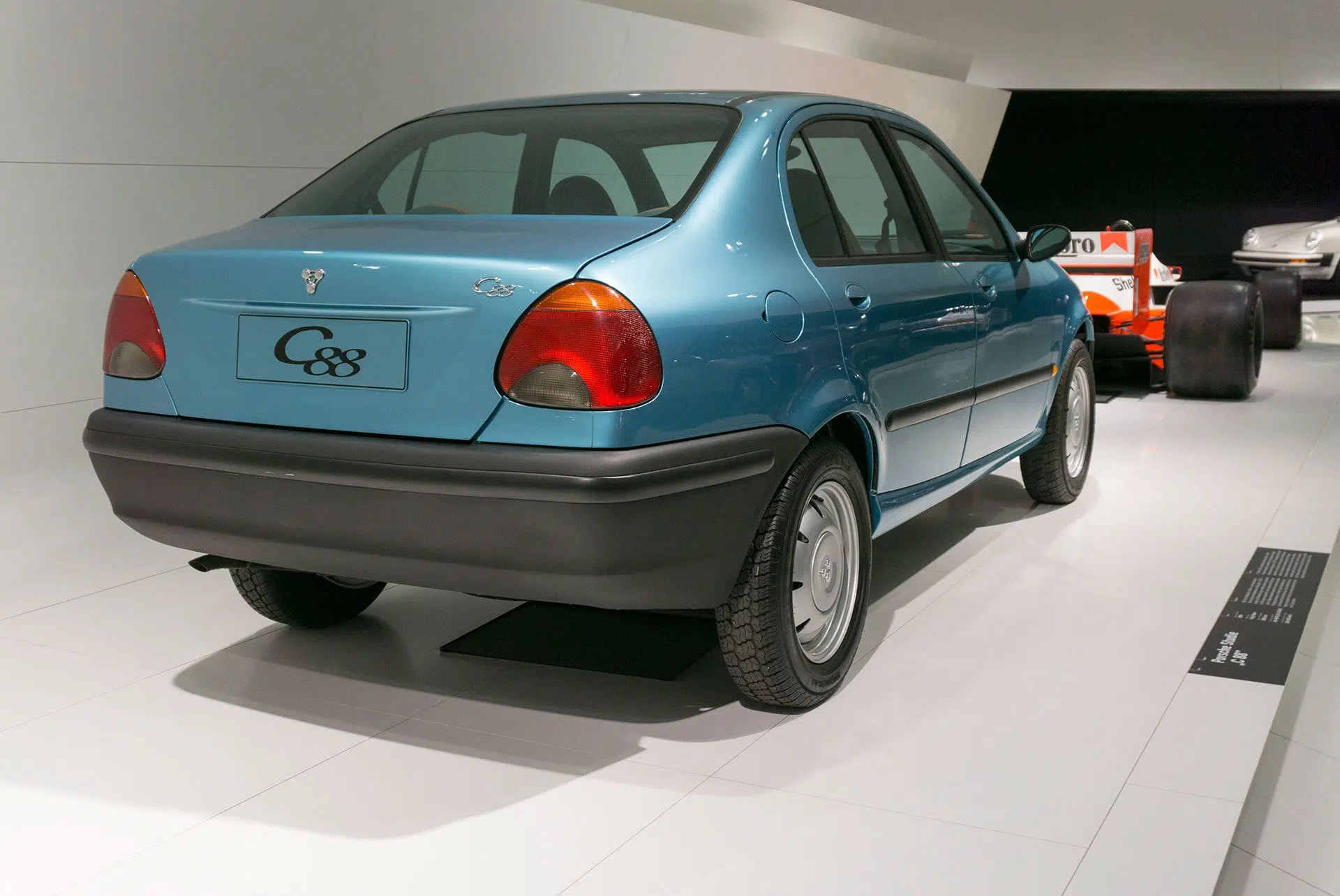
Despite these “treats”, it continued to be a low-cost project: the prototype had unpainted bumpers and the wheels were made of iron. The interior was also somewhat spartan, despite the contemporary design. But far from the typical bling bling of ballroom models.
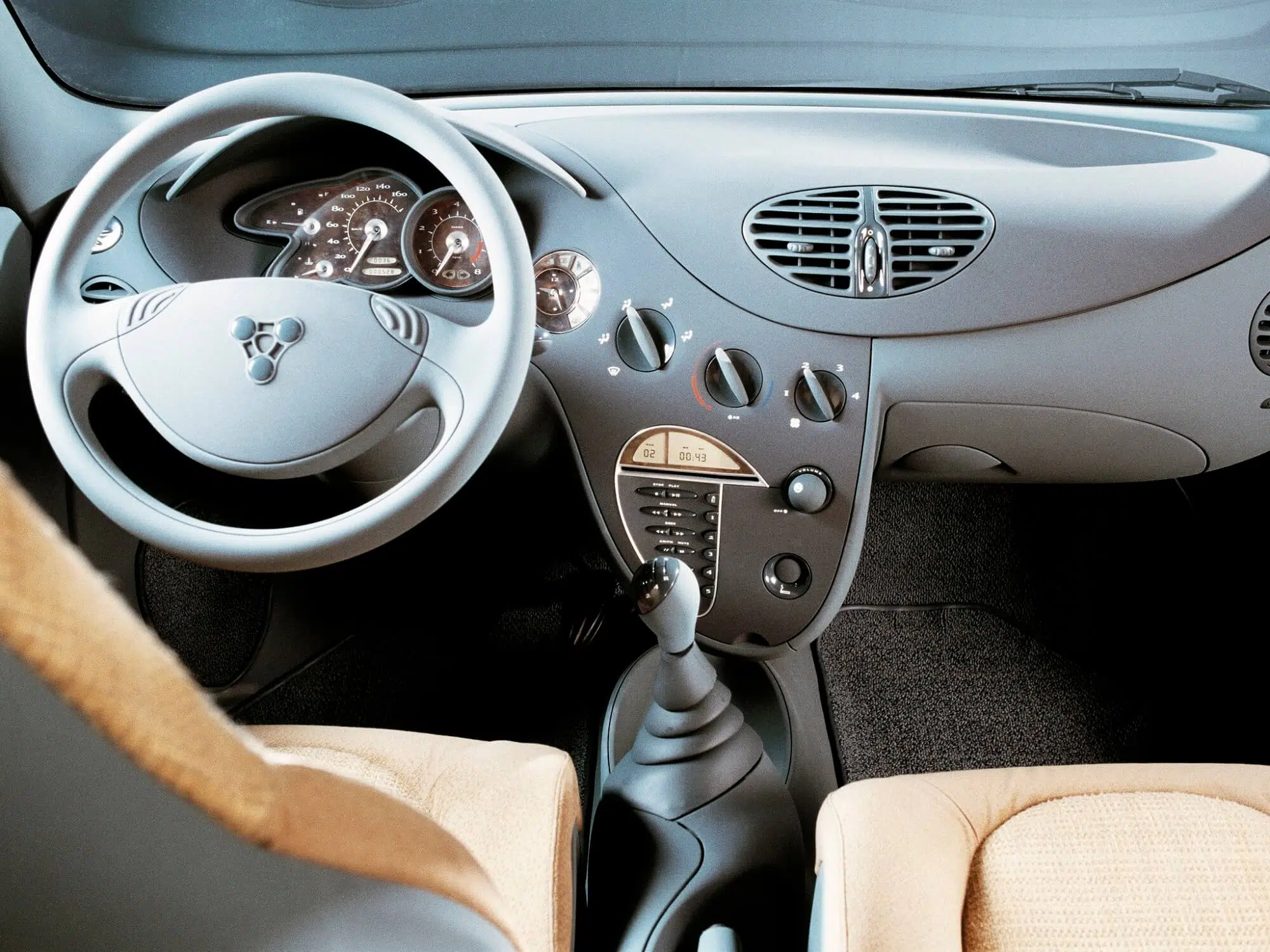
Despite this, the Porsche C88 was the only one of the three planned models to also be designed for export markets, and was prepared to exceed the safety and emissions standards in force in Europe at the time.
Why C88?...The name chosen for this kind of “Dacia Logan” from Porsche has a touch of… Chinese symbolism. If the letter C corresponds (possibly) to the country, China, the number “88” is, in Chinese culture, associated with good luck.
As we mentioned, there's also not a single Porsche logo visible — the C88 wasn't designed to be sold under the Porsche brand. This was conveniently replaced by one consisting of a triangle and three circles representing the “one-child policy” then prevalent in China.
Its soft, understated design was chosen so as not to appear dated when it went into production at the beginning of the new century that was approaching. It never came to fruition... Despite Wendelin Wiedeking's enthusiasm for the project — he even gave a speech in Mandarin during the presentation — it never saw the light of day.
Almost out of the blue, the Chinese government cancelled the entire family car project for the country without ever choosing a winner. Many of the participants felt that it was all nothing more than a waste of time and money.
In the case of Porsche, in addition to the vehicle, it planned to build a factory in China with an estimated annual production of between 300,000 and 500,000 vehicles derived from the C88. It even offered a training program to Chinese engineers in Germany to ensure that the quality of the final product would be on par with any other product in the world.
Still on this subject, the director of the Porsche museum, Dieter Landenberger, revealed in 2012 to Top Gear: “the Chinese government said “thank you very much” and took the ideas for free and today when we look at Chinese cars we see many details of the C88 in them”.
Mundoquatrorodas


Nenhum comentário:
Postar um comentário