AUTONEWS
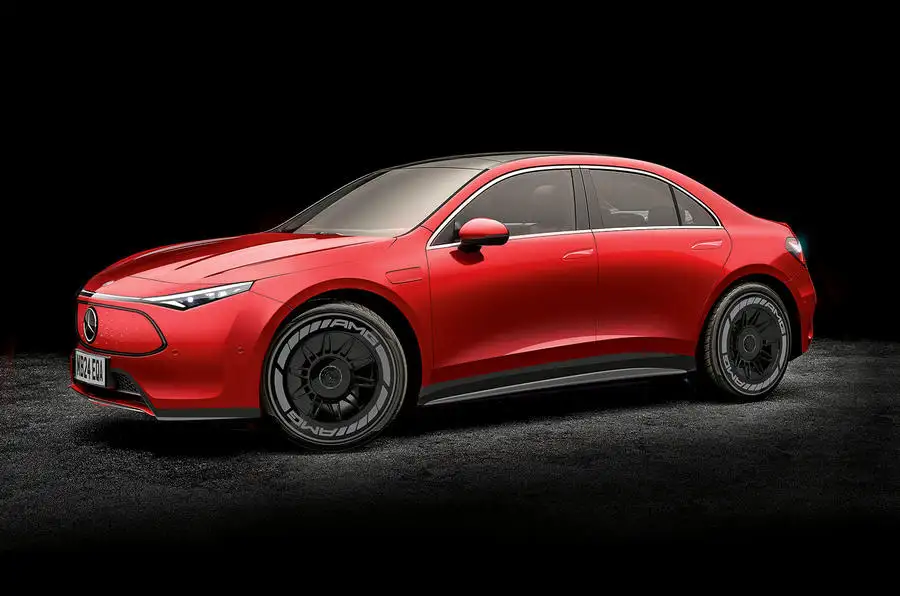
Mercedes design chief criticizes AI and multimedia screens
Mercedes' head of Design has no doubt that in the future he will be replaced by a machine equipped with Artificial Intelligence. And he also argues that large screens on board are not a luxury.
Gordon Wagener is the head of the Mercedes Design Department, responsible for all choices related to the brand's style in any of the activities in which it is present. At a recent unveiling of Mercedes' new apartment towers in Miami, Wagener took the opportunity to speak about the future of design, and in the process predicted that within 10 years it will be replaced by computers using Artificial Intelligence (AI) rather than flesh-and-blood designers.
Over the past 100 years, the people who have shaped vehicles, as well as everything else from furniture to homes, clothing, watches and eyewear, have sought to combine style with the brand's philosophy and its positioning in the market, while of course respecting function. What Mercedes' head of Design predicts is that soon a computer managed by an AI-powered program will be able to design anything, faster and much cheaper than the best designers in the market, in the most varied types of industry.
In conversation with the American television network ABC News, Wagener also spoke about the screens that have come to dominate the interior of modern cars (electric or not), both in size and quantity. Now, according to the Mercedes designer, screens — even larger ones or those arranged close together — are not seen by customers as a luxury element.
Wagener adds that the three-screen display called Hyperscreen, which can be found in the EQS and EQE electric cars, is perfect in terms of hardware. However, according to him, the software that powers it is far from perfect and ideal in terms of functionality. Wagener predicts that, in the coming years, the software will evolve to the point where it will become a real asset for customers, which inevitably involves keeping up with their needs.
AI laymen point to human creativity as the first barrier to an AI replacing a designer, but does a machine need to function like a brain to be creative? It just needs to emulate, analyzing thousands of variables until it finds what becomes creative for each buyer – be it in a video, a song, an advertisement or even a product. Ultra-personalization and mass simulation will generate this creativity, which many will call artificial, but which will fulfill its role. People will buy because the AI has run thousands of simulated worlds and identified that, for that specific consumer, it is exactly what they want at that moment.
Today, AI presents a startling paradox: while 99% of current AI designs still fall short of the standard of excellence, the remaining 1% points to a future of accelerated and transformative advances, and the pace at which that 1% will become 100% will take less than a decade.
Imagine a scenario in which, within a decade, human creative capacity is complemented – or even replaced – by machines capable of offering design solutions at much more efficient costs. This thinking not only breaks traditional paradigms, but also invites us to rethink how innovation and creativity can go hand in hand in an increasingly competitive market. What will be the role of creative professionals? And how are you preparing for this new challenge?
Do you believe we are prepared for this radical transformation?
Mundoquatrorodas


Nenhum comentário:
Postar um comentário