AUTONEWS
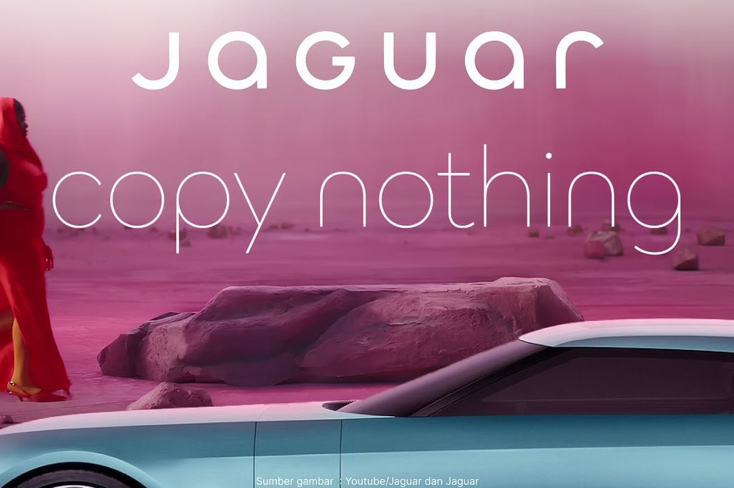
Jaguar’s controversial new identity continues to draw attention
Jaguar’s boss recently said the brand’s new identity wasn’t meant to be a hit, but he doesn’t mind losing his old customers
Jaguar is undergoing a major transformation and its new “Copy Nothing” relaunch campaign has already reached almost a billion people around the world.
Since releasing a colorful teaser video in November, the British brand has generated huge buzz, but also faced criticism and controversy.
Rawdon Glover, Jaguar’s managing director, recalls how what started out as a normal day at the office ended up becoming a PR nightmare.
The video, which was intended to announce Jaguar’s transition to an all-electric brand, ended up going viral unexpectedly, even attracting comments from Elon Musk and British politician Nigel Farage.
Among the lessons Jaguar has learned from this situation, Glover admits that the original message of the campaign got lost in the social media storm.
The exclusive use of these platforms to communicate the brand’s new identity has resulted in a lack of context, leaving room for speculation and misunderstanding.
The lack of clear information about the reasons for the change, the new electric drivetrain and Jaguar’s premium positioning has contributed to the confusion.
Another acknowledged mistake has been the alienation of traditional customers.
While Jaguar is targeting a younger, more urban and sophisticated audience, Glover stresses that the company still values its loyal customers.
He says he has been dedicated to keeping fans and enthusiasts of the brand informed about the transition, ensuring that those who already drive high-performance models such as the F-Type or SVR can make the switch to electric in the future.
Jaguar is also comfortable with the drastic reduction in sales, which, if it happens, will mean that the brand’s long-time customers are moving elsewhere.
With most of its models having ceased production and only the F-Pace still in production, the brand sold just 33,000 cars last year.
This number, however, does not worry the company, which is betting on repositioning itself as a luxury brand with much higher prices. The first model of the new phase will be a four-door GT, scheduled for 2026, costing between £110,000 and £130,000. Regarding the controversy surrounding the relaunch video, Glover denies that the campaign was intentionally “woke”.
He explains that the aim was simply to reflect Jaguar’s new identity, using a modern and bold design, but without political intentions. Even so, the campaign was quickly appropriated by the cultural debate and amplified by social media algorithms. Jaguar’s future will be all-electric, and Glover rules out any possibility of reversing this decision.
While brands such as Porsche and Lotus rethink their electrification plans, Jaguar maintains its strategy of not offering hybrid or combustion versions in its new models. The company is betting that by 2030, electric cars will dominate the market, and the new GT will be a car that people will want not just for the sake of necessity, but for its design and performance.
While the new GT is scheduled to go into production in 2026, prototypes are already being tested.
The delay is not due to the construction of a new battery factory at Jaguar’s parent company Tata, but rather to the complexity of JLR’s industrial restructuring.
The company is revamping factories in Solihull, Wolverhampton and Halewood to accommodate the production of electric models, including the electric Range Rover.
The shopping experience will also be transformed. Jaguar is developing a new store concept, starting with a showroom in Knightsbridge, London, followed by locations in Paris and Shanghai.
The aim is to create a luxurious environment where customers can configure their cars in virtual reality and experience personalized service, similar to what Land Rover already offers for models in the SV range. Finally, Glover doesn’t seem worried about criticism from figures like Nigel Farage, who predicted Jaguar’s collapse within two years.
He believes some people will immediately understand the brand’s new proposition, while others will need time to get used to it. And for those who don’t like it, he says without worry: “If it doesn’t go to Nigel, that’s fine.”
Car production suspension in India...Tata Motors' British luxury car unit has suspended its plans to manufacture electric vehicles at Tata's new $1 billion plant in southern India, Reuters reported on Wednesday.
The decision was made after JLR(Jaguar Land Rover) failed to balance the cost and quality of locally sourced parts for electric vehicles, the report said, citing sources. The sources also said the decision reflected a drop in demand for electric vehicles.
All work related to JLR's electric vehicles in India has been halted for about two months, the report added. The disruption in operations is expected to delay the launch plans of Tata Passenger Electric Mobility, Tata's local electric car unit, the report said, adding that the first of its premium Avinya models is expected to be impacted by the delay.
Mundoquatrorodas


Nenhum comentário:
Postar um comentário