AUTONEWS
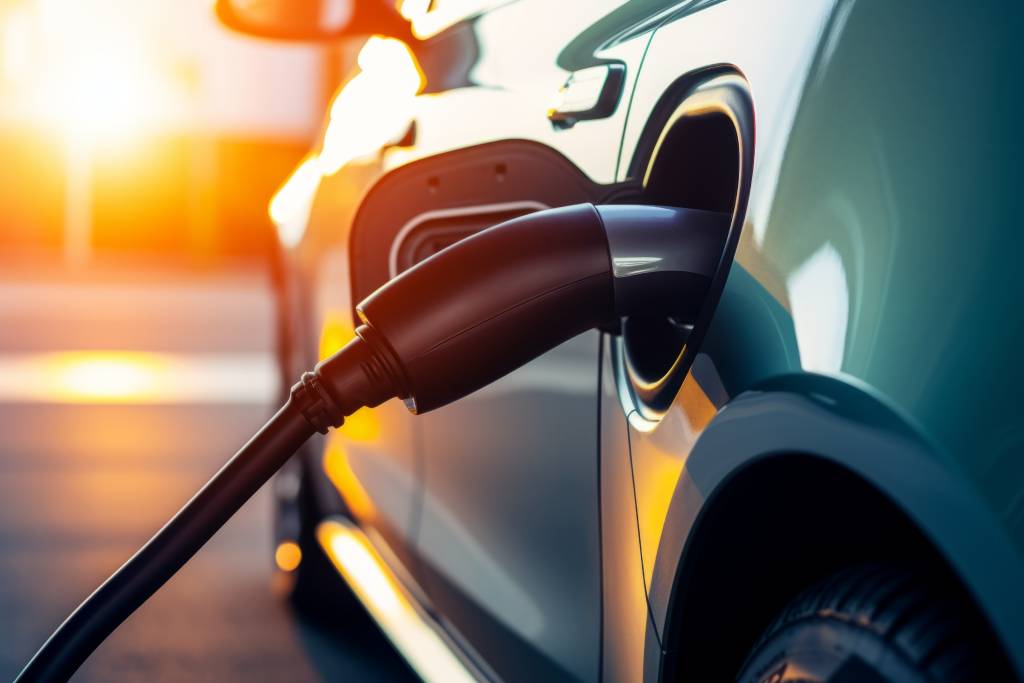
Electrification in the spotlight in Europe
The European Commission today unveiled its Action Plan to save the automotive industry, after more than a month of talks with several representatives of the sector.
In recent days, several of the measures that the Commission could present have been made public and we can confirm that they are all present in the final document.
The Action Plan revealed today focuses mainly on increasing the competitiveness of the automotive industry in terms of technological development (autonomous and software-defined vehicles) and electric vehicles (battery production, purchase incentives, charging infrastructure, etc.).
“I want our European car industry to take the lead. Our common goal is to build a sustainable, competitive and innovative automotive industry in Europe that benefits our citizens, our economy and our environment”... said Ursula von der Leyen, President of the European Commission Batteries in Europe... One of the major problems in the European automotive industry today is related to the lack of competitiveness of European electric vehicles compared to others, such as the Chinese ones.
The European Commission’s Action Plan aims to tackle this problem on several fronts, which involves not only battery production within the European Union, but also ensuring a “secure and competitive supply chain of battery raw materials”.
To this end, the EC announced that it will make 1.8 billion euros available, in an investment that aims to reduce dependence on external suppliers and guarantee Europe's strategic autonomy in the production of batteries for electric vehicles.
It is worth remembering that the EU had previously demonstrated its intention to reduce external dependence for the production and supply of batteries. At the end of 2024, it announced the granting of subsidies worth up to one billion euros to European battery manufacturers.
Incentives for the purchase of electric vehicles...Given the weak demand for electric vehicles in Europe, the Commission announced that it is working on measures to encourage the adoption of zero-emission cars: “the action plan includes measures that will provide incentives for the transition to zero-emission vehicles,” a statement said.
To ensure the effectiveness of the measures, the institution will work together with Member States to exchange information on best practices and lessons learned from existing incentive programmes, including in terms of taxation.
The Commission also wants to promote social leasing schemes for new and pre-owned zero-emission vehicles.
The Action Plan also encourages a renewed focus on sales of zero-emission vehicles to businesses and fleets. They currently account for 60% of all new car sales in the European Union.
Accelerating innovation...Another important point of the action plan is the creation of a European Alliance for Connected and Autonomous Vehicles, aimed at bringing together stakeholders from the automotive sector to develop these types of technologies.
This alliance will help the industry transition to autonomous and AI-powered vehicles. At the same time, the EC will continue to work on regulating these vehicles and creating conditions to enable large-scale pilot tests for both autonomous passenger and freight transport.
“These actions will be supported by joint public-private investments of around €1 billion supported by the Horizon Europe Programme over the period 2025-2027,” the EC announced.
Emissions standards relaxed...Following requests from several car manufacturers for the new emissions targets to be relaxed, the European Commission will propose a change to the CO2 (carbon dioxide) emissions regulations this month.
However, the goals remain the same. The only thing that changes is the deadline that builders have to comply with them. Instead of having to achieve them this year, the Commission proposes that the calculation be made over three years (2025-2027).
The aim is to give companies in the automotive sector more time to adapt to emissions reduction targets.
Support for industry workers...Last but not least, the Commission addressed the challenges related to skills shortages and an ageing workforce in the European automotive sector.
To address these challenges, a €90 million fund will be created to finance skills training in the sector, helping workers adapt to new technological demands and the transition to clean mobility.
In addition, a “European Just Transition Observatory” will be established, which will monitor employment trends in the automotive sector, identifying specific areas where job losses could occur due to technological change (such as the transition to electric vehicles).
Mundoquatrorodas


Nenhum comentário:
Postar um comentário