HONDA

The on-off trail bike market has been growing since 2013 and within it the “mid class” is the one that has seen the greatest growth. More than two and a half million units sold in a segment that has not yet reached its ceiling in its expansion.
This also translates into fierce competition between brands with many present in the segment and numerous models of all types, displacements...More than ever, the details count because the differences are becoming increasingly narrower and that is why we must keep an eye on what the market demands, as well as what is criticized, in order to correct it.
Honda brought back its Transalp model in 2023, after a decade without using it - the last previous model produced in Europe was the XL700V-A in 2011/2012 - to have a genuine trail bike that would cover both on- and off-road use well, comfortable, easy to reach, stable, manageable and loaded with equipment that would make it a leading product in terms of price, performance, aesthetics...

IN QUESTION... It is true that since its birth the Transalp has been "overwhelmed" by Honda's concept of making a mixed trail, but prioritizing road and daily use more than riding in the countryside.
Some expected a more rural mid-range trail version and Honda opted to be faithful to what the Transalp name meant: an adventure touring bike based on the original 1986 Transalp design.
However, the XL 750 version opted for a parallel twin-cylinder engine, not a V-shaped one as the previous XL600V, XL650V, XL700V had, this 750 being the largest displacement engine in the model.
Two years have been the period to launch the first redesign with aesthetic novelties in the Honda Transalp XL750 2025. The main changes appear in the front design with a new double LED projector headlight - previously it was a reflector - inspired by the design of the Africa Twin.
The windshield has also been renewed, also made of the innovative Durabio material of biological origin, with corn as the main component, a sign of the brand's involvement in sustainability in the manufacture of its motorcycles.
In addition, the model improves electronics and connectivity thanks to a new 5-inch TFT screen that includes Honda RoadSync connectivity for smartphones. A new 4-way switch arrives to operate the screen and the bike enjoys solutions such as self-cancelling indicators and emergency braking signal technology (ESS) when there are hard stoppages.

It has 5 levels of traction control, and in User mode it can be disconnected, also having integrated anti-wheelie control. In the 2025 model, the engine modes have been adjusted so that there is a greater contrast between sport and gravel, as well as between standard and rain. All to have a more progressive power delivery, with better quality when opening the throttle.
FROM NEGATIVE TO POSITIVE... The most criticized aspect of the Transalp was the rear suspension with a shock absorber that lacked firmness in compression and was too fast in extension, a somewhat unpredictable result at certain times.
That is why the shock absorber settings have been revised with a Showa fork that is more solid in compression/extension. For its part, the rear shock absorber is much firmer to have better control of the bike, going from previous comfort settings to "sporty" settings with more solidity in compression and a different rebound.

There is also a new and expanded range of accessories, such as 16L soft side bags, saddlebag-style, 100% waterproof, a thicker comfort seat (15 mm additional padding), an updated high windscreen (higher and wider), a high-volume alarm with motorcycle locator and adjustable alarm tone. Accessories include five packs: Urban, Touring, Adventure, Rally and Confort, with various options such as a top case, side bags, fog lights and comfort improvements.
Above all, in the suspension with the new settings, especially in the shock absorber with a very notable improvement compared to the previous model. The hydraulic retention is effective and riding with a load and/or passenger becomes substantially more effective.
There is less weight transfer between the rear and front suspension, which makes the 750 XL much more stable, agile and fun.
But also in the engine, the adjustments to the TBW electronics are positively surprising. The character of the engine changes noticeably, and I feel it as fuller, more fun and lively.
The quickshifter has improved a lot, which has been revised in accordance with the new electronic adjustments, now showing itself to be more precise and less abrupt. An optional accessory that should be fitted as standard and that, without a doubt, is “obligatory” to be fitted.
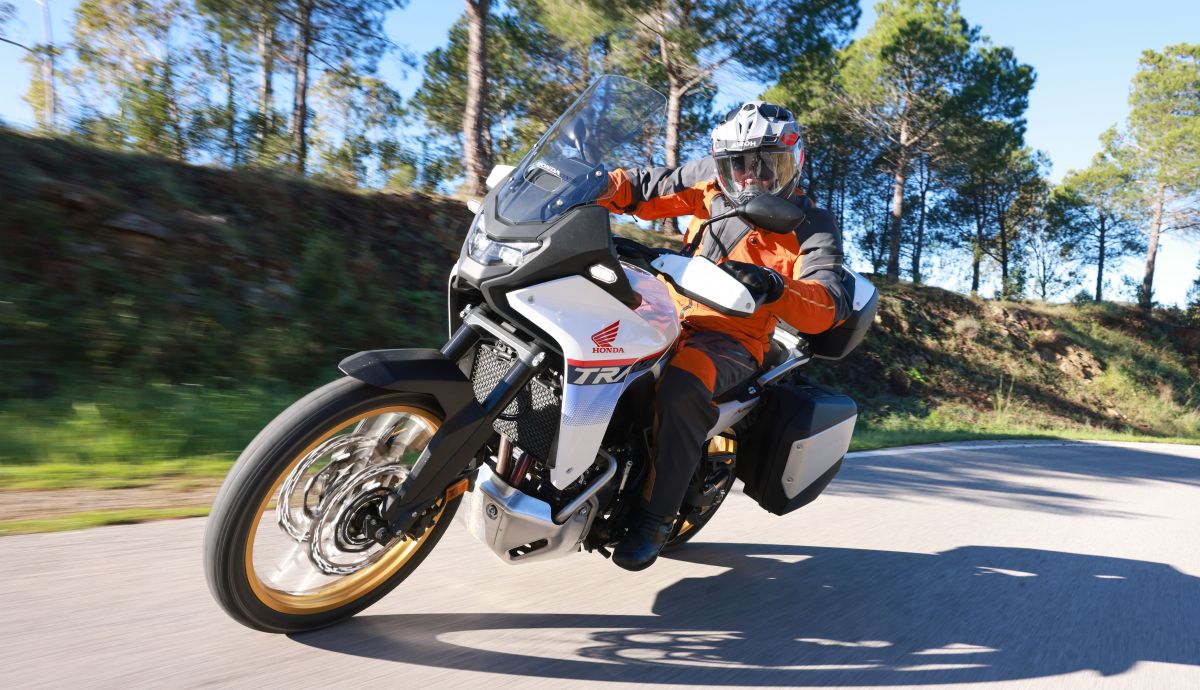
Good improvement in the instrumentation and the new switchgear, handling of the switchgear is much more intuitive and the information on the screen is clearer and much easier to read, in any of the different options that can be chosen for the display of the graphics, including day and night vision.
However, it requires adaptation to identify/understand the icons of each engine mode. I like the new front headlight with a more “premium” image in line with the Africa Twin and far from the previous aesthetic closer to the CB500X.
In any case, the better response of the bike was a good opportunity to have made a more profound design change to differentiate it and modernize it even more. Of the colors, the new gray is very good, and the photos do not do it justice.
Among the accessories, the comfort seat is amazing because it honors its name and allows the kilometers to pass with less fatigue than the standard one. The new side panniers deserve attention, very practical and well designed.
“Soft” cases that offer more freedom than rigid ones as they can be easily disassembled and offer comfort to be carried as a backpack, for example, to the office with the computer inside. Saddlebag that is versatile as it can be used in “top box” format on its specific support.
However, these saddlebags do not have a lock on their anchor, exposed to theft.
The Transalp is a trail in the classic concept: a bike that rides well on the road and on tracks. New for 2025: instrumentation, suspension settings and accessories such as “soft” cases.
The Transalp has improved more than it seems. If at first, going through the list of improvements, we might think that it is exactly more of the same, on the move the feeling is different.
The bike greatly improves its response thanks to a livelier and more fun engine that is complemented by a suspension with a much sportier and more solid feel, but without giving up comfort. Higher quality driving and enjoyment for a genuine trail.
Available in three colour options, two new ones, Graphite Black and Deep Mud Pearl Grey, in addition to the classic and identifying Tricolor, now with the Transalp letters in grey, previously in blue.
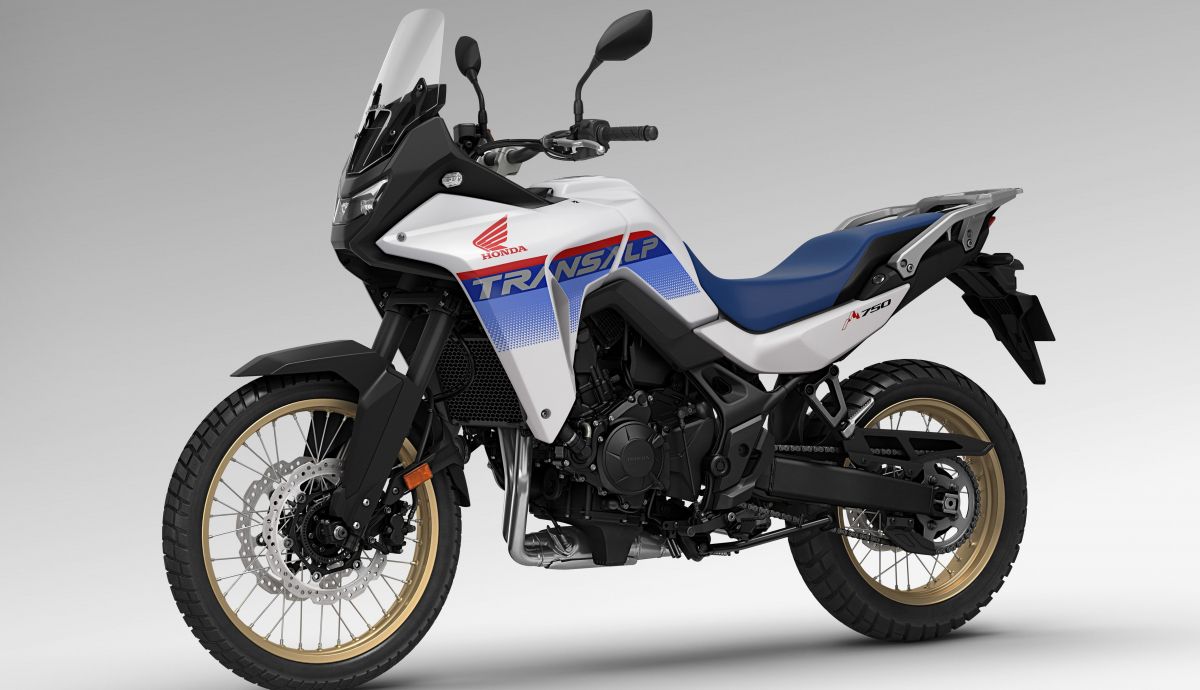
(TECHNICAL DATA) ENGINE--Type: 2 cyl. in line. Liquid cooled; Distribution: SOHC 8 V; Bore x stroke: 87.0 x 63.5 mm; Displacement: 755 cc; Compression: 11.1:1; Max. dec. power: 66.5 kW (90.5 hp) at 9,500 rpm; Max. dec. torque: 57 Nm at 5,150 rpm; Fuel supply: 2 injectors. 34 mm nozzles; Driving modes: 6; Electronic aids: TC; Acc. Clutch: Cable; Gearbox: 6 ratios; Sec. transmission: Chain.
CYCLE PART...Chassis: Diamond in steel; English: Swingarm: Double steel wishbone; Geometry: 27°/ 111 mm; Front suspension: Inverted fork; Bar diameter/Travel: 43 mm / 200 mm; Settings: None; Rear suspension/Travel: Monoshock / 190 mm; Settings: Preload; Front brake: Two 310 mm discs; Calipers: 2 pistons; Rear brake: One 256 mm disc; Caliper: Single piston; ABS Type / Disconnect: Standard / No; Front wheel: 90/90-21 ”. Rim 2.50”; Rear wheel: 150/70-18 ”. Rim 3.50”; Measurements: Tank capacity: 16.9 l; Full weight: 210 kg; Wheelbase: 1,560 mm; Seat height: 850 mm.
Reporter: Santi Ayala


Nenhum comentário:
Postar um comentário