AUTONEWS
São Paulo hosts approximately 1,100 helicopter flights per day. In New York, the second-placed city in the world, there are less than 300.
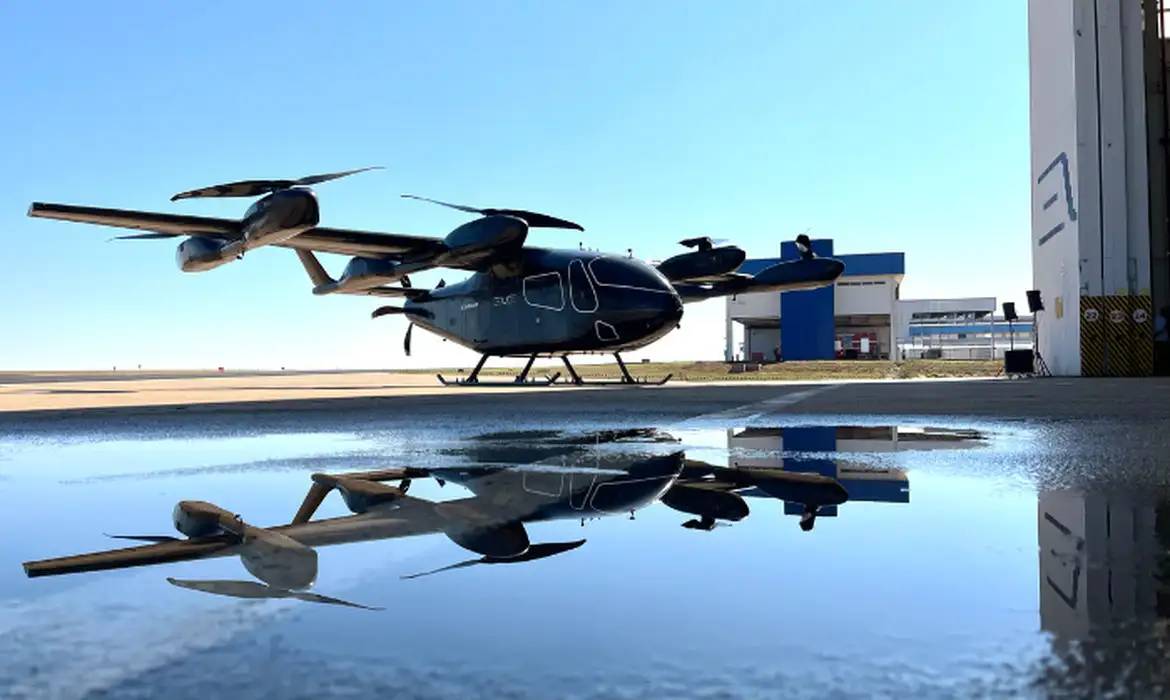
Although helicopters are a “modality” (there are quotation marks) restricted to the top of the pyramid, the fact that there are almost traffic jams of them in the skies of São Paulo makes the city an open-air laboratory for testing the viability of eVTOLs – an acronym in English for “electric vertical takeoff and landing vehicles”.
And the experiments are already underway, with real commercial flights, as we will see in this report.
Flying car or electric helicopter?...In the marketing jargon that has caught on, eVTOLs have been given the name “flying cars”. But that is not fair. The Jetsons are still in an inscrutable future. What we have are basically electric helicopter projects. Or giant drones, if you prefer. But still, aircraft that require professional pilots and a reasonable infrastructure.
Until a few years ago, eVTOLs only existed in PowerPoint presentations and 3D renderings. That has changed. The development of these aircraft is a solid global effort. At least 300 companies have projects along these lines and have already invested billions of dollars in developing prototypes – some of them are already carrying out demonstration flights.
The big advantage over helicopters, apart from zero CO2 emissions, would be the price per flight.
Chartering an entire helicopter for a 10-minute trip between the financial center of São Paulo and Guarulhos airport costs no less than R$10,000(local currency). With eVTOLs, the idea is that fuel savings and lower maintenance costs (part of the nature of any electric vehicle) will lower this price to something that more people can afford. Among the myriad of companies with eVTOL projects are the three largest in global aviation: Airbus, Boeing and Embraer – in this case, via EVE, a subsidiary of the São José dos Campos company that since 2020 has raised US$ 735 million by issuing shares and debt to create its electric aircraft. The idea is to develop a four-passenger vehicle with a range of 100 km – one fifth of that of a good helicopter, but that is what can be done with the batteries that exist today. What exists, for now, is a kind of full-size model, assembled at the Gavião Peixoto factory (SP). It is receiving the electrical paraphernalia for the first flight tests – scheduled for this year. The creation of an ‘ecosystem’... Building an eVTOL, however, is “only” one part of the whole thing. “We are not putting a new aircraft on the market. It is a whole new segment. An ecosystem,” said Frenchman Johann Bordais, CEO of EVE, at an event for investors in 2024.
Bordais was referring to the operational infrastructure. How would tickets be sold? By seat, like on a plane, or by vehicle, like on Uber? And what would the routes be? Aircraft, after all, don’t land in the middle of the street. “It’s an ecosystem that we have to build with partnerships,” added Eve’s CEO.
And the partnerships already exist. One of them is with Omni Helicopters, an air taxi company based in Lisbon with a strong presence in Brazil. It is the largest supplier of air transportation for Petrobras, for example – the state-owned company needs flights to transport labor to its offshore platforms. Omni operates 80 helicopters in Brazil and transports 800,000 oil industry workers per year.
If eVTOLs are in the sights of aircraft manufacturers, the same is true for aircraft operators. Omni already wanted to expand its operations beyond the oil fields. Knowing about the ambitious projects surrounding eVTOLs, he called Embraer for a conversation. He presented himself as a potential buyer of these aircraft and, more importantly, as an agent capable of helping in the development of this ecosystem.
To this end, in 2023, he set up a subsidiary, Revo, dedicated to urban passenger transport. The purpose there is to run a business model that could be applied to a future with eVTOLs, but using conventional helicopters – in this case, with a fleet of three aircraft based in São Paulo: an Airbus H135, for five passengers, and two H155s, for eight.
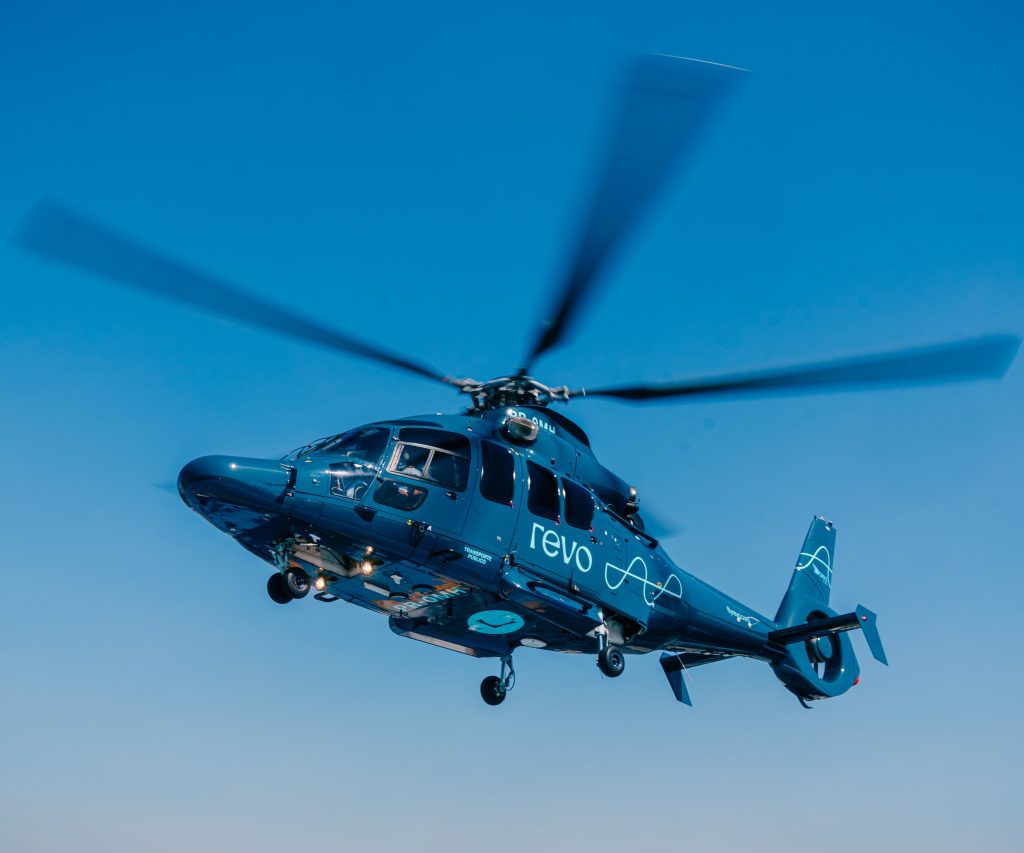
With the start of operations, Revo brought some answers to questions involving eVTOLs. How to book? Via app, like any airline. You enter the application, choose date, origin and destination.
Any origin and destination? No. To set up a viable business, the ideal is to focus on where there is most demand: airport transfers.
What Revo offers, then, are trips to Guarulhos airport departing from three heliports: one in the financial center of SP (Faria Lima), another in Alphaville and another in the luxury condominium Fazenda Boa Vista – always close to where you are the target audience for this type of service.
The sale is per seat, just like on an airplane. The helicopter can hold 5 or 8 passengers (depending on capacity), but it breaks down even if there is only one. For the return, same thing: you mark GRU as the starting point and Alphaville, Fazenda Boa Vista or Faria Lima as the destination. The service is “door to door” – a car takes each customer from the helipad to their home, and vice versa.
The challenge, of course, is to fill the aircraft so that the operation is profitable (an issue that will also be at stake in a future with electric aircraft). Revo, therefore, developed a system to adapt the supply of flights to potential demand.
“We know the configuration and schedules of all the planes that land in Guarulhos”, says the Portuguese João Welsh, CEO of Revo. In other words: knowing that, at a certain time, a Lufthansa Boeing 747 with 78 business class seats and 16 first class seats will arrive from Frankfurt, Revo will make more flights available at a time that matches this landing. There will certainly be people there willing to pay R$2,500 to be teleported via São Paulo.
According to João, demand has been growing. At the beginning of 2024, there were 200 passengers per month. By the end of the year, 800.
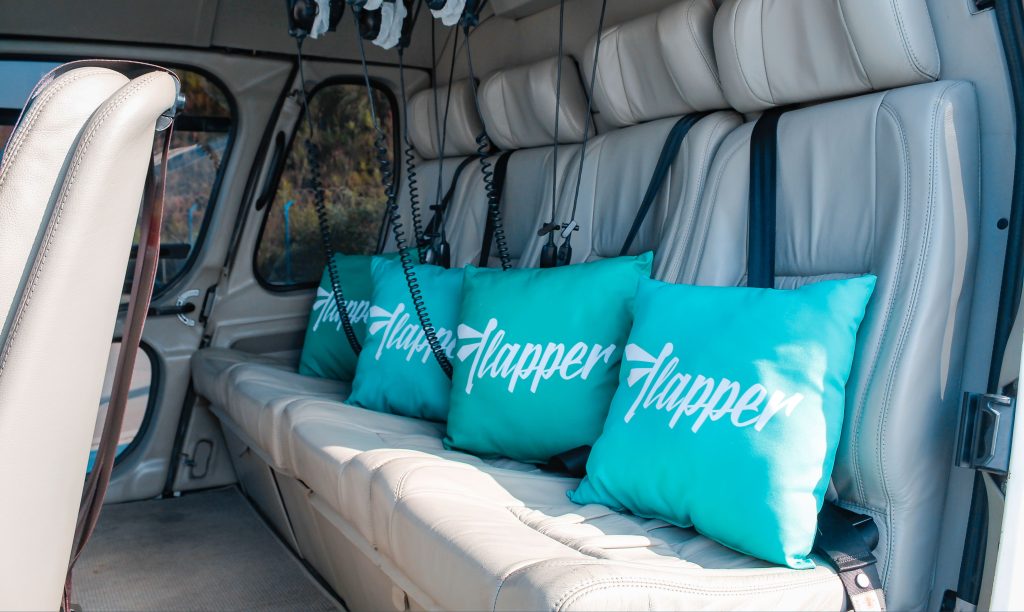
Another company that intends to join EVE’s client list is Flapper – a pioneer in “aviation by app”. Since 2016, it has been operating as a sort of AirBnB for air taxi companies. You access the app and book your flights. There are 2,600 aircraft registered there (including planes and helicopters), from various operators.
Flapper is known for selling seats on private jets at attractive prices. But let's focus on the subject of this report: helicopter transfers. The disadvantage compared to Revo is that, in the case of helicopters, there is only the possibility of chartering the entire aircraft.
The advantage, on the other hand, is that you can choose the departure point from among dozens of heliports in Greater São Paulo. In addition, the service is also present in Rio de Janeiro, Belo Horizonte and Curitiba.
In any case, "rotary wings" are not the big business there. Helicopter trips represent only 10% of Flapper's revenue. "Private jet flights are simply a better business, with an average ticket five times higher and a larger market," says Polish Paul Malicki, CEO of Flapper.
Even so, the company signed a letter of intent to purchase 25 eVTOLs from EVE and intends to use data from helicopter operations to shape a future service with electric aircraft. Revo also signed one, with the goal of acquiring 50 aircraft. Letters of intent need to be confirmed to become actual purchases, but they serve as a radar for market interest. EVE alone has pre-agreements like this for the sale of 2,900 eVTOLs, with 20 customers from 13 countries, and expects revenue of US$ 14.5 billion if the deals are completed. That works out to US$ 5 million per aircraft – a level equivalent to that of a conventional helicopter.
Mundoquatrorodas


Nenhum comentário:
Postar um comentário