MITSUBISHI

Mitsubishi ASX 2024 with Renault Captur DNA
Just two years after hitting the market, the Mitsubishi ASX will benefit from a handful of improvements. This restyling was obviously anticipated, due to the fact that Renault had to renew its Captur, a model that was launched in 2019 and on which the ASX is designed, with the French brand being also responsible for the production of the Japanese B-SUV, since we are dealing with brands from the same group, the Renault-Nissan-Mitsubishi Alliance. But all of this is only intended to explain the curious timing of the changes now introduced, because as far as customers are concerned, the arrival of this renovation is a gift from heaven, allowing access to a better and more modern model, with practically no increase in cost. price.
When the first ASX based on the Captur appeared in 2022, in an exercise that is traditionally called a rebadge — as it only changes the emblem and little else — Mitsubishi customers now have access to the commercial arguments of what is one of the best (and one of the best-selling) B-SUV on the market and, definitely, one of the most competitive models from the Japanese brand. But now that the ASX restyling hits the market almost simultaneously with the Captur's renewal, the “delay” effect is disappearing, with a certain bitter sensation of deja vu disappearing with it.
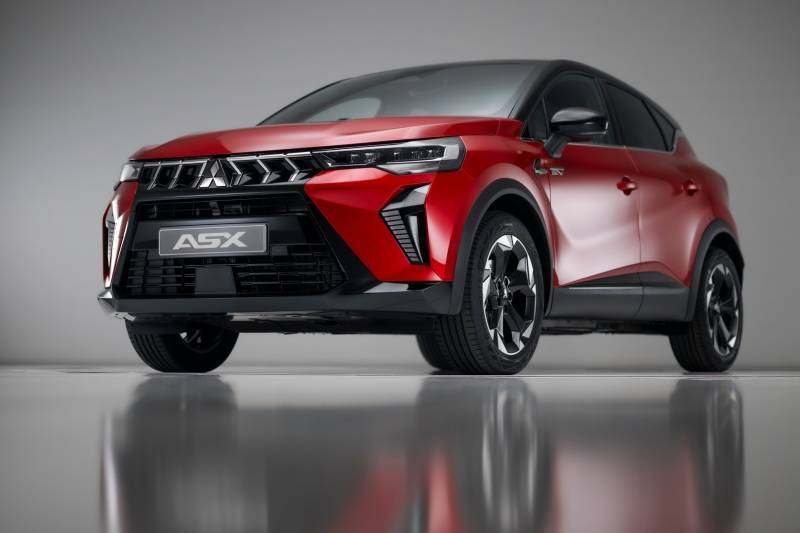
The renewed Mitsubishi ASX brings new aesthetics, especially at the front, this time more different from those shown by the Captur. The Japanese manufacturer points out that the rims are also new, a bit like the rear lights, which maintain their shape but change their coverage. Inside there are also changes, with emphasis on the central screen, which increases from 9.3” to 10.4”, with a series of physical buttons under the display to facilitate direct access to ventilation.
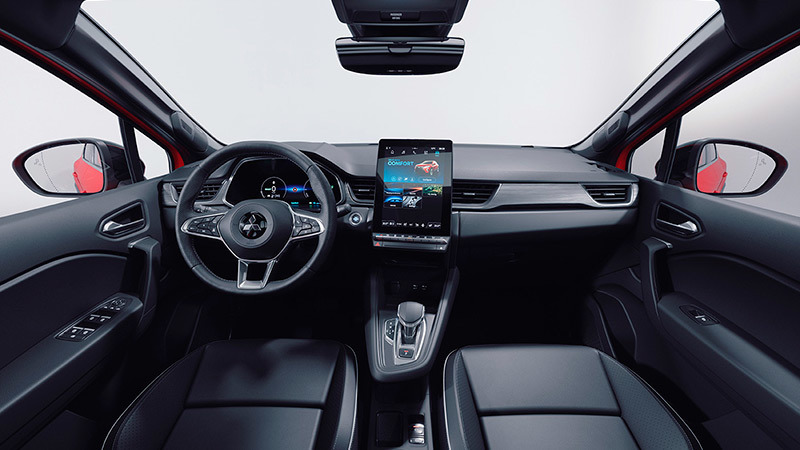
A closer look reveals that the automatic transmission control is now smaller and more electrical, but it is likely that the change most appreciated by customers is related to the introduction of a series of Google functions, which includes navigation via Google Maps and Google Assistant, a very practical and functional voice control system, which allows you to make calls and select the navigation system, among others, without taking your eyes or attention off the road.
There are also changes to the engines, but not all of them are good. As with the Captur, the 1.6 PHEV unit with 160 hp disappeared, which offered low consumption and 49 km of autonomy in electric mode. In the new ASX, the engine of the most affordable versions is the three-cylinder 1.0 Turbo with 90 hp, which has an average consumption of 5.7 l/100 km, a power unit that is completed by two 12V mild hybrid engines, both depending on the four cylinders with 1333 cc that delivers 140 or 160 hp, depending on the version, and that receives a slight help from a small engine powered by a battery with just 0.13 kWh. The consumption of these two mild hybrid units is, respectively, 5.7 and 5.9 l/100 km.
Customers looking for lower consumption can count on the full hybrid, which uses a 1.6 atmospheric engine with 94 hp, running on the Atkinson cycle to be more efficient, which is associated with a gearbox with 15 ratios (between three mechanics and five electrically modulated, with the mechanics also featuring two electric motors with 49 and 20 hp, the first to help the gasoline engine and the second to work the box, both powered by a battery with 1.2 kWh power. total reaches 145 hp, for a WLTP-approved consumption of 4.6 l/100 km.
As with the Captur, the plug-in hybrid disappears, which used the same gasoline engine and two electric units (more powerful, with 67 and 34 hp), powered by a 10.5 kWh battery. The new Mitsubishi ASX is expected in Portugal in June, with prices similar to those charged by the current version, that is, from 25 thousand euros for the less powerful but more accessible version.
by Mundoquatrorodas



Nenhum comentário:
Postar um comentário