DACIA
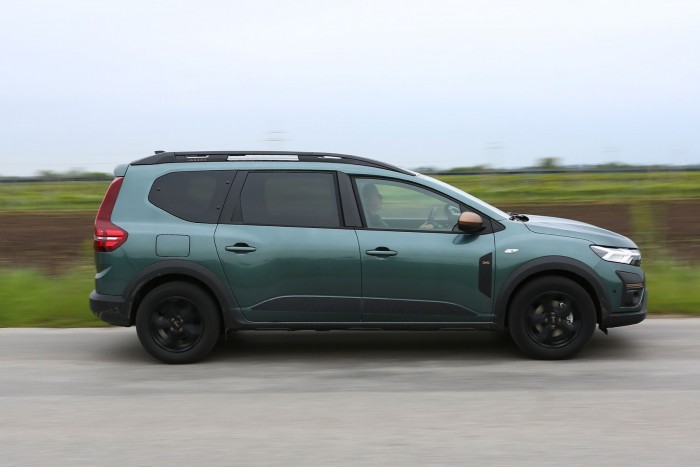
We have written several times about the Jogger, the weight reduction, the other engine versions and other solutions, for example, you can read here. Although the nose and floorboards are shared with the Sandero, the 2898 mm wheelbase is 29.4 centimeters longer than the Sandero, which is a favorite among private buyers in Europe.
This powertrain is also available as a plug-in hybrid with a larger battery capacity for several Renaults, but due to its high price, Dacia does not accept plug-in hybrids. In the self-charging full hybrid, the capacity of the 230-volt battery, supplied by Hitachi, is 1.2 kilowatt hours. The battery is covered by an 8-year/160,000 km warranty.
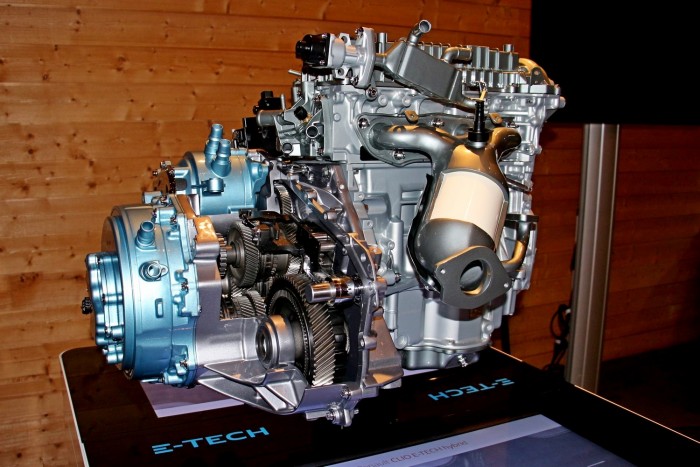
With 140 horsepower, this is by far the most powerful drivetrain for the Jogger, the newer Renaults have the same drivetrain with 145 horsepower. Two electric machines support the four-cylinder, 16-valve naturally aspirated gasoline engine.
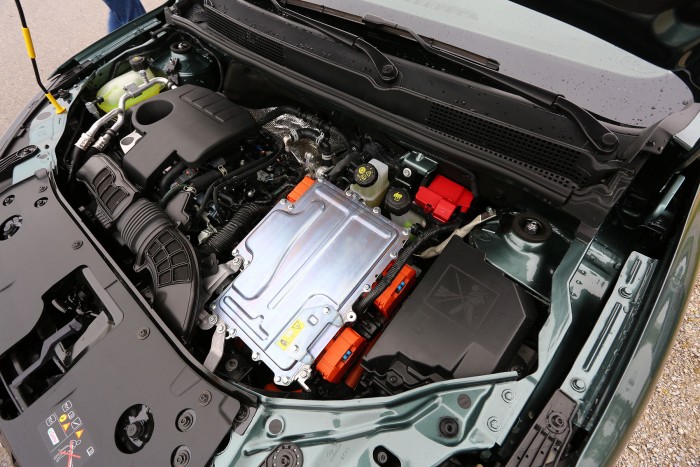
The 15 kW starter motor-generator and a four-speed gearbox, similar to those of motorcycles, with clutch claw solution and not synchronized, are connected to the gasoline main shaft with a constant gear ratio. Its structure is similar to that of manual transmissions.
The performance of the stronger electric motor is 36 kW, 49 horsepower. The electric motor with a torque of 205 Nm moves the car and switches to generator mode when taking off the gas and charging the batteries.
The driving electric motor also gets a gearbox with two gears, the petrol engine can drive the car with four gears.
At 167 km/h, the hybrid falls well short of the 183 km/h top speed of the 110 hp Dacia Jogger. Its acceleration to 100 km is slightly better, 9.8 and 10.0 seconds for the five-seater and the seven-seater respectively. The value of the petrol is 10.5 and 11.2 seconds.
The curb weight of the Jogger Hybrid is between 1,357-1,406 kg, which is almost one and a half to two kilograms more than the 1,176-1,261 kilograms of the gasoline model. The carbon dioxide emissions per kilometer are 108-111 grams, which corresponds to the standard average consumption of 4.8-4.9 liters per 100 km. The average for gasoline is 5.6-5.7 liters.
Since the high-voltage battery is roughly in the place of the LPG version’s gas tank between the rear wheels, a spare wheel cannot be ordered for the hybrid, which is a HUF 60,000 option for gasoline Joggers.
Szörényi András


Nenhum comentário:
Postar um comentário