GM
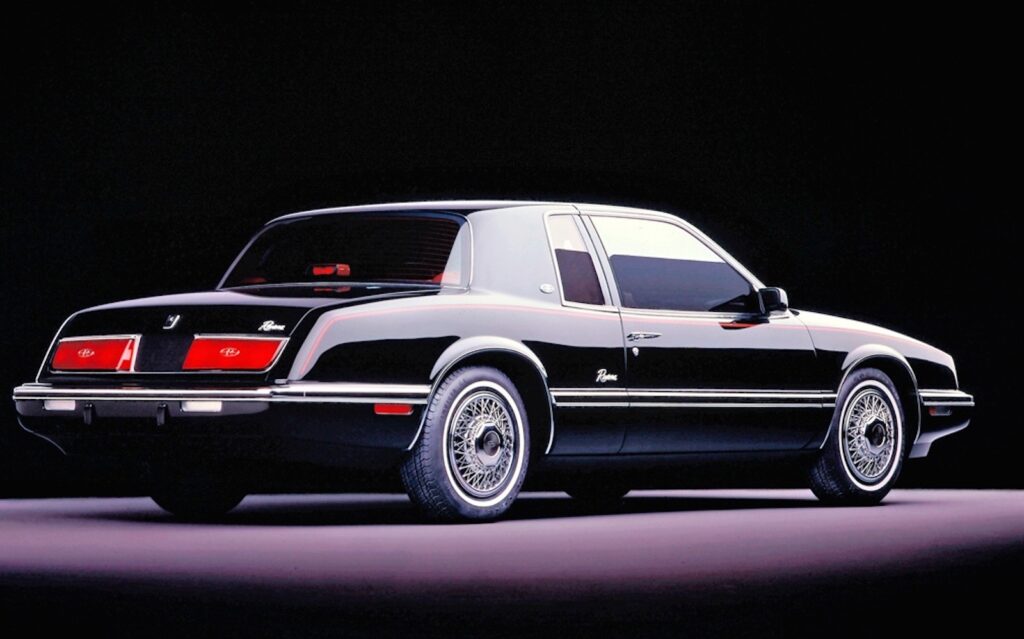
Today the race is on among the world's automakers to fill today's cars with more and more touchscreens. It's a high-tech arms race, dating back to this week in 1986, with the introduction of the car that forged its use, the 1986 Buick Riviera.
It is certainly a forgotten car due to its lack of popularity, as sales dropped 66% from 65,305 units in 1985 to 22,138 units in 1986.
Its waning popularity stemmed from the fact that it looked smaller and less luxurious than before, even though it was the first to use a modern infotainment system. Given that it could take up to five years to design and engineer new models at the time, Buick's introduction of the touchscreen as standard equipment on the Riviera in 1986 was absolutely groundbreaking.
The idea of a touchscreen in a car was clearly revolutionary as it used what was then new technology. However, touchscreens date back to 1965 when they were created by EA Johnson at the Royal Radar Establishment in Malvern, UK. The 1970s saw the introduction of touchscreens in air traffic control systems, but they didn't reach the consumer market until 1982, when Hewlett-Packard introduced the HP-150, a personal computer with a cathode ray sensitive to Sony touch 9-inch tube or CRT. But General Motors' decision to put a touchscreen on the Buick Riviera predates that, making its development all the more remarkable.
In November 1980, Buick managers in Flint, Michigan, set an ambitious goal for the next Buick Riviera. They would design it with the most advanced electronics in the industry for 1985. A committee was quickly formed to assess what features would be offered on the screen.
By chance, Delco Systems, then a division of General Motors, was developing a touch-sensitive CRT in Santa Barbara, California at the same time. With hardware designed by Delco Electronics and AC Spark Plug, and software designed by Delco Systems, it was presented to GM's Product Policy Group within a few months and approved for production in early 1981. The display parameters were determined in 1983 and The following year, 100 Rivieras were used to gauge consumer reaction.
What They Created...Dubbed the Graphics Control Center, the GCC was a CRT display covered in an invisible Mylar panel covered in transparent conductors arranged in rows and columns. Each was coded to perform a specific function on a specific page. The function of each switch has changed with the changed page.
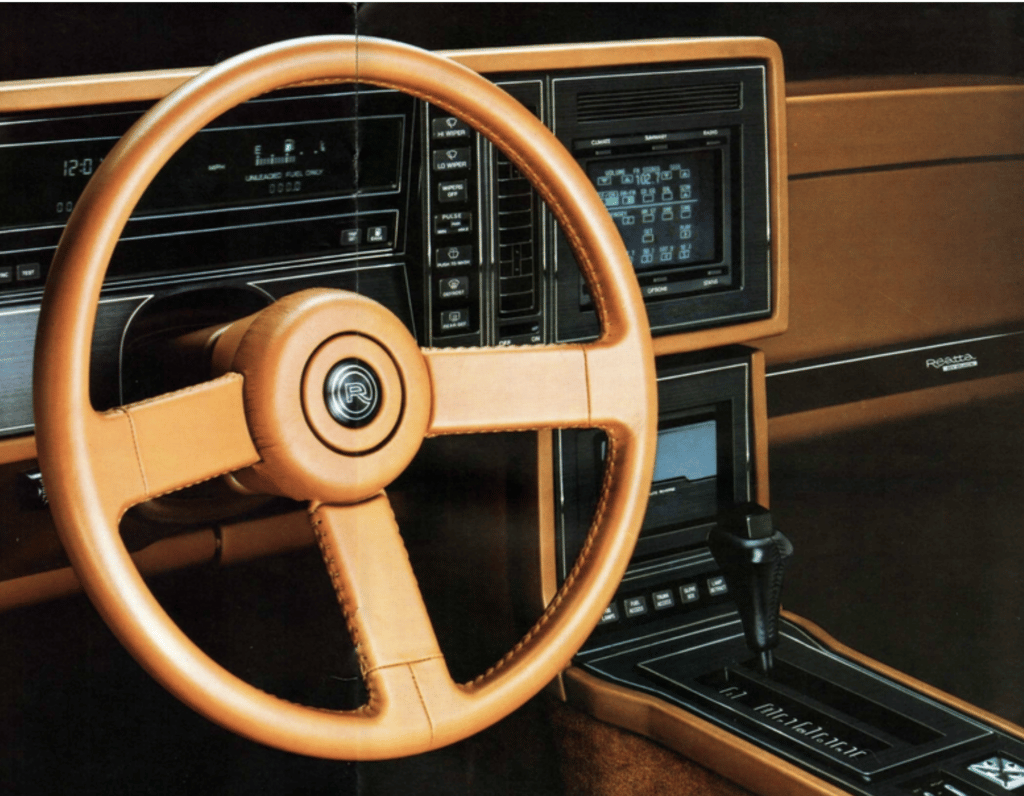
CRTs take a few seconds to warm up, so the GCC circuit activates when the driver's door handle is touched. The moment the driver's door opens and closes, the display lights up, revealing the Riviera logo. After the car is started, the display goes to your home page. There, 90% of a driver's desires can be controlled. If the screen is not touched within 30 seconds, it will turn off. The GCC controls automatic climate control, AM/FM radio and graphic equalizer, trip calculations, gauges and vehicle diagnostic information.
Buick executives were delighted, including Cary Wilson, who first studied the idea in 1980. “A new generation of automotive electrical systems is coming and Buick has set the stage,” he said in 1986.
Others, like legendary automotive journalist Brock Yates, were less optimistic.
“The reality of the Graphics Control Center is a sick joke,” he wrote in September 1986. “The Riviera setup does nothing that a conventional array of knobs, knobs, and analog instruments couldn't do in a fraction of the time. .” Colleague Rich Seppos agreed. “Riviera’s high-tech CRT isn’t a breakthrough, it’s a handful.”
Despite the backlash, Buick installed the GCC on the 1988-1989 Reatta well before an updated model - Oldsmobile Visual Information Center - became optional on the 1989-92 Oldsmobile Toronado Trofeo. Sony created the system's 4-inch color touchscreen. A Motorola cell phone that could be operated by the screen was optional.
While critics scoffed at these and other early attempts at touchscreens, new cars like the Tesla Model 3 come with all their controls on a touchscreen and nowhere else. Expect touchscreens to handle most, if not all, controls as screen technology advances.
It's a trend that started with the 1986 Buick Riviera.
Reporter: Larry Printz, Detroit-USA


Nenhum comentário:
Postar um comentário