terça-feira, 27 de outubro de 2026


AUTONEWS


Hyundai Elantra N Monochrome

Thirty-six years ago, Hyundai began production of the Elantra sedan, which has since spanned seven generations. In August, the eighth generation of the model—known as the "Avante" in its home market—arrived in South Korea. A sporty "N" version of this new generation is set to debut next year; in the meantime, Hyundai has revisited the current (or outgoing) Elantra N—a model whose TCR racing variant has secured numerous victories in the touring car class.

The CN7-series sports sedan has received a new variant dubbed the "Hyundai Elantra N Monochrome." Exterior changes focus on a more understated design; most notably, the vibrant accents previously found along the lower perimeter of the body and behind the wheels have been removed. The brake calipers are now finished in the same color as the body, with two exterior paint options available: Abyss Black Pearl and Performance Blue. This "Monochrome" sports sedan also features new forged wheels with a unique design.

Additionally, the front and rear bumpers, the rear spoiler, and the carbon-fiber side-mirror caps have been subtly revised. The Hyundai Elantra N Monochrome measures 4.71 meters in length, 1,825 mm in width, and 1,415 mm in height, with a wheelbase of 2.72 meters. The interior has also been updated: the sedan now features dark Alcantara upholstery with blue stitching and matching accents, along with a monochromatic Alcantara steering wheel equipped with black buttons. The Hyundai Elantra N Monochrome comes standard with a 2.0-liter T-GDI turbocharged 4-cylinder gasoline engine that produces 280 hp (290 hp with overboost) and 392 Nm of torque. The engine is paired with either an 8-speed dual-clutch automatic transmission (DCT) or a 6-speed manual transmission. Power is delivered to the front wheels via an electronically controlled limited-slip differential. This sporty "monochrome" sedan will be available in South Korea, Canada, Australia, and several other markets.


AUTONEWS


When diesel prices rise, every freight mile matters

The price on a fuel pump is easy to see. The miles embedded in everything you buy are harder to track.

Before a bag of rice reaches a grocery shelf or a replacement part arrives at a factory, it travels through a physical network of highways, rail lines and connections. When diesel gets expensive, those journeys become more expensive, too. 

On Oct. 20, the national average price of diesel stood at approximately $6.32 a gallon, compared with $3.62 a year earlier, according to AAA.

Understanding how far goods must travel helps experts assess freight costs. Researchers at Arizona State University have developed a more realistic way to estimate those miles, calculating distances along the highways and railways goods use instead of straight lines between locations.

Their study, "A dataset of inter-county distances along the real-world highway and railway networks in the contiguous United States," published in Scientific Data, a Nature Portfolio journal, introduces a dataset with more than 15.2 million county-to-county distance records across the contiguous United States. It gives researchers a more accurate foundation for studying the cost of moving goods.

Deniz Berfin Karakoc is an assistant professor of industrial engineering in the School of Computing and Augmented Intelligence, part of the Ira A. Fulton Schools of Engineering at ASU. She studies large transportation networks and how to move food and other essential commodities more efficiently.

“A straight line can tell you how close two counties are geographically, but it cannot tell you how far goods need to travel along highways or railways,” Karakoc says. “We wanted to give researchers a consistent way to measure those network distances at the county scale.”

That conclusion comes as Austin, Texas-based Magnus reported that the U.S. average retail diesel price rose to $6.29 a gallon in September, up $0.78 from the end of August and 68% above September 2025 levels. Those numbers came from the firm’s “September 2026 Diesel Fuel Snapshot” report.

In fact, September 2026 marked the highest monthly average in U.S. Energy Information Administration (EIA) weekly data dating back to 1994. All four September weeks priced above $5.00, bringing the 2026 total to 25 weeks above that threshold.

The speed of the price increase from August to September matters most for carriers whose surcharge programs reset monthly or are based on prior-period averages. When prices rise this fast, a surcharge priced off last month’s average trails what trucks are actually paying at the pump, and the difference comes out of carrier margin on every load until the surcharge table catches up. At 6.5 miles per gallon, a surcharge that trails the pump by $0.78 a gallon costs a carrier 12 cents a mile, or about $300 per truck on a 2,500-mile week.

“A fuel surcharge is supposed to make fuel neutral, it’s not supposed to be a profit builder for either side or a huge cost burden for the carrier,” said Matt Cartwright, founder and CEO of Magnus Technologies. “September showed how fast that balance breaks when diesel sets a new record hitting above $6.00. If your surcharge resets based off of last month’s price, you’re paying September’s price at the pump while only getting paid on August’s price. The fix is to re-rate against the published index every week, so both sides know what’s reasonable.”

Instead of waiting for fuel prices to normalize, leading companies are taking four steps to help counter the impact of the surge in diesel fuel costs.

Take control of fuel surcharges. Shippers can establish their own surcharge schedules in carrier contracts, pegged to the US Energy Information Administration’s published weekly diesel prices. This creates a more predictable, auditable reimbursement mechanism. Companies that use carriers’ surcharge tables can negotiate limits on how frequently those tables change and how large adjustments can be.

Shift eligible freight to rail. Rail costs significantly less per mile than truckload shipping, and one railcar can carry the equivalent of four full truckloads. It is slower and less flexible on delivery windows, so it’s most appropriate for nonperishable, time-tolerant freight, not just-in-time or temperature-sensitive goods. Better planning matters, too: Avoiding expedited shipments where possible, particularly premium air freight, can eliminate a significant source of unnecessary expense.

Reduce wasted miles and fuel consumption. Leaders work with carriers to find loads for trucks that would otherwise return empty, reducing both empty miles and fuel consumption. Companies operating private or dedicated fleets can also use telematics to identify excessive idling, inefficient routes, driving behaviors, and maintenance issues that increase fuel use. Individually, these actions may appear incremental, but when implemented systematically, they can produce sustained fuel savings.

Manage inbound freight as rigorously as outbound. Suppliers may seek price increases as their transportation costs rise. Procurement teams need transparency into the freight component of supplier pricing so they can distinguish legitimate cost pressure from broader price increases. Where scale permits, companies can also evaluate whether managing inbound transportation directly through their own logistics organization creates greater leverage.

Diesel volatility is a reminder that freight should be managed as a strategic cost, not simply a transportation expense. Companies that understand their exposure, establish disciplined surcharge mechanisms, and continuously optimize their networks will be better positioned to protect margins through the current spike and whatever comes next.

Beyond driving directions...For anyone accustomed to getting driving directions on a phone, that might sound like a problem already solved. Commercial routing tools can calculate trips between specific addresses. But studying transportation across thousands of counties requires a standardized dataset that supports comparisons across an entire country and across transportation modes.

Existing freight information often covers regions too large to support detailed county-level analysis. Without suitable distance data, researchers sometimes rely on calculations based on latitude and longitude. Those approximations capture geographic separation but cannot follow a highway around an obstacle or trace the connections in a rail network.

Organizing distances by county allows researchers to pair the dataset with existing estimates of goods moving between counties to better assess transportation costs. 

Karakoc, along with industrial engineering graduate student Yongxin Cai and data science graduate student Xinyan Li, started with federal transportation maps and county boundaries. They converted highway and railway segments into networks of nodes and links, then calculated the shortest paths between representative locations within counties.

Think of a vast collection of connected line segments. Each segment carries a distance. The task is to find the combination connecting two locations with the smallest total mileage.

The resulting dataset includes highway distances for 2,863 counties and railway distances for 2,649. It is publicly available, giving other researchers a foundation they can combine with information about commodities, shipment volumes, fuel consumption or transportation costs.

The dataset could help researchers explore how fuel prices affect the cost of moving goods. Combined with information about fuel efficiency and shipment volumes, these distances could offer a clearer picture of how transportation costs vary across suppliers, locations and routes.

From miles to making decisions...Consider a hypothetical food distributor comparing two suppliers. One might appear closer in a straight-line calculation but require a longer highway trip. Establishing that difference would be one step toward comparing transportation costs. Shipment size, vehicle efficiency, delivery schedules and other operating conditions would determine the rest.

“This dataset provides a foundation for asking more detailed questions about transportation costs, infrastructure and supply chains,” Karakoc says. “By representing the distances along actual networks, we can help future analyses better reflect the geography that freight has to navigate.”

The researchers checked their method against broader freight-flow information and compared samples of county-to-county distances with independent road and rail routing systems. Those comparisons showed strong overall agreement, although individual routes differed. The data are intended as a benchmark for broad freight analysis, with limits that matter for practical use.

A shortest path is not necessarily the fastest or cheapest route. The dataset does not incorporate all directional restrictions or operating constraints. Its representative county locations are not individual warehouses, highway interchanges or freight terminals. And a rail connection on a map does not, by itself, establish that a particular shipment can use it.

Those details would need to enter any analysis intended to guide a real shipment.

Ross Maciejewski, director of the School of Computing and Augmented Intelligence, says that the value of the work extends beyond examining current fuel-price spikes.

“This publicly available dataset gives researchers a shared starting point for studying transportation costs, emissions and supply-chain disruptions,” Maciejewski says. “Instead of building their own distance estimates, they can focus on what those distances mean for the movement of food, medicine and other essential goods.”

Where should a company build a warehouse? Which suppliers are best positioned to serve it? Where would a new transportation connection help? 

Distance informs each of those decisions. By measuring it along actual roads and rails, Karakoc’s new dataset could help researchers evaluate the options with a clearer understanding of the journeys involved.

When diesel prices rise, every freight mile matters... As diesel prices soar, efficiency in freight transport becomes a matter of financial survival. In October 2026, the national average price for diesel in the United States reached approximately $6.32 per gallon—a drastic jump from the $3.62 recorded a year earlier. This sudden increase means that every mile traveled has a direct impact on the profit margins of both trucking companies and independent owner-operators.

The impact on supply chains... Rising fuel costs trigger a ripple effect, driving up the price of everything from basic commodities to industrial components:

• Mismatches in fuel subsidies: Surcharge programs often rely on averages from the previous month. When diesel prices climb rapidly, carriers must cover the difference out of their own pockets until the rate schedules are updated.

• Squeezed margins: With diesel hovering near $6.30 per gallon, fuel costs can consume nearly half of an independent driver’s gross earnings.

• Empty miles: Moving trucks without cargo—known as "empty miles"—becomes an unsustainable loss, as the vehicle continues to consume expensive fuel without generating any revenue.

New approaches and technologies...To navigate this brutal macroeconomic landscape, the logistics sector and the academic community are adopting new strategies:

• More realistic routing: Researchers at Arizona State University (ASU) have developed an advanced method for estimating freight costs by calculating the actual distances along the highways and railways used, moving away from the traditional approach of measuring straight-line distances between two points. • Efficiency-focused training: Commercial driver training programs are revamping their curricula with a strong emphasis on smart routing and the reduction of engine idling time.

• Market visibility: According to logistics experts at Fare Lanes, having real-time visibility into rate fluctuations is crucial for brokers and shippers to recalculate costs without disrupting supply chains.


segunda-feira, 26 de outubro de 2026


TOYOTA


Toyota tests new four-cylinder engine in GR86 future FR Concept

Toyota’s Gazoo Racing division tested the GR86 Future FR concept—powered by a naturally aspirated 2.0-liter four-cylinder engine—during a race in the Japanese Super Taikyu endurance series at the Okayama circuit.

A mid-engine sports car, believed to preview the long-awaited successor to the MR2, drew the most attention during the Super Taikyu endurance race. However, it was not the only intriguing machine Toyota brought to the Okayama International Circuit. Gazoo Racing also used the event to test the GR86 Future FR concept—an experimental prototype in which a turbocharged three-cylinder engine has been replaced by a naturally aspirated 2.0-liter four-cylinder unit.

Although the production GR86 has never featured a turbocharged engine, it is worth noting that its racing counterpart did. A few years ago, Toyota equipped this coupe with the 1.6-liter engine found in the GR Yaris and GR Corolla—which produces approximately 300 hp—to test synthetic fuels using a 1.4-liter, reduced-displacement version created by shortening the piston stroke. Now, that engine has been replaced by a newly developed, naturally aspirated 2.0-liter unit.

The powertrain, codenamed G20E, is part of Toyota’s new family of smaller, lighter four-cylinder engines. The Japanese automaker has been teasing these engines for some time, including their use in the GR Yaris M concept and a subsequent coupe, where a 2.0-liter engine is positioned behind the driver. In the GR86 model, it sits under the hood and produces approximately 220 hp.

While this is significantly less power than that of the G16E-GTS engine, removing the turbocharger has reduced the weight at the front of the car. Turbo lag is no longer an issue, and Gazoo Racing driver Kazuya Oshima told *Car Watch* magazine that the engine can rev higher than the development team had anticipated. The naturally aspirated configuration should also provide a more direct and predictable throttle response, particularly when accelerating out of corners.

Beyond replacing the boxer engine found in the production model—and the turbocharged engine used in the racing version—the concept features several other changes. It utilizes a double-wishbone suspension setup at both ends to further enhance handling, with engineers currently testing various suspension geometries. Interestingly, Japanese media report that this particular GR86 carries the internal nickname "Levin"—a name historically associated with the sporty versions of the Corolla.

That's a far cry from the G16E-GTS, but removing the turbocharger has made the front end lighter. Turbo lag is obviously gone, and Gazoo Racing driver Kazuya Oshima told Car Watch magazine that the engine revs higher than the development team expected. The naturally aspirated setup should also make throttle response more immediate and predictable, particularly when accelerating out of corners.

Aside from ditching the road car's boxer engine and the race car's turbocharged setup, the concept brings other changes. It also uses double-wishbone suspension at both ends to sharpen handling further, with engineers testing various geometries. Interestingly, Japanese reports say this GR86 is internally nicknamed "Levin," after the sporty Corolla nameplate.

Toyota has yet to confirm what will power the next-generation GR86, and the new 2.0-liter engine shouldn't be taken as a guarantee that the production car will abandon its current powertrain. Nevertheless, this race car provides an intriguing look at the solutions Toyota is exploring for future sports cars.

Since Toyota is only now testing the naturally aspirated 2.0-liter engine in a race car, don't expect it in the next-generation GR86 anytime soon. The development program still has a long way to go, and engineers will need time to fine-tune the powertrain before considering it for a production model. If the engine makes the cut, it could take a couple of years to reach the road. For now, Toyota hasn't confirmed whether the next GR86 will ditch its Subaru-sourced 2.4-liter boxer engine for an in-house four-cylinder.

The Toyota GR86 Future FR Concept is a track-testing prototype developed by the Toyota Gazoo Racing (TGR) division to validate mechanical solutions expected to define the future of the brand’s road-going sports cars.

The vehicle recently made its debut at a round of the Super Taikyu endurance racing series at the Okayama Circuit in Japan, serving as a true "test mule" for the next generation of the GR86.

1. The end of the Boxer engine (Goodbye, partnership with Subaru?)... The concept’s major paradigm shift is the abandonment of the Subaru-supplied Boxer (horizontally opposed) engine, which powered the first two generations of the sports car. The GR86 Future FR Concept adopts an inline four-cylinder engine developed in-house by Toyota. Should this configuration reach production, the model would achieve complete design independence.

2. The all-new naturally aspirated 2.0-liter engine (G20E)... Although Toyota previously tested a turbocharged version based on the 3-cylinder block found in the GR Yaris, this new prototype returns to natural aspiration (no turbo), prioritizing an "analog" driving experience.

• Codename: G20E (part of a new family of smaller, lighter, and highly efficient engines).

• Power: Approximately 220 hp.

• Dynamic advantages: Removing the turbocharger and its auxiliary components has reduced weight at the front of the vehicle. Torque delivery is now completely linear, and the engine is capable of reaching much higher RPMs with smoother operation.

3. Enhanced dynamics and chassis:

• Layout: The engine has been positioned in a "front-midship" configuration (set further back within the engine bay), which significantly optimizes the car's weight distribution. • Suspension: The original setup was replaced with an independent, double-wishbone configuration on all four wheels, refining handling through corners.

• "Levin" Nickname: Within Gazoo Racing, the prototype was given the codename "Levin"—a direct homage to the classic, rear-wheel-drive sports versions of the Corolla (from the AE86 era) that have been immortalized by automotive culture.

This is an interesting development because the GR86 has always relied on Subaru-sourced boxer engines, even though Toyota has helped shape the coupe's character. Switching to an in-house inline-four would mark a significant departure from that formula, potentially suggesting Toyota is taking a more independent approach to developing the next-generation sports car.

Alternatively, the two companies could still be collaborating, with Toyota leading the engine while Subaru contributes elsewhere. Neither scenario has been confirmed, but the prospect of a Toyota-developed powertrain in the GR86 raises questions about how the partnership might evolve for the next generation.

Toyota has yet to confirm which engine will power the next-generation GR86; the new 2.0-liter unit should not be taken as a guarantee that the production model will move away from its current powertrain. Nevertheless, this race car offers an intriguing glimpse into the solutions Toyota is exploring for its future sports cars. Since Toyota is only now testing a naturally aspirated 2.0-liter engine in a race car, it should not be expected to appear in the next-generation GR86 anytime soon. The development program is still far from complete, and engineers will need time to further refine the powertrain before considering its use in a production model. Even if the engine successfully clears all development stages, it could still be several years before it finds its way into a road-legal vehicle. For now, Toyota has not confirmed whether the next GR86 will move away from the Subaru-sourced 2.4-liter boxer engine in favor of an engine of its own design.

This is an interesting development, as the GR86 has historically relied on boxer engines supplied by Subaru—even though Toyota played a key role in shaping the coupe's character. A shift to an in-house four-cylinder engine would mark a significant departure from the established formula and could suggest that Toyota is taking a more independent approach to the development of its next-generation sports car.

Another possibility is that the two companies could continue their collaboration, with Toyota leading engine development while Subaru contributes in other areas. Neither scenario has been confirmed, but the prospect of the GR86 featuring a Toyota-developed powertrain raises questions about how the partnership between the two companies might evolve for the next generation.

Regardless of whether another joint project between Toyota and Subaru takes shape, it is clear that Toyota remains committed to its affordable sports car. The GR86 has carved out a unique niche in the market as a relatively affordable, rear-wheel-drive coupe—at a time when cars designed for driving pleasure are becoming increasingly expensive and complex. It belongs to a breed of vehicle that is slowly fading away, yet not quite extinct.

Now that Toyota is testing engines from the G20E family in both front-engine and mid-engine sports cars, it appears the company is exploring various potential applications for its next-generation powertrains.

Autonews


BMW


Is the 2026 BMW iX3 better than the new Mercedes-Benz GLC in cone testing?

At well over 5,000 pounds, the new BMW iX3 is quite a heavy beast for a vehicle in the compact SUV segment. You can thank the big battery for that, of course. The question is: Does the heavy electric powertrain significantly impact the iX3’s agility? To answer that, km77 subjected the electric BMW to the dreaded moose test to see how effectively it could complete the evasive maneuver. Designed to see how safely a car can avoid a sudden hazard, it’s the ultimate test of a vehicle’s roll control, how well it manages understeer/oversteer, and whether the electronic stability control system does its job.

The vehicle used for the test is the 50 xDrive, which is the same iX3 model that arrived in the U.S. first. An even quicker variant, the iX3 M60, was unveiled earlier in October and arrives later. The vehicle that conducted the moose test had a few extras, including substantial 22-inch wheels.

The testers first took the iX3 out for the slalom test, where it had to navigate its way through a series of cones. The driver appreciated the iX3’s precise steering and resistance to excessive body roll. It finished the slalom in 22.7 seconds, matching the Porsche Macan (gas model). It was fractionally slower than the more powerful Mercedes-Benz GLC 400 4Matic EQ (22.6 seconds).

The BMW iX3 performs roughly on par with or fractionally behind the Mercedes-Benz GLC in cone and moose tests, matching its top-speed avoidance limits while staying tightly matched in slalom timing.

The BMW iX3 completed the slalom test in 22.7 seconds, while the Mercedes-Benz GLC 400 4Matic EQ was fractionally faster at 22.6 seconds.

Slalom test performance:

BMW iX3:

• Finished the cone slalom in 22.7 seconds.

• Praised for precise steering, resistance to excessive body roll, and good weight management despite its heavy battery pack.

• Matched the gas-powered Porsche Macan's time.

Mercedes-Benz GLC:

• Finished the cone slalom in 22.6 seconds, beating the iX3 by just one-tenth of a second.

• Benefited from features like rear-axle steering and air suspension options that enhance agility and composure in tight transitions

Test performance breakdown:

• Moose Test (Evasive Maneuver):

• The BMW iX3 manages a maximum clean completion speed of around 73 km/h (45 mph), frequently experiencing notable understeer due to its heavy battery pack.

• The Mercedes-Benz GLC (depending on the hybrid or electric variant tested) hits similar evasive speed thresholds around 74 km/h, though it also relies heavily on stability control intervention and exhibits early understeer.

• Slalom test:

• In tight slalom courses, the BMW iX3 completes runs in roughly 22.7 seconds, keeping pace closely with its rivals and finishing a fraction of a second behind the electric Mercedes-Benz GLC 400 4Matic.

• Handling Dynamics:

• Reviewers note that while the BMW iX3 feels responsive and features precise steering, its heavier weight and high-capacity battery can make it feel a bit skittish over bumps compared to the settled composure of a Mercedes GLC.


by: Autonews


AUTONEWS


Some US transit systems weigh whether to run trains without a human at the controls

Even as automated vehicles such as robotaxis grow more prevalent in the U.S., almost every mass transit system still requires a driver or operator on board. Two major cities are seeking to change that.

The future of rail is automated...The rail industry needs innovative solutions that address the challenges of growing urbanisation, climate change and other factors putting pressure on public transport.

That is why we are championing the push towards automated train operation from metro to heavy rail solutions. Equipped with digital tools, cutting edge sensors, powerful software, and deep experience in driverless transport, Alstom is at the forefront of the development of autonomous systems and has its eye set on making the highest automation level, GoA4, on regional train lines a reality.

What is Autonomous Mobility? Autonomous Mobility or Automatic Train Operation is an operational and safety enhancement in rail. It takes the guesswork, human error, and variables out of railways, making them more efficient, accurate, and reliable than ever. Combined with systems like Automatic Train Control, Automatic Train Protection and Automatic Train Supervision, these systems enable operators to do more with less, orchestrating their fleets and turning them into a finely-tuned network that performs better with less waste and risk. Alstom brings the industry’s broadest portfolio and deepest experience: Over 50 systems worldwide and driverless operation experience that stretches back to the 1970s.

Officials in Washington, D.C., recently advanced a plan that could let computers fully control one of its subways, and Los Angeles is seeking to build a new, completely automated line. Honolulu already has one.

The Washington and LA projects, which would take years to implement and still face financial and technical hurdles, come amid an already fierce debate over the safety risks and benefits of automated trains and whether the substantial upfront expense is worth the long-term savings in labor costs.

Supporters call the push long overdue, pointing out that American cities lag far behind numerous places across the world that run unattended subways, metros or buses, including several cities in Europe and Asia, as well as major systems in Canada, Australia, South America and the Middle East.

“It should be much harder to automate something that’s on-road, that has all of these various obstacles coming at it, compared to a fixed-rail system,” said Baruch Feigenbaum, senior managing director of transportation policy at the Reason Foundation, a libertarian think tank that has advocated for transit automation. “I don’t know a nice way to say this, but basically the transit world is where innovation goes to die.”

Only in recent years have on-road vehicles from such companies as Waymo,Tesla and Zoox taken the automation lead in the U.S. ahead of transit systems using a track. In fact, although operators have always been part of the Metro subway system in Washington, D.C., trains ran with some automated features when it opened 50 years ago. After a 2009 fatal crash, those were turned off, then restored over the past two years.

Now, officials in the nation's capital have renewed their push for automation on Metro's Red Line. And an environmental review is underway in Los Angeles for an automated track for a new underground line of its heavy-rail system that would cut through the rough terrain of the Santa Monica Mountains.

Honolulu is already running an elevated driverless line — the most expansive automated transit system in the U.S. It'll stretch 19 miles when completed, surpassing the elevated driverless trains Detroit and Miami opened as pilot projects in the 1980s, a monorail connecting hotels on the Las Vegas Strip, and smaller systems that carry passengers between airport terminals.

An automated monorail that once ran in Memphis, Tennessee, closed down years ago. And the driverless Jacksonville Skyway will indefinitely halt operations soon due to budget cuts, despite initial plans for an even larger automated system.

After nine people were killed and many others injured in the 2009 train collision near the Fort Totten station on the D.C. Red Line, the National Transportation Safety Board blamed the crash on a maintenance problem in the automated signaling system that separates trains from one another.

Randy Clarke, CEO of the Washington Metropolitan Area Transit Authority, pointed out in an interview with The Associated Press that the issue in Fort Totten had nothing to do with the cruise control-like system that was restored on the Red Line in 2024 and the other Metro lines last year. Still, he acknowledged that for many years the crash “paralyzed” Metro's plans for further automation.

“That was a big failure, there’s no question. We do not do anything like that now,” said Clarke, who called the current system “highly regulated, highly documented, very proficient.”

Trains could conceivably run without a human worker inside the cab as early as 2033 under the nearly $1 billion plan Metro's Board of Directors backed in April to upgrade the Red Line with safety features including protective barriers that prevent passengers from getting onto the tracks.

Clarke said that even if workers aren't needed to physically run the trains, they will be needed to maintain the tracks and respond to emergencies.

Unions have been critics of automation. John Samuelsen, a former worker in the New York subway system who now serves as international president of the Transport Workers Union, said unions have fought off automation efforts in New York and elsewhere, calling them “a catastrophe waiting to happen.”

“Passengers will be left dealing with a self-evacuation, which is a disaster in a system which runs on a third rail,” Samuelsen said.

To alleviate massive traffic bottlenecks for commuters, Honolulu opened its Skyline automated light metro transit system three years ago and expanded it last year.

Vance Tsuda, the system's project director, said there hasn't been a single crash or injury associated with automation. Even hybrid systems are less safe than a completely automated one, he said, arguing that a human is far more likely to overlook something like an open door and prematurely clear a train for departure.

“If you have somebody making that decision, they could make a wrong decision,” Tsuda said.

But David King, an associate professor of urban planning at Arizona State University who has researched automated transportation, said the success rate has to remain perfect to keep the public trust. That's why the Fort Totten crash and others involving automation put the technology so far behind, he said.

“We allow a certain amount of failure with private industry that we don’t tolerate when the state does it,” said King, citing the several rockets blown up by Elon Musk's SpaceX — a record he argues would cripple NASA's budget if it happened in the public sector.

Perhaps the most ambitious transit automation effort being pursued in the U.S. is the subway line Los Angeles officials voted to recommend beneath the Santa Monica Mountains. The area is one of the most notorious traffic headaches in the country, with the mountains dividing the bustling Westside employment hub from the San Fernando Valley.

There's already a subway system under the same mountain range near Hollywood, but that one has a driver onboard. The new proposal, which is undergoing an environmental review, would use shorter, more frequent trains, said Cecily Way, who oversees planning for the Sepulveda Project for LA Metro.

Like the project in Washington, the new line in Los Angeles would feature station doors to protect passengers on the platform from oncoming trains.

Feigenbaum with the Reason Foundation said that automation of a major transit line such as in Los Angeles or Washington could open the floodgates for other cities to follow.

“It sends a signal that this is technologically doable and this is something that maybe other systems are going to want to strive for,” he said.

Are automated trains already a reality...Yes, automated and driverless trains are already a reality in closed or semi-controlled environments, though full automation on open, mixed-traffic main lines remains rare.

Where automated trains exist today:

• Urban Metros and Subways: Fully automated, driverless trains operate daily in cities around the world, including Singapore, Dubai, Paris, Tokyo, Copenhagen, and Nuremberg, as well as Honolulu's Skyline system in the U.S.. These systems use Communication-Based Train Control (CBTC) and closed tracks with platform screen doors.

• Heavy Freight Systems: Long-distance automated freight trains transport iron ore in remote areas like Western Australia.

• Grades of Automation (GoA): Rail automation is divided into distinct levels:

• GoA 2 (Semi-Automatic): The train starts and stops automatically, but a driver stays onboard to manage doors and emergencies (such as Hamburg's S-Bahn).

• GoA 3 (Driverless): Automated driving with a train attendant present.

• GoA 4 (Unattended): Completely driverless operation with no staff on board.

Why open-line automation is limited:

• Complex Crossings and Unfenced Tracks: Standard rail lines feature open grade crossings, pedestrians, and wildlife, making split-second obstacle detection far more challenging than in a sealed subway tunnel.

• Legacy Infrastructure: Upgrading 19th-century tracks, signaling, and positive train control systems is extremely expensive.

• Safety and Union Pushback: Labor unions frequently oppose full automation due to safety, emergency evacuation, and job-loss concerns, especially following historical accidents like the 2009 Washington D.C. Metro crash

Trains operate without a human at the controls using Automatic Train Operation (ATO) systems paired with centralized computer controls and specialized track technology.

Key technologies:

• Automatic Train Operation (ATO): This onboard computer subsystem handles starting, acceleration, speed adjustment, coasting, and stopping.

• Automatic Train Protection (ATP): This safety mechanism monitors speed limits and automatically applies the brakes if the train exceeds safe parameters.

• Automatic Train Control (ATC): This layer combines ATO and ATP to manage overall network flow and adjust to real-time changes.

• Communications-Based Train Control (CBTC): This wireless system lets trains talk to trackside equipment and other trains in real time, tracking exact positions down to centimeters and keeping safe distances (known as "moving blocks").

• Sensors and Track Hardware: Systems use transponders, beacons, radar, lidar, and cameras to check speed, wheel rotation, and obstacles. Platform screen doors are also often used to keep people and objects off the tracks.

Grades of automation (GoA):

Driverless or unmanned trains are classified by the International Association of Public Transport into distinct levels detailed on the Automatic Train Operation - Wikipedia page:

• GoA1 (Manual): A driver controls the train with basic electronic help.

• GoA2 (Semi-Automatic): The train starts and stops automatically, but a human driver is present to handle doors and emergencies (common in many subways).

• GoA3 (Driverless): The train runs automatically, but an attendant or staff member is on board for doors and manual takeover.

• GoA4 (Unattended/Fully Automated): The train runs completely without staff on board, controlled remotely from a central operations room.

Reason Foundation

domingo, 25 de outubro de 2026


YOZMA


Yozma releases new off-road electric dirt bike with reverse gear and 88 km of range

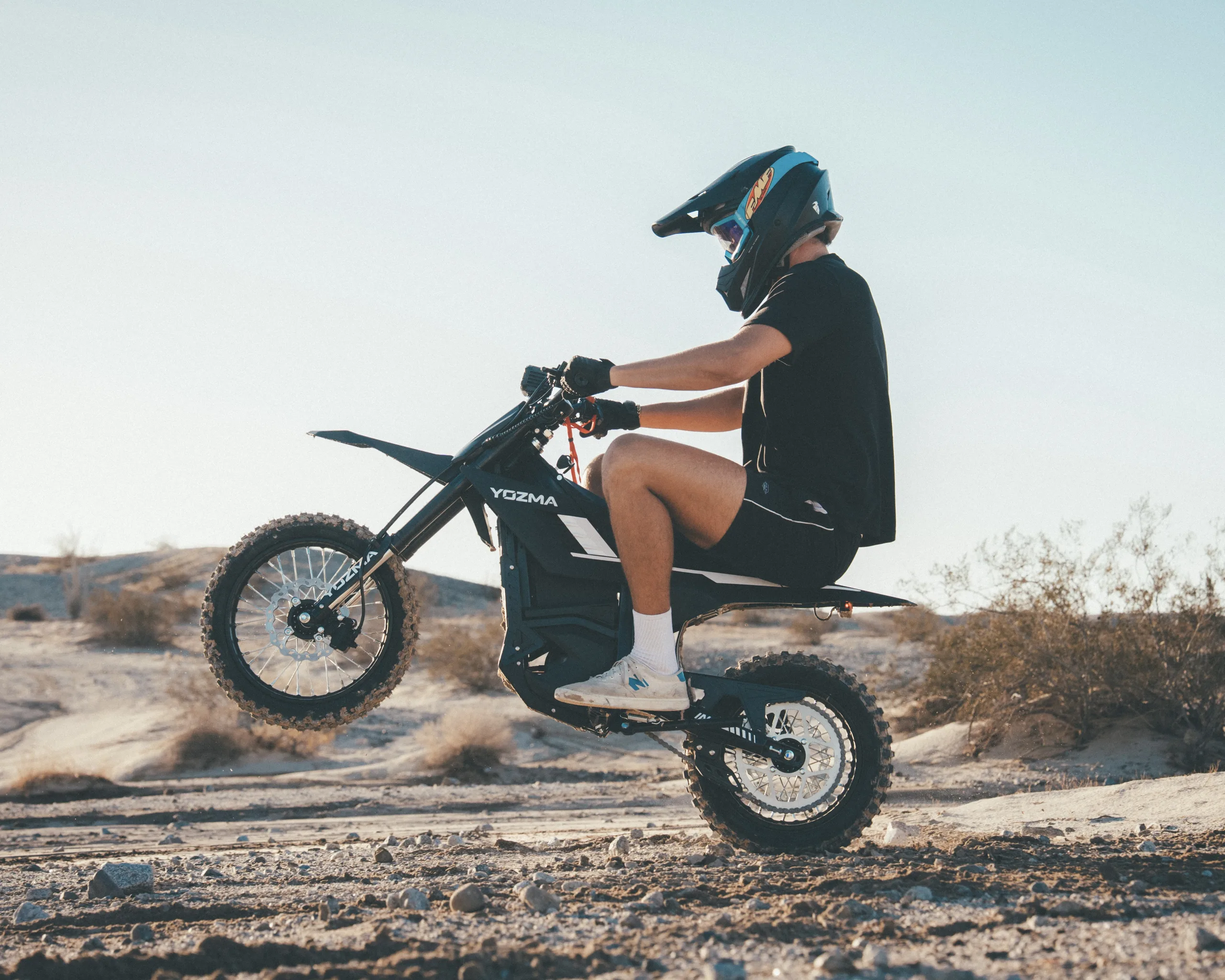
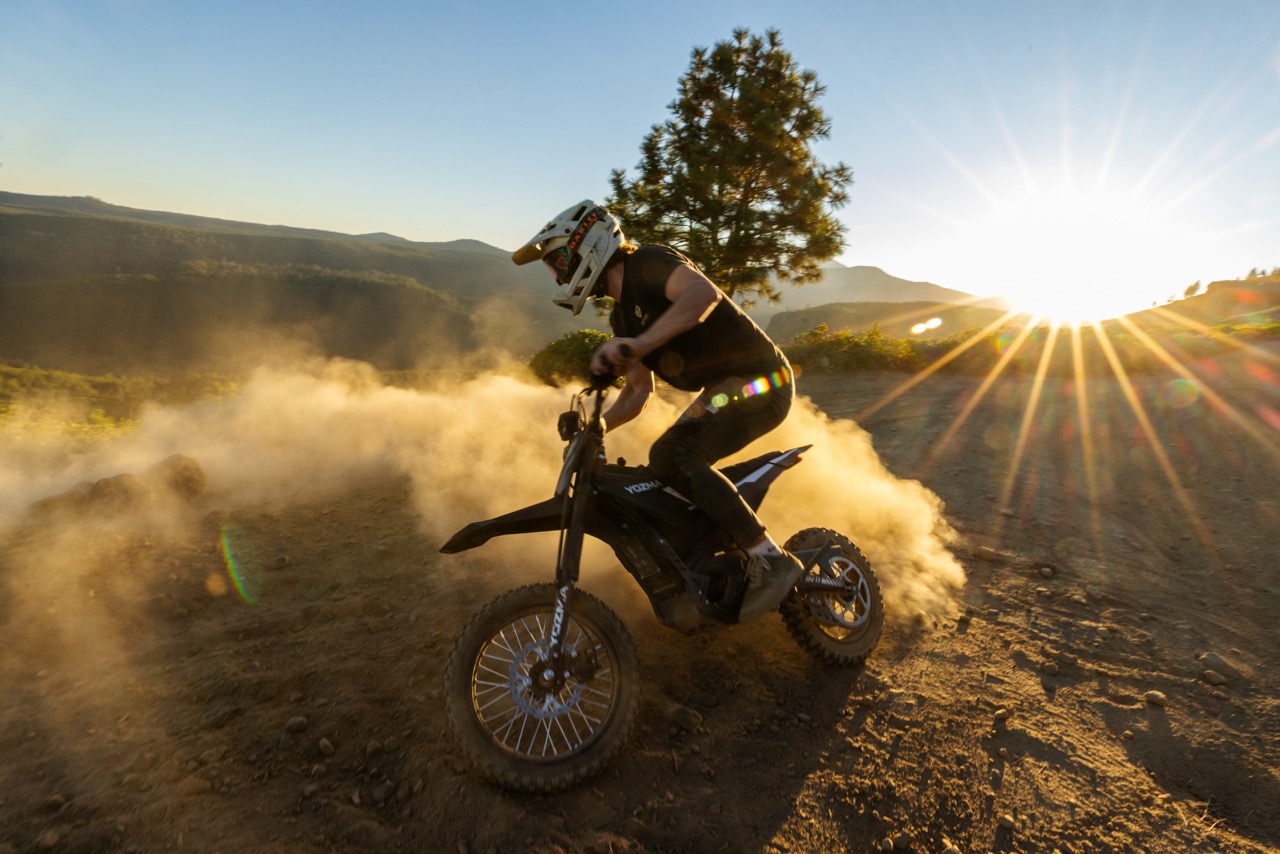
Yozma has launched the all-new IN 11 electric dirt bike globally. The IN 11 is an off-road as well as city-friendly dirt bike, featuring a mid-drive motor and a large 1,404 Wh lithium battery. Plus, it offers a top speed of 45 mph (72 km/h) and a range of 55 miles (88 km) on a single charge. 

Yozma has unveiled its latest electric dirt bike, the IN 11. It comes as a direct successor to the last year’s IN 10, bringing significant upgrades in terms of power, battery capacity, and suspension. Speaking more precisely, the IN 11 is now more powerful than before. It features a mid-drive motor, providing 200 Nm of torque and a 4,800 W peak power, a step up from the 2,600 W of the IN 10. The powerful motor delivers a maximum of 45 mph (72 km/h) of top speed. 

As for the battery, the electric dirt bike boasts a large 1,404 Wh lithium battery, which is said to offer 55 miles (88 km) of range on a single charge. However, the real-life range of the e-bike depends on riders’ throttle use, elevation, terrain, and riding speed. On top of that, there are also four power modes, including eco, sport, race, and stunt. Like the premium Talaria Komodo, the affordable IN 11 dirt bike ships with one-button reverse gear. 

The LCD display shows essential driving-related information such as speed, distance, modes, and battery levels. Furthermore, it supports a maximum payload of 220 lbs (100 kg), down from the 265 lbs (120 kg) limit of its predecessor, the IN 10. The high carbon steel frame paired with 14” front and 12” rear tires. Stopping power comes from dual hydraulic disc brakes. Plus, it has hydraulic front suspension and a nitrogen-charged rear absorber. 

The IN 11 comes with an IPX6 rating, meaning it can withstand water jets from any direction, although it is not rated for immersion in water. Other features include a high-visibility brake light, a one-touch wheelie, a magnetic emergency switch, and auto wheelie assist. It’s worth noting that the dirt bike is designed for riders between 3.94 ft (120 cm) and 5.9 ft (180 cm) tall. 

As for price, the Yozma IN 11 is priced at $1,499. Available in a black colorway, buyers can now purchase the electric dirt bike directly from Yozma’s official website. 

But we of course, don’t live in a vacuum, and others, including the Heybike Villain and the Engwe Eagle have already brought 52V, 4.5kW motors to the pit bike form factor, sometimes at much lower cost.

I should say here that parents who want to keep their kids’ e-motos in the 20-30mph range are going to be a whole lot happier with the 2.6kW than 4.5kW motors. Two nice safety improvements over the original Yozma IN10 include the magnetic kill switch and brake lights on the IN11.

Electrek’s take: Yozma’s advantages...If we are keeping it real here, there are dozens of similar-sized and spec’d mini-e-motos out there, often at a much lower cost than the Yozma IN11. But I’d argue that as the biggest and most trusted of these brands, Yozma is a safer bet.

Also, the IN11 is just a lot more solid than the random Amazon/Alibaba electric pit bike. Putting the IN11 together is quicker and easier than any other emoto I’ve built, and it just feels a lot more solid.

That feeling extends to the safety features. The brakes are more dialed in. The turning feels a lot tighter, and the overall ride is quieter and lighter. I believe, and my limited testing bears this out, that spec for spec, I got a lot more range on the IN11 than I got on other bikes with similar battery and motor specs. That 200nm of torque feels like it belongs on a much more expensive e-moto.

The wheelie mode is a nice trick (15, 25, or 40 degrees wheelie settings) and something we’ve only seen on Anylands for this price point so far. It is more developed on the IN11 but expect to see this on just about every new pit bike coming out over the next few years.

That said, the price, which is currently fluctuating between $1299 and $1499 (don’t forget your $60 off Electrek code), Yozma is going to be on the more expensive side of the 4.5kW emotos out there and some of the newcomers are bringing an intense value competition to the place where Yozma once dominated by itself.

Yozma IN 11 spec sheet:

4,800W: Peak motor output, up sharply from the prior IN 10’s 2,600W baseline.

200 Nm: Claimed peak torque, delivering aggressive low-end climb performance.

45 mph: Advertised top speed in Race mode. Real world only slightly lower

52V 27Ah = 1404Wh: Removable lithium battery pack, promising up to 55 miles of range in Eco mode with a 5- to 6-hour recharge time. No one has time to drive for 55 miles in Eco Mode. Expect 20-30 miles when gunning it.

~$1,299: Pre-order and promotional launch pricing. Yozma has the swag to demand a higher price point than the sub-$1,000 off-brand offerings, but it isn’t a slam-dunk decision.

Auto Wheelie Assist: Embedded in “Stunt Mode,” this feature allows riders to cap front-wheel elevation between 15° and 40° with anti-tip protection, functioning like digital training wheels for lofting the bike. Wheelies also increase the likelihood of injuries obviously

One-button reverse gear – helps riders maneuver tight trails and tight garage spaces without manhandling the frame.

Brake Light / Magnetic kill switch – nice safety features and substitute for key in some cases.

Tiered riding modes: Four maps (Eco, Sport, Race, Stunt) let users toggle between commuter battery conservation and full-torque delivery.


by: Autonews


MOTO GP


Jorge Martín avoids surgery and may compete in Malaysia next week

Spaniard Jorge Martín, who fractured his right radius yesterday following a crash in the Sprint race at the Australian Grand Prix—held at the Phillip Island Circuit—will not require surgery and intends to attempt to compete in the Malaysian Grand Prix next weekend.

The Aprilia rider underwent a CT scan following his crash in yesterday’s Phillip Island Sprint. Only a non-displaced fracture of the distal radius has been confirmed, while the ulna — which had raised some doubts — has not suffered any fractures.

In light of the latest tests, the possibility of surgery has been definitively ruled out and Martín will not have to return to Spain. His plans have not changed: he will fly from Australia to Malaysia, where he will undergo the treatment recommended by doctors.

However, it is still too early to know whether Jorge will be able to consider trying to race at Sepang. The next few days will be crucial in finding out. The fact that the fracture to the radius is non-displaced and close to the wrist is a positive aspect, offering at least some hope.

The decision to go to Malaysia was made because Martín will be able to undergo the same treatment there as he could have received in Spain. It also leaves the door open to trying to race next week. However, as we said, it is too early to know at this stage.

Early this morning in Spain, as delays and cancellations unfolded at Phillip Island—eventually leading to the total cancellation of the Grand Prix—Aprilia provided an update on the condition of the Madrid-born rider, who had undergone a CT scan to assess a potential fracture of the distal end of his right ulna.

In a statement, Aprilia clarified that the only confirmed injury was the previously identified non-displaced fracture of the distal radius. The team also announced that Martín will not return to Spain, but will instead undergo the necessary treatment over the coming days.

These details suggest that Martín’s goal is to secure medical clearance next Thursday at the Sepang International Circuit to compete in the Malaysian Grand Prix. He heads into that event trailing Marc Márquez—who took the lead in the overall standings following his Sprint victory—by just ten points.

Regarding this, Paolo Bonora expressed optimism: "We will monitor the situation day by day, but, honestly, he seemed to be doing well this morning, which is very positive for us," the Aprilia Racing team manager told MotoGP, noting that the rider's participation in Sepang will depend on medical evaluations.

"We will certainly work toward that. He is the first one pushing to reach this goal, but we have to wait for medical updates. We are engineers, after all, so we must follow the medical assessments and his physical condition. But we are quite optimistic about it," he emphasized. Massimo Rivola was far more pessimistic. "Very difficult. Very, very difficult," the Aprilia Racing CEO replied during the press conference. "I hope to see Jorge with us in Sepang," he continued, highlighting Martín’s run of bad luck at Aprilia and his own desire to bring the relationship between the two parties to a close in the best possible way.


by Autonews

  AUTONEWS How Porsche increased profits despite a 16% drop in sales Porsche’s operating profit rose to 1.74 billion euros in the first nine...