quinta-feira, 30 de julho de 2026


AUTONEWS


SKKU research team develops high-capacity battery material to drastically increase EV range

A joint research team—led by Professor Ki-Jae Kim from the Department of Energy Science and the Department of Future Energy Engineering

Sungkyunkwan University(SKKU), alongside Professor Jang Wook Choi's research team from Seoul National University—has developed a high-performance "hybrid polymer binder" for thick-film electrodes. This breakthrough significantly boosts the energy density of lithium-ion batteries while extending their lifespan. The study proposes a practical strategy to overcome chronic binder migration issues and performance degradation that occur during the conventional wet-manufacturing process when making electrodes thicker to increase battery capacity for electric vehicles (EVs) and smartphones.

Recently, the battery academia and industry have actively researched "high-loading electrode" technology. This involves stacking more nickel-rich layered cathode materials into thicker layers to increase EV driving ranges. However, the conventionally used PVDF (polyvinylidene fluoride) binder suffers from a critical drawback during the drying process of thick electrode manufacturing: the binder tends to float to the top, causing the electrode to crack or crumble easily. This severely weakens the mechanical strength and lithium-ion conductivity of the electrode, leading to a sharp decline in battery lifespan.
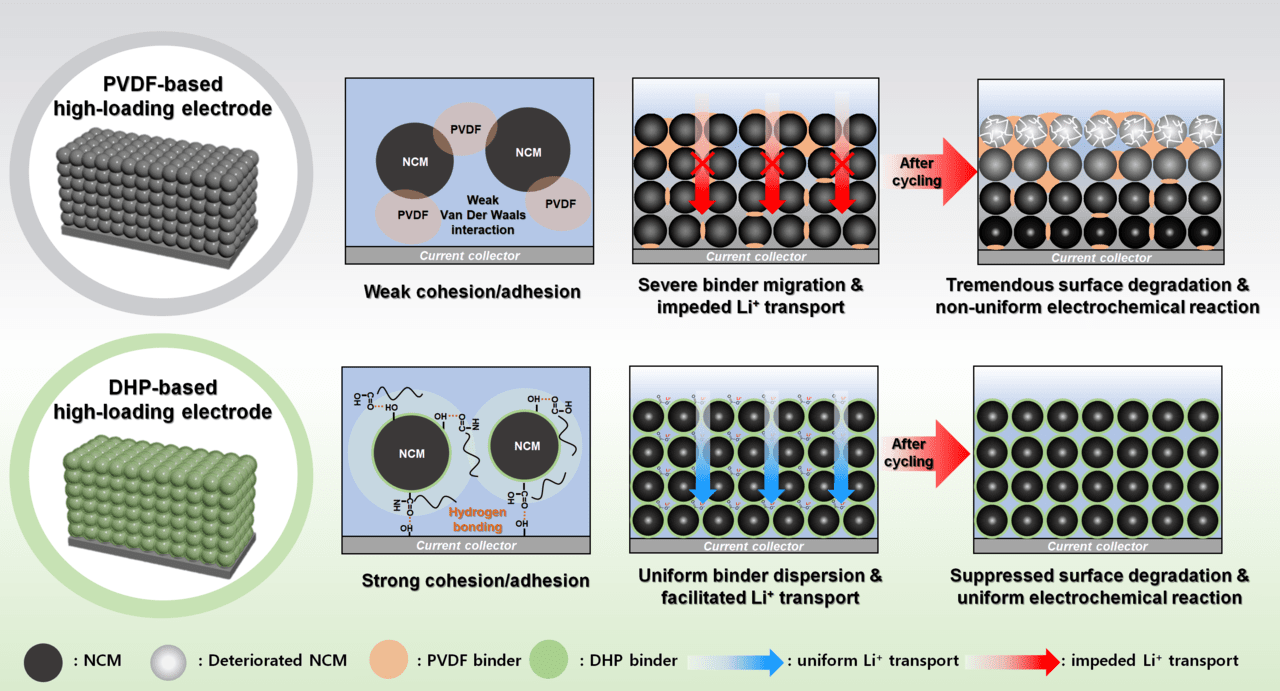
Structure of the DHP hybrid polymer binder and its principle for protecting the battery electrode(image above) Credit: SKKU

To tackle this challenge, Professor Ki-Jae Kim's joint research team blended two polymers with completely different properties: Spandex (SPDX), a highly elastic apparel fabric, and Poly(acrylic acid) (PAA). They applied this combination to the electrode as a novel "Dual-Acting Hybrid Polymer (DHP)" binder. Thanks to spandex's excellent elasticity and PAA’s superior molecular interaction with internal electrode components, this new binder maintains a robust structure that prevents cracking or crumbling, even when applied to exceptionally thick electrodes.

Experimental results showed that the electrode using the newly developed binder exhibited nearly twice the adhesive strength of conventional PVDF binders. Notably, the team identified a new operational mechanism during the initial charge/discharge cycles: the binder spontaneously forms a "Li-PAA interface" that accelerates lithium-ion migration. This enables faster and more uniform lithium-ion transport within the thick-film electrode, significantly enhancing its electrochemical performance.

Furthermore, the research team validated the new hybrid binder by fabricating large-capacity, commercial-grade pouch-type cells. The results were remarkable: while batteries with conventional binders suffered a sharp drop in capacity and failed after approximately 95 cycles, the batteries using the new hybrid binder stably maintained 86.8% of their initial capacity even after more than 200 charge/discharge cycles—effectively more than doubling the lifespan.

Chemical bonding mechanism and molecular interaction analysis of the DHP hybrid polymer binder--Park, B.K., Shim, Y.B., Won, J.U. et al. Wet-processed high-areal-capacity electrodes via transformative spandex–poly(acrylic acid) binder toward 450 Wh kg−1 lithium-ion batteries(image above) Nat Commun (2026).

This research carries immense industrial value because it allows manufacturers to produce high-capacity batteries using existing "wet manufacturing processes" without needing to alter production lines or invest in new equipment. It stands as an exemplary case of solving a practical industrial bottleneck by effectively harnessing the physical/chemical properties and ion-transport mechanisms of polymers.

"Previously, increasing electrode thickness and size was limited by binder and processing issues, which restricted overall battery performance. We overcame this hurdle by efficiently combining the advantages of spandex and poly(acrylic acid)," said Professor Ki-Jae Kim. "This binder technology is highly adaptable to the industry as it utilizes current wet production lines without adopting dry-processing technologies, which have recently attracted attention as next-generation battery manufacturing methods. We expect it to play a pivotal role in extending the driving range of next-generation electric vehicles."

This research was supported by the Ministry of Science and ICT and the National Research Foundation of Korea (NRF) through the projects: Development of Modular LEA (Lithium Electrode Assembly) Core Technology for Universal Utilization of Lithium Metal Anodes and Training Future Leading Talents to Respond to Industrial Demand for Breakthrough Next-Generation Secondary Batteries.

A major breakthrough in electric vehicle (EV) battery technology was achieved by a joint South Korean research team from Sungkyunkwan University (SKKU) and Seoul National University. They successfully developed a novel Dual-Acting Hybrid Polymer (DHP) binder that significantly boosts battery energy density and extends vehicle driving ranges.

What makes this innovation a potential industry game-changer is its seamless integration: it allows manufacturers to produce higher-capacity batteries using existing wet manufacturing lines without requiring any massive capital investment or retooling for dry-processing machinery.

The industrial bottleneck: thicker electrodes...To push EV driving ranges beyond the 400-mile mark, manufacturers need to increase the battery's energy density. The most direct way to do this is by making the electrode layers thicker, allowing them to hold more power-dense, nickel-rich active materials.

However, conventional wet-manufacturing methods hit a hard ceiling due to the standard industry glue, a polyvinylidene fluoride (PVDF) binder. During the slurry drying process for thick-film electrodes, the PVDF binder tends to migrate and float to the top. This uneven distribution causes the thick electrode to crack, crumble, and separate from the current collector, causing the battery's lifespan to plummet rapidly.

The innovation: spandex meets poly(acrylic acid)...To resolve this issue, the researchers combined two polymers with drastically opposing but complementary characteristics to create the DHP binder:

Spandex (SPDX): Provides extreme flexibility and elasticity, allowing the dense, thick electrode to absorb structural stresses without fracturing.

Poly(acrylic acid) (PAA): Offers powerful molecular bonding capabilities to securely hold the internal active materials and conductive agents together.

The combination yields nearly twice the adhesive strength of conventional PVDF binders. Furthermore, during the initial charge and discharge cycles, the binder spontaneously builds a specialized lithium-PAA (Li-PAA) interface layer. This layer acts as a high-speed transit highway, accelerating lithium-ion migration uniformly through the exceptionally thick electrode.

Promising performance results...When validated using commercial-grade, large-capacity pouch-type cells, the differences were stark:

Conventional Binders: Suffered a sharp, immediate drop in capacity, failing after roughly 95 cycles.

Why it matters for automakers...Most next-generation battery concepts (such as certain solid-state designs or dry-coating methods) require entirely new factories and massive capital expenditures (CapEx) to build specialized production environments. Because this hybrid polymer binder functions perfectly within traditional water- or solvent-based wet slurry systems, battery plants can deploy it immediately. This offers a fast, low-cost path toward mass-producing cheaper, longer-range EVs using factories that are already up and running.

If you are interested, we can look closer into the chemical mechanics of the Li-PAA interface, explore how it compares to other emerging binder alternatives like biomass-derived options, or look into the estimated timeline for commercial adoption in passenger vehicles.


source: Sungkyunkwan University(SKKU)

quarta-feira, 29 de julho de 2026


AUTONEWS


Foreign brands' market share in China falls below 25% for the first time; VW drops 26%, Honda 35%.

In 2020, they controlled over 60% of the market. The boom in Chinese electric vehicles has destroyed a business model that lasted for decades and seemed unshakable.

The market share of foreign automakers in China fell below 25% this year for the first time, driven by the rapid growth of Chinese brands—particularly in the electric vehicle segment—according to data cited by local media on Tuesday.

According to an estimate recently presented by Wang Qian, deputy general manager of the Chinese automaker Dongfeng, at an industry forum, this figure includes joint ventures—such as the one Dongfeng maintains with Japan’s Nissan. He described the situation as "unimaginable just three years ago."

He stated that the growth of China's electric vehicle market has put an end to the industry's traditional model, in which foreign manufacturers provided the technology while Chinese partners handled distribution and cost advantages in exchange for access to a massive market.

Data from the China Association of Automobile Manufacturers (CAAM) shows that foreign automakers and their joint ventures with local partners controlled over 60% of the Chinese market in 2020.

This share fell to 28% in the first half of this year, a figure slightly higher than the estimate presented by Wang.

According to the news portal Yicai, all major foreign brands recorded significant sales declines in China between January and June.

Volkswagen saw sales drop by 26%, while Japanese automakers Toyota, Nissan, and Honda recorded declines of 17%, 15%, and 35%, respectively.

The luxury segment was also affected, with Mercedes-Benz sales falling 28% year-on-year in the first half, while Audi and BMW recorded drops of 19% and 20%, respectively.

Faced with this scenario, foreign manufacturers are accelerating the localization of their operations in China, granting local teams greater autonomy in decision-making and technological development in an effort to regain competitiveness and respond more quickly to market changes.

According to Wang, the Dongfeng Nissan joint venture managed to increase sales by 192% year-on-year after raising the proportion of electric vehicles in its total sales from 7% to 30% this year, following the launch of three new electric models.

Foreign automakers losing ground in China is nothing new. In recent years, Chinese brands have gained prominence, fueled by the rapid development of electric vehicles and consumers who are increasingly receptive to domestic manufacturers.

The result of this shift is historic: in the first half of this year, the market share of foreign automakers dropped to 28% (including joint ventures with Chinese partners). To put the scale of this transformation into perspective, these brands controlled more than 60% of the Chinese auto market in 2020, according to CAAM data.

German automakers are among the hardest hit. For decades, China was a veritable El Dorado for brands like Volkswagen, Mercedes-Benz, and BMW, accounting for around 40% of these manufacturers' global sales between 2019 and 2021.

Today, the landscape is vastly different. In the first half of the year, Volkswagen's sales in China fell by 26%, while Mercedes-Benz, Audi, and BMW recorded drops of 28%, 19%, and 20%, respectively, according to the website Yicai. However, the pressure is not limited to European brands: Toyota saw sales retreat by 17%, Nissan by 15%, and Honda by 35%.

The transition to electric vehicles was one of the catalysts for this shift, according to Wang Qian, deputy general manager of the Chinese automaker Dongfeng.

For decades, foreign manufacturers dominated the Chinese market thanks to their technological advantage, while local partners handled production and distribution. Electrification has altered that balance.

Instead of following European, North American, and Japanese manufacturers, Chinese brands have taken the technological lead in electric vehicles, benefiting from a more consolidated battery supply chain, competitive production costs, and faster development cycles.

Manufacturers such as BYD, Geely, Li Auto, Xiaomi, Aito, and Xpeng are now competing in the market not only on price but also on technology, range, software, and driver-assistance systems—areas where foreign manufacturers were, until a few years ago, considered the benchmark.

A new strategy...To regain competitiveness, foreign automakers are moving away from the practice of selling global models adapted for China and are instead focusing on cars developed from scratch specifically for that market.

Volkswagen is one such example with its ID. UNYX line, while Audi has even created a brand exclusive to China—AUDI (without the iconic four rings)—designed specifically to meet the demands of Chinese consumers.

This preference for Chinese cars is no longer limited to the domestic market. In Europe, for instance, Chinese manufacturers have significantly increased their presence. In the first half of this year, Chinese manufacturers' share of the European market reached 10.9%, and Chinese manufacturers now dominate the top three spots in plug-in hybrid sales.


AUTONEWS


China effect: BMW to cut ‘as many as 8,000 jobs’

BMW is planning to cut as many as 8,000 jobs in Germany, according to reports, in the latest sign of Europe’s largest carmakers reducing costs under pressure from Chinese rivals.

The Munich-headquartered company has started a voluntary redundancy programme agreed with employee representatives, a BMW spokesperson said on Wednesday.

The company and its ​works council had agreed a severance ⁠programme targeting the administration and development ​divisions, the spokesperson said. Production operations are excluded. BMW’s total workforce is about 160,000.

Germany’s carmakers have come under intense pressure in recent years with the rise of Chinese competitors that have quickly come to dominate in the electric vehicle market. Chinese manufacturers have also launched a fierce price war in their home market, which had previously been a lucrative source of export earnings for European brands including BMW.

Europe’s carmakers have also had to find cash for their own transition from petrol to electric, and cope with the impact of US tariffs. Several manufacturers – including Volkswagen, Stellantis and Ford – have turned to partnerships with Chinese rivals to help them build and sell in Europe.

BMW’s cuts come after Milan Nedeljković, who was previously head of production, took over as chief executive in May.

A spokesperson said: “The BMW Group is proactively shaping the profound changes taking place in its operating environment. These include the technological transformation of the automotive industry, geopolitical uncertainties, changing market conditions and developments in China.”

Volkswagen, Germany’s largest carmaker by volume, confirmed on Friday that it would cut as many as 100,000 jobs from its total workforce of 650,000. The plans include closing four factories and halving the number of models produced.

Porsche, the sports car brand part-owned by Volkswagen, is also undergoing a severe restructuring. Another 5,000 job cuts were agreed this week, taking total planned redundancies to 9,000 – a fifth of its workforce – by 2035. The Stuttgart-based company reported a €1.4bn (£1.2bn) profit before tax on Wednesday, up from €1.1bn a year earlier.

Porsche’s sales in China slumped by 30% to 14,500 in the first half of 2026, faster than the 17% decline across the group as a whole. Donald Trump’s withdrawal of subsidies for electric cars such as Porsche’s Taycan also hit North American sales.


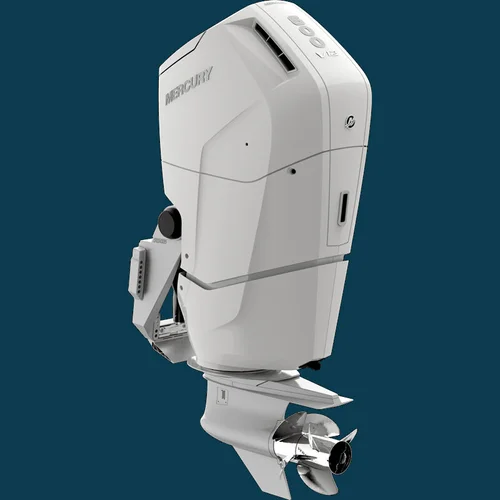
MERCURY


Verado® V12: 600 hp

The first V12 engine was built in 1904 by Putney Motor Works in London for boat racing. Today, Wisconsin-based Mercury Marine has launched its first V12 outboard—a 600 hp engine geared toward the center-console market.

Building on the legacy of the Verado® engine family, Mercury has reimagined outboard performance to deliver the ultimate luxury boating experience.

With the “unwavering strength of a V12 engine,” the 600 hp Verado outboard offers extraordinary range and performance to “take your boating adventures to new destinations.”

Mercury explains that advancements in handling and control are made possible by the outboard segment’s first steerable gearcase and an industry-first two-speed transmission.

“Quiet, smooth, and refined—this is the engine that raises the bar for premium design and engineering,” says the manufacturer.

There’s nothing different about firing up the new Mercury V12 Verado – turn the key and it fires itself up immediately – but at idle you’d barely know it is there. Mercury has worked hard on suppressing noise, vibration and harshness with this new engine, and its efforts have certainly paid off. I was tempted to try the old Rolls-Royce trick of balancing a 20-cent coin on its edge on the engine cover, but there’s too much of a slope on top.

Mercury has tuned the V12 Verado to stump up its full 600hp serve on regular 91 RON fuel, so there’s no real need for owners to reach for the premium pump.

Of note, the new control unit gives a visual indicator – a green LED on the throttle arm – that shows when the engine is in neutral. Slip the engine into gear and there’s no perceptible change in the engine’s note as it slips into the lowers of the two transmission ratios.

Playing with the new throttle, it is extremely sensitive to input. This is an engine with big dollops of torque – Mercury seems reluctant to disclose exactly how much – and thanks to its Duoprop system it also has big bite on the water, so everything that happens at the electronic throttle control tends to happen instantly down the back.

The throttle is extremely sensitive, so if you’re handing the controls over to a first-timer, make sure they are aware of just how instantly reactive things can be, particularly if you're in a confined space.

One of the first things you’ll notice is that because only the Mercury V12 Verado’s lower drive leg turns, you’re not going to be able to glance aft and sense their direction, particularly if you’ve been anchored up for a bit.

Instead, you’re going to have to rely on an electronic rudder gauge built into the in-dash display. Our test boat also has an underwater camera focused on the lower gearcase so you can also visually check the steering angle.

Muddling along at low speed and it almost feels as though you're on an electric boat, there's so little audible input from the transom.

Open up the throttle and there is an increase in engine volume but it is still surprisingly muted, quieter than a V6.

The electronic throttle controls mean whatever happens at the console is immediately felt at the transom. Big atmo engines tend to have this hesitancy to them as they breathe deep to respond to a call for power, but with the V12 the response is instantaneous as the engine's electronics beat the war drums and rouse the troops.

Accelerate from a standing start and at around 3000rpm there's an almost imperceptible change of momentum as the transmission flicks from first to second gear. You can hear the dip in the revs, but you have to listen hard to pick it up. 

Part of that listening hard is due to the fact that even with a tsunami ofrevs onboard, the Mercury V12 Verado doesn't announce it. This engine is almost frustratingly quiet – what's the point in having a V12 engine when it sounds like an unstressed V6? A V8 Verado is more audibly engaging.

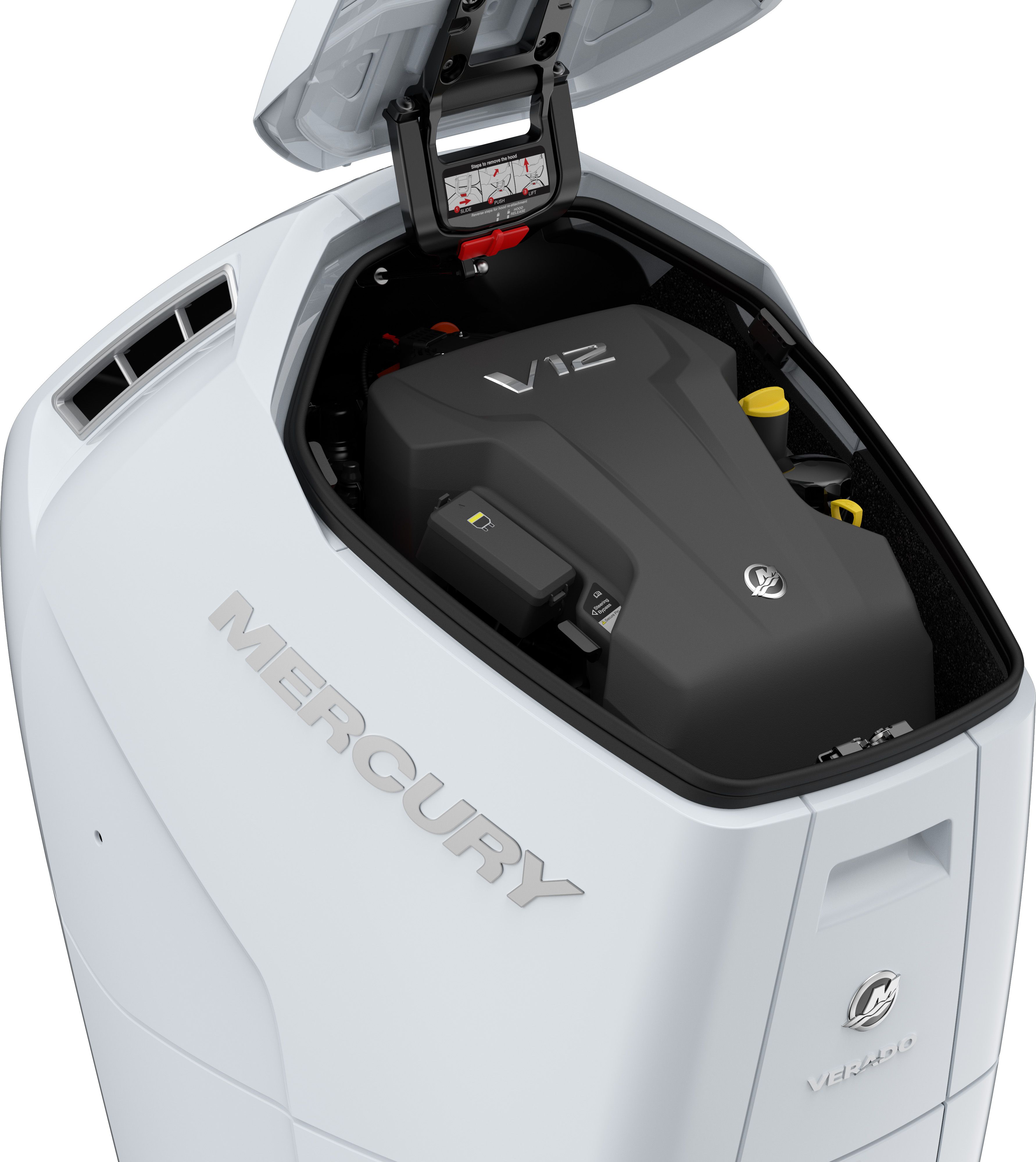
If you're thinking maintenance will be a nightmare with 12 cylinders to fetter, Mercury anticipated that pain point and tried to make the V-12 easy to deal with. There's a hood on the top of the cowling that allows owners (or their minions) to handle the 200-hour oil change without removing the cowling or taking the boat out of the water. The cowling does come off for the major service, but that one's only every five years or 1000 hours. Mercury is also offering a commercial version called the SeaPro that's designed to rack up huge hours and take plenty of abuse. That one is detuned to 500 horsepower, but a couple of those would get your trawler moving pretty good.

While a 600-horse V-12 sounds like the epitome of hey-look-at-me outrageousness and ostentation, Mercury makes the case that these beasts actually represent pragmatic boating. One benefit: fuel economy. How is a 7.6-liter V-12 good for fuel economy? Because to get 1200 horsepower, you'd use either two of these or, say, three 425-hp V-8s. In which case, you still have 24 cylinders, but the added drag of another drive in the water. Mercury says dual V-12s deliver 20 percent better fuel economy than triple (Yamaha) V-8s.

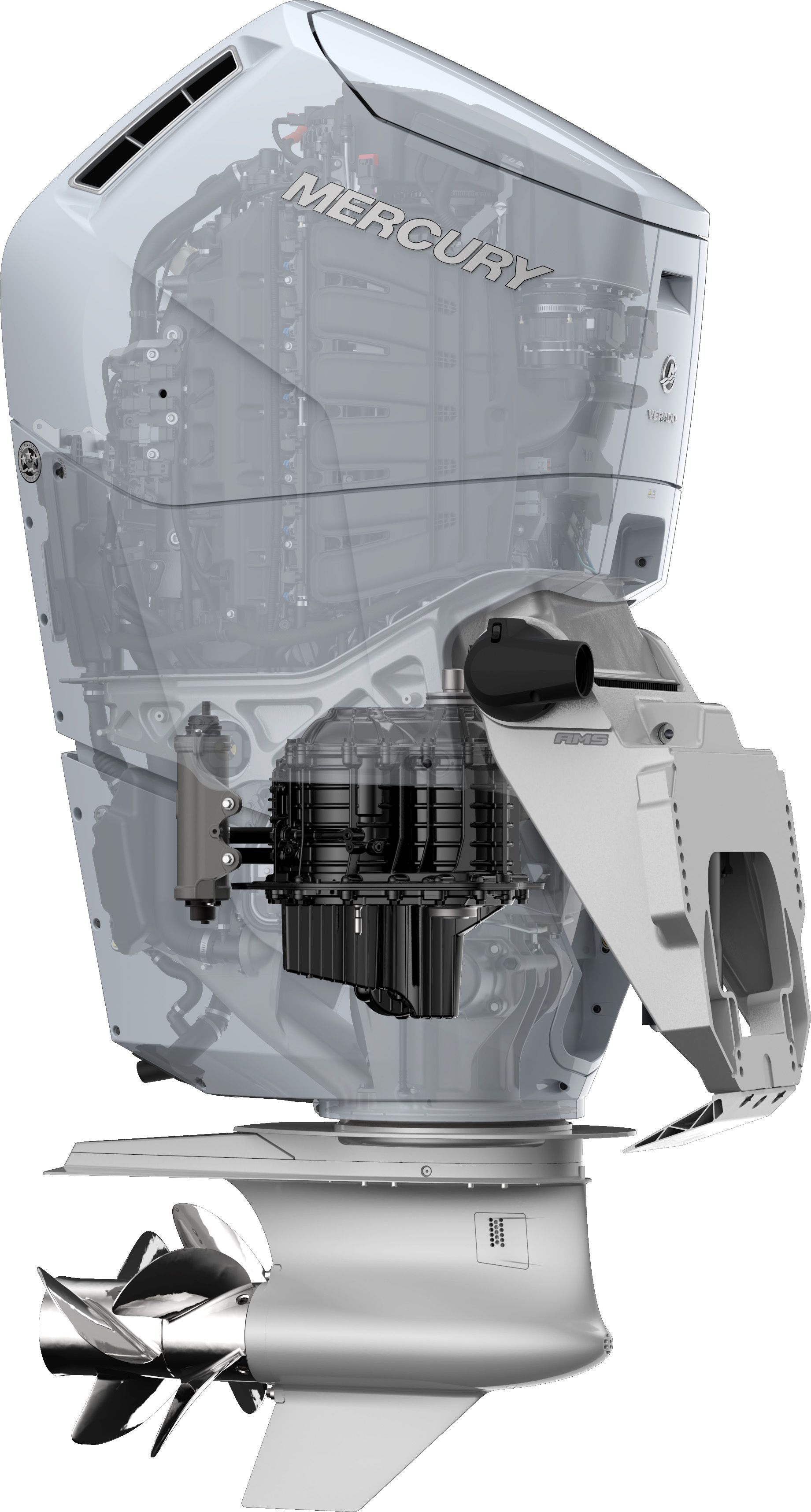
Even more impressive is that the engine has the industry’s first steerable gearcase on an outboard that pivots independently underwater while the engine’s powerhead remains in a space-saving fixed position. This provides more room for multi-engine configurations and a wider steering angle for agile handling. With help from contrarotating propellers, it also has better “bite” in the water for docking and other close quarters maneuvering.

“With boats continuing to grow bigger and performance expectations continuing to rise, boaters have been asking for a better, more capable, high-horsepower solution to meet their needs. The V12 Verado outboard is Mercury’s answer,” said Chris Drees, Mercury Marine president. “Using our advanced engineering and design capabilities, we completely redefined outboard performance. The V12 Verado outboard delivers boaters unrivaled freedom, luxury, and power to pursue their passions on the water. This is a remarkable engine that will change the future of boating…This engine makes boats easy to maneuver near the dock and provides superior handling at all speeds. It’s incredibly fuel efficient, so boaters can go farther and stay out longer. It’s so smooth and quiet that you can have a conversation while the engines are running. It’s durable, reliable, and easy to maintain. There’s nothing else like the V12 Verado in the marketplace today.”

Another astounding feature is that the engine is capable of operating for 200 hours before requiring routine service, including oil changes, and basic maintenance is done through the innovative top cowl service hood while the boat is still in the water. The entire cowl doesn’t need to be removed to allow more in-depth service until 1,000 hours or five years.

Verado V12 Power and Performance...The outboard segment’s first V12 engine delivers superior power and performance within a surprisingly compact footprint. Combined with the steerable gearcase and a streamlined, compact design, the engine can be mounted on 27-inch centers, allowing boaters to fit the necessary power onto the transom.

The two-speed transmission makes transferring 600 hp to the gearcase effortless. It delivers maximum torque and acceleration in first gear, then quietly shifts to second for efficient cruising and thrilling top speeds. No shift clunk. No limitations. Just smooth, impressive power.

Electro-hydraulic controls allow the steerable gearcase to react instantly to the pilot's commands. With no movement of the engine body above the water, there are no distractions—just precise maneuverability around docks and smooth, effortless handling in open water. 

Contra-rotating propellers...A new series of dual propellers has been expertly crafted to harness the full 600-hp potential. Designed to operate in a contra-rotating configuration, the new propellers lift the boat onto plane quickly and efficiently, while delivering exceptional handling and fuel economy at cruising speeds.

Exceptionally smooth and quiet...A robust, refined, next-generation Advanced MidSection (AMS) mounting system cradles the powerhead to isolate noise and vibration, while careful tuning dampens induction sounds and virtually eliminates injection noise.


by Autonews

terça-feira, 28 de julho de 2026


DOSSIER


AUTONEWS


VW feels the impact of Chinese competition in Europe

Volkswagen needs to deepen cost-cutting measures to remain competitive in the face of the advance of Chinese automakers in the European market, CEO Oliver Blume said on Friday (24), following the release of quarterly results that showed a mixed performance.

The world's second-largest automaker is trying to balance the need to reassure investors with the defense of a sweeping restructuring plan. At the same time, it is grappling with the impact of tariffs and a weak Chinese market, while weighing the potential closure of some factories in Germany.

"When we look to the future, we see risks increasing," Blume said, citing the existence of more than 150 car manufacturers in China. "And they are all coming to the market," he added, referring to Europe.

The executive proposed doubling the number of previously planned job cuts—raising the total from 50,000 to 100,000 positions—and warned that four German factories are at risk of closure after 2030. He noted that all parties involved are aware of the challenges facing the company.

Despite this, Blume was unable to secure full approval for his restructuring plan during a supervisory board meeting held earlier this month. The decision paves the way for a new round of negotiations with labor unions, following an agreement reached in late 2024 that outlined the initial 50,000 job cuts.

Some analysts believe the second-quarter results indicate the company is stabilizing. Revenue exceeded market expectations, and the group remains on track to raise its operating margin this year to a range of 4% to 5.5%.

"Volkswagen's results suggest the company is beginning to stabilize, despite a challenging environment," said Morningstar analyst Rella Suskin, highlighting the company's strong cash generation. Bernstein analysts stated that Volkswagen's management is trying to "balance the need to reassure investors while warning employees that the situation is serious"—a challenge considered nearly impossible.

Profit forecast maintained...Volkswagen's operating profit fell 9.5% between April and June, to €3.5 billion ($3.98 billion). Revenue totaled €82.4 billion, allowing the company to maintain an operating margin of 4.2% for the quarter, within its annual target range of 4% to 5.5%.

The company maintained its profit forecast for the year but dropped its revenue growth projection. It now estimates a sales decline of up to 3% in 2026.

Shares of Volkswagen—owner of the VW, Skoda, Audi, Porsche, Bentley, and Lamborghini brands—fell as much as 3.2% following the results announcement but recovered some of those losses during the trading session.

Chinese competition advances in Europe...Amid a prolonged slowdown in the domestic Chinese market, the country's automakers have expanded their presence in Europe with lower-cost, high-tech electric vehicles and plug-in hybrid models. This trend has already eroded Volkswagen's long-standing market leadership in China.

In addition to exporting vehicles, companies like BYD and Geely are setting up factories in Europe, prioritizing countries with lower production costs, such as Hungary and Spain.

Meanwhile, Volkswagen is seeking alternatives to utilize idle capacity at its German plants. Options under consideration include producing models designed for the Chinese market domestically and forging partnerships with defense sector companies.

Volkswagen's works council stated that merely cutting costs would not be enough to restore the company's competitiveness and advocated for increased investment in technology and new product development. According to a council spokesperson, following the summer break at German factories, worker representatives will resume negotiations with management to discuss the measures needed to ensure the company's long-term sustainability.

Blume stated that he expects to finalize these decisions before the end of the year.

Chinese competition is no longer confined to a handful of “sensitive” segments. It now reaches the traditional pillars of made in Europe: automotive, machine tools, batteries, chemicals and industrial equipment. That is the core message of a report published in February 2026 by France’s High Commission for Planning and Strategy, which describes a new wave of competition of “unmatched” scale.

The acceleration since the post-Covid period is driven by two combined effects: rapid quality upgrades across Chinese products and structural cost advantages. The report highlights production cost gaps that are often estimated around 30–40% versus Europe for comparable quality, reshaping the competitiveness equation.

Volkswagen’s restructuring hits a wall with Germany’s powerful unions...Volkswagen’s global CEO, Oliver Blume, faces an uphill battle to push through a major overhaul of Europe’s largest automaker after failing to secure initial support from the supervisory board—a body that, under the German governance model, sits above the executive board.

Blume’s proposals—which include further job cuts, plant closures in Germany, and potentially even spinning off the VW brand from the rest of the conglomerate—were rejected by 12 of the 19 supervisory board members during a meeting in Wolfsburg on Thursday.

The company, which also owns Audi and controls Porsche, presented only vague goals following Thursday’s meeting. It pledged to reduce the complexity of its vast product portfolio, aiming to focus its lineup on the most attractive market segments.

There was “no sign of progress toward an agreement on plant closures, a five-year investment plan, or additional staff cuts,” stated Jefferies analyst Philippe Houchois in a report to clients.

Consequently, news that the company plans to halve its model lineup was met with indifference. VW’s preferred shares, which have fallen nearly a third this year, showed little movement on Friday.

While change at VW is always difficult due to its unique structure, the challenges facing its industrial future have rarely been greater. Profits in China are unlikely to recover as local rivals like BYD win over buyers, while US tariffs erode returns for the luxury brands Audi and Porsche.

VW has struggled to cut production costs in Germany, which Jefferies estimates are about two-thirds higher than in other locations such as Portugal and Spain. High labor and energy costs, compounded by the burden of bureaucracy, are the primary factors—alongside a workforce accustomed to generous bonuses and empowered to defend its own interests.

Investors' patience will be tested in the coming months after Blume stumbled at the first major hurdle in his attempt to revive flagging profits. The company’s market value remains near a decade-low of around €36 billion ($41.1 billion), meaning it trades at little more than its net cash position.

VW’s executive board “is taking responsibility for the company’s sustainable future—at a time when the automotive industry is under intense pressure worldwide,” Blume said in a statement on Friday. The turnaround plan is “positioning the group to be even more robust and competitive, even in a highly challenging global environment.”

The unions’ swift response was to ramp up pressure on the CEO. Daniela Cavallo, head of VW’s works council and a member of the supervisory board, issued an ultimatum demanding that Blume explain himself to the company’s staff. Like other major German corporations, VW operates under a co-determination system involving worker representatives, designed to foster long-term consensus.

Union leaders wrote to employees blaming management for stoking fears of layoffs and demanded that Blume and his team answer more than 80 questions explaining the restructuring plan by Friday.

When he failed to meet the request, the works council distributed a special edition of its newsletter to staff on Saturday, stating that Blume would have to answer directly to employees at meetings to be held after the summer break.

There has already been “a massive loss of trust” in Blume, who, upon taking office, presented himself as someone who wanted to do the job “for the people,” the council wrote.

“He certainly won initial goodwill from much of the workforce with that stance,” it added. “But by now, practically none of that remains.”

The combative comments mark a clear shift in tone. Blume, a VW career employee with over 30 years at the company, had largely been spared the fierce attacks that union leaders leveled against his predecessor, Herbert Diess—a former BMW AG executive who was ousted in 2022.

At VW, workers wield even greater influence. The state of Lower Saxony holds a 20% stake, and its two representatives on the supervisory board typically side with the unionists. This often makes it difficult to assert investor interests when key stakeholders negotiate major decisions.

After this initial round of attempted reform, the company may resort to a piecemeal approach, involving targeted cost-cutting measures that could take several months to complete.

Blume “evidently did not deem it necessary, over the course of weeks, to share the essential facts about his future plan with tens of thousands of deeply unsettled—indeed, frightened—employees,” the works council wrote on Saturday.

“For the employee representatives, enough is enough.”


Porsche wants to stop the bleeding and lays off another 6,000 employees...Porsche continues to go through a difficult period, as not only are sales falling, but operating profits are following this cycle of losses, which is visible after this automaker — of which the VW Group owns 75% — declared in 2025 a 93% drop in operating profits, in addition to a 9.5% reduction in revenue and a 10.1% cut in sales. It is up to Michael Leiters(image above), the new CEO who replaced Oliver Blume at the helm of Porsche, to recover the manufacturer that accumulated profits for years on end, but which recently seems to have lost its way.

Leiters took control of the manufacturer that gave us the 911, among other emblematic models, only in January 2026, so everything that is behind is not his responsibility, as at the time he was CEO of McLaren. But even though he inherited many mistakes from the past (with Blume), the first six months of his leadership in 2026 don't exactly give him a merit diploma, with global sales falling 16% from January to June and operating results plummeting 11.6%.

Now, the recipe announced by the new CEO to turn the problem around and get the brand back to good results involves laying off another 6,000 employees, in addition to the 3,900 that Blume dismissed in recent times as CEO, still in 2025. According to Reuters, the layoff plan will be presented to workers next week, with responsibility for the poor results being placed on the additional taxes in the American market and the anemia that plagues the Chinese market. More importantly, the 911 has suffered from the excess of Chinese rivals, mostly electric, which easily surpass it in power and speed, despite a price close to half, a combination of factors that also helps to explain the flight of potential customers.

Leiters' strategy also involves simplifying the range, which can be seen as code to eliminate versions or even models, betting more on vehicles that guarantee higher profit margins, such as the 911. However, the most famous Porsche owes its profit margin to a certain exclusivity stemming from the fact that it sells only about 50,000 units per year, which alone is not enough to "feed" a brand.

Another decision announced by Michael Leiters involves disinvestment in electric vehicles, even the successors to the 718 Cayman and Boxster, models that were already scheduled for launch in 2025, then delayed to 2026 and finally to 2027, until they were abandoned, along with all the money invested.

While the electric 718 has been put on hold, the same cannot be said for another Porsche project, known by the codename K1, a larger SUV than the Cayenne with three rows of seats to provide seven passengers. The future K1 will now be built on the Premium Platform Combustion, designed for V6 and V8 engines, instead of the Scalable Systems Platform mentioned earlier, which is dedicated to electric models.

Autonews


BENTLEY


New teaser video: Bentley Torcal

Bentley has been preparing for some time to launch its first electric model—an SUV—and today we officially know its name. Bentley announced that its fourth model line will be called Torcal. A teaser image has also been released, and we won't have to wait long to see the full model, as the unveiling is scheduled for September 23.

Bentley states that the name Torcal comes from El Torcal de Antequera in Andalusia, Spain—a nature reserve in the Sierra del Torcal mountain range featuring striking limestone formations, including towering cliffs, unusual rock structures, and caves. This is not the first Bentley named after a natural landmark, following in the footsteps of the Bentayga, Bacalar, and Batur. Bentley also notes that the name references the Latin word "torquere," meaning "to twist," which gave rise to the modern English word "torque."

Alongside the name announcement, Bentley released a new image of the Torcal for the first time. Showing the rear of the car, the image reveals little but appears to confirm it is an SUV rather than a sedan or coupe, as the roofline seems to extend to the vehicle's rear. We can also catch a glimpse of slim taillights with a diamond-shaped design and a black Bentley emblem.

More information is expected to emerge in the coming months, but we have already seen the Torcal undergoing testing and know some preliminary details. The SUV will be smaller than the gas-powered Bentayga and is expected to be very similar to the electric Porsche Cayenne. This likely implies a powerful dual-motor powertrain with all-wheel drive, as well as an 800-volt architecture supporting a maximum charging rate of 400 kilowatts.

Autonews


AUTONEWS


How you can reduce your fuel consumption yourself: It is important when you change gears, but also to listen to the engine

Fuel consumption does not only depend on the car you drive, but also on the way you drive it.

With a few simple habits behind the wheel, it is possible to noticeably reduce fuel consumption, especially if you drive a car with a manual transmission. Experts from the German organization TÜV have highlighted several tips that can help you save fuel, but also put less strain on the engine.

One of the most important tips relates to correct gear shifting. When accelerating, it is recommended to shift to a higher gear as soon as possible, while when slowing down, you should shift to a lower gear as late as possible, writes Autonews.

It is ideal to shift to a lower gear when the engine speed drops to around 1,000 rpm, or just before the engine starts to shake. In general, experts state that the most economical engine operation is between 1,500 and 2,500 rpm. In this range, the engine consumes the least fuel, is less stressed, and also runs quieter.

Therefore, according to TÜV, drivers can also rely on their hearing – when the engine runs smoothly and quietly, it is most often in its optimal operating mode.

When moving off, it is recommended to press the accelerator pedal to approximately two-thirds of its travel. After accelerating, maintaining a steady speed is one of the best ways to reduce fuel consumption.

As a general rule, TÜV advises driving at a speed of 70 to 80 percent of the vehicle's maximum speed, but no more than 130 kilometers per hour.

To further save fuel, it is also recommended to release the accelerator pedal as early as possible when you know you will soon stop. For example, if you see that the traffic light is red, there is no need to accelerate to it and then brake suddenly. It is much more economical for the car to slow down gradually, using its kinetic energy.

On long stretches of highway or flat roads, using cruise control can also be useful, as it helps maintain a constant speed and reduces unnecessary acceleration.

However, experts warn that cruise control is not always the best solution. In heavy traffic, especially if the vehicle does not have adaptive cruise control, its use is not particularly practical.

Finally, we should not forget the weight that the car is carrying. Any additional load increases fuel consumption. According to TÜV estimates, an additional 50 kilograms of luggage can increase consumption by about 0.3 liters per 100 kilometers, so it is recommended to remove items from the car that you do not need while driving.

Fuel-efficient driving techniques...Fuel-efficient driving can save you hundreds of dollars in fuel each year, improve road safety and prevent wear on your vehicle. Adopt these 5 fuel-efficient driving techniques to lower your vehicle’s fuel consumption and carbon dioxide emissions by as much as 25%.

1. Accelerate gently...The harder you accelerate the more fuel you use. In the city, you can use less fuel by easing onto the accelerator pedal gently. To be as fuel-efficient as possible, take 5 seconds to accelerate your vehicle up to 20 kilometres per hour from a stop. Imagine an open cup of coffee on the dashboard. Don’t spill it!

2. Maintain a steady speed...When your speed dips and bursts, you use more fuel, and spend more money, than you need to. Tests have shown that varying your speed up and down between 75 and 85 km per hour every 18 seconds can increase your fuel use by 20%.

Consider using cruise control for highway driving, where conditions permit. Be mindful, however, that little variations in speed can actually be good when gravity does the work. Where traffic patterns permit, allow your speed to drop when you travel uphill, then regain your momentum as you roll downhill.

3. Anticipate traffic...Look ahead while you’re driving to see what is coming up. And keep a comfortable distance between your vehicle and the one in front of you. By looking closely at what pedestrians and other cars are doing, and imagining what they’ll do next, you can keep your speed as steady as possible and use less fuel. It’s also safer to drive this way.

4. Avoid high speeds...Keep to the speed limit and save on fuel! Most cars, vans, pickup trucks and SUVs are most fuel-efficient when they’re travelling between 50 and 80 km per hour. Above this speed zone, vehicles use increasingly more fuel the faster they go.

For example, at 120 km per hour, a vehicle uses about 20% more fuel than at 100 km per hour. On a 25-km trip, this spike in speed – and fuel consumption – would cut just two minutes from your travel time.

5. Coast to decelerate...Every time you use your brakes, you waste your forward momentum. By looking ahead at how traffic is behaving, you can often see well in advance when it’s time to slow down. You will conserve fuel and save money by taking your foot off the accelerator and coasting to slow down instead of using your brakes.

Take the free online ecoDriving course to learn more about how fuel-efficient driving can help you save money and reduce your greenhouse gas emissions.

More ways to use less fuel...Here are more easy ways you can reduce your fuel consumption and costs:

Avoid idling your vehicle...Turn off your engine when you’re stopped for more than 60 seconds, except when in traffic. The average vehicle with a 3-litre engine wastes 300 millilitres (over 1 cup) of fuel for every 10 minutes it idles.

Measure your tire pressure every month...Driving a vehicle with tires under-inflated by 56 kilopascals (8 pounds per square inch) can increase fuel consumption by up to 4%. It can also reduce the life of your tires by more than 10,000 kilometres. Find the right tire pressure for your vehicle on the tire information placard. It’s usually on the edge of the driver’s door or doorpost. Learn more about tire maintenance.

Use a manual transmission properly...Pay attention to the tachometer, which shows engine speed. Use it to know when to shift a manual transmission for the best fuel efficiency. The higher the rpm, the more fuel the engine is burning. So shift through the lower gears smoothly and quickly, and build up speed in the higher gears.

Don’t carry unnecessary weight...Remove items such as salt, sand and sports equipment from your vehicle. The less it weighs, the less fuel your vehicle will use. The fuel consumption of a mid-size car increases by about 1% for every 25 kilograms of weight it carries.

Remove roof or bicycle racks...Streamline your vehicle by taking off the racks when you’re not using them. Aerodynamic drag can increase fuel consumption by as much as 20% on the highway.

Use air conditioning sparingly...Air conditioning can increase a vehicle’s fuel consumption by as much as 20%. Open the windows when you’re driving in the city, and use the flow-through ventilation system with the windows up on the highway. If you do use air conditioning, use the re-circulate option. It will minimize the impact.

Use a fuel consumption display...See the impact of the 5 fuel-efficient driving techniques firsthand with the help of a fuel consumption display, a feature now standard on many vehicles. (Some newer vehicles come equipped with even more sophisticated displays that analyze speed variations, shift points for manual transmissions, and driving behaviours such as acceleration and braking times.)

Many drivers consume 15% less fuel by acting on the feedback that fuel consumption displays provide.

Track your fuel consumption...How long can you go without filling your tank? Two weeks? A month?

Challenge yourself to refill as seldom as possible and your monthly costs will come down.

Plan ahead...Map out your route, especially if it’s long

Listen to traffic reports and avoid accidents, road construction and other trouble spots

Avoid roads that cut through major cities and are dotted with stoplights, intersections and pedestrians

Use four-lane highways when you can

Combine trips...Longer excursions let your vehicle’s engine warm up to its most fuel-efficient temperature.

Run your errands one after the other

Plan your route to avoid backtracking and rush-hour traffic

Drive less...The best way reduce fuel consumption is to drive less.

Walk or bike to your destination. You’ll use no fuel and have a healthier lifestyle

Use public transit

Join a car or van pool. You and your group will save fuel and avoid emitting tonnes of air pollutants a year

Work from home when you can. Every day you telecommute reduces the amount of fuel you use by 20%

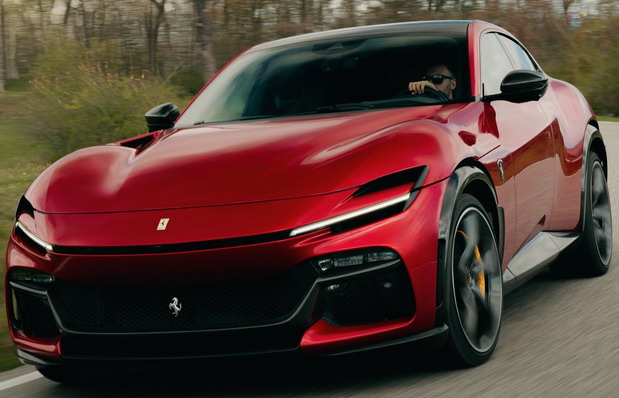
AUTONEWS Ferrari sold out by the end of 2027 Ferrari has announced that its order books for 2027 are already fully booked. In other words, n...