quarta-feira, 29 de julho de 2026


AUTONEWS


Foreign brands' market share in China falls below 25% for the first time; VW drops 26%, Honda 35%.

In 2020, they controlled over 60% of the market. The boom in Chinese electric vehicles has destroyed a business model that lasted for decades and seemed unshakable.

The market share of foreign automakers in China fell below 25% this year for the first time, driven by the rapid growth of Chinese brands—particularly in the electric vehicle segment—according to data cited by local media on Tuesday.

According to an estimate recently presented by Wang Qian, deputy general manager of the Chinese automaker Dongfeng, at an industry forum, this figure includes joint ventures—such as the one Dongfeng maintains with Japan’s Nissan. He described the situation as "unimaginable just three years ago."

He stated that the growth of China's electric vehicle market has put an end to the industry's traditional model, in which foreign manufacturers provided the technology while Chinese partners handled distribution and cost advantages in exchange for access to a massive market.

Data from the China Association of Automobile Manufacturers (CAAM) shows that foreign automakers and their joint ventures with local partners controlled over 60% of the Chinese market in 2020.

This share fell to 28% in the first half of this year, a figure slightly higher than the estimate presented by Wang.

According to the news portal Yicai, all major foreign brands recorded significant sales declines in China between January and June.

Volkswagen saw sales drop by 26%, while Japanese automakers Toyota, Nissan, and Honda recorded declines of 17%, 15%, and 35%, respectively.

The luxury segment was also affected, with Mercedes-Benz sales falling 28% year-on-year in the first half, while Audi and BMW recorded drops of 19% and 20%, respectively.

Faced with this scenario, foreign manufacturers are accelerating the localization of their operations in China, granting local teams greater autonomy in decision-making and technological development in an effort to regain competitiveness and respond more quickly to market changes.

According to Wang, the Dongfeng Nissan joint venture managed to increase sales by 192% year-on-year after raising the proportion of electric vehicles in its total sales from 7% to 30% this year, following the launch of three new electric models.

Foreign automakers losing ground in China is nothing new. In recent years, Chinese brands have gained prominence, fueled by the rapid development of electric vehicles and consumers who are increasingly receptive to domestic manufacturers.

The result of this shift is historic: in the first half of this year, the market share of foreign automakers dropped to 28% (including joint ventures with Chinese partners). To put the scale of this transformation into perspective, these brands controlled more than 60% of the Chinese auto market in 2020, according to CAAM data.

German automakers are among the hardest hit. For decades, China was a veritable El Dorado for brands like Volkswagen, Mercedes-Benz, and BMW, accounting for around 40% of these manufacturers' global sales between 2019 and 2021.

Today, the landscape is vastly different. In the first half of the year, Volkswagen's sales in China fell by 26%, while Mercedes-Benz, Audi, and BMW recorded drops of 28%, 19%, and 20%, respectively, according to the website Yicai. However, the pressure is not limited to European brands: Toyota saw sales retreat by 17%, Nissan by 15%, and Honda by 35%.

The transition to electric vehicles was one of the catalysts for this shift, according to Wang Qian, deputy general manager of the Chinese automaker Dongfeng.

For decades, foreign manufacturers dominated the Chinese market thanks to their technological advantage, while local partners handled production and distribution. Electrification has altered that balance.

Instead of following European, North American, and Japanese manufacturers, Chinese brands have taken the technological lead in electric vehicles, benefiting from a more consolidated battery supply chain, competitive production costs, and faster development cycles.

Manufacturers such as BYD, Geely, Li Auto, Xiaomi, Aito, and Xpeng are now competing in the market not only on price but also on technology, range, software, and driver-assistance systems—areas where foreign manufacturers were, until a few years ago, considered the benchmark.

A new strategy...To regain competitiveness, foreign automakers are moving away from the practice of selling global models adapted for China and are instead focusing on cars developed from scratch specifically for that market.

Volkswagen is one such example with its ID. UNYX line, while Audi has even created a brand exclusive to China—AUDI (without the iconic four rings)—designed specifically to meet the demands of Chinese consumers.

This preference for Chinese cars is no longer limited to the domestic market. In Europe, for instance, Chinese manufacturers have significantly increased their presence. In the first half of this year, Chinese manufacturers' share of the European market reached 10.9%, and Chinese manufacturers now dominate the top three spots in plug-in hybrid sales.


AUTONEWS


China effect: BMW to cut ‘as many as 8,000 jobs’

BMW is planning to cut as many as 8,000 jobs in Germany, according to reports, in the latest sign of Europe’s largest carmakers reducing costs under pressure from Chinese rivals.

The Munich-headquartered company has started a voluntary redundancy programme agreed with employee representatives, a BMW spokesperson said on Wednesday.

The company and its ​works council had agreed a severance ⁠programme targeting the administration and development ​divisions, the spokesperson said. Production operations are excluded. BMW’s total workforce is about 160,000.

Germany’s carmakers have come under intense pressure in recent years with the rise of Chinese competitors that have quickly come to dominate in the electric vehicle market. Chinese manufacturers have also launched a fierce price war in their home market, which had previously been a lucrative source of export earnings for European brands including BMW.

Europe’s carmakers have also had to find cash for their own transition from petrol to electric, and cope with the impact of US tariffs. Several manufacturers – including Volkswagen, Stellantis and Ford – have turned to partnerships with Chinese rivals to help them build and sell in Europe.

BMW’s cuts come after Milan Nedeljković, who was previously head of production, took over as chief executive in May.

A spokesperson said: “The BMW Group is proactively shaping the profound changes taking place in its operating environment. These include the technological transformation of the automotive industry, geopolitical uncertainties, changing market conditions and developments in China.”

Volkswagen, Germany’s largest carmaker by volume, confirmed on Friday that it would cut as many as 100,000 jobs from its total workforce of 650,000. The plans include closing four factories and halving the number of models produced.

Porsche, the sports car brand part-owned by Volkswagen, is also undergoing a severe restructuring. Another 5,000 job cuts were agreed this week, taking total planned redundancies to 9,000 – a fifth of its workforce – by 2035. The Stuttgart-based company reported a €1.4bn (£1.2bn) profit before tax on Wednesday, up from €1.1bn a year earlier.

Porsche’s sales in China slumped by 30% to 14,500 in the first half of 2026, faster than the 17% decline across the group as a whole. Donald Trump’s withdrawal of subsidies for electric cars such as Porsche’s Taycan also hit North American sales.


MERCURY


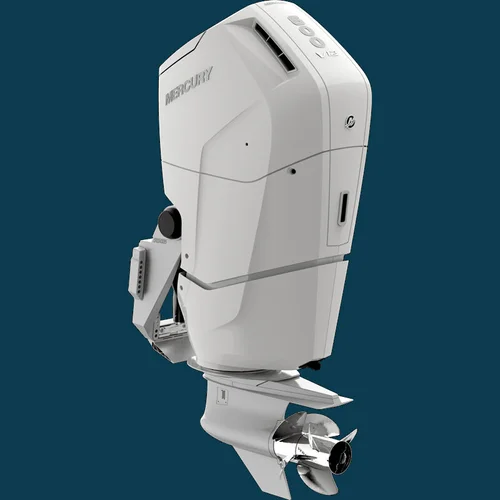
Verado® V12: 600 hp

The first V12 engine was built in 1904 by Putney Motor Works in London for boat racing. Today, Wisconsin-based Mercury Marine has launched its first V12 outboard—a 600 hp engine geared toward the center-console market.

Building on the legacy of the Verado® engine family, Mercury has reimagined outboard performance to deliver the ultimate luxury boating experience.

With the “unwavering strength of a V12 engine,” the 600 hp Verado outboard offers extraordinary range and performance to “take your boating adventures to new destinations.”

Mercury explains that advancements in handling and control are made possible by the outboard segment’s first steerable gearcase and an industry-first two-speed transmission.

“Quiet, smooth, and refined—this is the engine that raises the bar for premium design and engineering,” says the manufacturer.

There’s nothing different about firing up the new Mercury V12 Verado – turn the key and it fires itself up immediately – but at idle you’d barely know it is there. Mercury has worked hard on suppressing noise, vibration and harshness with this new engine, and its efforts have certainly paid off. I was tempted to try the old Rolls-Royce trick of balancing a 20-cent coin on its edge on the engine cover, but there’s too much of a slope on top.

Mercury has tuned the V12 Verado to stump up its full 600hp serve on regular 91 RON fuel, so there’s no real need for owners to reach for the premium pump.

Of note, the new control unit gives a visual indicator – a green LED on the throttle arm – that shows when the engine is in neutral. Slip the engine into gear and there’s no perceptible change in the engine’s note as it slips into the lowers of the two transmission ratios.

Playing with the new throttle, it is extremely sensitive to input. This is an engine with big dollops of torque – Mercury seems reluctant to disclose exactly how much – and thanks to its Duoprop system it also has big bite on the water, so everything that happens at the electronic throttle control tends to happen instantly down the back.

The throttle is extremely sensitive, so if you’re handing the controls over to a first-timer, make sure they are aware of just how instantly reactive things can be, particularly if you're in a confined space.

One of the first things you’ll notice is that because only the Mercury V12 Verado’s lower drive leg turns, you’re not going to be able to glance aft and sense their direction, particularly if you’ve been anchored up for a bit.

Instead, you’re going to have to rely on an electronic rudder gauge built into the in-dash display. Our test boat also has an underwater camera focused on the lower gearcase so you can also visually check the steering angle.

Muddling along at low speed and it almost feels as though you're on an electric boat, there's so little audible input from the transom.

Open up the throttle and there is an increase in engine volume but it is still surprisingly muted, quieter than a V6.

The electronic throttle controls mean whatever happens at the console is immediately felt at the transom. Big atmo engines tend to have this hesitancy to them as they breathe deep to respond to a call for power, but with the V12 the response is instantaneous as the engine's electronics beat the war drums and rouse the troops.

Accelerate from a standing start and at around 3000rpm there's an almost imperceptible change of momentum as the transmission flicks from first to second gear. You can hear the dip in the revs, but you have to listen hard to pick it up. 

Part of that listening hard is due to the fact that even with a tsunami ofrevs onboard, the Mercury V12 Verado doesn't announce it. This engine is almost frustratingly quiet – what's the point in having a V12 engine when it sounds like an unstressed V6? A V8 Verado is more audibly engaging.

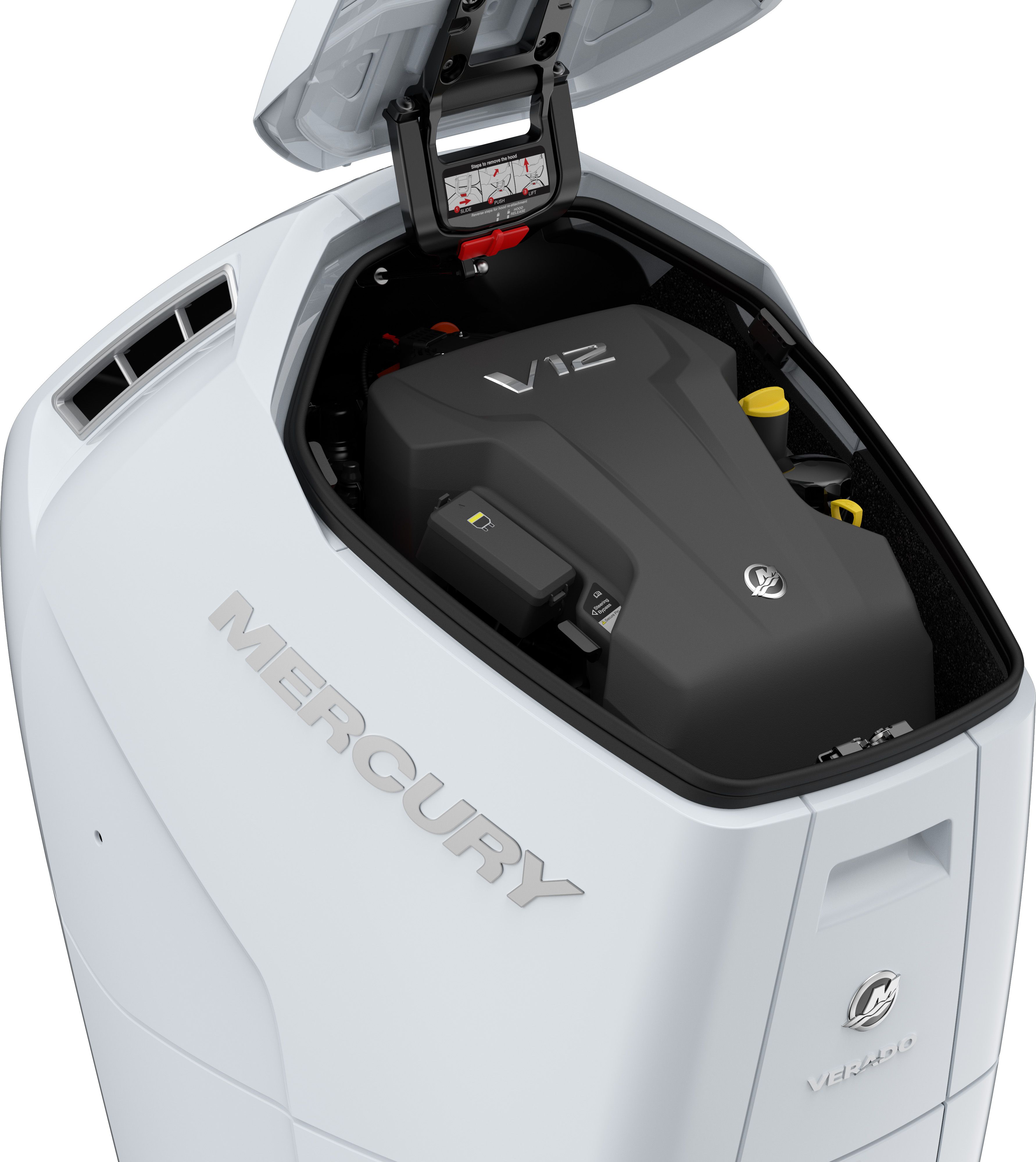
If you're thinking maintenance will be a nightmare with 12 cylinders to fetter, Mercury anticipated that pain point and tried to make the V-12 easy to deal with. There's a hood on the top of the cowling that allows owners (or their minions) to handle the 200-hour oil change without removing the cowling or taking the boat out of the water. The cowling does come off for the major service, but that one's only every five years or 1000 hours. Mercury is also offering a commercial version called the SeaPro that's designed to rack up huge hours and take plenty of abuse. That one is detuned to 500 horsepower, but a couple of those would get your trawler moving pretty good.

While a 600-horse V-12 sounds like the epitome of hey-look-at-me outrageousness and ostentation, Mercury makes the case that these beasts actually represent pragmatic boating. One benefit: fuel economy. How is a 7.6-liter V-12 good for fuel economy? Because to get 1200 horsepower, you'd use either two of these or, say, three 425-hp V-8s. In which case, you still have 24 cylinders, but the added drag of another drive in the water. Mercury says dual V-12s deliver 20 percent better fuel economy than triple (Yamaha) V-8s.

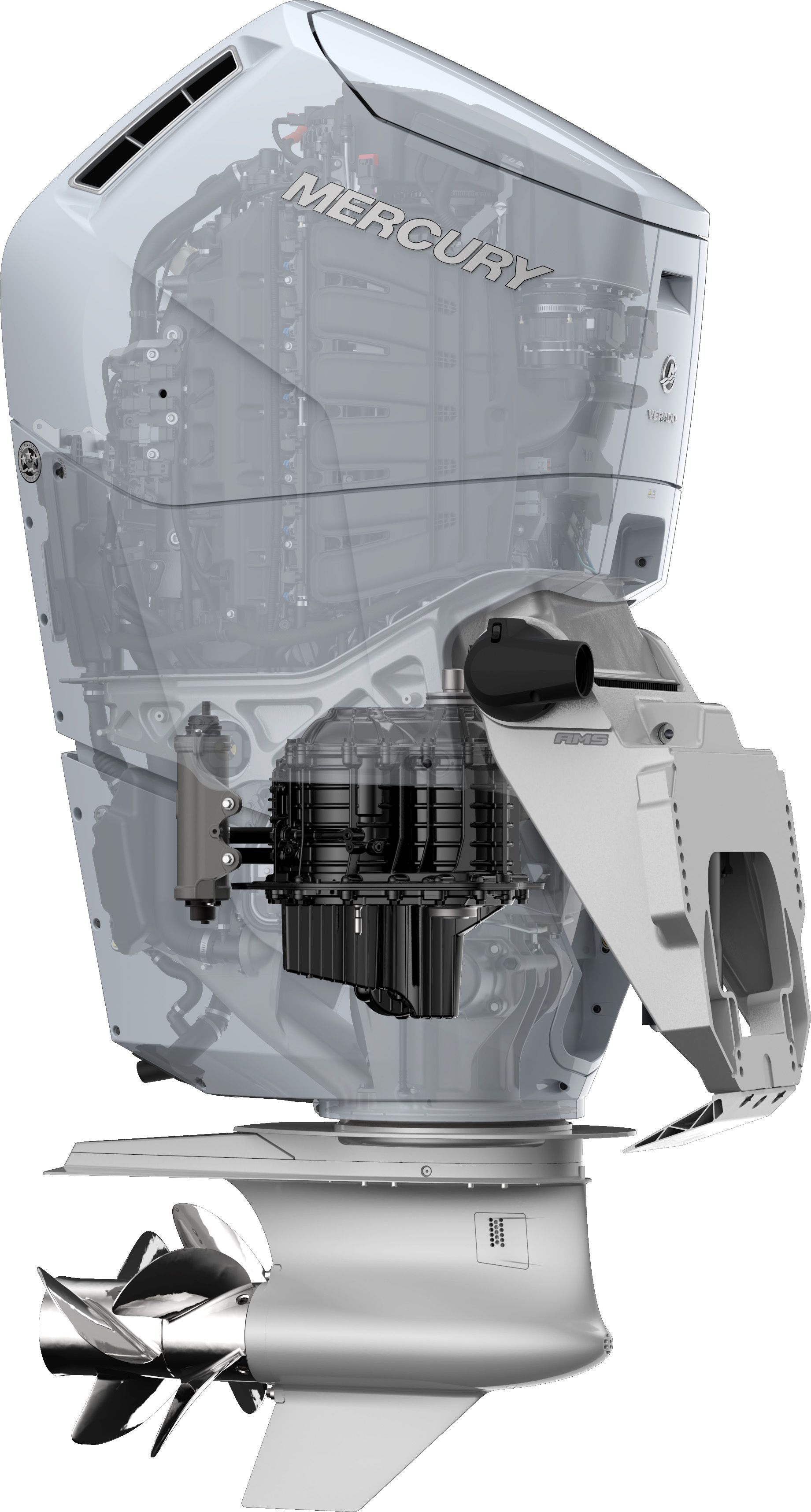
Even more impressive is that the engine has the industry’s first steerable gearcase on an outboard that pivots independently underwater while the engine’s powerhead remains in a space-saving fixed position. This provides more room for multi-engine configurations and a wider steering angle for agile handling. With help from contrarotating propellers, it also has better “bite” in the water for docking and other close quarters maneuvering.

“With boats continuing to grow bigger and performance expectations continuing to rise, boaters have been asking for a better, more capable, high-horsepower solution to meet their needs. The V12 Verado outboard is Mercury’s answer,” said Chris Drees, Mercury Marine president. “Using our advanced engineering and design capabilities, we completely redefined outboard performance. The V12 Verado outboard delivers boaters unrivaled freedom, luxury, and power to pursue their passions on the water. This is a remarkable engine that will change the future of boating…This engine makes boats easy to maneuver near the dock and provides superior handling at all speeds. It’s incredibly fuel efficient, so boaters can go farther and stay out longer. It’s so smooth and quiet that you can have a conversation while the engines are running. It’s durable, reliable, and easy to maintain. There’s nothing else like the V12 Verado in the marketplace today.”

Another astounding feature is that the engine is capable of operating for 200 hours before requiring routine service, including oil changes, and basic maintenance is done through the innovative top cowl service hood while the boat is still in the water. The entire cowl doesn’t need to be removed to allow more in-depth service until 1,000 hours or five years.

Verado V12 Power and Performance... The outboard segment’s first V12 engine delivers superior power and performance within a surprisingly compact footprint. Combined with the steerable gearcase and a streamlined, compact design, the engine can be mounted on 27-inch centers, allowing boaters to fit the necessary power onto the transom.

The two-speed transmission makes transferring 600 hp to the gearcase effortless. It delivers maximum torque and acceleration in first gear, then quietly shifts to second for efficient cruising and thrilling top speeds. No shift clunk. No limitations. Just smooth, impressive power.

Electro-hydraulic controls allow the steerable gearcase to react instantly to the pilot's commands. With no movement of the engine body above the water, there are no distractions—just precise maneuverability around docks and smooth, effortless handling in open water. Contra-Rotating Propellers... A new series of dual propellers has been expertly crafted to harness the full 600-hp potential. Designed to operate in a contra-rotating configuration, the new propellers lift the boat onto plane quickly and efficiently, while delivering exceptional handling and fuel economy at cruising speeds.

Exceptionally smooth and quiet...A robust, refined, next-generation Advanced MidSection (AMS) mounting system cradles the powerhead to isolate noise and vibration, while careful tuning dampens induction sounds and virtually eliminates injection noise.


by Autonews

terça-feira, 28 de julho de 2026


DOSSIER


AUTONEWS


VW feels the impact of Chinese competition in Europe

Volkswagen needs to deepen cost-cutting measures to remain competitive in the face of the advance of Chinese automakers in the European market, CEO Oliver Blume said on Friday (24), following the release of quarterly results that showed a mixed performance.

The world's second-largest automaker is trying to balance the need to reassure investors with the defense of a sweeping restructuring plan. At the same time, it is grappling with the impact of tariffs and a weak Chinese market, while weighing the potential closure of some factories in Germany.

"When we look to the future, we see risks increasing," Blume said, citing the existence of more than 150 car manufacturers in China. "And they are all coming to the market," he added, referring to Europe.

The executive proposed doubling the number of previously planned job cuts—raising the total from 50,000 to 100,000 positions—and warned that four German factories are at risk of closure after 2030. He noted that all parties involved are aware of the challenges facing the company.

Despite this, Blume was unable to secure full approval for his restructuring plan during a supervisory board meeting held earlier this month. The decision paves the way for a new round of negotiations with labor unions, following an agreement reached in late 2024 that outlined the initial 50,000 job cuts.

Some analysts believe the second-quarter results indicate the company is stabilizing. Revenue exceeded market expectations, and the group remains on track to raise its operating margin this year to a range of 4% to 5.5%.

"Volkswagen's results suggest the company is beginning to stabilize, despite a challenging environment," said Morningstar analyst Rella Suskin, highlighting the company's strong cash generation. Bernstein analysts stated that Volkswagen's management is trying to "balance the need to reassure investors while warning employees that the situation is serious"—a challenge considered nearly impossible.

Profit forecast maintained...Volkswagen's operating profit fell 9.5% between April and June, to €3.5 billion ($3.98 billion). Revenue totaled €82.4 billion, allowing the company to maintain an operating margin of 4.2% for the quarter, within its annual target range of 4% to 5.5%.

The company maintained its profit forecast for the year but dropped its revenue growth projection. It now estimates a sales decline of up to 3% in 2026.

Shares of Volkswagen—owner of the VW, Skoda, Audi, Porsche, Bentley, and Lamborghini brands—fell as much as 3.2% following the results announcement but recovered some of those losses during the trading session.

Chinese competition advances in Europe...Amid a prolonged slowdown in the domestic Chinese market, the country's automakers have expanded their presence in Europe with lower-cost, high-tech electric vehicles and plug-in hybrid models. This trend has already eroded Volkswagen's long-standing market leadership in China.

In addition to exporting vehicles, companies like BYD and Geely are setting up factories in Europe, prioritizing countries with lower production costs, such as Hungary and Spain.

Meanwhile, Volkswagen is seeking alternatives to utilize idle capacity at its German plants. Options under consideration include producing models designed for the Chinese market domestically and forging partnerships with defense sector companies.

Volkswagen's works council stated that merely cutting costs would not be enough to restore the company's competitiveness and advocated for increased investment in technology and new product development. According to a council spokesperson, following the summer break at German factories, worker representatives will resume negotiations with management to discuss the measures needed to ensure the company's long-term sustainability.

Blume stated that he expects to finalize these decisions before the end of the year.

Chinese competition is no longer confined to a handful of “sensitive” segments. It now reaches the traditional pillars of made in Europe: automotive, machine tools, batteries, chemicals and industrial equipment. That is the core message of a report published in February 2026 by France’s High Commission for Planning and Strategy, which describes a new wave of competition of “unmatched” scale.

The acceleration since the post-Covid period is driven by two combined effects: rapid quality upgrades across Chinese products and structural cost advantages. The report highlights production cost gaps that are often estimated around 30–40% versus Europe for comparable quality, reshaping the competitiveness equation.

Volkswagen’s restructuring hits a wall with Germany’s powerful unions...Volkswagen’s global CEO, Oliver Blume, faces an uphill battle to push through a major overhaul of Europe’s largest automaker after failing to secure initial support from the supervisory board—a body that, under the German governance model, sits above the executive board.

Blume’s proposals—which include further job cuts, plant closures in Germany, and potentially even spinning off the VW brand from the rest of the conglomerate—were rejected by 12 of the 19 supervisory board members during a meeting in Wolfsburg on Thursday.

The company, which also owns Audi and controls Porsche, presented only vague goals following Thursday’s meeting. It pledged to reduce the complexity of its vast product portfolio, aiming to focus its lineup on the most attractive market segments.

There was “no sign of progress toward an agreement on plant closures, a five-year investment plan, or additional staff cuts,” stated Jefferies analyst Philippe Houchois in a report to clients.

Consequently, news that the company plans to halve its model lineup was met with indifference. VW’s preferred shares, which have fallen nearly a third this year, showed little movement on Friday.

While change at VW is always difficult due to its unique structure, the challenges facing its industrial future have rarely been greater. Profits in China are unlikely to recover as local rivals like BYD win over buyers, while US tariffs erode returns for the luxury brands Audi and Porsche.

VW has struggled to cut production costs in Germany, which Jefferies estimates are about two-thirds higher than in other locations such as Portugal and Spain. High labor and energy costs, compounded by the burden of bureaucracy, are the primary factors—alongside a workforce accustomed to generous bonuses and empowered to defend its own interests.

Investors' patience will be tested in the coming months after Blume stumbled at the first major hurdle in his attempt to revive flagging profits. The company’s market value remains near a decade-low of around €36 billion ($41.1 billion), meaning it trades at little more than its net cash position.

VW’s executive board “is taking responsibility for the company’s sustainable future—at a time when the automotive industry is under intense pressure worldwide,” Blume said in a statement on Friday. The turnaround plan is “positioning the group to be even more robust and competitive, even in a highly challenging global environment.”

The unions’ swift response was to ramp up pressure on the CEO. Daniela Cavallo, head of VW’s works council and a member of the supervisory board, issued an ultimatum demanding that Blume explain himself to the company’s staff. Like other major German corporations, VW operates under a co-determination system involving worker representatives, designed to foster long-term consensus.

Union leaders wrote to employees blaming management for stoking fears of layoffs and demanded that Blume and his team answer more than 80 questions explaining the restructuring plan by Friday.

When he failed to meet the request, the works council distributed a special edition of its newsletter to staff on Saturday, stating that Blume would have to answer directly to employees at meetings to be held after the summer break.

There has already been “a massive loss of trust” in Blume, who, upon taking office, presented himself as someone who wanted to do the job “for the people,” the council wrote.

“He certainly won initial goodwill from much of the workforce with that stance,” it added. “But by now, practically none of that remains.”

The combative comments mark a clear shift in tone. Blume, a VW career employee with over 30 years at the company, had largely been spared the fierce attacks that union leaders leveled against his predecessor, Herbert Diess—a former BMW AG executive who was ousted in 2022.

At VW, workers wield even greater influence. The state of Lower Saxony holds a 20% stake, and its two representatives on the supervisory board typically side with the unionists. This often makes it difficult to assert investor interests when key stakeholders negotiate major decisions.

After this initial round of attempted reform, the company may resort to a piecemeal approach, involving targeted cost-cutting measures that could take several months to complete.

Blume “evidently did not deem it necessary, over the course of weeks, to share the essential facts about his future plan with tens of thousands of deeply unsettled—indeed, frightened—employees,” the works council wrote on Saturday.

“For the employee representatives, enough is enough.”


Porsche wants to stop the bleeding and lays off another 6,000 employees...Porsche continues to go through a difficult period, as not only are sales falling, but operating profits are following this cycle of losses, which is visible after this automaker — of which the VW Group owns 75% — declared in 2025 a 93% drop in operating profits, in addition to a 9.5% reduction in revenue and a 10.1% cut in sales. It is up to Michael Leiters(image above), the new CEO who replaced Oliver Blume at the helm of Porsche, to recover the manufacturer that accumulated profits for years on end, but which recently seems to have lost its way.

Leiters took control of the manufacturer that gave us the 911, among other emblematic models, only in January 2026, so everything that is behind is not his responsibility, as at the time he was CEO of McLaren. But even though he inherited many mistakes from the past (with Blume), the first six months of his leadership in 2026 don't exactly give him a merit diploma, with global sales falling 16% from January to June and operating results plummeting 11.6%.

Now, the recipe announced by the new CEO to turn the problem around and get the brand back to good results involves laying off another 6,000 employees, in addition to the 3,900 that Blume dismissed in recent times as CEO, still in 2025. According to Reuters, the layoff plan will be presented to workers next week, with responsibility for the poor results being placed on the additional taxes in the American market and the anemia that plagues the Chinese market. More importantly, the 911 has suffered from the excess of Chinese rivals, mostly electric, which easily surpass it in power and speed, despite a price close to half, a combination of factors that also helps to explain the flight of potential customers.

Leiters' strategy also involves simplifying the range, which can be seen as code to eliminate versions or even models, betting more on vehicles that guarantee higher profit margins, such as the 911. However, the most famous Porsche owes its profit margin to a certain exclusivity stemming from the fact that it sells only about 50,000 units per year, which alone is not enough to "feed" a brand.

Another decision announced by Michael Leiters involves disinvestment in electric vehicles, even the successors to the 718 Cayman and Boxster, models that were already scheduled for launch in 2025, then delayed to 2026 and finally to 2027, until they were abandoned, along with all the money invested.

While the electric 718 has been put on hold, the same cannot be said for another Porsche project, known by the codename K1, a larger SUV than the Cayenne with three rows of seats to provide seven passengers. The future K1 will now be built on the Premium Platform Combustion, designed for V6 and V8 engines, instead of the Scalable Systems Platform mentioned earlier, which is dedicated to electric models.

Autonews


BENTLEY


New teaser video: Bentley Torcal

Bentley has been preparing for some time to launch its first electric model—an SUV—and today we officially know its name. Bentley announced that its fourth model line will be called Torcal. A teaser image has also been released, and we won't have to wait long to see the full model, as the unveiling is scheduled for September 23.

Bentley states that the name Torcal comes from El Torcal de Antequera in Andalusia, Spain—a nature reserve in the Sierra del Torcal mountain range featuring striking limestone formations, including towering cliffs, unusual rock structures, and caves. This is not the first Bentley named after a natural landmark, following in the footsteps of the Bentayga, Bacalar, and Batur. Bentley also notes that the name references the Latin word "torquere," meaning "to twist," which gave rise to the modern English word "torque."

Alongside the name announcement, Bentley released a new image of the Torcal for the first time. Showing the rear of the car, the image reveals little but appears to confirm it is an SUV rather than a sedan or coupe, as the roofline seems to extend to the vehicle's rear. We can also catch a glimpse of slim taillights with a diamond-shaped design and a black Bentley emblem.

More information is expected to emerge in the coming months, but we have already seen the Torcal undergoing testing and know some preliminary details. The SUV will be smaller than the gas-powered Bentayga and is expected to be very similar to the electric Porsche Cayenne. This likely implies a powerful dual-motor powertrain with all-wheel drive, as well as an 800-volt architecture supporting a maximum charging rate of 400 kilowatts.

Autonews


AUTONEWS


How you can reduce your fuel consumption yourself: It is important when you change gears, but also to listen to the engine

Fuel consumption does not only depend on the car you drive, but also on the way you drive it.

With a few simple habits behind the wheel, it is possible to noticeably reduce fuel consumption, especially if you drive a car with a manual transmission. Experts from the German organization TÜV have highlighted several tips that can help you save fuel, but also put less strain on the engine.

One of the most important tips relates to correct gear shifting. When accelerating, it is recommended to shift to a higher gear as soon as possible, while when slowing down, you should shift to a lower gear as late as possible, writes Autonews.

It is ideal to shift to a lower gear when the engine speed drops to around 1,000 rpm, or just before the engine starts to shake. In general, experts state that the most economical engine operation is between 1,500 and 2,500 rpm. In this range, the engine consumes the least fuel, is less stressed, and also runs quieter.

Therefore, according to TÜV, drivers can also rely on their hearing – when the engine runs smoothly and quietly, it is most often in its optimal operating mode.

When moving off, it is recommended to press the accelerator pedal to approximately two-thirds of its travel. After accelerating, maintaining a steady speed is one of the best ways to reduce fuel consumption.

As a general rule, TÜV advises driving at a speed of 70 to 80 percent of the vehicle's maximum speed, but no more than 130 kilometers per hour.

To further save fuel, it is also recommended to release the accelerator pedal as early as possible when you know you will soon stop. For example, if you see that the traffic light is red, there is no need to accelerate to it and then brake suddenly. It is much more economical for the car to slow down gradually, using its kinetic energy.

On long stretches of highway or flat roads, using cruise control can also be useful, as it helps maintain a constant speed and reduces unnecessary acceleration.

However, experts warn that cruise control is not always the best solution. In heavy traffic, especially if the vehicle does not have adaptive cruise control, its use is not particularly practical.

Finally, we should not forget the weight that the car is carrying. Any additional load increases fuel consumption. According to TÜV estimates, an additional 50 kilograms of luggage can increase consumption by about 0.3 liters per 100 kilometers, so it is recommended to remove items from the car that you do not need while driving.

Fuel-efficient driving techniques...Fuel-efficient driving can save you hundreds of dollars in fuel each year, improve road safety and prevent wear on your vehicle. Adopt these 5 fuel-efficient driving techniques to lower your vehicle’s fuel consumption and carbon dioxide emissions by as much as 25%.

1. Accelerate gently...The harder you accelerate the more fuel you use. In the city, you can use less fuel by easing onto the accelerator pedal gently. To be as fuel-efficient as possible, take 5 seconds to accelerate your vehicle up to 20 kilometres per hour from a stop. Imagine an open cup of coffee on the dashboard. Don’t spill it!

2. Maintain a steady speed...When your speed dips and bursts, you use more fuel, and spend more money, than you need to. Tests have shown that varying your speed up and down between 75 and 85 km per hour every 18 seconds can increase your fuel use by 20%.

Consider using cruise control for highway driving, where conditions permit. Be mindful, however, that little variations in speed can actually be good when gravity does the work. Where traffic patterns permit, allow your speed to drop when you travel uphill, then regain your momentum as you roll downhill.

3. Anticipate traffic...Look ahead while you’re driving to see what is coming up. And keep a comfortable distance between your vehicle and the one in front of you. By looking closely at what pedestrians and other cars are doing, and imagining what they’ll do next, you can keep your speed as steady as possible and use less fuel. It’s also safer to drive this way.

4. Avoid high speeds...Keep to the speed limit and save on fuel! Most cars, vans, pickup trucks and SUVs are most fuel-efficient when they’re travelling between 50 and 80 km per hour. Above this speed zone, vehicles use increasingly more fuel the faster they go.

For example, at 120 km per hour, a vehicle uses about 20% more fuel than at 100 km per hour. On a 25-km trip, this spike in speed – and fuel consumption – would cut just two minutes from your travel time.

5. Coast to decelerate...Every time you use your brakes, you waste your forward momentum. By looking ahead at how traffic is behaving, you can often see well in advance when it’s time to slow down. You will conserve fuel and save money by taking your foot off the accelerator and coasting to slow down instead of using your brakes.

Take the free online ecoDriving course to learn more about how fuel-efficient driving can help you save money and reduce your greenhouse gas emissions.

More ways to use less fuel...Here are more easy ways you can reduce your fuel consumption and costs:

Avoid idling your vehicle...Turn off your engine when you’re stopped for more than 60 seconds, except when in traffic. The average vehicle with a 3-litre engine wastes 300 millilitres (over 1 cup) of fuel for every 10 minutes it idles.

Measure your tire pressure every month...Driving a vehicle with tires under-inflated by 56 kilopascals (8 pounds per square inch) can increase fuel consumption by up to 4%. It can also reduce the life of your tires by more than 10,000 kilometres. Find the right tire pressure for your vehicle on the tire information placard. It’s usually on the edge of the driver’s door or doorpost. Learn more about tire maintenance.

Use a manual transmission properly...Pay attention to the tachometer, which shows engine speed. Use it to know when to shift a manual transmission for the best fuel efficiency. The higher the rpm, the more fuel the engine is burning. So shift through the lower gears smoothly and quickly, and build up speed in the higher gears.

Don’t carry unnecessary weight...Remove items such as salt, sand and sports equipment from your vehicle. The less it weighs, the less fuel your vehicle will use. The fuel consumption of a mid-size car increases by about 1% for every 25 kilograms of weight it carries.

Remove roof or bicycle racks...Streamline your vehicle by taking off the racks when you’re not using them. Aerodynamic drag can increase fuel consumption by as much as 20% on the highway.

Use air conditioning sparingly...Air conditioning can increase a vehicle’s fuel consumption by as much as 20%. Open the windows when you’re driving in the city, and use the flow-through ventilation system with the windows up on the highway. If you do use air conditioning, use the re-circulate option. It will minimize the impact.

Use a fuel consumption display...See the impact of the 5 fuel-efficient driving techniques firsthand with the help of a fuel consumption display, a feature now standard on many vehicles. (Some newer vehicles come equipped with even more sophisticated displays that analyze speed variations, shift points for manual transmissions, and driving behaviours such as acceleration and braking times.)

Many drivers consume 15% less fuel by acting on the feedback that fuel consumption displays provide.

Track your fuel consumption...How long can you go without filling your tank? Two weeks? A month?

Challenge yourself to refill as seldom as possible and your monthly costs will come down.

Plan ahead...Map out your route, especially if it’s long

Listen to traffic reports and avoid accidents, road construction and other trouble spots

Avoid roads that cut through major cities and are dotted with stoplights, intersections and pedestrians

Use four-lane highways when you can

Combine trips...Longer excursions let your vehicle’s engine warm up to its most fuel-efficient temperature.

Run your errands one after the other

Plan your route to avoid backtracking and rush-hour traffic

Drive less...The best way reduce fuel consumption is to drive less.

Walk or bike to your destination. You’ll use no fuel and have a healthier lifestyle

Use public transit

Join a car or van pool. You and your group will save fuel and avoid emitting tonnes of air pollutants a year

Work from home when you can. Every day you telecommute reduces the amount of fuel you use by 20%

segunda-feira, 27 de julho de 2026


AUTONEWS


Redesigned Mercedes-AMG GT catches fire during testing in southern Spain

A camouflaged Mercedes-AMG GT prototype has been destroyed by fire during development testing in southern Spain. Video shared on Instagram by kikisnevada_pgarage shows the coupe completely engulfed in flames, with thick smoke rising above the road as the blaze consumes the rear and passenger compartment.

The incident reportedly occurred in the Sierra Nevada mountains, an area frequently used by manufacturers for demanding hot-weather evaluations. 

A prototype of the redesigned Mercedes-AMG GT caught fire during a test drive in high temperatures in southern Spain.

The video shows the camouflaged coupe engulfed in flames as thick smoke billows out. Fortunately, no one was injured, but the prototype was completely destroyed.

The incident took place in Spain’s Sierra Nevada mountains, where carmakers often conduct high-temperature tests. According to the person who filmed the video(below), the fire started in the rear of the vehicle, before spreading rapidly. By the time emergency services arrived, the AMG prototype had already burned out.

The original social media post said the batteries in the car’s hybrid system were responsible for the blaze, adding that the car’s built-in fire extinguishers failed to put out the flames. It’s important to note that this claim has not been confirmed, and Mercedes-Benz has not publicly commented on the cause of the incident.

The redesigned AMG GT is expected to retain its V8 engine lineup, while electrified versions will continue to be offered, including models using Mercedes-AMG’s E Performance hybrid technology. It is also not known whether this particular prototype was one of those hybrid models.

Investigators have not confirmed that a battery was involved in this case, which is why it is too early to draw conclusions. For now, the only thing certain is that Mercedes has one less prototype to continue testing, and engineers will likely want to determine the cause of the fire as soon as possible.

No injuries were reported, and the surrounding landscape appears to have escaped significant damage. Emergency crews eventually attended the scene, although the AMG had already been reduced to a heavily burned shell by the time the fire was brought under control.

The cause remains unknown, and Mercedes-Benz has not publicly explained what triggered the blaze. Claims that the prototype's hybrid battery was responsible have circulated online, but that theory has not been independently confirmed.

Automakers regularly send development vehicles to regions with extreme temperatures to evaluate cooling systems, powertrain durability, cabin climate control, and other components under sustained stress. Mountain roads also allow engineers to combine high ambient temperatures with steep gradients, repeated acceleration, heavy braking, and low-speed operation.

Those conditions can reveal weaknesses that may not appear during laboratory testing or ordinary road use. Although losing a prototype is an expensive setback, identifying serious faults before production is one of the main reasons manufacturers conduct such demanding development programs.

The burned vehicle appears to have been a facelifted version of the current Mercedes-AMG GT Coupe, judging by its familiar proportions and camouflage. Reports suggest the updated model is being prepared for the 2027 model year, although Mercedes-AMG has not publicly detailed the specific prototype involved in the fire.

Fire reportedly began near the rear...The person who filmed the incident claimed the flames initially appeared toward the rear of the car. That area contains several potential heat sources and mechanical components, depending on the prototype's exact specification, making it impossible to identify the origin from the video alone.

The original social media account also alleged that onboard fire extinguishers failed to contain the blaze. There has been no official confirmation regarding what suppression equipment was carried or whether engineers attempted to use it before leaving the vehicle.

Modern development cars are often fitted with additional monitoring equipment, temporary wiring, sensors, and prototype hardware that differ considerably from production vehicles. A fire affecting a test mule therefore does not automatically indicate that customer cars have the same defect.

Hybrid battery claims are unverified...Online discussion quickly focused on the possibility that the destroyed AMG was fitted with an electrified powertrain. Mercedes-AMG already offers E Performance plug-in hybrid technology in parts of its lineup, making speculation about a hybrid test vehicle understandable.

Nothing visible in the footage conclusively identifies the car's powertrain, however. Mercedes has not confirmed whether the prototype used a conventional V8, a hybrid system, or another experimental configuration.

A battery-related cause should not be treated as established without an investigation or statement from the manufacturer. Fuel, oil, electrical wiring, hot exhaust components, and test instrumentation can all contribute to vehicle fires, especially when a prototype is being pushed through an intensive development cycle.

An expensive yet valuable development failure...The prototype appears to be a total loss, taking months of engineering work and specialized equipment with it. Even so, the data gathered before and during the incident could help Mercedes-AMG determine what failed and whether changes are required before the refreshed GT enters production.

The current AMG GT range continues to use Mercedes-AMG's twin-turbocharged 4.0-liter V8 in several versions, including the GT 63 and track-focused GT 63 Pro. The latter produces 612 horsepower and 627 lb-ft of torque, illustrating the substantial thermal and mechanical demands placed on the platform during performance testing.

For now, the only confirmed outcome is that one development car was destroyed and nobody was hurt. Until Mercedes or investigators release additional information, conclusions about a battery failure, engineering defect, or specific powertrain problem remain speculation.


DODGE


2026 Dodge Charger R/T

There was never any question when it came to the R/T or Scat Pack debate for the previous Charger and Challenger. The R/T's 5.7-liter V-8 wasn't even in the same zip code of fun as the Scat Pack's 6.4-liter Hemi. Things are different this time around, because now both the R/T and Scat Pack Sixpack variants of the Charger are fitted with the Hurricane twin-turbo inline-six. Yes, there are still differences, but the experience gulf is nothing like as wide. Dodge muddies the water with its pricing strategy. But, even so, the R/T compares sneakily well to the more powerful and more expensive Scat Pack.

The old divide between the Dodge Charger and Dodge Challenger has gone, with the brand now offering the choice between two-door and four-door versions of the Charger, the sedan tested here carrying a $2000 premium over the equivalent coupe.

Both R/T and Scat Pack get all-wheel drive as standard, and I tackled a skid pad, slalom course, and short rally stage at Team O’Neil to get a taste of the system working on slick surfaces. The R/T's less violent power delivery made doing endless donuts and quick transitions through the slalom straightforward, while the Scat Pack required big initial inputs followed by a more delicate touch. The R/T was definitely more forgiving.

Fitted with winter tires, the Charger is a blast in the snow, emphasizing just how different this new generation is compared to its predecessor. Okay, so the curb weight and enormous footprint on tight rally tracks still felt like a limitation, but the ability to drive hard in all weather conditions undoubtedly opens up the Charger's use case.

And don't worry, Dodge will still let the R/T driver select a rear-wheel-drive mode, disconnecting the front axle and leaving this model just as helpless in the deep stuff as the previous one. I confirmed as much in a snow-covered parking lot in an example fitted with the standard all-season tires.

The Dodge Charger R/T Sixpack uses the Standard Output version of the 3.0-liter twin-turbo inline-six, rated for 420 hp and 468 lb-ft of torque. Those figures are 130 horses and 63 lb-ft down on the Scat Pack's High Output version of the same engine, with the biggest difference being the S.O.'s smaller turbos, which produce less boost. Also, the S.O. doesn't rev nearly as high, delivering peak power at just 5200 rpm and meeting its redline 300 revs later. The R/T even sounds a little different thanks to a unique exhaust that drops the valved design of the Scat Pack’s sports system.

The specs already promised a good time, but the R/T powertrain experience was even better in reality than it was on paper. Sure, the Scat Pack will leave it for dead when the stopwatch is running, but the S.O. has its own nifty tricks. Most importantly, the engine in the R/T felt significantly more alert and responsive thanks to smaller turbos that spin up quicker. Peak torque is found at 2500 rpm for the R/T, while the Scat Pack's Hurricane engine makes you wait until 3500 rpm. The small 63-lb-ft disparity in torque peaks in the context of a car that weighs nearly 5000 pounds means the two accelerate off the line with shocking similarity. And when I was just cruising nowhere close to the redline, the R/T hardly felt like it was missing a beat compared to the Scat Pack.

Away from the slick stuff, the R/T experience can go one of two ways. I first drove an example that had been spec'd to the moon. Vitally, one of those options was the $2995 Performance Handling Group, which might as well be called the Scat Pack package. It essentially tacks on almost all the performance parts that come standard on the more expensive car, including big Brembo brakes, sport suspension, and the 275/40ZR-20 wheel-and-tire package. Features including launch control, line lock, an additional Custom drive mode, sport seats, and a rear spoiler are all included too. Dodge forces buyers to additionally select the $1495 Driver Convenience Group package alongside this, but for the $4490 total upgrade the result is an R/T that drives and feels like a Scat Pack everywhere except powertrain.

The slippery roads kept me from driving the R/T anywhere near as hard as I did the Scat Pack at Tail of the Dragon last year, but its ride-and-handling feel was practically indecipherable from a Scat Pack. You can't get the bigger 305-section-width tires that are optional on the Scat, but that's about it. Sadly, the smaller 275 tires don't help improve its numb steering any. The sport suspension made the car a bit nervous on rough surfaces, but it was stiff and serious enough to maintain a quick pace as long as the road isn't too tight or winding. Think colossal, capable muscle car, not a sports car.

If handling is less of a priority, skip the performance package and enjoy the cushier ride of the standard R/T. I spent a brief stint in an almost-completely base 4-Door (above) that stickered for $54,685 and rode on 18-inch wheels with big sidewall tires. Together with the standard suspension, the ride was significantly more supple on pockmarked dirt roads, although there was also additional dive under braking and roll in corners. The most unforgivable thing about this more basic version, though, was the lack of paddle shifters. Dodge's calibration of the new eight-speed auto leaves the car in the wrong gear often, making the inability to choose my own gears even more frustrating. You can add the tiny flappy paddles back in, but that would require the $1495 Driver Convenience Group box to be checked.

Autonews


AUTONEWS


Ultraprecise battery scan maps nanoscale electrode thickness variations to improve EV fire safety

A KAIST research team has developed a method capable of detecting minute variations in battery electrode thickness that can contribute to thermal runaway with a precision equivalent to approximately one ten-thousandth of the diameter of a human hair, all without disassembling or damaging the battery. The technology is expected to improve battery safety and quality by identifying invisible defects during the manufacturing process.

A research team led by professor Young-Jin Kim of the Department of Mechanical Engineering has developed a technology that measures the thickness of lithium-ion battery electrodes in a noncontact and nondestructive manner.

The study was led by Dr. Guseon Kang of the KAIST Department of Mechanical Engineering, currently with the Korea Institute of Industrial Technology, as the first author, with Kim serving as the corresponding author. The research findings were published in Nature Communications on June 10.

Why thickness uniformity is critical...The technology combines terahertz waves (electromagnetic waves in the spectral region between light and radio waves) with an optical frequency comb, which divides the frequency of light into evenly spaced intervals like the markings on a ruler and serves as a reference for ultra-precise measurements.

The electrodes in lithium-ion batteries, which are widely used in electric vehicles, are essential components through which electric current flows. Even a slight variation in electrode thickness can cause current to become concentrated in certain areas when charging and discharging, generating heat. If the heat continues to accumulate, it may lead to thermal runaway, a phenomenon in which a battery's internal temperature rises rapidly and can result in a fire or explosion. Maintaining uniform electrode thickness is therefore critically important during battery manufacturing.

Existing inspection technologies, however, have limitations when applied to production environments. X-ray computed tomography can provide detailed images of internal structures, but its relatively long inspection time makes it difficult to use on high-speed production lines. Ultrasonic acoustic microscopy requires direct contact with a liquid medium, while laser displacement sensors can perform rapid measurements but have difficulty precisely analyzing structures inside an electrode.

Combining terahertz with a frequency comb..The research team overcame these limitations by combining optical frequency comb and terahertz technologies. The researchers first directed terahertz waves at a battery electrode and collected signals generated as the waves were repeatedly reflected within the electrode. They then used an optical frequency comb as a reference to analyze the signals with exceptionally high precision and calculate the electrode thickness. This enabled nanometer-scale measurements of the electrode's internal structure without damaging the battery.

At the core of the technology is Fabry–Pérot interference, a regularly spaced interference pattern produced as terahertz waves repeatedly travel back and forth between the front and rear surfaces of an electrode. Much like measuring length by reading the markings on a ruler, the researchers precisely analyzed the interference pattern using the optical frequency comb as a reference to determine the electrode thickness.

As a result, the team successfully measured both the electrode thickness and its complex refractive index (a material's optical property indicating how strongly it transmits and absorbs electromagnetic waves) in a single measurement without requiring a separate calibration process.

Precision at production-line speeds...The researchers validated the technology using battery electrodes measuring between 50 and 150 micrometers in thickness, comparable to the diameter of a human hair. With a measurement time of just 0.2 seconds, the system detected thickness differences as small as 70.1 nanometers in the anode (approximately one fourteen-hundredth of the diameter of a human hair) and 465.5 nanometers in the cathode. This measurement speed is considered sufficient for use on rapidly moving battery production lines.

When the measurement time was increased to 25.6 seconds, the precision improved further. The system distinguished differences as small as 7.8 nanometers in the anode (approximately one ten-thousandth of the diameter of a human hair) and 25.2 nanometers in the cathode. This represents up to a 100-fold improvement in precision compared with conventional time-domain analysis methods, enabling the detection of thickness variations that are completely invisible to the naked eye.

The technology is not limited to measuring thickness at a single point. It can generate a three-dimensional map of thickness across an entire electrode and track gradual thickness variations in real time during production. The researchers also confirmed that the system could accurately measure an electrode tilted at an angle of approximately 45 degrees, demonstrating its potential for application to fast-moving, real-world battery manufacturing lines.

Extending quality control to future batteries...The study is significant because it presents a new inspection technology capable of identifying invisible microscopic defects during production without disassembling or damaging batteries. In addition to lithium-ion batteries, the technology is expected to serve as a key quality-control tool for manufacturing next-generation all-solid-state batteries, which use solid electrolytes instead of liquid electrolytes. By detecting defects at an early stage, the technology could improve battery safety and quality while enabling more stable manufacturing processes.

"This technology is an integrated metrology platform that can simultaneously measure electrode thickness and material properties without requiring a separate calibration process," said Kim. "We expect it to become a key technology for the real-time quality control of production lines for next-generation lithium-ion batteries and all-solid-state batteries."

A research team at KAIST (Korea Advanced Institute of Science and Technology) has developed an ultra-precise, non-destructive inspection technology capable of scanning battery electrodes for thickness variations as small as 7.8 nanometers. Published in Nature Communications, this breakthrough allows manufacturers to identify microscopic defects that lead to thermal runaway without disassembling or damaging the cells.

-Extreme precision: Detects variations equivalent to roughly one ten-thousandth of a human hair width.
-Non-destructive scanning: Measures internal variations entirely through a non-contact scanning method.
-Integrated metrology platform: Simultaneously analyzes electrode thickness and material properties without separate calibration.

Factory floor integration:
-High-speed application: Accurately measures components even when tilted at a 45-degree angle.
-Real-time QC: Perfect for fast-moving, real-world EV manufacturing lines.
-Future-proof tech: Directly applies to current lithium-ion units and next-generation all-solid-state batteries.

Why this matters for EV safety...Microscopic deviations in electrode thickness cause uneven current distribution during charging. Over time, these hot spots trigger local degradation, accelerate short circuits, and cause catastrophic EV battery fires. Catching these invisible defects on the production line significantly stabilizes production quality and prevents fire-prone batteries from ever hitting the road.

If you want, tell me if you are looking for information on:

-The specific optical/acoustic principles powering this scan
-How this impacts solid-state battery development timelines
-Other real-time inspection systems currently used by EV automakers

Provided by The Korea Advanced Institute of Science and Technology (KAIST)

domingo, 26 de julho de 2026


MERCEDES-BENZ


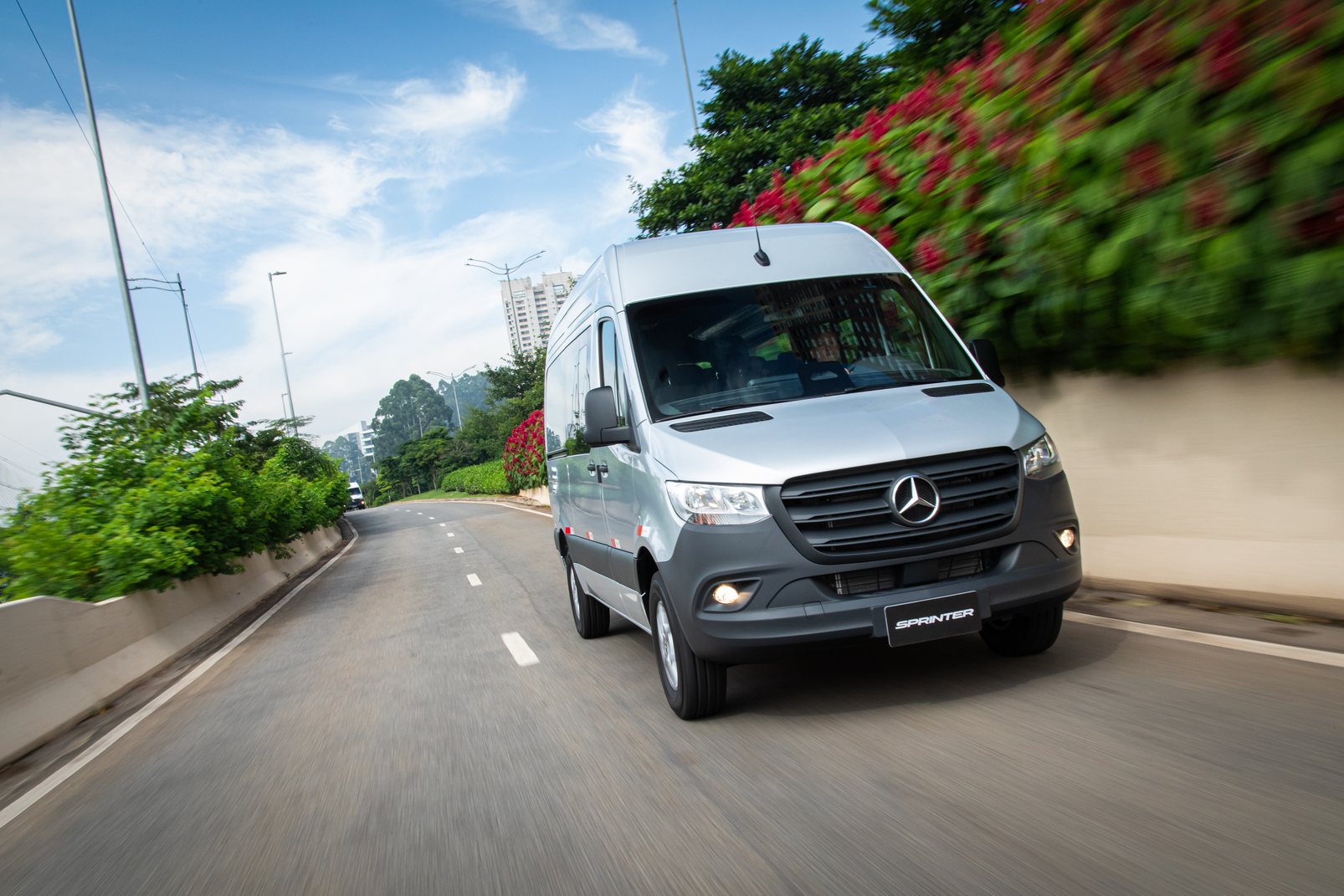
Decades after its launch in Brazil, the Sprinter now features an automatic transmission

Produced in Argentina, the automatic Sprinter utilizes the 9G-TRONIC transmission—a nine-speed gearbox already familiar from Mercedes-Benz passenger cars and adopted for the brand's commercial vehicles in other markets. In real-world use, the main benefit is smoothness. Gear changes are progressive, reducing physical strain on the driver and making driving less tiring in stop-and-go city traffic.

The vehicle retains the well-known OM654 2.0 turbodiesel engine, offering 163 hp and 40 kgfm of torque. It is not designed for sporty performance, but rather for low-end torque, predictability, and efficiency. The automatic transmission aids precisely in this regard: it keeps the engine within the optimal RPM range and eliminates the constant clutch work and gear shifting required on routes with frequent stops.

In practice, the automatic Sprinter becomes a more attractive option for fleet operators, executive transport companies, and delivery services. On urban routes, where drivers stop dozens of times a day, the automatic transmission offers greater comfort, reduced wear and tear, and a smoother driving experience. For passengers, the advantage is felt through smoother acceleration and fewer jerks, particularly in the passenger transport versions.

With proper use, the automatic transmission requires virtually no maintenance, whereas a manual clutch requires preventive replacement—a costly procedure for a vehicle of this size.

The automatic lineup is available in chassis, van, and passenger versions, expanding the range of options for various use cases. In total, the Sprinter range now comprises around 50 configurations, combining both manual and automatic options. Prices start at R$ 274,300 for the chassis-cab version and approach R$ 500,000 for long-wheelbase passenger configurations.

Launched in Brazil in 1997...The segment truly underwent a revolution that year with the arrival of the Sprinter—also a Mercedes and the successor to the MB180. It was a far more modern vehicle, imported from Argentina, where it was assembled using the CKD (Completely Knocked Down) method. As the first Mercedes model to bear a proper name (breaking away from the brand's typical alphanumeric naming convention) and having debuted in Europe just two years earlier in 1995, it stood out as the most modern and technologically advanced passenger van sold in Brazil. Its major rival, the Fiat Ducato, would not arrive until 1998 with a similar offering.

The model was initially unveiled in February 1997, with sales commencing in August of that year. The lineup featured three versions (Standard, Intermediate, and Luxury) and standard specifications that included front-wheel drive, rear leaf-spring suspension, power steering, ventilated front disc brakes, and a five-speed manual transmission. It was powered by a 2.5-liter, fuel-injected turbodiesel engine supplied by Maxion—the most powerful in its class—delivering 95 hp. Torque output was around 22 kgf-m.

It was by no means fast, but it got the job done across the available body styles: cargo van, passenger van (a minibus configuration seating up to 14 passengers), and chassis cab. The gross vehicle weight rating (GVWR) did not exceed 3,500 kg. On the other hand, it was far better equipped and more refined than its predecessor, the MB180; features included a cassette player, fog lights, air conditioning, power windows, mirrors, and locks, heated side mirrors, a rear window defogger, and an instrument cluster that included a tachometer and a digital odometer.

The interior automatic Sprinter 2026(image above) maintains a functional focus, featuring a good driving position, well-laid-out controls, storage compartments, and features tailored for professional use. The lineup has also seen significant upgrades in recent years, such as a multimedia system with voice control, lane-keeping assist, electronic brake-force distribution, and ABS brakes.

Another key factor for commercial customers is maintenance. The automatic Sprinter retains the same service intervals as the manual versions: 30,000 km for the 3.5-ton configurations and 20,000 km for the 4- and 5-ton versions. It comes with a two-year, unlimited-mileage warranty—an important feature for vehicles that cover high mileage.

Behind the wheel, the vehicle feels more refined. While the nine-speed transmission doesn't turn the Sprinter into a light vehicle, it makes the driving experience closer to that of a modern commercial vehicle. During maneuvers, acceleration, and heavy traffic, the system operates smoothly, allowing the driver to focus more on the route and less on mechanical operation.

Features like Auto Hold optimize brake maintenance and significantly improve overall comfort, especially when the vehicle is fully loaded.

The introduction of the automatic transmission also reflects a shift in the Brazilian market itself. The van segment has grown in recent years, driven by delivery services, passenger transport, specialized services, and motorhomes. In this context, comfort and reduced driver fatigue are no longer luxuries but have become key factors in the productivity equation.

Equipped with the modern 9G-TRONIC automatic transmission, the Sprinter was developed to deliver smoother, more precise gear shifts, enhancing both driving comfort and operational efficiency.

This advanced technology contributes to more consistent performance across various operating conditions, helping to avoid inefficient driving habits. The result is greater mechanical durability and increased operational productivity—essential attributes for those seeking daily reliability and performance.

With the arrival of the Automatic Sprinter on the Brazilian market, the Sprinter lineup solidifies its position as the most comprehensive in the segment, combining robustness, safety, and the brand's renowned reliability with even greater comfort and technology.

9G-TRONIC transmission...The 9G-TRONIC automatic transmission features nine gears, reducing engine RPM spikes, increasing gear-shifting agility, and improving vehicle performance during start-ups and across all driving conditions.

For the customer, this advanced technology translates into benefits such as:

• The 9G-TRONIC eliminates the need for a clutch by using a torque converter, which reduces component wear.

• Greater comfort in traffic and urban environments.

• Fluid driving dynamics, offering a safer and less fatiguing experience for the driver.

• Standardized driving behavior, providing fleet operators with greater cost predictability.

The Automatic Sprinter delivers a more comfortable driving experience—especially during urban operations or long shifts—while maintaining the high standards of quality, safety, and performance that set the benchmark in the category. It also reinforces the commitment to providing customers with modern, efficient solutions. In specific tests, the automatic transmission demonstrated a fuel consumption reduction of approximately 8% in urban driving and 5% on highways, though results may vary depending on load, driving style, and route conditions.


Autonews


FORD


Ford GTII analysis

First, since the road and race versions were developed in parallel, aerodynamics were crucial. As Jamal Hameedi, Ford Performance’s chief engineer, explains: “We wanted downforce, but it had to be efficient downforce—we didn’t want to pay a high price in terms of drag. That’s why we moved to a fixed seating position; it really allowed us to reduce the glass area and the frontal area.” So, you stay put in the cockpit while adjusting the pedals and steering wheel to your liking.

The compact, longitudinally mounted V6 engine sits close to the carbon-fiber structure's bulkhead, while the turbos feeding it are positioned further forward, beneath massive aerodynamic channels. The turbo intercoolers are located even further forward, within side structures that resemble a pod racer. Had the GT used a V8, it would have taken up more space and compromised the aerodynamics (not to mention adding weight). Just how much aerodynamics? How much downforce? Well, that is the one thing Ford won’t reveal, as it could allow rival teams to calculate the race version's downforce output.

Yet, you’ll find some form of aerodynamic device at every corner of the bodywork. The buttresses connecting the side structures to the central fuselage form a wing profile (they are also hollow, channeling intake air to the engine—a fascinating detail); the taillights are hollow to vent air from the intercoolers; and there is an underbody diffuser, a splitter, a flat undertray, and an active rear wing. As Hameedi points out, “You’d never have an opening unless it was feeding an intercooler.”

How strange would it be if this cutting-edge aerodynamic engineering were paired with a powerful, classic V8 engine? Well, it features an all-aluminum, dry-sump 3,497 cc V6 engine that develops 647 hp at 6,250 rpm and 746 Nm of torque at 5,900 rpm, sending all that power to the rear wheels via a seven-speed dual-clutch transmission. It uses a double-wishbone suspension setup at all four corners, featuring inboard spring/damper units. Braking is handled by carbon-ceramic discs—with six-piston Brembo calipers up front clamping 394 mm discs (and four-piston calipers on the 360 ​​mm rear discs)—and the steering is hydraulic rather than electric.

And then there’s Track Mode. Turn a knurled dial on the steering wheel to the "T" position, confirm with another button press, and the GT instantly drops by 50 mm. It’s as if the underside of the GT turns into a suction cup. It has a dry weight of 3,000 pounds, which likely means it weighs close to 1,500 kg when fully fueled and serviced. That makes it not much lighter than an Audi R8 V10 Plus, whereas a McLaren 675LT has a dry weight of 1,230 kg...

It is a sensational car to drive. Always agile, it is wonderfully balanced, precise, stable, and rewarding. It’s also thrilling. This isn't one of those relentlessly efficient cars that cares too much about lap times to be fun. Instead, it draws you into its world. It is joyful, exuberant, friendly enough to appeal to the less experienced, and capable enough to fascinate seasoned drivers.

No, the engine isn't particularly charismatic or exciting to use, but the power it delivers is undeniable. Just be aware that you’ll experience the thrill through touch, not sound. And if it didn't have this engine—if it had a V8—the design would be different, and the GT wouldn't have its unique edge. Because the aerodynamics, the buttresses, and those extravagant channels aren't just about instant visual recognition; they allow this car to carve out its own niche in the market. It is a fascinating machine.


Autonews


DOSSIER


AUTONEWS


Farnborough Airshow

From hybrid planes to new engines to long, slender wings, the aerospace industry is laser-focused on designing more efficient aircraft. 

At the Farnborough Airshow, this year’s version of the aerospace industry’s marquee trade event that alternates between London and Paris, the future of flight dominated the conversation this week.

The industry is always looking to reduce the amount of fuel needed to power its aircraft, both to reduce greenhouse gas pollution and to save on fuel costs. But this year saw a wave of optimism that these technologies, as well as an entirely new aircraft, could be coming soon. 

Demand is high across all segments of the aerospace industry — commercial, defense, space and private jets, as well as maintenance, repair and replacement parts. And, on the commercial side, major manufacturers and their suppliers say they are ready to ramp up.

That cautious optimism took hold last year, as Boeing showed promising signs that it was ready to increase production of its most popular and most lucrative plane, the 737 MAX, and solidified into real confidence this year, air show attendees and analysts said after the first days of the weeklong trade show. 

Analysts from Morgan Stanley wrote in a note to investors that the industry’s “upcycle remains in its early innings,” and companies are “investing for sustained growth rather than preparing for a cyclical slowdown.” 

Analysts from RBC Capital opened their optimistic note to investors with the warning that “we have been down this path before,” only to be disappointed later, but admitted that this year “the industry has more confidence” and appears to have fewer risks lurking in the background. 

Stephanie Pope, head of Boeing Commercial Airplanes, told reporters just ahead of the air show, which concludes Friday, that the manufacturer had stabilized its operations, after two years of internal review following a catastrophic 2024, and is now ready to think about optimizing. 

All of that optimism freed attention to turn toward the next entirely new, “clean-sheet” airplane, something neither Boeing nor Airbus have undertaken in nearly three decades. Boeing CEO Kelly Ortberg shifted his tone from just a few weeks earlier, telling some reporters this week he expects the company will have the financial stability to introduce its new program in the next few years. 

Airbus CEO Guillaume Faury doubled down on his expectation that Airbus will launch its next narrowbody program by 2030. 

“We’re not there yet, we are maturing the technologies, but we have a road map,” he told reporters Tuesday.   

Lars Wagner, head of commercial aircraft for Airbus, described the process as a “push and pull.” Airbus is targeting 2030 but it also has to wait until the technology — like engines and digital architecture — that will make it a next-generation plane is ready. 

“If you want to launch such a game-changing product, you have to lay down some bricks,” he said. 

Airbus and Boeing secured just over 300 orders at this year’s air show, slightly above the order count at last year’s Paris air show and 30% higher than the tally at the 2024 Farnborough Airshow, according to aerospace analysts Vertical Research Partners. 

In 2024, Boeing was still reeling from a midair fuselage panel blowout that January and knew its Machinists union in the Puget Sound area, where it builds the majority of its commercial airplanes, was poised to strike later that year. 

This year, Boeing beat Airbus on the orders front, announcing 169 orders to Airbus’ 140. Brazilian manufacturer Embraer secured 58 orders. 

At Farnborough, the companies often marked order announcements with some fanfare and a signing ceremony in one of the temporary “chalets” that popped up around a usually quiet airport. The suburban English town filled with businesspeople clad in suits, cramming into four pavilions full of companies showing off their latest products between meetings with potential customers.

Heading into the show, Airbus was outpacing Boeing on yearly orders, with Airbus reporting 821 net orders from January through the end of June and Boeing reporting 386 net orders after cancellations and adjustments for accounting principles. 

Of the orders placed during the air show, aircraft lessor SMBC Aviation Capital made the largest commitment, ordering 100 narrowbody planes from Boeing and Airbus each. 

Boeing’s 777X program took the biggest hit during the show. The plane-maker said it had last year scrapped one of its first planes due to the amount of repair needed to incorporate design changes after a lengthy certification process. 

Then Tim Clark, president of Gulf carrier Emirates, said the airline wouldn’t accept the first 10 777X planes slated for delivery because of that rework, though he added he felt Boeing was now back on track with the long delayed aircraft family and its overall manufacturing philosophy. 

The next day, engine maker Rolls-Royce revealed that Airbus is considering a 777X rival by stretching its current widebody A350, according to media reports. 

Companies and suppliers vehemently highlighted one problem they do not have: demand. 

Whether the supply chain, which includes a global network of parts makers, can keep up is another question. 

“We’re not in an arena where we don’t have demand; we’re in an arena where we have to keep focused on how do we get better at what we do,” said Chris Raymond, the head of Boeing’s Global Services Division, which provides maintenance and aftermarket support to customers.

Pope, Boeing’s head of commercial airplanes, told reporters its supply chain “is still a little bit volatile,” though it is seeing improvement. 

Boeing and its suppliers face the same problems, Pope said, so Boeing has been working to incorporate the changes to its supply chain it has made over the two years since the 2024 midair fuselage blowout. 

“In many cases, we’re sending experts in to partner and help with them,” Pope said. “That’s something we’re going to have to continue to monitor.”

In a different corner of the industry, RTX’s senior vice president for supply chain Sarfraz Nawaz said at a supply chain-focused panel that companies earlier in the production cycle are lagging behind the industry’s recovery. RTX is a Virginia-based conglomerate that includes Pratt & Whitney, Raytheon and Collins Aerospace. 

Nawaz was referring to what’s known as second- and third-tier suppliers, companies serving companies who then make materials and products for major manufacturers like Boeing and Airbus. 

Those suppliers are struggling to find talented workers and financing to scale up. A slow regulatory process to bring new suppliers on board to fill those gaps is also standing in the way, as are ever-changing geopolitics, from the pandemic to tariffs to the war in Iran.

“Every six months something else is happening,” Nawaz said. “Even though one (challenge) goes away, something else will come up and take its place.” 

Boeing is looking at ways to add redundancy to its supply chain and ensure it doesn’t have a single source for crucial parts and components, in case something goes awry, William Ampofo, a senior vice president for the Global Services Division, said at the panel.

The pandemic limited redundancy in Boeing’s supply chain, Ampofo said. Now, it’s setting up a “heat map” to spot areas of concern before a problem develops. 

In Washington state, home to more than 1,500 aerospace-related companies according to the state’s Commerce Department, suppliers are seeing the increased demand — and that translated to a very successful air show. 

“If you have capacity, somebody wants it,” said Elizabeth Brane, a vice president with aerostructures company Aernnova and board chair for the Pacific Northwest Aerospace Alliance.

Gretchen Reimbold, chief operating officer for Washington-based Mid-Mountain Materials, shared the optimism, speaking at Washington state’s booth during a cheerful happy hour at the end of the third day of the show.

“The aerospace community,” she said, “is rebounding.”

Boeing, opens new tab ​edged Airbus, opens new tab in a subdued series of order announcements at the Farnborough Airshow this week, as the global aerospace industry ‌focuses on fixing lingering supply constraints and catching up on record order backlogs.

The deals — worth tens of billions of dollars — were in line with expectations within the industry for just over 300 orders, reported by Reuters ahead of the event, but fell short of some bullish external forecasts reaching as high as 800 aircraft.

The once-addictive buzz surrounding orders ​at air shows has been fading in recent years as planemakers avoid giving jarring messages at a time when they are ​struggling industrially, and as airlines digest a record number of aircraft still on order.

"I didn't have high expectations of ⁠big commercial orders at the show, not particularly because of the current macro or geopolitical climate, but because a lot of large orders ​are already out there," airline analyst John Strickland said.

Boeing announced firm and preliminary orders for 173 aircraft, helped by a mix of narrowbody ​and widebody deals, while its European rival announced 154 firm and provisional orders, for a total of 327, according to a Reuters tally.

After excluding deals already in manufacturer order books without the buyer initially being named — including Boeing's half of a big lessor order — the overall tally was 218 aircraft.

That's up slightly on the previous Farnborough ​event in 2024, but well below the 2018 cyclical peak of 1,109 orders for the two dominant manufacturers.

Following years of supply-chain disruptions, labour ​shortages and manufacturing setbacks, Airbus and Boeing have amassed order books stretching well into the next decade.

With manufacturers focused on increasing output and airlines facing long ‌waits for ⁠new jets, air shows are generating fewer headline-grabbing orders and even planes than in the past.

"Demand is not the issue," Boeing Commercial Airplanes CEO Stephanie Pope told reporters on the eve of the show.

Airbus showed off its A350-1000 as it considers stretching the jet to counter Boeing's delayed 777X.

Boeing did not bring any of its major commercial variants, three of which are in the process of being certified.

The ​week's biggest commercial deal came from ​the world's second-largest lessor SMBC ⁠Aviation, which split an order for 200 single-aisle jets evenly between the two main planemakers, buying 100 Boeing 737 MAX and 100 Airbus A320neo-family jets.

The deal underscored still-strong demand for narrowbody aircraft, the workhorses of short- ​and medium-haul travel, despite scarce delivery slots and supplier bottlenecks.

Other deals included continued demand for widebody jets, ​with Riyadh Air and Philippine ⁠Airlines shopping at both manufacturers and leasing giant AerCap buying more Boeing 787s.

Away from the main aircraft stands, a key feature of the show was a record order for more than 1,000 LEAP-1A engines from CFM International to ⁠power 500 ​previously ordered Airbus jets.

A previous aircraft order boom stoked in part by low interest ​rates has placed high industrial demands on the engine industry, leading to parts shortages and maintenance delays.

Both CFM and Pratt & Whitney, the main supplier affected, said the industrial situation was ​improving steadily.

  AUTONEWS Foreign brands' market share in China falls below 25% for the first time; VW drops 26%, Honda 35%. In 2020, they controlled o...