MERCEDES-BENZ
;Resize=(600,451))
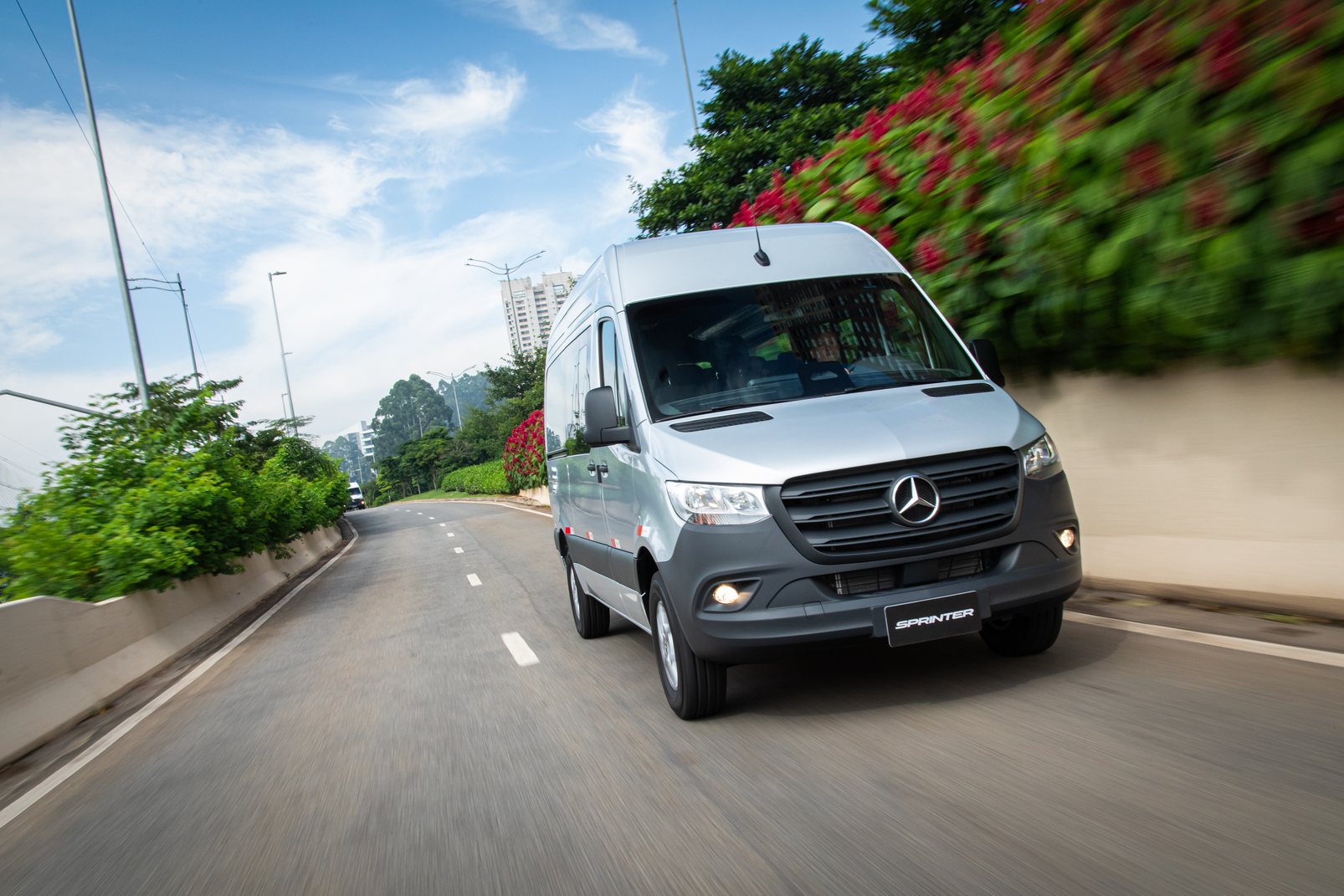
Decades after its launch in Brazil, the Sprinter now features an automatic transmission
Produced in Argentina, the automatic Sprinter utilizes the 9G-TRONIC transmission—a nine-speed gearbox already familiar from Mercedes-Benz passenger cars and adopted for the brand's commercial vehicles in other markets. In real-world use, the main benefit is smoothness. Gear changes are progressive, reducing physical strain on the driver and making driving less tiring in stop-and-go city traffic.
The vehicle retains the well-known OM654 2.0 turbodiesel engine, offering 163 hp and 40 kgfm of torque. It is not designed for sporty performance, but rather for low-end torque, predictability, and efficiency. The automatic transmission aids precisely in this regard: it keeps the engine within the optimal RPM range and eliminates the constant clutch work and gear shifting required on routes with frequent stops.
In practice, the automatic Sprinter becomes a more attractive option for fleet operators, executive transport companies, and delivery services. On urban routes, where drivers stop dozens of times a day, the automatic transmission offers greater comfort, reduced wear and tear, and a smoother driving experience. For passengers, the advantage is felt through smoother acceleration and fewer jerks, particularly in the passenger transport versions.
With proper use, the automatic transmission requires virtually no maintenance, whereas a manual clutch requires preventive replacement—a costly procedure for a vehicle of this size.
The automatic lineup is available in chassis, van, and passenger versions, expanding the range of options for various use cases. In total, the Sprinter range now comprises around 50 configurations, combining both manual and automatic options. Prices start at R$ 274,300 for the chassis-cab version and approach R$ 500,000 for long-wheelbase passenger configurations.
Launched in Brazil in 1997...The segment truly underwent a revolution that year with the arrival of the Sprinter—also a Mercedes and the successor to the MB180. It was a far more modern vehicle, imported from Argentina, where it was assembled using the CKD (Completely Knocked Down) method. As the first Mercedes model to bear a proper name (breaking away from the brand's typical alphanumeric naming convention) and having debuted in Europe just two years earlier in 1995, it stood out as the most modern and technologically advanced passenger van sold in Brazil. Its major rival, the Fiat Ducato, would not arrive until 1998 with a similar offering.
The model was initially unveiled in February 1997, with sales commencing in August of that year. The lineup featured three versions (Standard, Intermediate, and Luxury) and standard specifications that included front-wheel drive, rear leaf-spring suspension, power steering, ventilated front disc brakes, and a five-speed manual transmission. It was powered by a 2.5-liter, fuel-injected turbodiesel engine supplied by Maxion—the most powerful in its class—delivering 95 hp. Torque output was around 22 kgf-m.
It was by no means fast, but it got the job done across the available body styles: cargo van, passenger van (a minibus configuration seating up to 14 passengers), and chassis cab. The gross vehicle weight rating (GVWR) did not exceed 3,500 kg. On the other hand, it was far better equipped and more refined than its predecessor, the MB180; features included a cassette player, fog lights, air conditioning, power windows, mirrors, and locks, heated side mirrors, a rear window defogger, and an instrument cluster that included a tachometer and a digital odometer.

The interior automatic Sprinter 2026(image above) maintains a functional focus, featuring a good driving position, well-laid-out controls, storage compartments, and features tailored for professional use. The lineup has also seen significant upgrades in recent years, such as a multimedia system with voice control, lane-keeping assist, electronic brake-force distribution, and ABS brakes.
Another key factor for commercial customers is maintenance. The automatic Sprinter retains the same service intervals as the manual versions: 30,000 km for the 3.5-ton configurations and 20,000 km for the 4- and 5-ton versions. It comes with a two-year, unlimited-mileage warranty—an important feature for vehicles that cover high mileage.
Behind the wheel, the vehicle feels more refined. While the nine-speed transmission doesn't turn the Sprinter into a light vehicle, it makes the driving experience closer to that of a modern commercial vehicle. During maneuvers, acceleration, and heavy traffic, the system operates smoothly, allowing the driver to focus more on the route and less on mechanical operation.
Features like Auto Hold optimize brake maintenance and significantly improve overall comfort, especially when the vehicle is fully loaded.
The introduction of the automatic transmission also reflects a shift in the Brazilian market itself. The van segment has grown in recent years, driven by delivery services, passenger transport, specialized services, and motorhomes. In this context, comfort and reduced driver fatigue are no longer luxuries but have become key factors in the productivity equation.
Equipped with the modern 9G-TRONIC automatic transmission, the Sprinter was developed to deliver smoother, more precise gear shifts, enhancing both driving comfort and operational efficiency.
This advanced technology contributes to more consistent performance across various operating conditions, helping to avoid inefficient driving habits. The result is greater mechanical durability and increased operational productivity—essential attributes for those seeking daily reliability and performance.
With the arrival of the Automatic Sprinter on the Brazilian market, the Sprinter lineup solidifies its position as the most comprehensive in the segment, combining robustness, safety, and the brand's renowned reliability with even greater comfort and technology.
9G-TRONIC transmission...The 9G-TRONIC automatic transmission features nine gears, reducing engine RPM spikes, increasing gear-shifting agility, and improving vehicle performance during start-ups and across all driving conditions.
For the customer, this advanced technology translates into benefits such as:
• The 9G-TRONIC eliminates the need for a clutch by using a torque converter, which reduces component wear.
• Greater comfort in traffic and urban environments.
• Fluid driving dynamics, offering a safer and less fatiguing experience for the driver.
• Standardized driving behavior, providing fleet operators with greater cost predictability.
The Automatic Sprinter delivers a more comfortable driving experience—especially during urban operations or long shifts—while maintaining the high standards of quality, safety, and performance that set the benchmark in the category. It also reinforces the commitment to providing customers with modern, efficient solutions. In specific tests, the automatic transmission demonstrated a fuel consumption reduction of approximately 8% in urban driving and 5% on highways, though results may vary depending on load, driving style, and route conditions.
Autonews


Nenhum comentário:
Postar um comentário