AUTONEWS

How a cooler, cheaper catalyst could clean up ammonia-fueled ships
Picture an ocean-crossing engine that burns a fuel with no carbon in it—ammonia—and still faces a warming trap. One slip in the exhaust, and nitrous oxide (N2O), a greenhouse gas with a global warming potential roughly 300 times higher than carbon dioxide, can leak into the air instead of breaking apart.Study Chemistry
That trap is what a team at the Korea Institute of Energy Research (KIER) says it has designed around. Reporting work published in Applied Catalysis B: Environment and Energy, the group led by Dr. Sun‑Mi Hwang describes an exhaust-treatment approach for ammonia-fueled ships that targets multiple pollutants at once. They report roughly 99% removal of the targeted pollutants, at temperatures engines actually see, and at far lower cost than the noble-metal standards the industry knows.
Ammonia is on shipping’s shortlist for cutting carbon, but exhaust cleanup is not a solved problem. In material reported via phys, the KIER team frames that cleanup as the most formidable barrier to ammonia-fueled shipping, and presents two catalysts as an all-in-one answer. One runs at 350 °C—approximately 100 °C lower than conventional commercial catalysts and below the high operating temperatures exceeding 450 °C that have been the norm—and the overall system is described as simultaneously and cost‑effectively removing various greenhouse gases from ammonia combustion.
What’s actually new in the hardware...Two claims stand out. First, performance: the team reports approximately 99% removal of the targeted pollutants. Second, practicality: the catalysts are at least 80% less costly than existing noble‑metal alternatives, and total catalyst usage can be reduced by up to 50% because a single layer tackles multiple species at once. Those three numbers—~99%, ≥80%, and up to 50%—are what make this more than a lab curiosity.
The temperature window matters just as much. One of the catalysts is specified to operate at 350 °C. The team contrasts this with conventional commercial catalysts that need temperatures approximately 100 °C higher, and with other options that require high operating temperatures exceeding 450 °C. Running cooler opens doors: it lines up with the heat actually available in exhaust and avoids extra burners or energy penalties.
From kitchen chemistry to ship stacks: how a catalyst helps...If you’ve ever used a self‑cleaning oven, you know heat alone can break down grime. Exhaust cleanup is the same idea with molecules: you steer them onto a surface that makes the hard reactions easy. The analogy breaks down because, unlike an oven’s indiscriminate burn‑off, ship exhaust needs selectivity—turning targeted compounds into harmless nitrogen without making new problems—and it has to do it continuously at the pace of an engine.
According to the KIER team, the new setup aims to handle multiple greenhouse gases from ammonia combustion in one go. That consolidation is why they can claim less total catalyst material and a single layer doing double duty: one pass, fewer parts.
Why not just stick with today’s catalysts? Cost and heat. Noble‑metal catalysts work but are expensive; the team states their approach is at least 80% less costly than those alternatives. And many incumbent systems want temperatures exceeding 450 °C to do their best work. The KIER catalysts shift that window down to 350 °C for the nitrous‑oxide step and report approximately 100 °C advantage over conventional commercial offerings. Those are not marginal tweaks; they change where you can bolt the unit in and how much you pay for it.
What happens if it falls short aboard a ship...The risk is in what gets through. N2O’s warming punch—roughly 300× CO₂’s global warming potential—means even small leaks matter. The reported ~99% removal target is meant to keep that punch bottled up; missing it would push warming back the wrong way just as shipping is trying to decarbonize.
Why a 100 °C drop is a big deal...Catalytic rates often follow Arrhenius behavior: rate ∝ exp(−Ea/RT). Knock 100 °C off the required temperature at fixed activity, and you’ve implicitly either lowered Ea or found a surface that sustains high turnover at reduced T. The KIER data points let you do a back‑of‑the‑envelope: if a conventional commercial catalyst asks for ~450 °C while the new one works at 350 °C, that’s a shift from ~723 K to ~623 K. For a representative activation barrier of 80 kJ/mol (common for dissociation steps), the naive Arrhenius factor exp[−Ea/R(1/T1−1/T2)] going from 623→723 K is ~exp[−80000/8.314×(−0.00022)] ≈ exp(2.1) ≈ 8×. In other words, at the cooler temperature you’d expect an order‑of‑magnitude rate loss if nothing else changed. Maintaining ~99% conversion at 350 °C, as reported, implies a material that compensates—via higher site density, better adsorption energetics, or a different rate‑limiting step—so the apparent Ea or pre‑exponential works in your favor. That’s the chemical meaning of “same job, 100 °C colder.”
What we don’t know yet...Key details are not public here: lifetime on real engines, tolerance to contaminants, maintenance intervals, and performance over duty cycles. The reports do not specify those numbers, nor do they list the exact cost breakdown behind the “at least 80% less costly” figure or how the “up to 50%” catalyst reduction scales with engine size. Those are the measurements that will decide whether the lab promise holds at sea.
The potential upside, in one sentence...If an exhaust unit can cost at least 80% less than noble‑metal systems, use up to 50% less catalyst, run at 350 °C rather than the >450 °C many systems demand, and still remove roughly 99% of the targeted pollutants, it directly addresses what Dr. Sun‑Mi Hwang has called the most formidable barrier to ammonia‑fueled shipping.
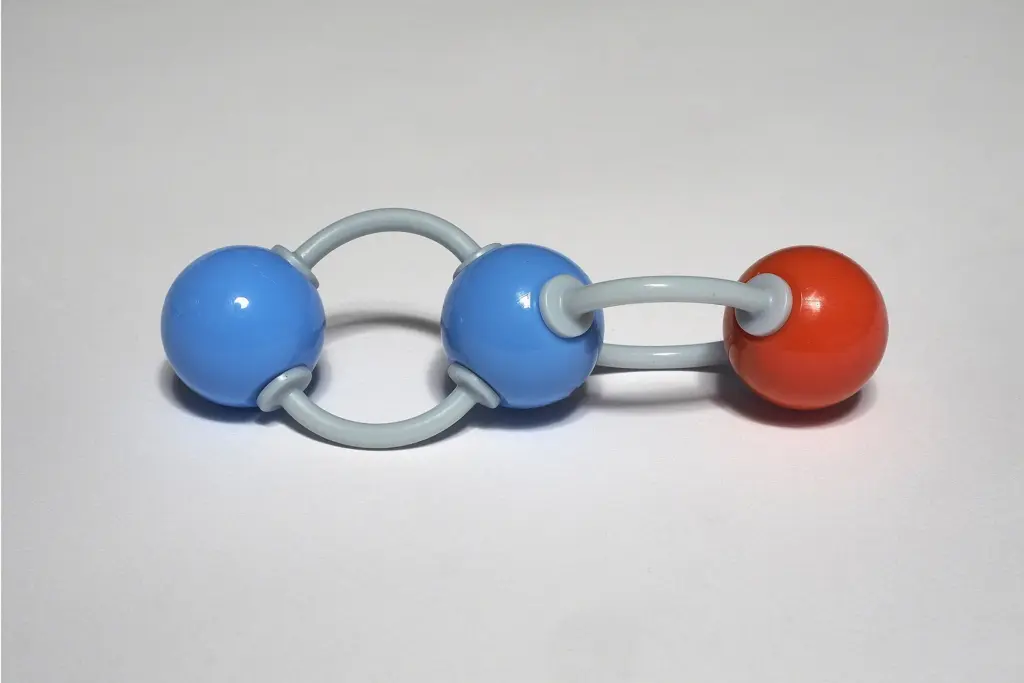
KIER reports catalysts for ammonia-fueled ship exhaust that target multiple pollutants at lower temperatures. Ljeto / Wikimedia Commons (CC BY-SA 4.0)
Where the findings live for the record...The study’s findings are published in Applied Catalysis B: Environment and Energy. For readers who want the technical backbone, see “K‑Ni0.4Co2.6O4 spinel catalysts for low‑temperature catalytic decomposition of N2O: Effects of K on activity and NO/NH3 resistance” (https://doi.org/10.1016/j.apcatb.2026.127204).
Ammonia is widely regarded as a next-generation clean fuel for the shipping industry because it produces no direct carbon dioxide emissions when burned, and is relatively easy to transport and store. In practice, however, combustion in marine engines generates nitrogen oxides (NOx), nitrous oxide (N₂O) and unburned ammonia (NH₃). Nitrous oxide in particular is classified as a potent greenhouse gas, and failure to treat it adequately could undermine the carbon-reduction benefits of ammonia as a fuel.
Existing exhaust treatment systems for ships compound the problem. Diesel vessels are designed primarily to remove nitrogen oxides, but ammonia ships must also handle nitrous oxide and unburned ammonia. Installing separate catalysts and equipment for each pollutant would significantly increase space requirements, weight and cost.
The research team addressed the problem by developing a "hybrid catalyst" that simultaneously breaks down nitrogen oxides and unburned ammonia. A single catalyst layer removes both substances at roughly 99 percent efficiency, and the amount of catalyst required can be cut by up to half compared with conventional approaches.
Existing precious-metal-based catalysts for ammonia decomposition are expensive and can generate additional nitrogen oxides during the treatment process. The team's catalyst cuts costs by at least 80 percent compared with precious-metal alternatives.
The team also developed a separate technology for treating nitrous oxide. Their nitrous oxide decomposition catalyst operates at a temperature about 100 degrees Celsius lower than existing commercial catalysts, and can decompose more than 99 percent of nitrous oxide at 350 degrees Celsius — conditions similar to actual ship exhaust environments — without requiring a separate reducing agent.
The research team noted that both catalysts are compatible with exhaust treatment equipment already used on diesel ships, reducing the need for large-scale retrofits. Given the limited space aboard vessels, the technologies also offer advantages in terms of equipment miniaturization and weight reduction.
"This technology can simultaneously reduce multiple pollutants, which has been the biggest challenge for ammonia-fueled ships," Hwang said. "It reflects real-world demands for reduced installation space, lighter systems and improved maintenance efficiency."
She added that the institute plans to refine the technology through pilot demonstrations and support its commercialization to help South Korea's shipbuilding and shipping industries gain a competitive edge in the clean-vessel market.
The research was conducted as part of the Korea Institute of Energy Research's core program, and the findings were published in Applied Catalysis B: Environment and Energy, an international journal covering energy and environmental science.
A research team led by Dr. Sun-Mi Hwang, from the Clean Air Research Laboratory at the Korea Institute of Energy Research (KIER), has developed an innovative catalyst system capable of eliminating approximately 99% of the pollutants generated by the exhaust of ammonia-powered ships. The breakthrough, published in the scientific journal *Applied Catalysis B: Environment and Energy*, simultaneously removes harmful gases and greenhouse gases directly within marine engines, overcoming one of the major obstacles to the decarbonization of the shipping sector.
The challenge of ammonia as a fuel...Although ammonia is considered a promising fuel because it does not emit carbon dioxide (CO₂) when burned, its combustion generates highly polluting byproducts:
• Nitrogen oxides (NOₓ): Direct contributors to air pollution.
• Unburned ammonia ("ammonia slip"): A toxic substance that poses environmental and safety risks.
• Nitrous oxide (N₂O): A potent greenhouse gas with a global warming potential approximately 300 times greater than that of CO₂.
Previously, treating these gases required multiple separate systems, which significantly increased costs and took up valuable space on board.
How the new technology works...The advancement from KIER consists of an integrated approach based on two new catalysts:
1. An "all-in-one" hybrid catalyst: This decomposes nitrogen oxides (NOₓ) and unburned ammonia simultaneously within a single catalytic layer. It reduces the required amount of catalyst by up to 50% and is at least 80% cheaper than conventional alternatives made from noble metals (such as platinum).
2. Low-temperature catalyst for N₂O: It decomposes nitrous oxide with an efficiency of over 99% without requiring external reducing agents. It operates at 350 °C (approximately 100 °C lower than traditional commercial catalysts), which aligns perfectly with the actual temperature of the exhaust gases exiting ship engines.
Korea Institute of Energy Research (KIER)


Nenhum comentário:
Postar um comentário