AUTONEWS
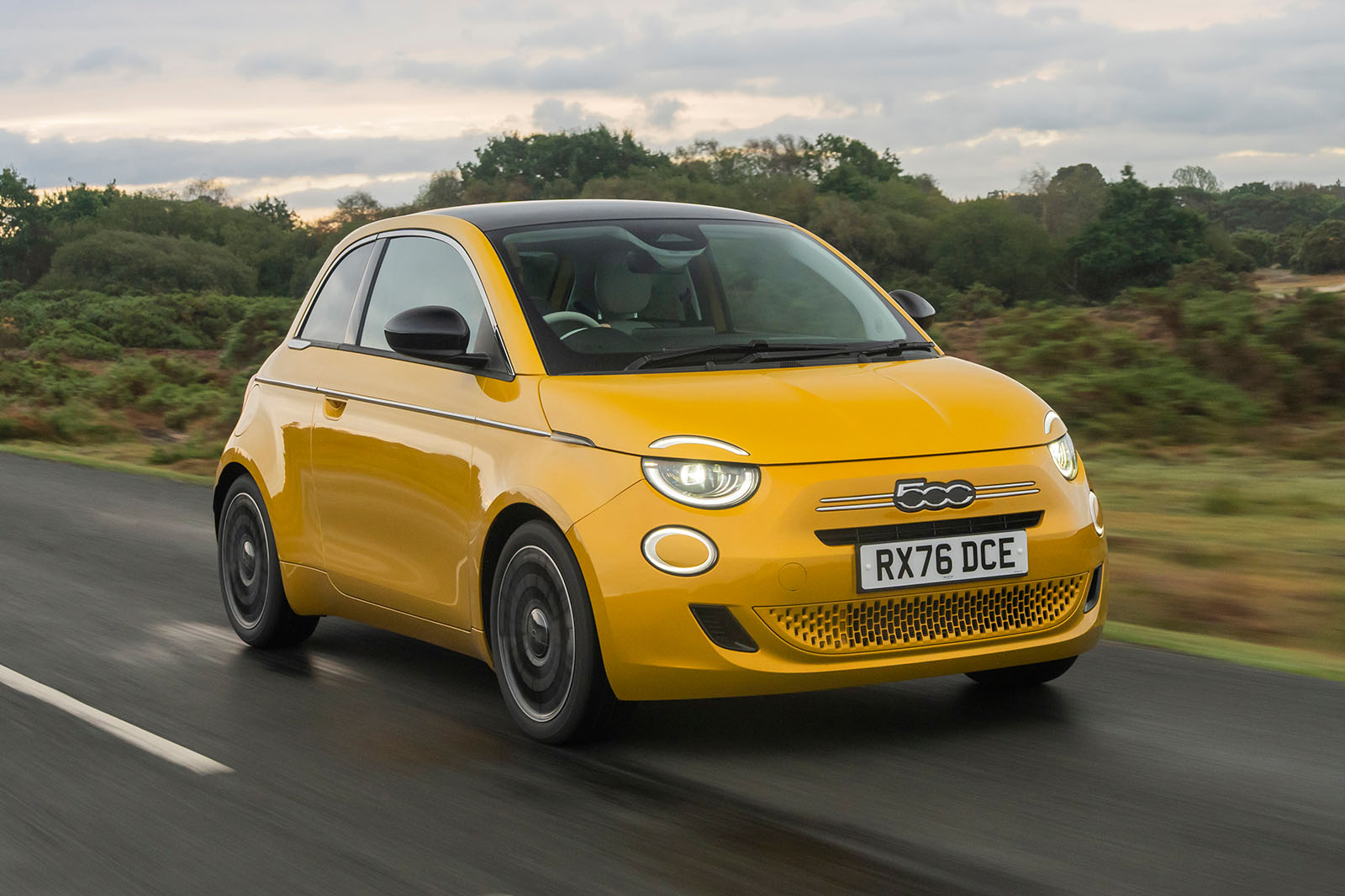
Fiat 500 Hybrid review
Having finally discontinued the petrol 500 in August 2024, it had expected the new-shape, electric 500e to pick up the mantle. What happened instead was an utter collapse in sales, as buyers defected to petrol alternatives such as the Kia Picanto or something larger.
That forced the Mirafiori plant – Fiat’s crown jewel, in its home town of Turin – to idle for months, building precisely zero cars and furloughing workers while dealers cleared their surplus of 500es.
With the power of hindsight, Fiat Europe boss Gaetano Thorel calls the electric-only move “suicide”.
To right the ship, Fiat opted to perform the unprecedented and convert a bespoke EV to ICE power. That meant both 500 variants could be built on the same production line, giving Mirafiori the shot in the arm it desperately needed.
Twenty months after making that bold decision, Fiat’s efforts have borne fruit.
The conversion required the near-total redevelopment of the 500e: new subframes are located at the front and rear ends to accommodate a petrol engine and six-speed manual gearbox, and a fuel tank has been subbed in for the EV’s traction battery.
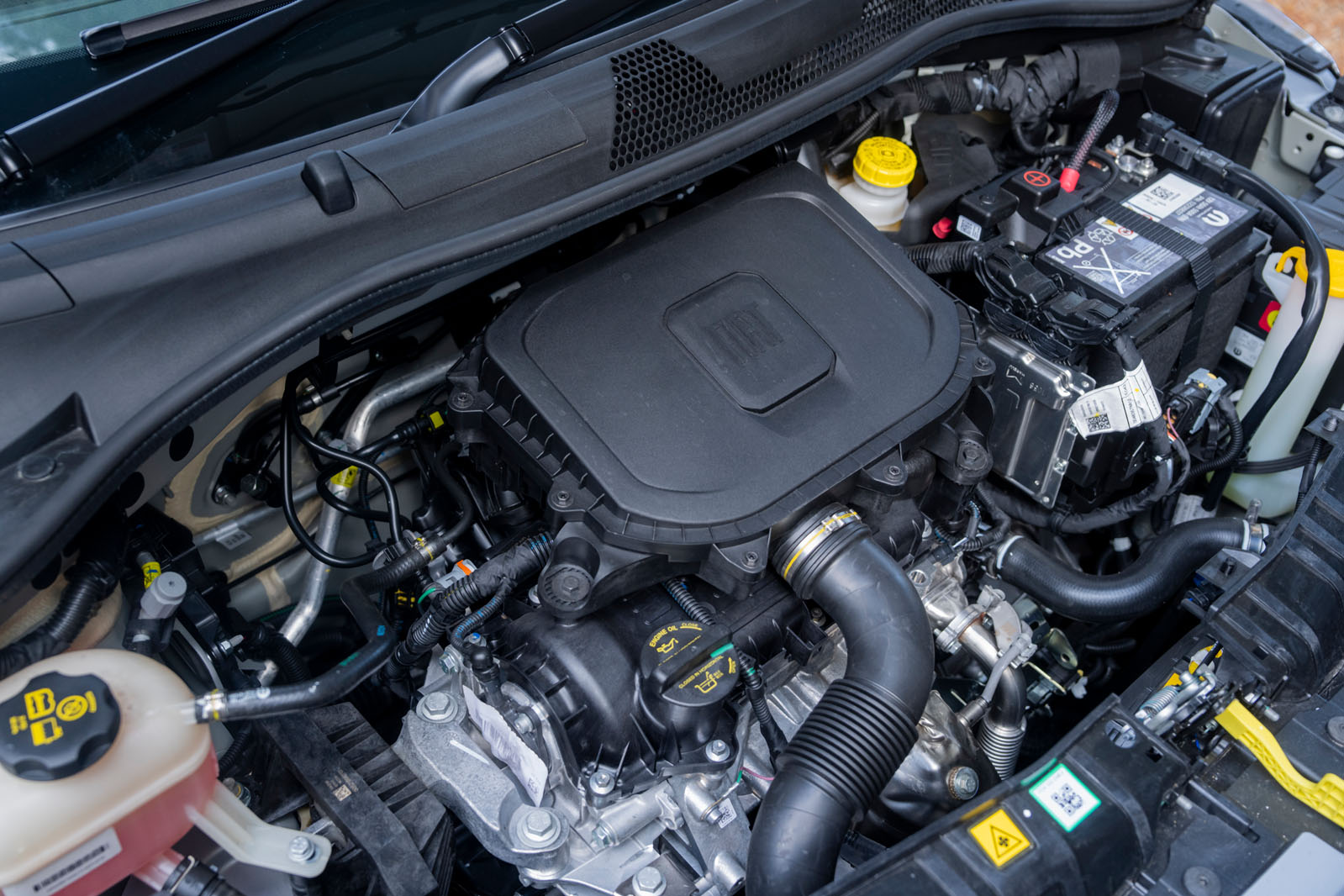
Even with the 500e’s diminutive motor removed, space under the bonnet was severely limited. The 1.2-litre Puretech petrol engine deployed in a range of Stellantis models, including the larger Fiat Grande Panda, simply wouldn’t have fit. Developing something bespoke would have been too costly.
That left the naturally aspirated 1.0-litre three-cylinder used by the previous 500 Hybrid and updated for the Italian-market Panda in 2024 as the only option. This includes a 12V starter-generator hybrid system, and puts out a total of 64bhp and 68lb ft.
Inside, there’s a revised dashboard to accommodate a gearlever, mounted high as in the previous 500.
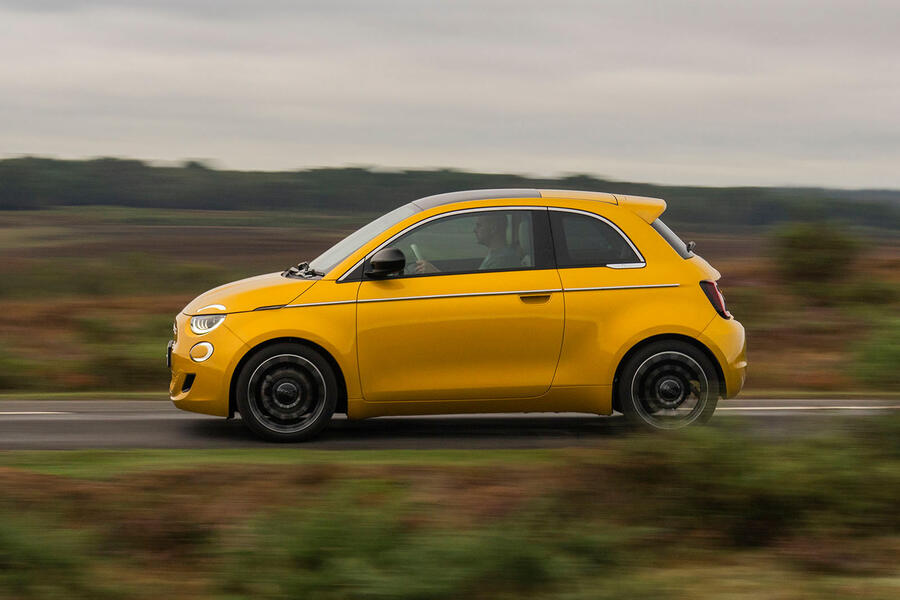
Otherwise, the 500 Hybrid looks almost identical to the EV, with its front end only gaining a 'moustache' grille to provide sufficient cooling to the engine and its gubbins.
The Fiat 500 Hybrid range at a glance...There's only one engine and gearbox combo available – no automatic option, as that would have been too costly for Fiat to engineer – leaving you to choose from one of three trims.
Entry-level Icon brings 16in alloy wheels, LED headlights, a black cloth interior and rear parking sensors.
For a limited time, you'll also be able to opt for the Torino trim, named after Fiat's home town. This builds on Icon with special badging and cloth and vinyl upholstery.
Stepping up to the range-topping La Prima upsizes the alloys to 17in, brings faux-leather upholstery with neat 'cannelloni' stitching, and adds heating for the seats and windscreen and a reversing camera.
The interior is a mixed bag. The topology and design carried over from the 500e work well, and it has a much greater sense of solidity than the old 500.
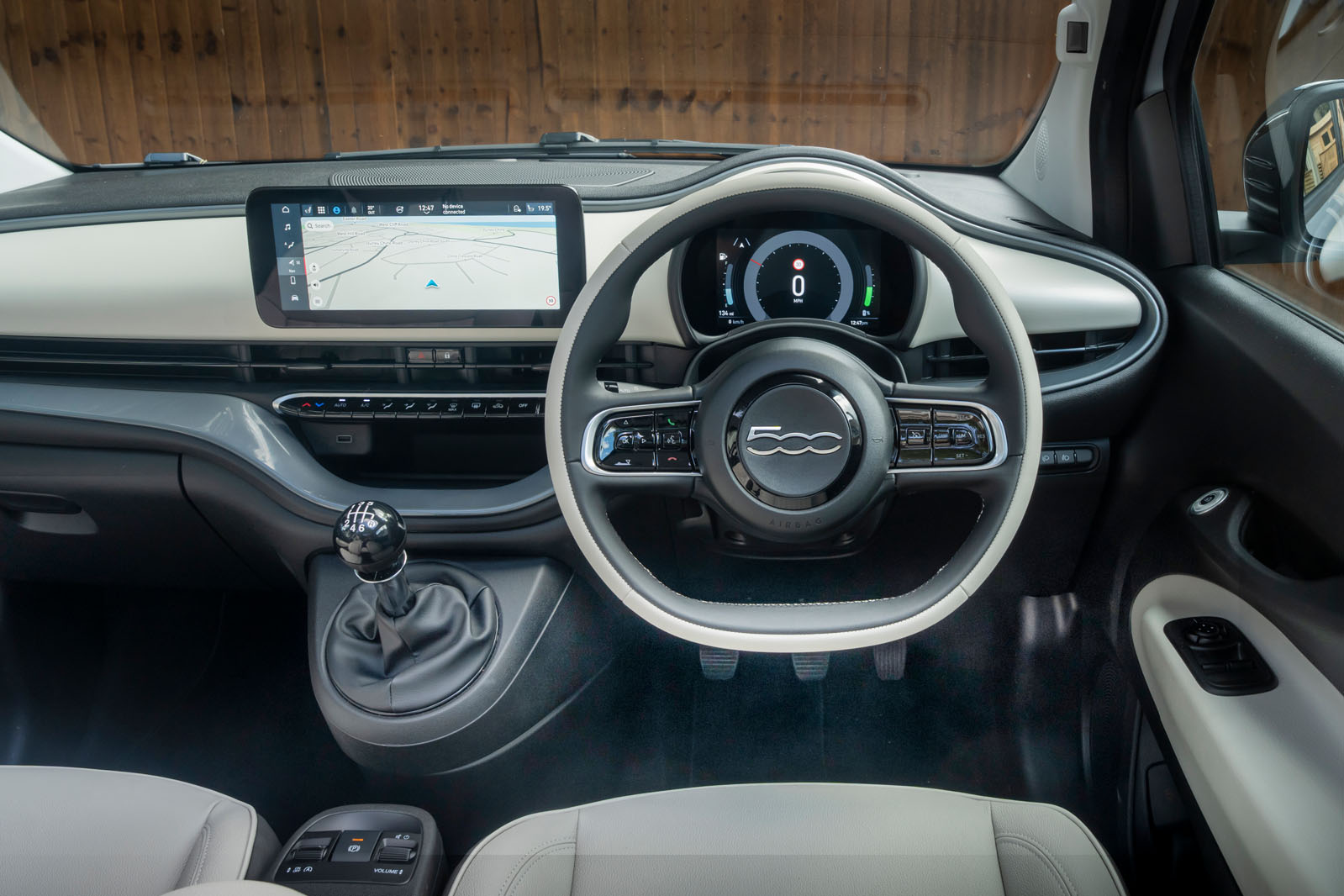
The 10.25in infotainment touchscreen feels slightly overwhelmed by the density of icons, but once you’ve figured out the layout, it’s plenty responsive. Wireless Android Auto and Apple CarPlay smartphone mirroring is standard.
The digital instrument display has a nice big tacho and speedo, although some testers had to set the steering wheel high so as not to block their view of the gauges. Our test car didn’t have height adjustment for the seat, either, which made for an uncomfortable experience after more than half an hour.
Another issue with the driving position is that, while there's plenty of room for the clutch pedal in a left-hand-drive car, the right-hand footwell is very tight. As a result, there's only just enough room for three pedals, and the footrest is tiny.
Visibility isn't great. The rear screen is narrow and the C-pillar's thickness means there's a huge blindspot over your shoulder. It's just as well that Fiat fits huge side mirrors, which help to mitigate this problem somewhat.
Being a tiny city car, there isn't much room for rear passengers. This is a four-seater, freeing up some room widthways for rear passengers, though their legs will feel cramped after more than a short run.
Access to the back is also compromised by the three-door layout. Although mainland European buyers are offered a novel 'three plus one' bodystyle with a small rear door mounted on the passenger side, this won't be offered in the UK because it would be too expensive to develop a new bodyshell – effectively flipped over to suit right-hand drive – for a single market.
The boot, meanwhile, is as tight as you'd expect from such a compact car. There's room for a few large backpacks or three carry-on suitcases, but bigger loads will require you to fold down the rear seats.
Given that the 500 Hybrid weighs around 1050kg, about 100kg more than previous, simpler models, it’s easy to see why its top speed is a meagre 96mph and why it takes 16.2sec to accelerate from 0-62mph. This is nearly double the time needed by the bigger-battery 500e (the more popular of the two electric versions in the UK), which has no less than 85% more power.
The 500 Hybrid immediately feels very familiar to drive, especially for those used to the old 500’s high seating and its well-defined, slightly long-throw six-speed gearchange.
But as soon as you start driving seriously, you realise three things: this car has a lamentable lack of mid-range power for anything but tootling about in 30mph traffic. Its (pleasant-sounding) three-pot engine needs to be used hard just to stay with traffic on B-roads.
What’s more, it’s fundamentally overgeared for British use. You hardly ever see fifth and sixth gears and advice from the ‘change up’ light on the dashboard must be ignored at all times.
The quality of the gearchange itself is pleasant enough. The lever’s mounted high, and the large, round knob makes for comfortable changes but the throw is long and heavy.
The ride is decent for such a short and stout car, and seems to have become slightly quieter with age. Although you’re never completely isolated from the road’s surface, it does a good job of taking the bite out of bigger shocks.
The trade-off is a fair amount of body lean through fast or tight bends and a hint of floatiness over crests, but it feels well judged for a car that will trundle around cities most of the time.
''The way this new 500 dispatches big bumps is a massive improvement on the old car, feeling like a much stronger, tougher car'' Charlie Martin''...Senior Staff Writer
Similarly, the steering is fingertip-light and devoid of feedback, but that makes the car especially easy to manoeuvre around multi-storey car parks and tight urban bends.

It's also precise, so you can place the car exactly where you'd like it through faster bends. That makes it easy – even enjoyable – to carve a smooth line and conserve as much momentum as you possibly can.
With prices from £18,995 and WLTP fuel economy of 53.3mpg, the Fiat 500 Hybrid is one of the cheapest and most frugal cars on sale. However, the Kia Picanto is available for almost £2000 less, a Dacia Sandero is still under £15,000, and there's an increasing number of sub-£20,000 electric options. Fiat is offering a £1775 deposit contribution for PCP finance, which should keep the monthlies affordable.
In our testing, the 500 returned economy in the high 40s, which is decent enough, though you can get more from (more expensive) hybrid options. It's also worth noting that the new 500 Hybrid's economy is a retrograde step compared with the previous car's, which was 55mpg in the real world. That's because the new one uses exactly the same engine but is 86kg heavier, so it has to work harder.
Reporters: Charlie Martin & Steve Cropley & Illya Verpraet


Nenhum comentário:
Postar um comentário