BENTLEY
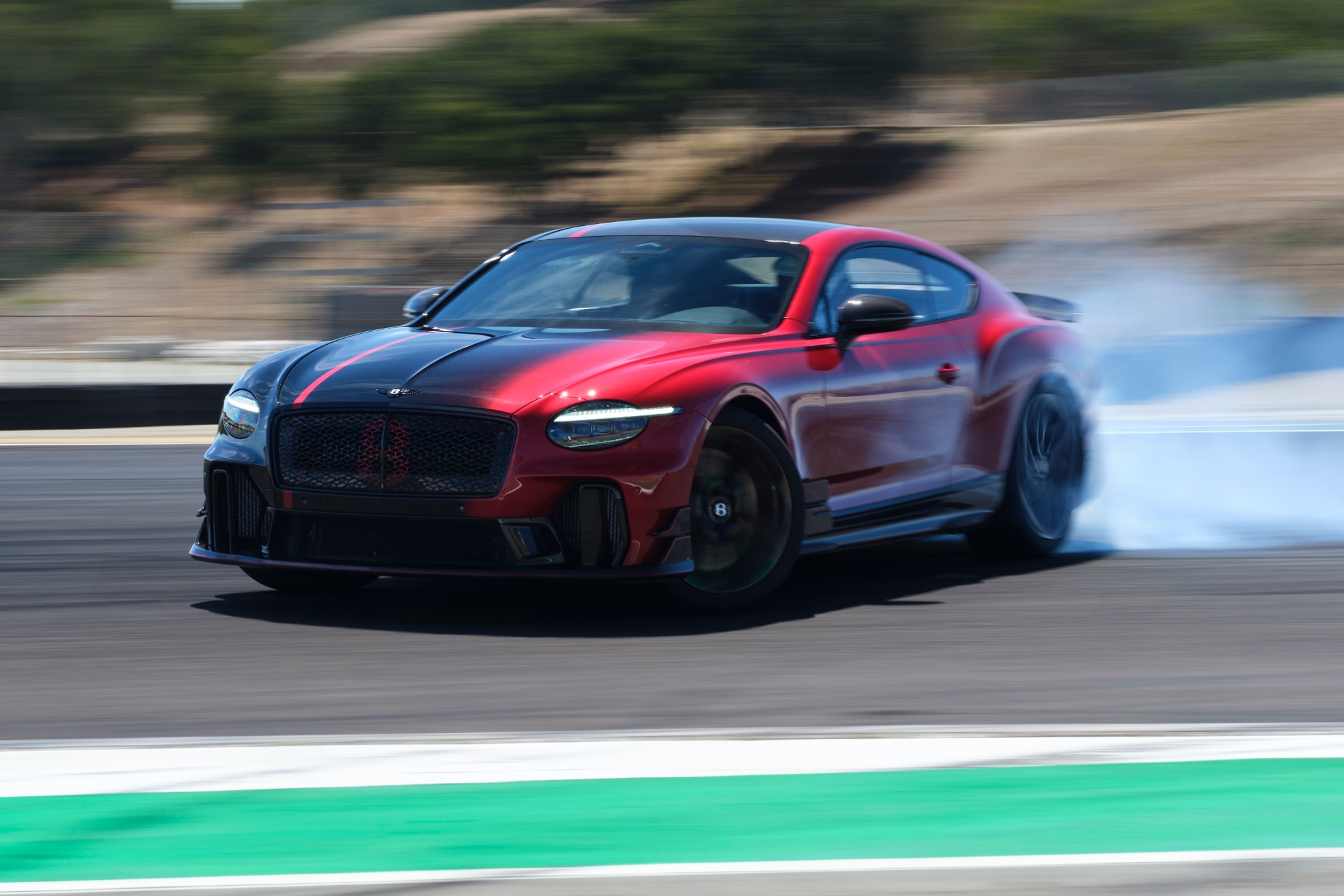
Bentley Supersports: an English lord with Porsche DNA
To make a car sportier, certain basic principles are followed: increasing power, improving the transfer of that extra power to the road (optimized chassis, upgraded tires, and greater aerodynamic efficiency for better grip), and reducing weight. This is exactly what Bentley did under the direction of its new CEO, Frank-Stephen Walliser, who arrived from Porsche in 2024—bringing the ideal profile to develop the first Bentley since taking the helm of the British brand. And it shows.
Starting with the last point—weight—the Bentley Supersports is the lightest model in the last 85 years; it is nearly half a ton lighter than the Continental GT and also the first model in this range to dip below the 2,000 kg mark. The main factor contributing to this significant weight reduction was the omission of the all-wheel-drive system. The roof—made of aluminum on the standard Continental GT—was replaced with a lighter carbon-fiber version, further lowering the car's center of gravity. Inside, the two rear seats, along with their speakers and wiring, were removed, and sound-insulation materials were stripped from the cabin. Certain driver-assistance systems are also absent from the Supersports, as it is a car focused more on track performance.
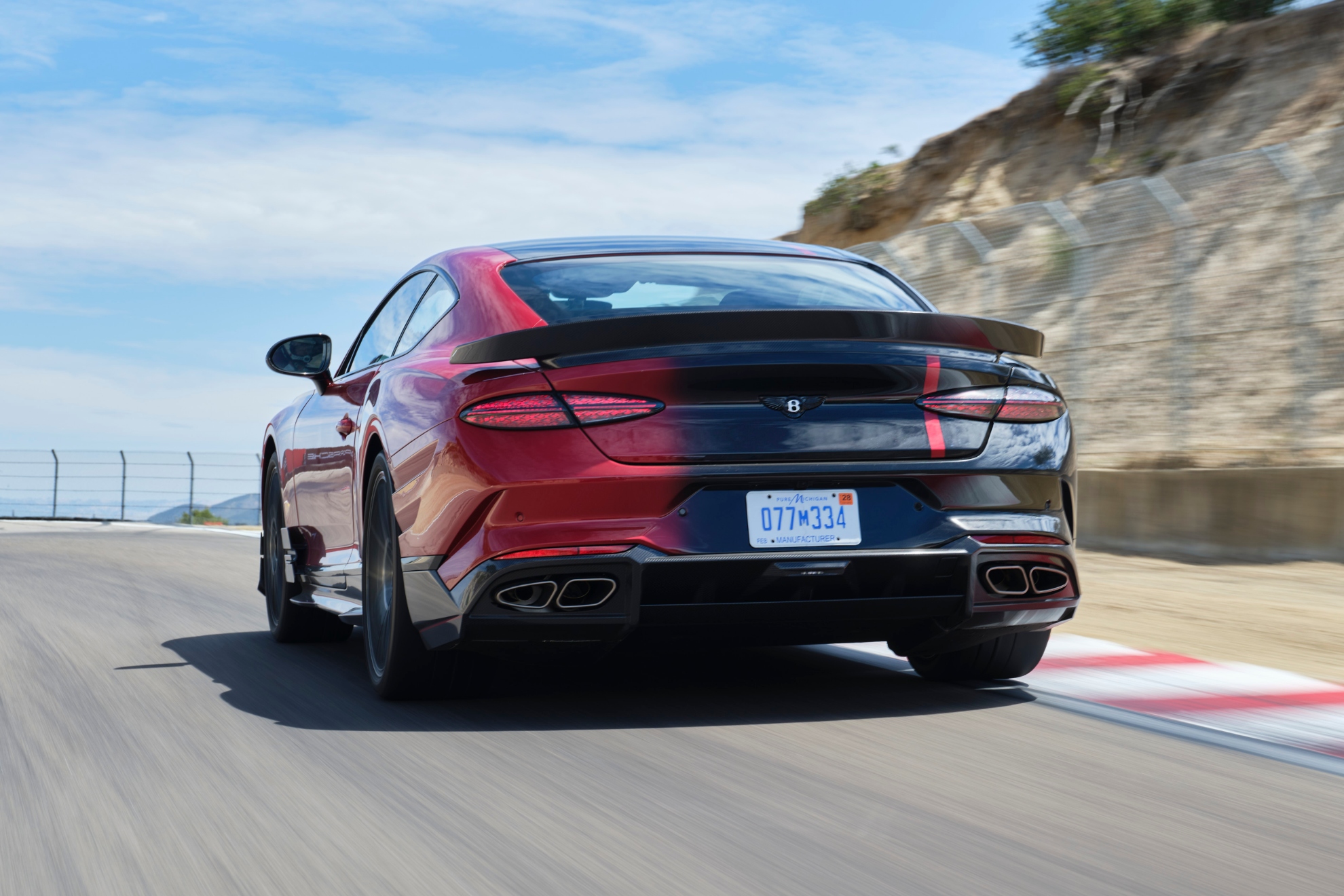
Finally, at the intersection of weight and aerodynamics, almost all new bodywork elements are made of carbon fiber, serving the same objective. All these features have a practical function—reducing weight and improving aerodynamics—with none included for purely aesthetic reasons. Collectively, these aerodynamic components generate over 300 kg of additional downforce (at 250 km/h) compared to a Continental GT Speed. This, in turn, helps optimize weight distribution between the front and rear, starting at 54%–46% (with the vehicle stationary, shifting toward the rear as speed increases).
The lower front bumper is new and incorporates a front splitter (the largest ever fitted to a road-going Bentley). This bumper includes two new cooling ducts on each side to lower engine and brake temperatures. The new laser-cut aluminum mesh grille features a design unique to the Supersports model. Profiles have been added behind the front wheels and on the side skirts to reduce lift during hard acceleration and improve airflow along the vehicle's flanks. This is also the function of the new rear diffuser, which works in tandem with a spoiler mounted atop the trunk lid.
The bold interior features carbon fiber accents and a combination of genuine leather and synthetic material (Dinamica). The rear seats have been replaced by a leather-trimmed carbon fiber monocoque structure.
As previously mentioned, the significant weight reduction achieved in the powertrain stems from the absence of a plug-in hybrid system (which requires a heavy battery) and the fact that it features rear-wheel drive only (it is the first road-legal Continental GT without all-wheel drive).
A record-breaking engine...The 4.0L twin-turbo V8 engine received a reinforced crankshaft, upgraded cylinder heads, and higher-boost turbochargers to generate the highest specific power output ever produced by Bentley: 166.5 hp/liter, resulting in a total of 666 hp and 800 Nm of torque. It is mated to an eight-speed ZF dual-clutch automatic transmission—used across the Bentley lineup but featuring reinforced clutches and a new gear-shifting strategy (faster shifts, with special attention paid to downshifts during braking to enhance the Bentley Supersport's stability).
The engine breathes through a titanium exhaust system (developed with specialist Akrapovič), producing a sound far more expressive than any other Bentley—and "completely natural," as Bentley Technical Director Mathias Raabe insists. It accelerates from 0 to 100 km/h in 3.7 seconds and reaches a top speed of 310 km/h.
Power is sent exclusively to the rear wheels via an electronic limited-slip differential (eLSD), with a rear track 16 mm wider than that of the Continental GT. The eLSD features torque-vectoring assistance during braking, and both systems work in tandem to optimize turn-in and traction. Rear-wheel steering is retained for maximum agility.
New calibrations have been introduced for the steering, suspension, traction control, and electronic stability control (ESC). Stability control settings allow the driver to select tolerance levels ranging from minimum to high (specifically, "Dynamic Mode," which permits a degree of slip and oversteer within the vehicle's reaction limits) or even to deactivate the system completely.
Three driving modes... There are three driving modes: "Touring" mode is equivalent to the Continental GT Speed's "Sport" mode but combines it with increased ground clearance (104 mm), softer damping, and a more subdued exhaust note. "Bentley" mode is sportier, featuring adjustments to transmission strategy, throttle response, and chassis settings; exhaust valves open to intensify the sound, and launch control is activated. "Sport" mode (which lowers the vehicle by 1 cm) maximizes chassis and engine response. For city driving or navigating certain garages, a "Lift" function allows the driver to raise the vehicle's front end by 5.5 cm.
The vehicle features a double-wishbone front suspension and a multi-link rear axle, along with air springs and new dual-chamber dampers offering independent compression and rebound control. The Bentley Dynamic Ride system, which electronically manages stability, can apply up to 1,300 Nm of torque to each axle within 0.3 seconds. The braking system—the largest ever fitted to a production car—comes standard with 440 mm silicon-carbide (CSiC) discs and 10-piston calipers on the front axle, and 410 mm discs with four-piston calipers at the rear. The calipers are black as standard, with an optional red finish.
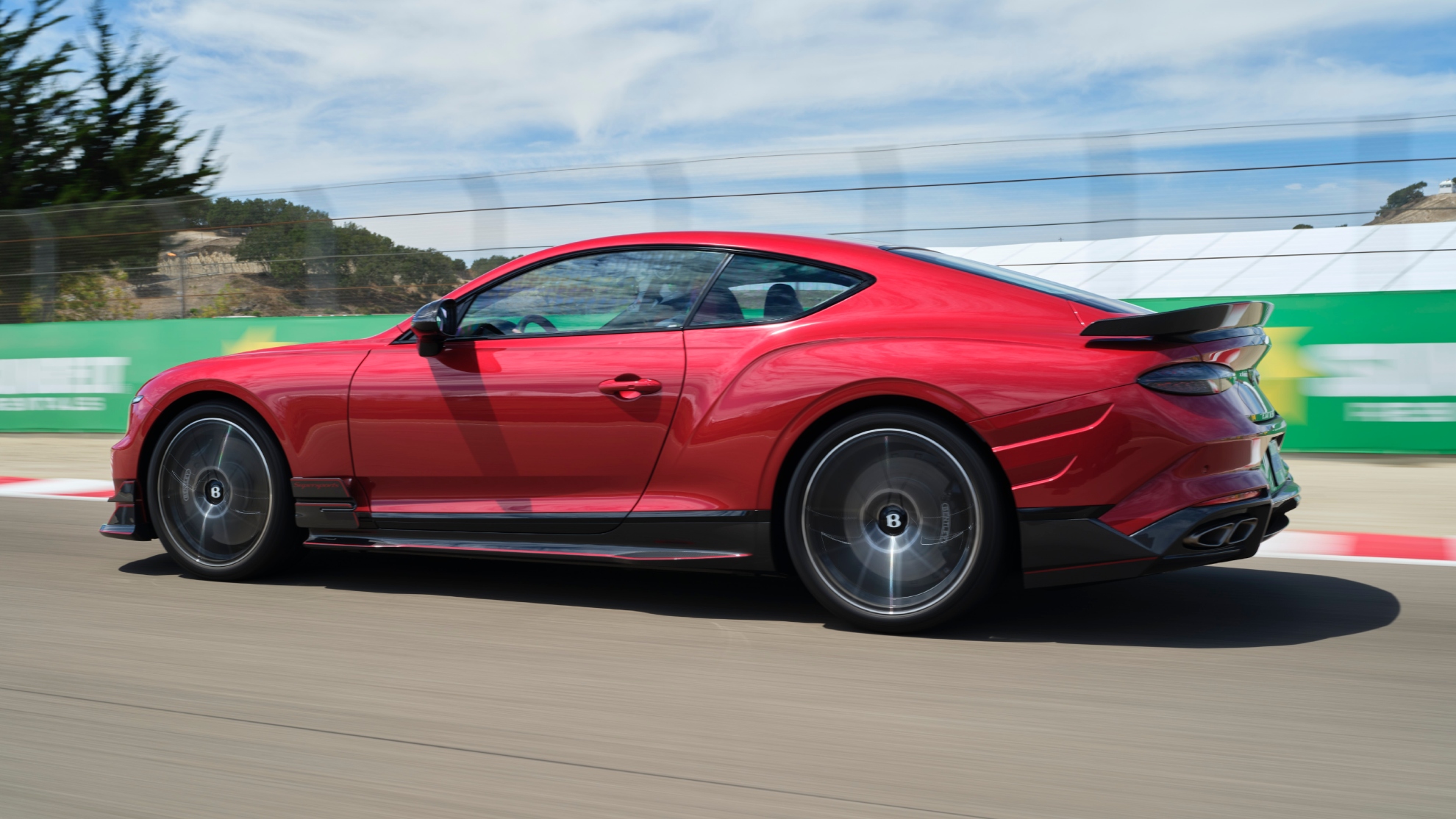
The Supersports comes equipped with new 22-inch forged and machined aluminum alloy wheels, developed in collaboration with specialist Manthey Racing. Two tire options are offered: the standard Pirelli P-Zero and the new high-performance Trofeo RS tire as an option. With the Trofeo RS tires, chassis modifications, and weight reduction, the Supersports can corner approximately 30% faster than a Continental GT Speed, generating a maximum lateral force of up to 1.3 g.
Laguna Seca as a proving ground...Before hitting the Laguna Seca track, Bentley's current CEO acknowledged the significance of the moment: "This car is more than just the most driver-focused Bentley ever. It represents our brand's return to producing more extreme cars and, personally, my first complete project since joining Bentley Motors."
However, I couldn't resist the urge to tease a little and asked Walliser if limiting production to 666 units—with about 200 destined for European customers—instead of 500 (given that the 2017 Supersports had 710 hp and that was also the total number of cars produced) might have been a fitting tribute to the Supersports' history. Smiling, the CEO admitted, "That’s a very valid question, but we believe this volume of 500 units will sell out quickly among potential customers and help the vehicle appreciate in value later on, as there will be fewer units than the market could easily absorb."
Then, I headed to the Laguna Seca circuit near Monterey Bay, where Auto Week had taken place just the day before. The track was 3.6 kilometers long and featured 11 corners—some quite demanding, especially the famous Corkscrew. I entered it completely blind, plunging down a dizzying drop where the only reference point for the turn was a pine tree on the horizon. At the finish line, it is clear that—between the incredible stopping power provided by the largest brake discs ever fitted to a road car and the drastic weight reduction—the Supersports impresses in both acceleration and braking. That is no small feat, considering it can sprint from 0 to 100 km/h in just 3.7 seconds.
In the Supersports version, the transmission delivers a sportier response, delaying upshifts and executing earlier downshifts—particularly in Sport mode, where the engine also takes on a deeper, more commanding note.
Naturally, the immense stopping power inspires confidence during the few laps I managed to drive in the Supersports; this is further aided by the superior grip of the Pirelli Trofeo RS tires fitted to the two pre-production cars used for this activity in California (these represent the sportiest tire option for this model).
Without route directions...Although we couldn't test the suspension's performance on uneven surfaces (there was no road testing), it is notably firm, and body roll is very well controlled. And while I wasn't able to disable the stability control (a limitation imposed by Bentley), it is evident that the rear end is more responsive than in the Continental GT Speed (AWD), making cornering more enjoyable. Furthermore, the front axle's excellent grip clearly contributes to making this Supersports even more thrilling in more extreme driving modes.
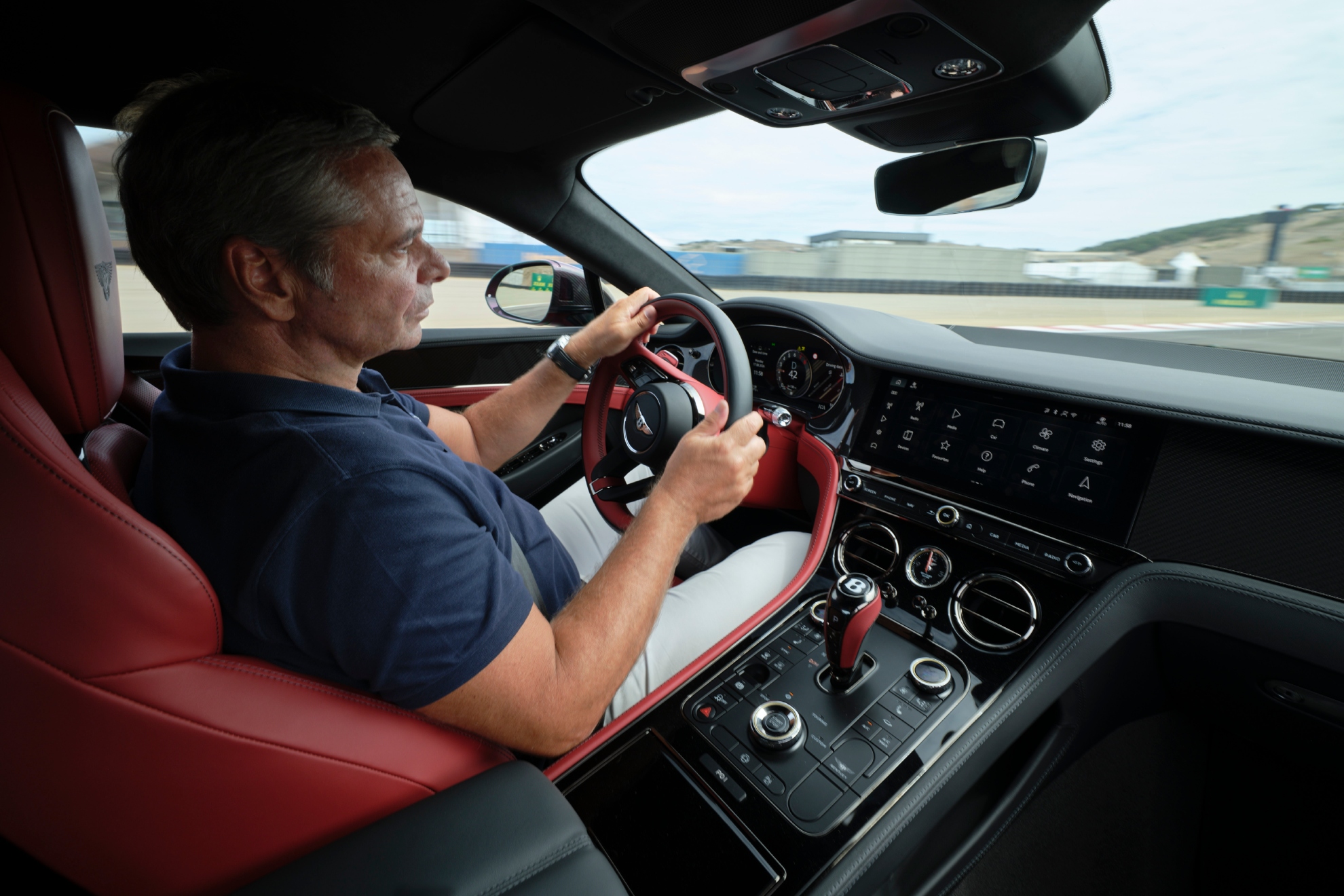
Wearing a mandatory helmet on the track always creates a sense of claustrophobia and limits direct visual contact with the cockpit, yet the interior retains the layout of the rest of the Continental family: excellent materials (carbon fiber, Alcantara, leather, and aluminum predominate) and high-quality finishes on the upper dashboard and door panels. However, there are still some plastics on the center console—where almost all manual controls are concentrated—that are less refined than they should be. This includes the rotary drive mode selector; in a car that frequents high-speed circuits or encourages spirited road driving (conditions permitting), it would be preferable to have this control on the steering wheel.
Our first impression: The Supersports is the Bentley model that most seeks to awaken the racing driver within each of us. The chassis setup—and especially the rear-wheel-drive configuration—is key to achieving this goal. Without hybridization, it delivers 666 hp and exceptional performance, aided by weight-saving measures that shed half a ton.
Autonews


Nenhum comentário:
Postar um comentário