AUTONEWS
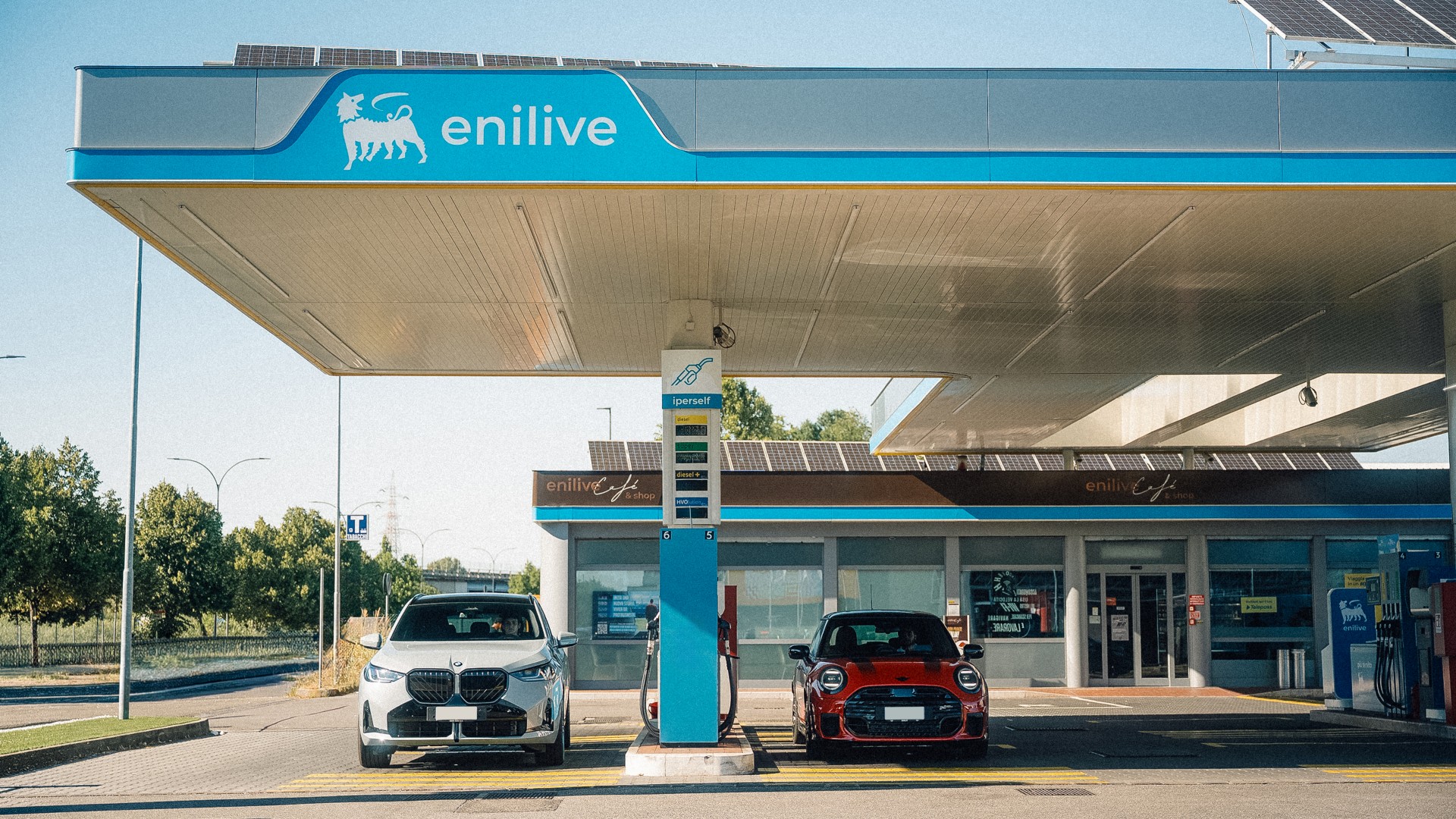
BMW and Eni: Partnership for the future of diesel
Eni and BMW Group announce an agreement to power the BMW vehicles of corporate fleets in Italy with HVOlution (Hydrotreated Vegetable Oil), a diesel biofuel that is produced from 100% renewable feedstocks by Enilive.
Enilive is Eni's company dedicated to products and services for a more sustainable mobility. With an approach that aims to support a successful energy transition through the usage of all available technologies, the BMW Group considers 100% pure HVO as an important solution towards an "Eligible Fuels only-fleet" for its customers, and as an effective product that can immediately contribute to decarbonize road transport. In 2025, across the entire supply chain, the average CO₂eq emissions reduction of Enilive HVO was 79.5% compared to the reference fossil mix.*
BMW Group recently started its demo, and development diesel-fleets powered by pure HVO. In the vehicles of the fleets a new technical solution is being developed by the BMW Group: refueling data from vehicles is being compared with data from the fleet operators’ payment system, to seamlessly trace the fuel used by each vehicle. This allows a complete and transparent traceability of the fuel the vehicle has used.
The BMW corporate fleets involved in the initiative use pure HVO while travelling across Italy, Germany and Austria, countries where a network of about 1,700 Enilive Stations provides the product HVOlution (100% pure HVO).
This new agreement follows the announcement that Eni and BMW Italia to ally for a more sustainable mobility: BMW Group support to the usage of Enilive HVO diesel biofuel is one of the pillars of the ongoing collaboration.
In accordance with the European fuel standard EN 15940, the BMW Group has approved the use of HVO diesel fuels for its Diesel models registered from late 2014 onwards, and equipped with a Generation B diesel engine. Furthermore, to raise awareness about biofuels, BMW Italia is providing an Enilive HVOlution voucher to all customers of new BMW diesel vehicles in Italy.
Dr. Martin Kaufmann, SVP Powertrain Development at BMW Group, said: “We are very happy to collaborate with Eni in our test and demo fleet. In this case this has more than one benefit: Eni is using BMW vehicles in their corporate fleet, at the same time is Enilive a major force in pushing renewable fuels in Europe. With HVOlution, Enilive has a very good product available delivering CO₂eq emissions reduction every day.”
With more than 250 million existing vehicles in Europe, their CO₂eq footprint can be improved if the proportion of renewable fuels is increased. This further underlines BMW Group’s commitment to enabling immediate and practical emissions reduction measures already available today.
BMW Group support this initiative in addition to its wide range of powertrain technologies, as the company’s goal is to reduce CO₂eq emissions across all areas. The BMW Group is convinced that all available technologies are needed to reduce CO₂eq across the entire value chain. In particular, there is potential for CO₂eq reduction in the area of fuels that are not based on fossil.
Stefano Ballista, Chief Executive Officer of Enilive, commented: “The development of our cooperation with BMW Group and BMW Italia marks another significant step toward the decarbonization of road transport and represents a tangible example of integrated partnership between the automotive and energy industries. Enilive biorefineries in Venice and Gela process mainly waste and residues, such as used cooking oil and animal fats, to produce HVO biofuels, that can be used in all validated diesel engines. As a drop-in fuel, pure HVO does not require engines or distribution infrastructure modifications, making it a readily available and effective solution to accelerate the decarbonization of transport today.”
A new era for corporate fleets...BMW Group and Eni have signed an agreement that changes the way diesel is viewed and experienced. From July 2026, BMW corporate fleet vehicles in Italy will use HVOlution, a biofuel made from 100% renewable raw materials. Production comes from Eni's biorefineries in Venice and Gela, where waste oils and animal fats are processed.
With this move, BMW is showing that diesel does not have to mean high emissions. On the contrary, the average reduction in CO2 emissions in 2025 reached 79.5% compared to fossil fuels.
Transparency and technology,,,BMW is developing a system that links fuel consumption data from vehicles with information from the fleet's payment system. The result is a complete and transparent record of which fuel a vehicle uses. This eliminates any doubt and allows clear control over the process.
Network available throughout Europe...BMW fleets use pure HVO fuel as they move through Italy, Germany and Austria. Enilive provides a network of around 1,700 stations offering HVOlution. This means that the fuel is not only experimental, but also practically available to drivers.
BMW Group's position...Dr. Martin Kaufmann, SVP (Senior Vice President) Powertrain Development at BMW Group, stressed that the cooperation with Eni brings double benefits: "Eni uses BMW vehicles in its fleet, and at the same time Enilive is strongly pushing renewable fuels in Europe. HVOlution is delivering emissions reductions every day."
BMW is making a clear message that all technologies must work together to reduce emissions. Electrification is key, but fossil-free fuels offer an immediately available solution.
Enilive's perspective...Stefano Ballista, CEO of Enilive, emphasized that the cooperation with BMW is a concrete example of the integration of the automotive and energy industries. HVO fuel is used in all validated diesel engines without the need for modifications. This means that the switch to pure biofuel does not require new engines or new infrastructure.
The future of diesel...The agreement between the BMW Group and Eni shows that diesel can become the fuel of the future without a fossil base. HVOlution offers a solution that is immediately available, without waiting for new technologies. This move opens the door to a faster decarbonization of transport and shows that industry collaboration brings results.


Nenhum comentário:
Postar um comentário