LANCIA
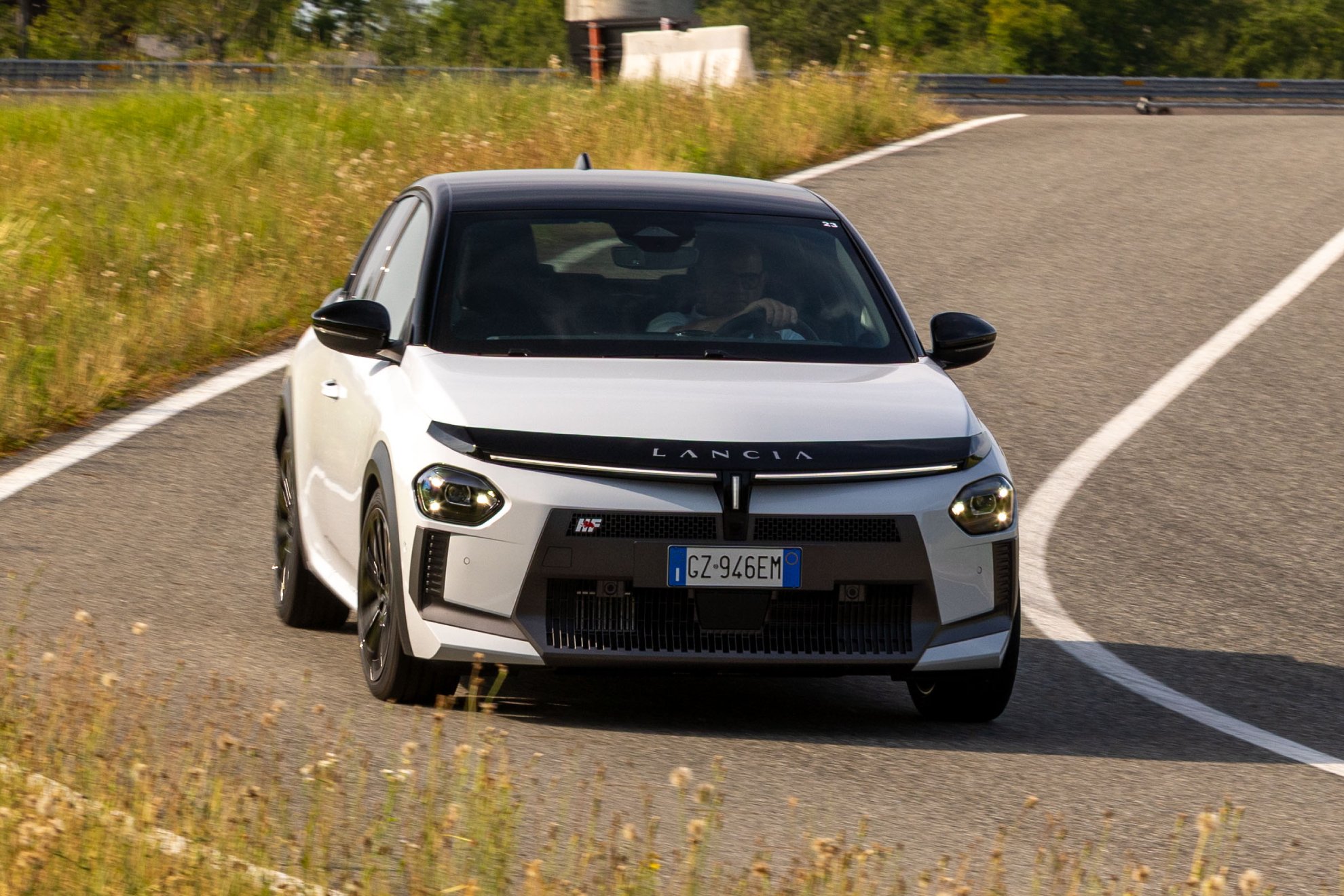
Lancia Ypsilon Manual: A small but efficient engine and a manual gearbox
Lancia has launched a new version of the Ypsilon to complete its lineup, which is currently the only model available until the arrival of the Lancia Gamma later this year. This new version features a 100 hp turbocharged gasoline engine and a six-speed manual transmission. It is a simple, affordable and highly efficient option, designed to meet the needs of those seeking an elegant mobility solution without spending too much.
The engine offers an agile response...This version is equipped with a three-cylinder engine with a variable geometry turbocharger that offers a smooth response, although without great pretensions. This is the same engine used in other Stellantis Group models, such as the Opel Corsa and the Peugeot 208, among others. In the Lancia, the engine does not transmit much vibration or harshness, something common in three-cylinder engines. Combined with the manual gearbox, which has slightly shorter gear ratios, it offers an agile and efficient response. It even gives the impression that the engine has more power than the official figures indicate, despite not being an engine designed for maximum performance.
Under the hood, the Ypsilon features the new engine dubbed "T100," initially introduced in the Peugeot 208 and 2008 range and recently in the Fiat 600, and which will gradually be used to power all Stellantis Group compact models in Europe.
The 1,199 cc three-cylinder gasoline engine develops a maximum power of 101 hp at 5,500 rpm and a maximum torque of 20.9 kgf·m from 1,750 rpm. Lancia reports an acceleration from 0 to 100 km/h in 10.2 seconds and a top speed of 194 km/h. The reported average fuel consumption is 19.2 km/l, bearing in mind that in Europe gasoline contains a maximum of 10% alcohol.
The engine incorporates technologies such as a metal timing chain for the valve timing, variable geometry turbocharger (VGT), high-pressure direct injection (350 bar), and operates according to the Miller cycle with a high compression ratio, improving thermal efficiency.
Reliability was also paramount, with the engine block, pistons, and rings designed to maximize robustness and control oil consumption. The development program was among the most rigorous in its class: more than 30,000 hours on the test bench and more than 3 million km driven in prototype vehicles. All of this translates into an immediate benefit for the customer: maintenance intervals every 25,000 km or two years, with low and predictable operating costs.
With the introduction of the manual transmission, the Lancia Ypsilon's interior received a functional update: with the addition of the gear lever to the center console, the area needed to be redesigned, a new storage compartment was added, and the multifunctional table with wireless charging for cell phones, present in the HEV and BEV versions, was removed.
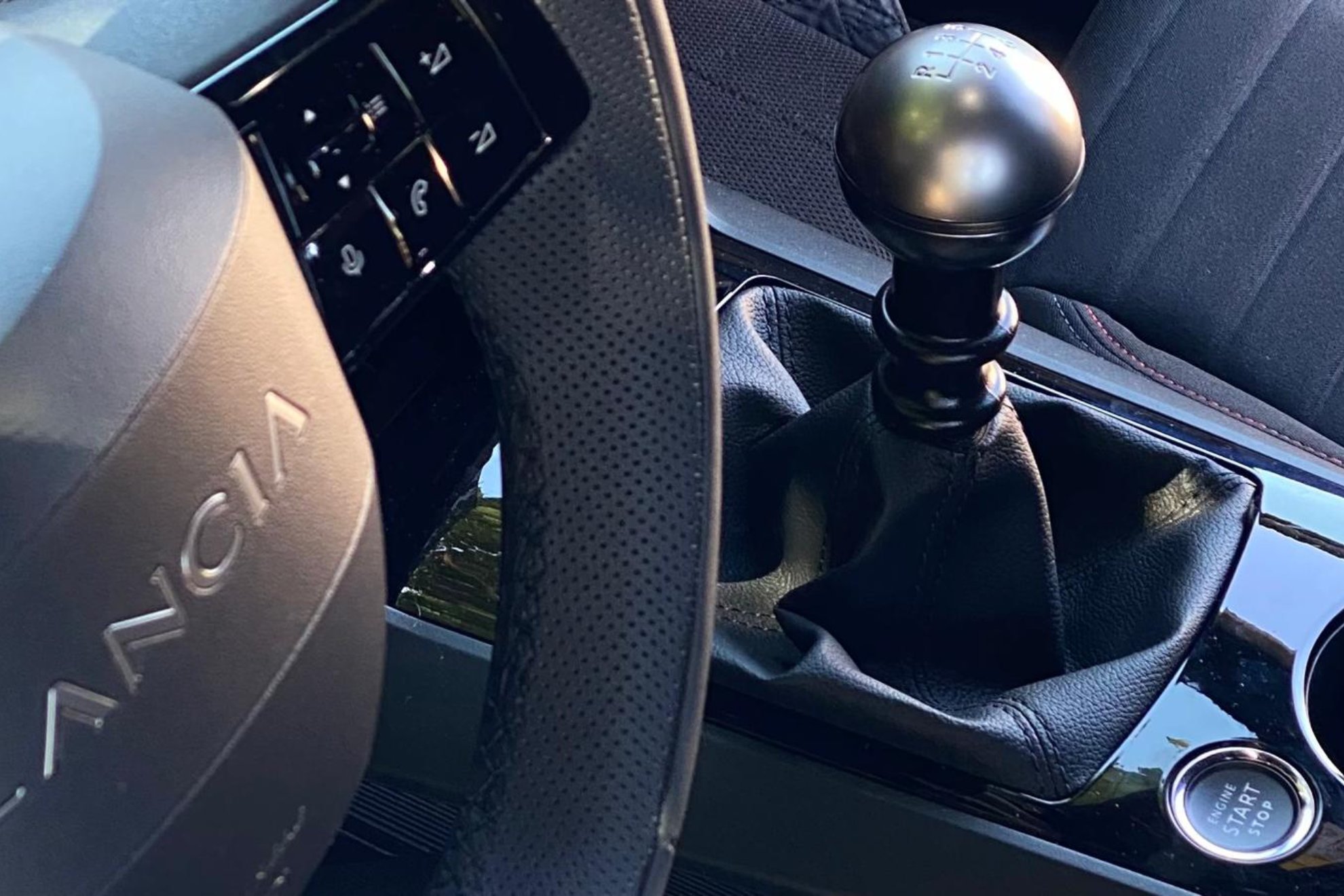
With the introduction of the manual transmission, the Lancia Ypsilon's interior received a functional update: with the addition of the gear lever to the center console, the area needed to be redesigned, a new storage compartment was added, and the multifunctional table with wireless charging for cell phones, present in the HEV and BEV versions, was removed.
Traditional driving...The Turbo 100 version is aimed at the market segment that still hesitates to opt for an automatic transmission and continues to rely on combustion engines. These are drivers who want to maintain a traditional driving experience and avoid additional costs that could increase the final price of the vehicle. With this new option, Lancia offers precisely that: simplicity and reliability.
The development of this vehicle involved 30,000 hours of testing and three million kilometers driven to achieve a perfectly tuned product. Its launch completes the range of engines, making it a car with several multi-energy options. The hybrid version is already available, being very attractive for its fuel efficiency and ECO label. The electric version is unbeatable in the city with its zero emissions label. The Turbo 100 brings back the pleasure of driving and ease of use. This completes the family of vehicles, catering to a variety of tastes.
This version is available in all three trims: Ypsilon, Ypsilon LX, and HF Line, just like the other versions. One of the most striking aspects of the Turbo 100 manual test drive is the absence of the famous "tavolino," the small table for storing objects that is present in the other two engine options and has been a major selling point since the car's launch. The reason for its omission is to provide better accessibility and more space for the gear lever.
One of the Turbo 100's biggest attractions will be its price. It starts at €21,200, including VAT, for the most basic version, while the LX and HF versions add €3,000, which still makes it a very competitive price.
In short, the manual Turbo 100 can be considered an option for those who value simplicity and practicality. It's a car with an attractive design that fits a tighter budget. Its natural habitat is the urban environment, although the engine is capable of handling longer journeys at a relaxed pace. It's an option for those who want to travel in style but don't need high performance.
Autonews


Nenhum comentário:
Postar um comentário