AUTONEWS
ZF presents software-defined systems for trucks
ZF unveiled a new generation of safety systems, motion control technologies, and electronic architectures for commercial vehicles at CV Tech Day 2026, held in Germany. These solutions preview technologies that will take center stage at IAA Transportation 2026 and reflect the company's strategy to address the evolution toward software-defined vehicles, connectivity, and artificial intelligence.
At its proving ground near Hanover, Germany, ZF is showcasing its latest innovations in safety and motion control systems ahead of IAA Transportation 2026. These technologies support customers on their specific journeys toward cleaner, safer, smarter, and more efficient commercial vehicles, enhancing operational efficiency today while enabling future-proof architectures driven by software-defined commercial vehicles and Artificial Intelligence (AI). With technology adoption progressing at varying degrees, paces, and scales across regions, ZF emphasizes that the transition to next-generation commercial vehicles is not linear—despite a clear long-term vision—a complexity further compounded by the growing diversity of global regulations. Enabling customers to develop their specific businesses and technological evolutions with maximum flexibility is the core objective of ZF’s Commercial Vehicle Solutions division. To achieve this, ZF focuses on flexible system architectures and onboard intelligence that enhance safety, efficiency, and Total Cost of Ownership (TCO), while simultaneously protecting existing investments.
Rather than focusing solely on disruptive changes, ZF pursues an evolutionary approach based on scalable platforms, flexible E/E (electrical/electronic) architectures, system intelligence, and digital ecosystems. This allows OEMs and fleet operators to continuously improve efficiency, safety, uptime, and TCO throughout the vehicle's entire lifecycle, while ensuring the sustainable utilization of existing investments.
The company is focusing on integrating systems that enhance safety, operational efficiency, and vehicle uptime, while enabling the gradual adaptation of current fleets and platforms to meet new technological demands in the transport sector.
According to the company, the sector's transformation is progressing at different speeds across the globe, requiring flexible solutions that allow current and future technologies to coexist.
The strategy of ZF’s Commercial Vehicle Solutions division relies on scalable architectures, electronic integration, and onboard intelligence, enabling OEMs and fleet operators to modernize their vehicles without the need to completely replace existing platforms.
“The direction toward the commercial vehicle of the future is taking shape, but the path is neither linear nor simple,” stated Andreas Moser, member of the ZF Board of Management and Head of the Commercial Vehicle Solutions division.
“At CV Tech Day, we demonstrated how we support our customers with practical solutions that create value today and enable a scalable, cost-efficient transition toward zero accidents and zero emissions,” the executive added.
The Software-Defined Vehicle (SDV) concept involves using software as the core element to control, update, and expand vehicle functionalities throughout its lifecycle.
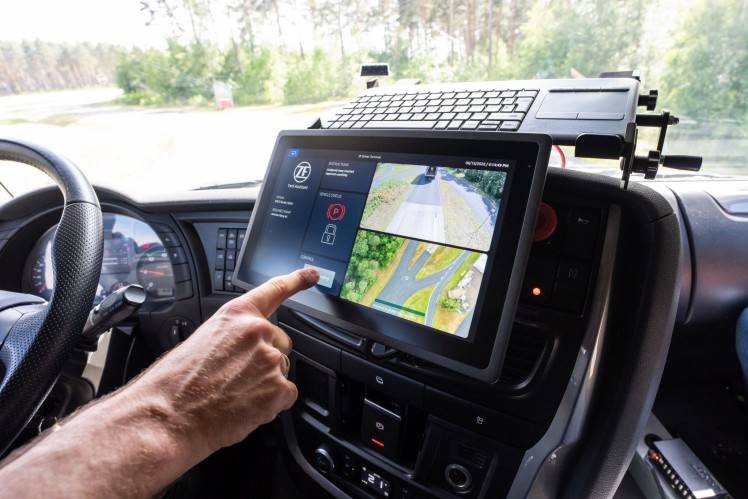
According to ZF, this architecture enables over-the-air updates, the integration of driver assistance systems, predictive maintenance, and new operational features without requiring significant mechanical modifications. “The software-defined vehicle is already a reality—and Brazil is directly contributing to this transformation. At ZF, we don’t wait for the future to arrive: we develop globally and deliver locally, with an engineering team capable of calibrating, customizing, and validating technologies for commercial vehicles that meet the real needs of each market, including South America,” stated Silvio Furtado, Vice President of Commercial Vehicle Solutions and Industrial Technology at ZF South America.
One of the highlights presented by the company is a new driver assistance architecture based on sensors distributed throughout the truck and trailer.
The system combines radars, cameras, electronic control units, and communication between the tractor unit and the trailer, creating continuous perception around the entire vehicle combination.
How does ZF’s new safety architecture work? According to the manufacturer, the system enables 360-degree monitoring with no blind spots, integrating braking, steering, and driver assistance into a single ecosystem.
Functions demonstrated include:
Comprehensive monitoring of the area around the truck and trailer;
Advanced reversing assistance with automatic braking;
Warning systems for urban turns;
Detection of pedestrians and vulnerable road users;
Recognition of emergency vehicles via sirens;
Monitoring of driver fatigue and distraction.
The Driver Monitoring System (DMS), for example, continuously monitors driver behavior and issues alerts in the event of signs of drowsiness or distraction.
Technologies for city buses...ZF also presented solutions aimed at urban public transport. Among them is City Bus Assist, a system that aids buses in approaching bus stops using sensors and active steering assistance.
The technology aims to reduce damage to tires, wheels, and urban infrastructure, while also improving accessibility during passenger boarding and alighting. Another highlight is Continuous Damping Control (CDC Skyhook), a software-controlled damping system that continuously adjusts suspension behavior based on vehicle operating conditions.
Electrification advances with diverse solutions...The company emphasized that the transition to low-emission vehicles will follow various technological paths, depending on the application and region of operation. For this reason, ZF maintains a strategy based on multiple propulsion technologies.
Which electrification solutions were presented? The systems demonstrated include:
TraXon 2 Hybrid automated transmission;
CeTrax 2 and CeTrax 2 Dual central electric motors;
AxTrax 2 electric axles;
Systems for electrifying implements and trailers;
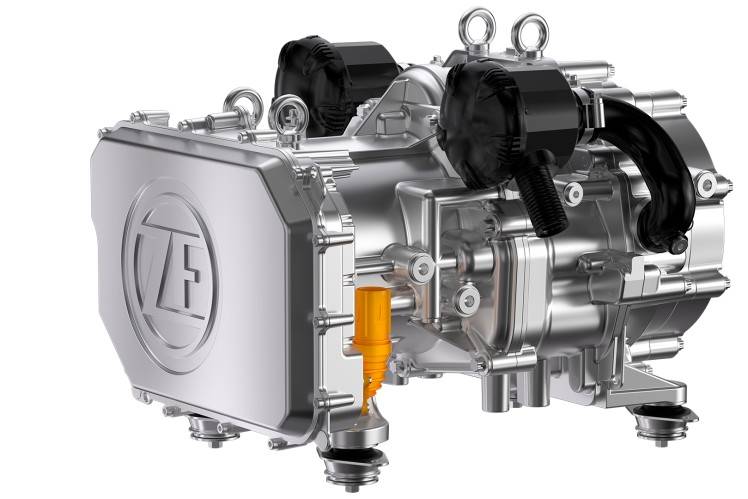
E-Comp Scroll electric compressor for electrified vehicles.
According to the company, these technologies allow manufacturers to adapt existing platforms for electrification with minimal structural impact.
Software expands logistics integration...Another topic addressed during the event was the growing digitalization of transport operations.
ZF presented solutions that connect trucks, trailers, operators, and logistics infrastructure through service-oriented architectures.
Demonstrated features include the automatic configuration of operational zones, remote vehicle access, integration between truck and trailer, and emergency stop systems triggered by Bluetooth devices used by yard operators.
Strategy aims to protect fleet investments... ZF’s approach to software-defined commercial vehicles is based on the gradual evolution of electronic and digital systems, enabling carriers and manufacturers to incorporate new technologies without disrupting established operations.
According to the company, the integration of software, onboard electronics, safety systems, and electrification is expected to play a central role in transforming freight and passenger transport in the coming years, enhancing vehicle connectivity and creating new possibilities for operational management, maintenance, and safety.


Nenhum comentário:
Postar um comentário