AUTONEWS
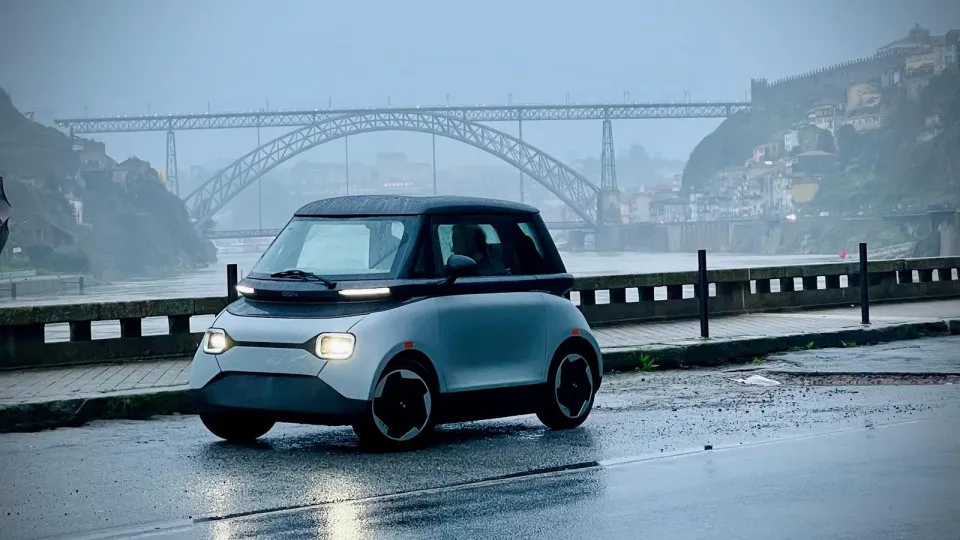
BEN: the first Portuguese electric mini-car
BEN will be the first Portuguese electric mini-car. It's a project of CEiiA - the Center for Engineering and Product Development, based in Matosinhos.
The idea is to explore sustainable mobility and the profitability of car use - with the dematerialization of ownership and a focus on sharing.
It's a concept that proposes some technological innovations, doesn't neglect autonomous driving, and aims for network operation: connecting different BENs and even the people who use the vehicle.
Autonews recently visited CEiiA in Matosinhos, where we were received by CTO Helena Silva - whom we interviewed. In the first part of the conversation, we talked about CEiiA and the BEN concept. In this second part, we discuss the mini-car and the focus on sustainability from a technological point of view.
BEN has functionalities related to biometric data. Regarding privacy, if a user doesn't want to know where they've been, it's not known...in the future there's also the issue of autonomous driving. Therefore, the BEN has an enormous technological scope.
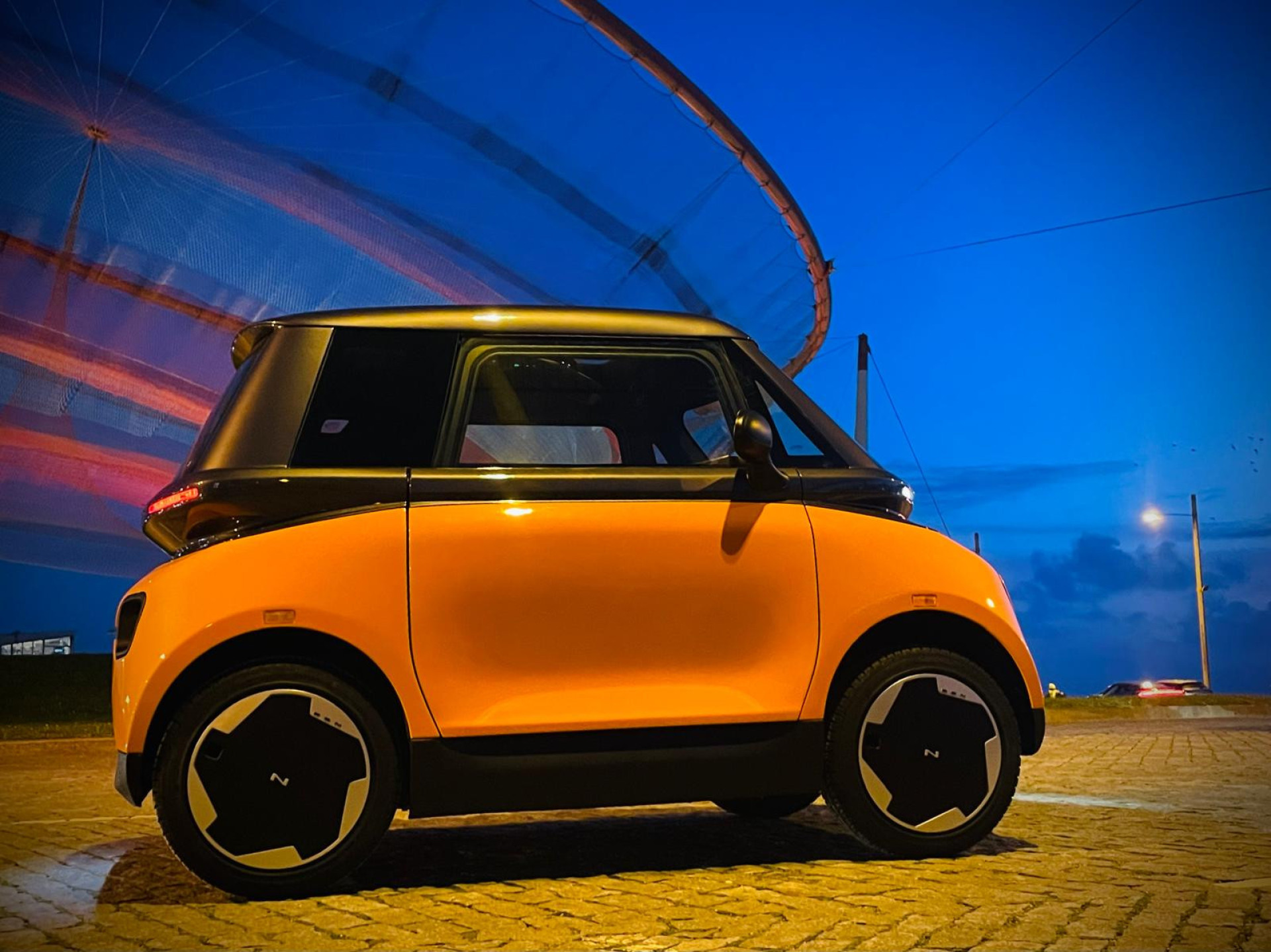
When we say that BEN is the integration between a spirit and a body, that's the idea. In other words, the body is its physical platform, which we see, and it has a great capacity for configuration, it's very much based on modularity, very much on simplicity. And we call the spirit a digital platform because it has no limits. Everything that is digital, the limit is our imagination. And our goal is for it to evolve over time with the integration of new functionalities. Today, we are preparing the next version of BEN - which will probably already have some autonomous functions.
And it's very appropriate to what its use will be, not to have an autonomous vehicle just for the sake of being autonomous; it's what it will be used for. And then, the functionalities will adapt accordingly. And we are talking about a digital world where BENs, their "peers," which are basically the digital extensions of BENs, will recognize each other with the digital extensions of, for example, people.
One of the ways a person can be digitally extended is through their biometric data. I, for example, can – through the device I have on my wrist – open the BEN (Business Electronic Network) that I have access to and customize the service to my preferences.
Therefore, we are talking about the integration between networks of people and networks of objects in the digital world, in their digital extensions. This is super powerful because, from there, I can have a lot of data to be able to perform other services and also optimize the use of mobility objects, in the case of BENs, with other vehicles.
And since we are talking about technology, about the BEN, as it is today, what innovations does it incorporate that you highlight?
I would highlight, without a doubt, its digital platform, which has a digital representation layer that allows me to know all the vehicle's data in real time. This is important for whom? For those who operate the BEN and for those who use it. And, with this data, I can also connect this BEN with other BENs. In other words, connecting them in a network – that's also a very interesting innovation in this type of vehicle. For example, I could have a community of BENs – networks of BENs that connect to each other, recognize each other, receive alerts, and know where their users can use them.
One of the most distinctive features of the BEN is that I can configure it for a new service at any time thanks to this platform. That is, today I'm using it in a community of colleagues, and tomorrow I can put it to use for "last mile" logistics. And that's the digital capacity to connect this BEN to any mobility service.
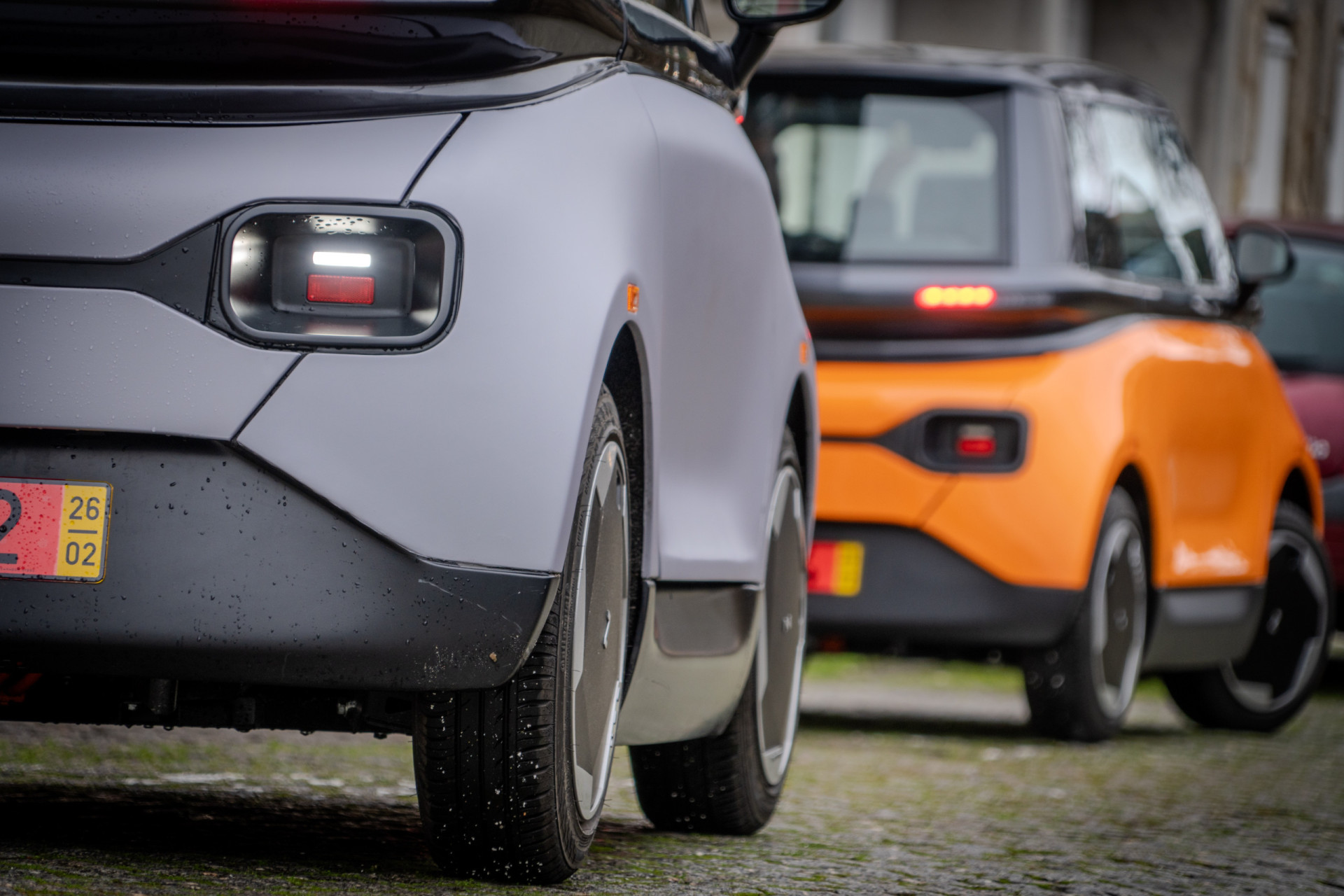
And also one of the most differentiating factors of the BEN is the way it will be industrialized. A collaborative and distributed way across several "sites" in Europe. We are working with Italy so that we can join Microlino and also have the BEN produced in Italy. And we are trying to create all the conditions in Portugal as well to have another "site" – one or two "sites" in Portugal to happen. This is an innovative form of industrialization because it significantly breaks with the traditional model of car manufacturers based in Europe. Our goal here is also to have a very small carbon footprint in the production of the BEN, with short supply chains. And people who purchase the BEN will be aware of their carbon footprint during its production, with the goal of potentially offsetting it through extensive use. To achieve this, there's a perpetual counter of the emissions generated so I can perform the "offset."
When buying a car, a person might look at, for example, the zero grams of carbon dioxide per kilometer driven. But they aren't fully aware that electric cars have other types of associated emissions. And here at BEN, the car arrives in the owner's hands with those emissions already accounted for…
Yes, you already know what emissions were generated during its production. And then there's something else that's also very important: the BEN digital platform knows exactly where it's charged and with what energy mix it's charged. Because even having an electric vehicle, I might be charging it with fossil fuels.
Therefore, with everything related to the digital platform, I can verify that in that place, at that time, the energy mix was a specific one. And therefore, the emissions I will avoid are probably different from those that another person will avoid in another place, at another time, charging their electric vehicle. This also contributes to the quantification and valuation of emissions and also to what can become an environmental asset.
CEiiA is present in the automotive, aerospace, and aeronautical sectors. And sustainability, seemingly unrelated, will unite, for example, the aerospace and automotive sectors? Right. Sustainability is a guiding thread in our activity and is our purpose here. But it's not sustainability in concept; it's sustainability in what we develop. And, in the case of BEN, it has to do with the fact that it's zero emissions and can quantify and value emissions during its use. It's also about looking at the footprint in its production. The fact that this is explicit in the service and that I can provide this information in real time to the city. In other words, the way I'm operating effectively contributes to accelerating my city's carbon neutrality goals. That is, it has to do with my contribution, it has to do with the contribution of others.
But then there's another area, which is space, where we work on the applications of space technologies. And in this specific case, what we do here at CEiiA is use very high-resolution Earth observation images, merging them with data from Earth, to develop artificial intelligence models from various disciplines and replicate them in various parts of the planet.
When we talk about cities and I cross-reference how I move in cities with Earth observation images, I can explore the axis of sustainability and apply it to help predict and make decisions about what best achieves carbon neutrality.
For example, predicting carbon sequestration spaces, how I will place urban forests, how they are evolving over time, what sequestration potential I am currently having in a city. That's one example of when we cross-reference mobility with space here at CEiiA.


Nenhum comentário:
Postar um comentário