RENAULT
How does the Renault Clio E-TECH hybrid perform?
1990 was one of those era-defining years. Germany officially reunified after decades of division, Nelson Mandela was finally released from prison after 27 years, and music began to shift to a new generation of sounds that would define an entire decade. In addition, in Spain, an industrial transformation was underway that would eventually consolidate the automobile as one of the country's main economic engines. And it was precisely in this context that one of the most important cars in recent European history was born: the Renault Clio.
Thirty-six years have passed since the first generation, which had the mission of replacing the Renault 5, and since then, the Clio has survived practically everything. It has withstood economic crises, technological changes, emissions regulations, the SUV boom, and now electrification. While some historic names have disappeared along the way (like the Ford Fiesta) and others have evolved into something completely different (the Peugeot 205 gave way some time ago to the current Peugeot 208), the Clio has remained, adapting without losing its essence.
And perhaps that is precisely one of its greatest virtues: understanding what the European driver really expects from a small car. Because the Clio has never been the most radical, the sportiest, or the most technologically advanced in absolute terms. But, generation after generation, it has managed to maintain something much more difficult: balance.
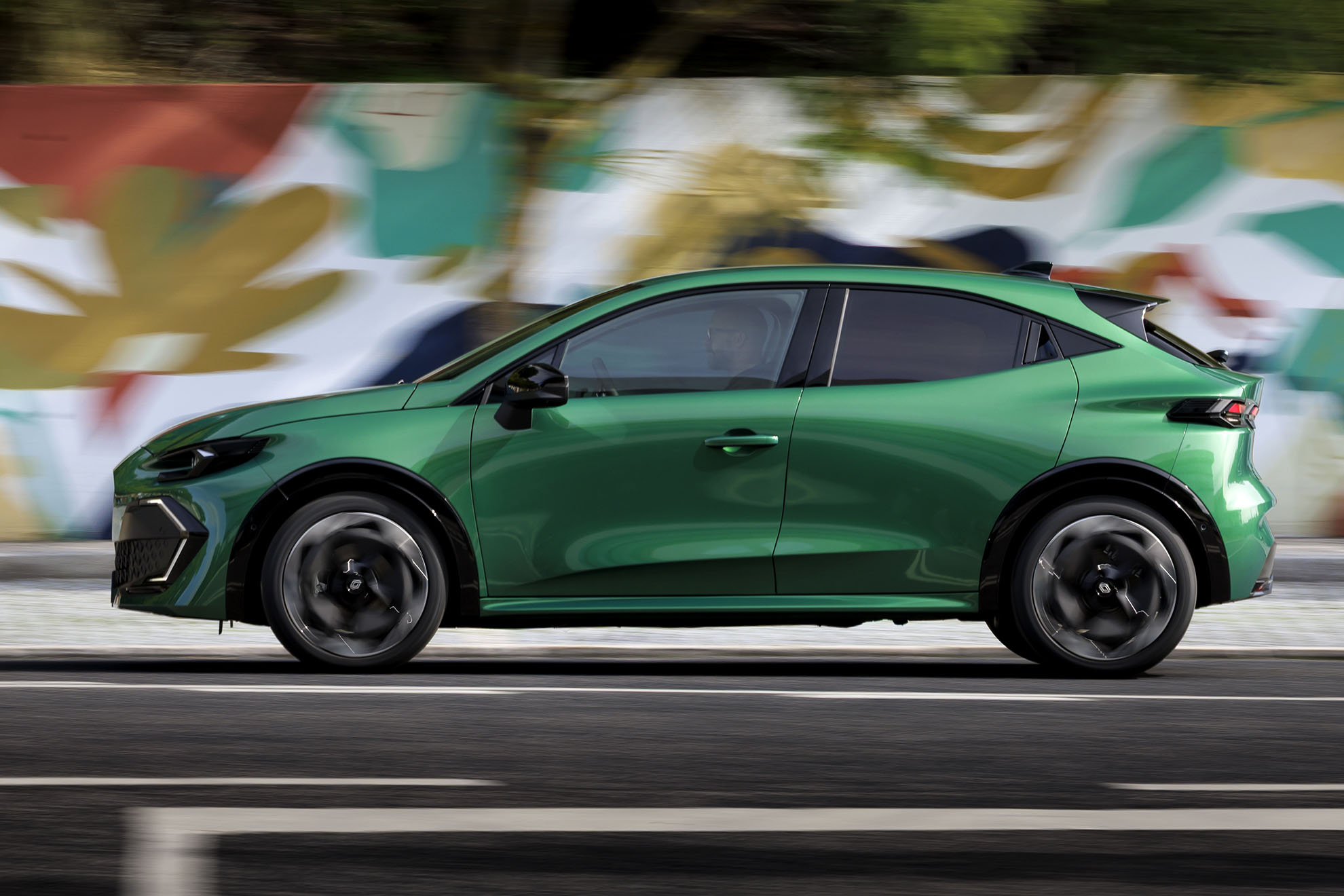
That same balance is what Renault sought to reinforce with this sixth generation, especially in the 160 hp E-Tech Full Hybrid version that we had the opportunity to test. This variant probably represents better than any other the direction the model is taking: more refined, more efficient, more technologically advanced, and with a distinctly more mature feel.
Furthermore, the Clio has a special significance for Spain. For decades, it was part of the national industry, initially produced in Valladolid and later as one of the most important models for Renault's industrial ecosystem in the country. And although this new generation is produced in Bursa, Turkey, the Clio continues to be part of the recent history of the Spanish and European automotive industry, a distinction that few models in its segment can boast.
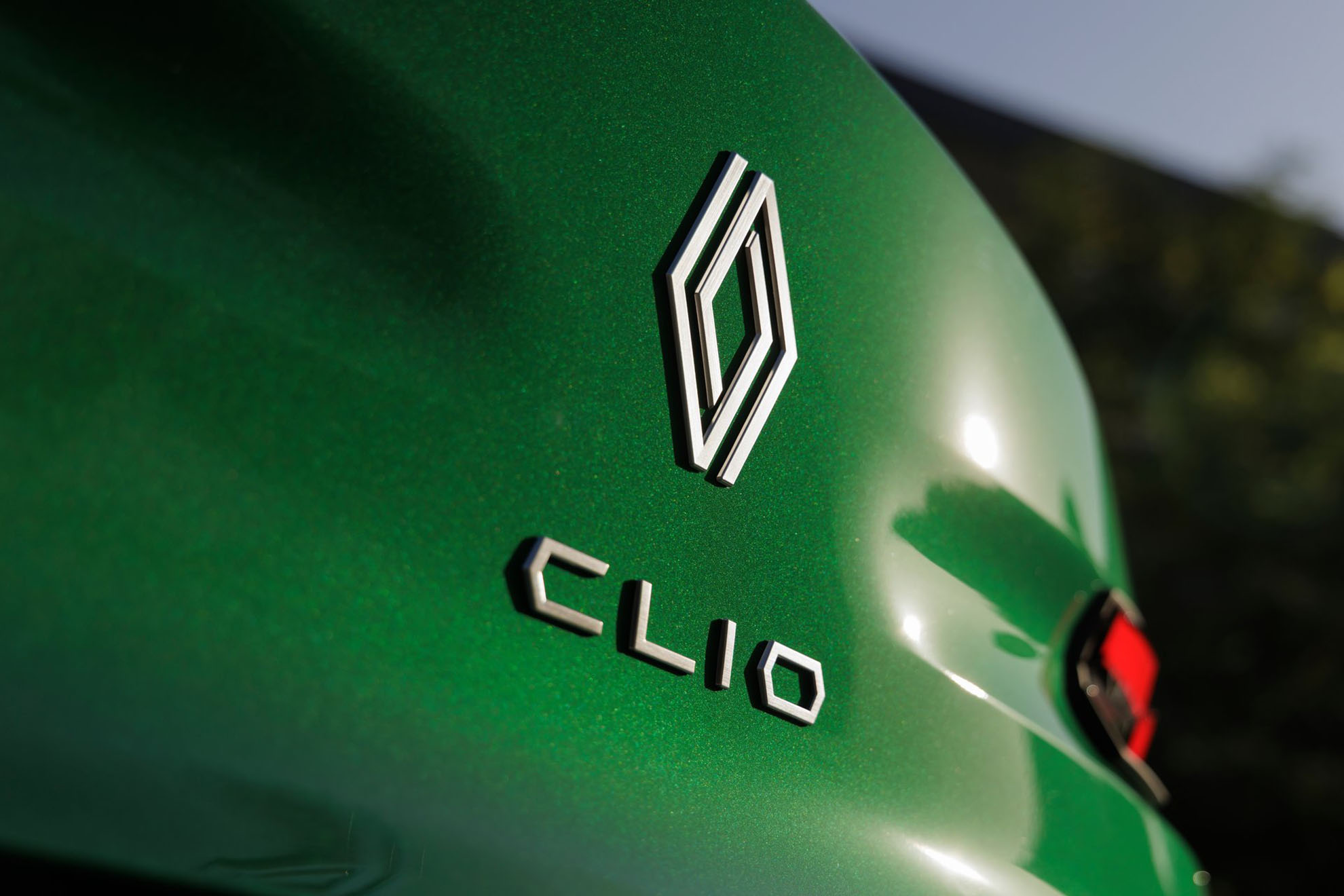
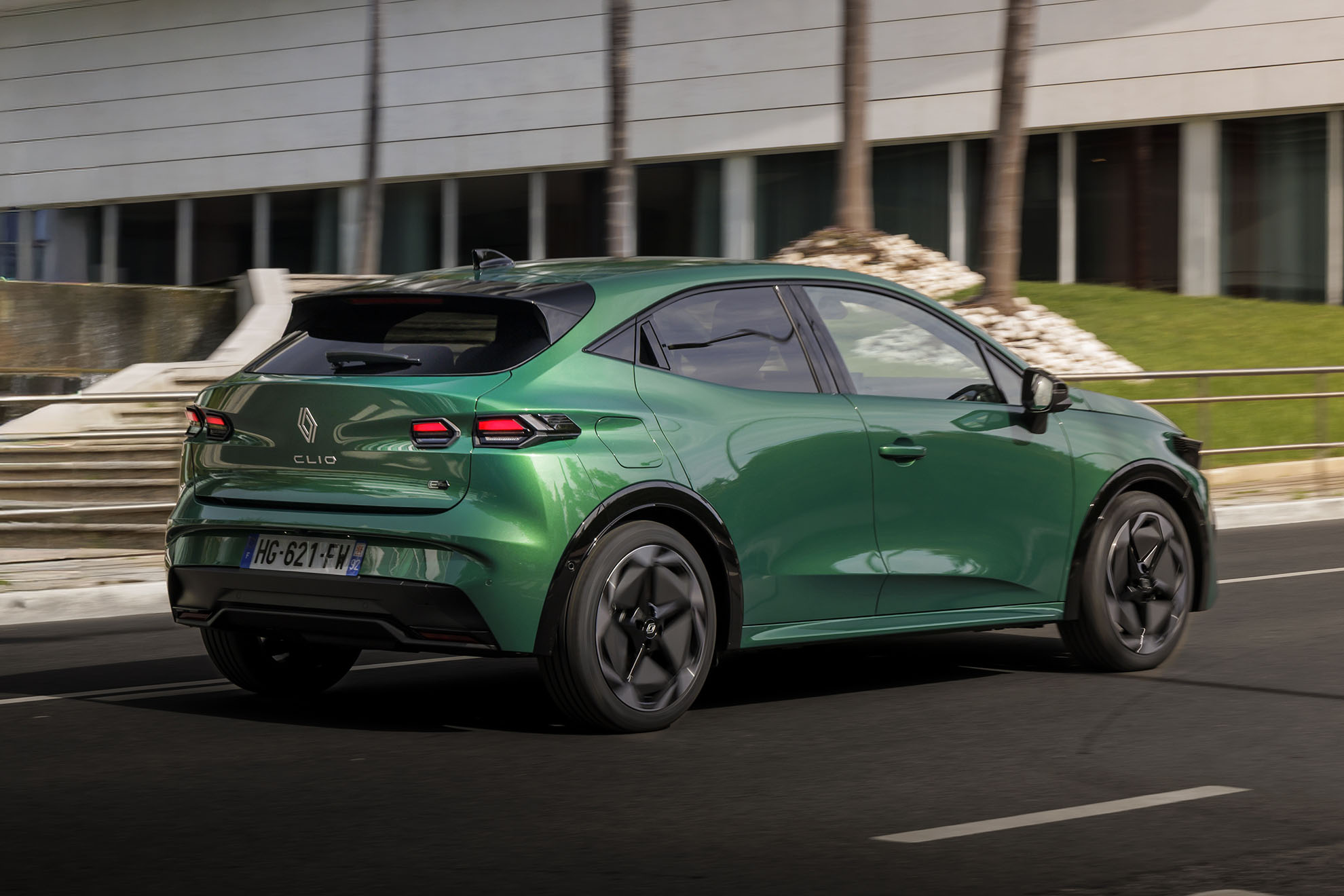
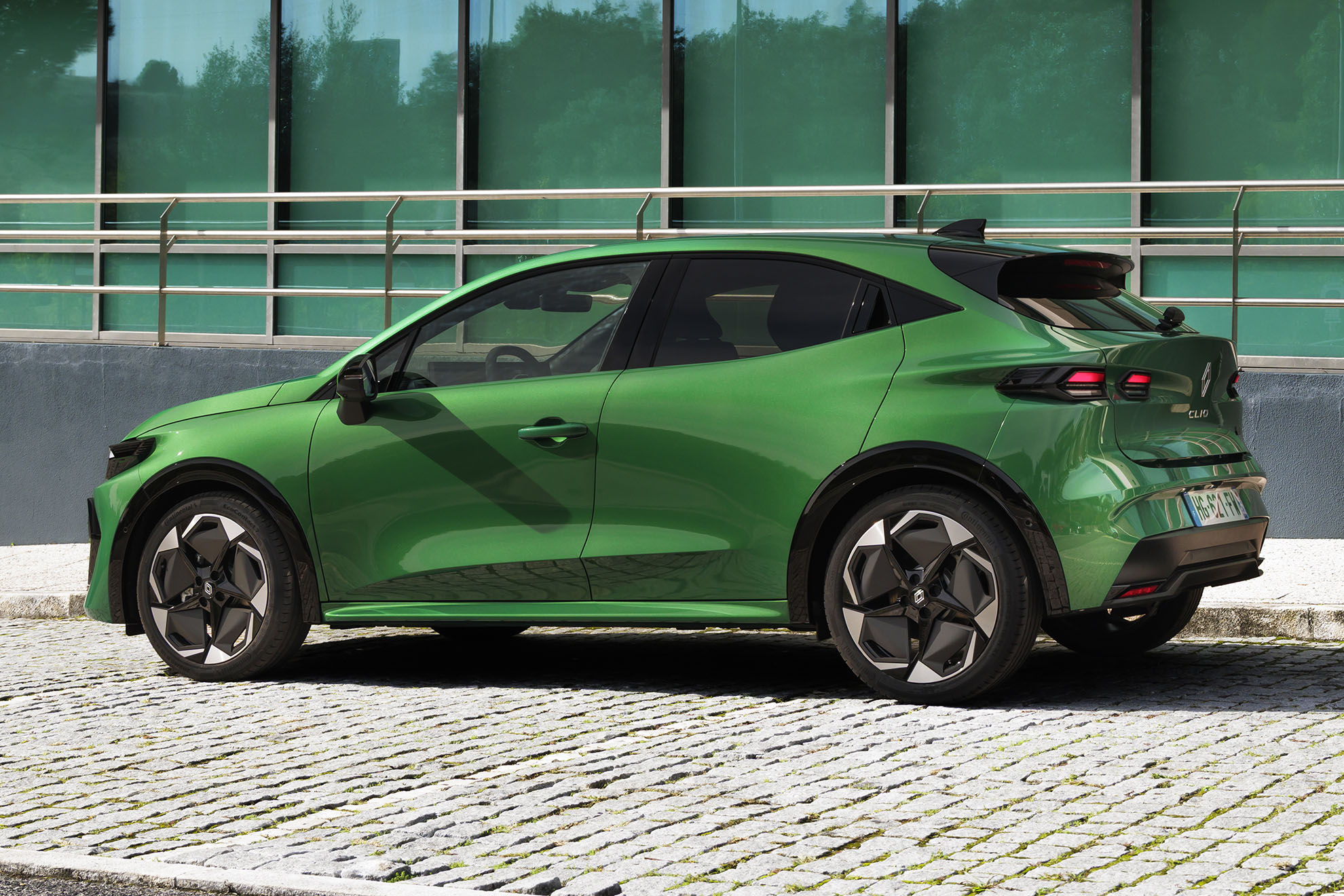
Although we already analyzed it at the time, it is worth revisiting the most representative characteristics of the model, among which the exterior design is clearly one of the key points. Because the new Clio has changed considerably more than it appears at first glance. Renault wanted to give it a more solid image, closer to higher segments, moving away somewhat from the youthful aesthetic that has historically characterized the model.
Although it is based on the same platform as its predecessor, it now measures 4.12 meters in length, is wider and adopts more robust proportions, especially at the front. The hood is longer, the front track has increased by 39 mm, and the new diamond-shaped LED light signature gives it a much more distinctive personality.
The result is a car that visually looks more stable on the road. More serious. More imposing. And that's probably exactly what Renault intended: for the Clio to stop being seen as a mere utility vehicle and become a viable alternative as a main car for many drivers, especially now that the Mégane has become electric.
A more mature car inside...This feeling extends directly to the interior, where Renault has clearly raised the perceived quality and technological experience. The dashboard is dominated by the OpenR Link system with two screens of up to 10 inches and integrated Google, something still uncommon in this segment. Google Maps, Assistant, and Play Store are part of the car's ecosystem, significantly reducing the need for a smartphone.
The interface is fast, intuitive, and much more pleasant to use than the multimedia systems of some conventional competitors. In addition, Renault has managed to ensure that the technology does not complicate daily use. There is still a certain physical logic to some of the controls, which is much appreciated.
The compact steering wheel, inherited from higher-end models like the Austral and Rafale, conveys a sporty feel and complements the low, comfortable driving position. There is also a clear improvement in materials, finish, and ambient lighting, especially in the higher trim levels. The Esprit Alpine version adds an extra touch of excitement with specific details, Alcantara, and sports car-inspired finishes. Renault understood that, even in a compact car, the feeling of quality is becoming increasingly important.
Hybrid mechanics: the best Clio to date...Let's analyze what, for me, is the star of this test: the new 160 hp E-Tech hybrid powertrain (and probably also the car's strong point). Renault has significantly improved the hybrid system compared to the previous 145 hp E-Tech. Now, it uses a new naturally aspirated 1.8 engine, combined with two electric motors and a 1.4 kWh battery. The result is 160 hp and a much more refined response.
The improvement is not limited to performance (it accelerates from 0 to 100 km/h in 8.3 seconds), but above all to the way the power is delivered. The system now works much more smoothly and naturally than before. The multi-mode gearbox still has a unique operation compared to other traditional hybrids, but Renault has significantly refined the transition between engines, making the overall experience much more enjoyable. Furthermore, the hybrid Clio achieves something very difficult: being fast when needed and efficient almost always.
However, if there is one thing that defines the 160 hp Clio E-Tech, it is precisely its balance. It doesn't try to be the sportiest, like some versions of the SEAT Ibiza, nor the most radical in design, like the Peugeot 208, nor the most obsessed with absolute efficiency, like the Toyota Yaris. What it does is combine practically everything in a reasonable way.
In the city, it moves with great ease thanks to its electric operation. In fact, Renault claims that it can operate in electric mode up to 80% of the time in urban environments and, although this depends a lot on traffic and driving style, it is true that the car spends a significant amount of time without the combustion engine being activated.
On the road, the behavior is surprisingly balanced. The suspension absorbs road irregularities very well, the sound insulation is remarkable, and the steering has a very natural feel. It doesn't convey pure sportiness, but it offers a lot of confidence and a sense of maturity for a B-segment car. In addition, the Smart mode automatically manages the different driving profiles and adapts the car's response quite effectively according to the pace and environment.
But perhaps the best part is fuel consumption. During the test, it was relatively easy to achieve around 5.5 l/100 km in real driving, a truly impressive figure for a 160 hp car with this level of performance. This is where the hybrid Clio truly stands out from traditional gasoline models.
In short, the Renault Clio could have disappeared years ago, like so many other historic names in European motoring. However, 36 years after its birth, it is still here because it has evolved without losing its essence. And this sixth generation probably represents better than ever what the Clio has always been: a balanced, practical, comfortable and incredibly easy-to-recommend car.
Compared to its direct rivals, the Clio E-Tech 160 may not have the dynamic charisma of the Ibiza, nor the hybrid fame of the Yaris, or the visual impact of the 208 (although I think it does now), but what it achieves is something probably more important: being the car that best balances all these aspects.
That's why it remains one of the last great survivors in the segment… and also because of its price. The range starts at €18,900 for the 115 hp petrol version, rises to €20,340 if you opt for the automatic transmission and reaches €23,270 for our hybrid, all with the Evolution trim. The most expensive Clio starts at €27,690 for the Esprit Alpine trim, which is exclusive to the full hybrid E-Tech 160.
by Autonews


Nenhum comentário:
Postar um comentário