MAZDA

Mazda CX-5 2.5 e-Skyactiv G test
The third generation of the Mazda CX-5 has joined the heralds of spring in Catalonia. An ideal opportunity to thoroughly test the new model on the winding mountain roads and highways around Barcelona. And right from the start, we can say: the Japanese remains true to itself!
Since its premiere in 2012, the Mazda CX-5 has sold more than 4.5 million units worldwide. This SUV is one of the brand's absolute bestsellers and has been the backbone of Mazda's success in Europe for more than a decade. It is therefore no wonder that the Japanese are playing on proven virtues with the new generation. The CX-5 should retain loyal customers and at the same time attract new ones, without losing pace with modern competition. Mazda customers are loyal, they value not only tradition and products, but also the service network, as well as the pan-European warranty.
The Mazda CX-5 has quietly got on with being a success for the company, and has been its biggest selling model since it launched in 2012. It’s done this by providing a neat design and driving ability that has the better of its rivals, combined with a welcome level of practicality that befits a family SUV.
For the third generation, Mazda’s best-selling SUV has taken a safety-first approach and looked to keep things familiar so as to not scare off its hard-earned current customers. Rather than reinventing the CX-5, the firm has chosen to evolve it, refining the styling, updating the drivetrain, expanding the cabin and introducing a more technology-focused interior. We’ll let you know how that’s worked out.
Does this new model have what it takes to remain near the head of the SUV pack? Or has the CX-5 fallen behind in the race with its increasingly turbocharged and hybridised rivals? Keep reading to find out and check out our how we test cars page to learn more about our process.
Should you buy a Mazda CX-5? The formula remains appealing, but increasingly flawed and behind the times. Sure, the CX-5 is spacious, comfortable and still largely good to drive, but the loss of some genuinely useful interior controls and underwhelming acceleration from an engine that feels outdated in the current climate mean it no longer stands quite as confidently alongside its best rivals as it once did.
The CX-5 now has a slightly wider and lower stance, giving it a more robust look, although it's not hard to notice the difference without comparing it to its predecessor. It's a subtle change, but one that gives the CX-5 a bit more presence without straying too far from the design language we're already familiar with. The company claims the design combines sharp lines with calmer, more organic surfaces.

However, the interior changes are more noticeable and controversial. The cabin is virtually devoid of buttons, with a clean look that borders on monotony. This means Mazda has removed many of the physical controls that previously made its interiors so intuitive, replacing them with a larger touchscreen infotainment system and Google software.
Mazda has also worked to enhance refinement. Additional sound insulation and adjustments to vibration calibration help keep road and engine noise well controlled, while the engine now features a balancer shaft designed to reduce low-frequency vibrations. It's on the road that this is most noticeable, and the CX-5 proves to be a very comfortable vehicle for long journeys.
Mazda has made several small but significant changes to the vehicle's mechanics. The suspension has been revised with softer springs, recalibrated shock absorbers, and changes to the stabilizer bars, all aimed at improving driving comfort while maintaining the precise handling traditionally characteristic of the model. Since its launch, the CX-5 has been offered with a single engine, whether you like it or not, and one that seems out of step with modern trends, at least on paper. Mazda continues to favor larger-displacement naturally aspirated engines over smaller turbocharged units, and the CX-5 uses a 2.5-liter gasoline engine.
The new 2.5-liter e-Skyactiv G engine replaces the previous 2.0-liter unit and produces 139 hp and 240 Nm of torque. Mazda claims that the increased displacement improves traction at low and medium revs, with torque gains of up to 19% below 4,500 rpm compared to the previous engine.
The gasoline engine is complemented by Mazda's 24V M hybrid system, which uses an integrated starter-generator and a lithium-ion battery to recover energy during braking and provide small amounts of electric assistance during acceleration. Mazda states that other powertrain options are on the way, including a hybrid system based on its future Skyactiv-Z engine, although this is expected to arrive later in the model's lifecycle. However, the brand also stated that its electric options will likely be destined for other models in the range, so the CX-5 is playing it safe, targeting those who are not yet ready to transition to electric vehicles.
Performance is… slow. The front-wheel-drive version hits 100 km/h in 10.5 seconds, while the all-wheel-drive model takes a little longer. This engine seems much more agile in the smaller CX-30, which largely explains the slow response – a quick look at the spec sheet reveals everything. The CX-5 weighs 1629 kg, placing it at the heavier end of the class.
The engine is quite smooth at constant cruising speed, but when accelerating hard or climbing hills, the noise can be surprisingly loud. In a way, it simply sounds noisy when pushed to its limits, even minimally, with noise levels at just 3000 rpm much higher than expected. On several occasions, we found ourselves manually shifting to one or two higher gears just to anticipate the shift and calm the engine. All this seems out of step with the car's tranquil nature – it is very quiet and balanced at low revs, and only starts to make noise when pushed harder.
The steering has also been revised and is lighter, while maintaining good feedback through the steering wheel. It has a pleasant weight and transmits information well, although it is a little slower than we would like in faster corners. Mazda describes this balance as a reinforcement of its well-known "jinba ittai" philosophy, the idea that car and driver should feel a strong connection. Indeed.
Depending on the version, buyers can choose between front-wheel drive or Mazda's i-Activ all-wheel drive system. Working in conjunction with G-Vectoring Control Plus, the system subtly adjusts torque distribution in corners to improve stability and steering response. The difference is noticeable on the road – this version offers more precise steering and a greater sense of connection with the vehicle on winding roads.
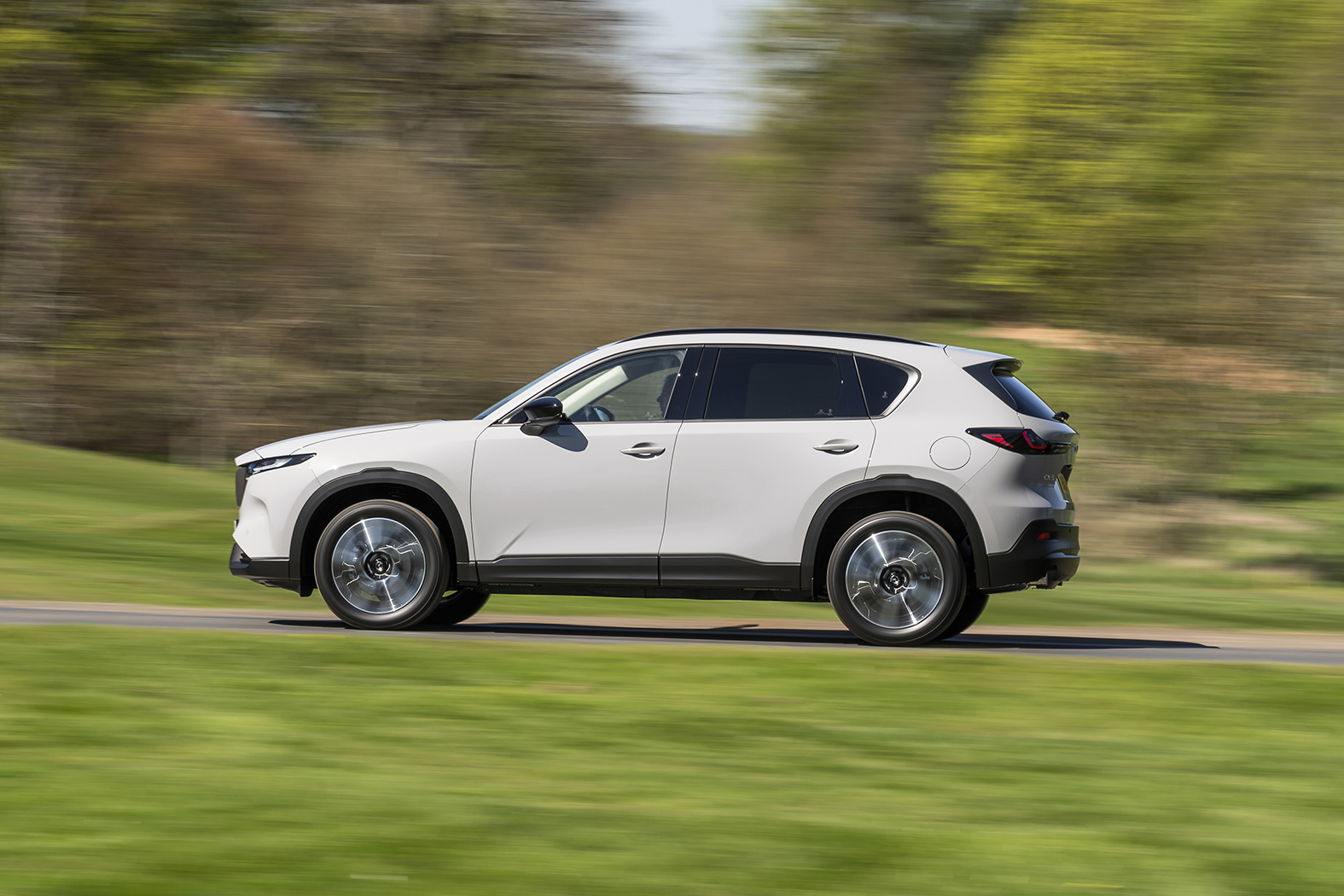
But the problem is that it has retained many of the features that worked well early on and now seem outdated. The large naturally aspirated engine may offer simplicity, but the modest performance and fuel economy, along with the lack of any noticeable hybrid assistance, make it feel like a CD in the age of music streaming. The only notable modernization resulted in the loss of the excellent rotary control of the infotainment system, suggesting that progress has brought unnecessary compromises.
Current CX-5 owners will recognize the formula instantly and will likely feel at home with the new model. It's unlikely to scare anyone, but it doesn't bring many surprises either. The question is whether this is enough in a category full of strong competitors. Would you choose it over a Nissan Qashqai, Skoda Karoq, or Cupra Terramar? Probably not. The CX-5 remains a very pleasant family SUV, but this time it feels more like a careful evolution than a leap forward that puts it at the forefront of the category, and its buyers probably deserve more.
Autonews


Nenhum comentário:
Postar um comentário