LADA

Purists will love it: Lada Niva is as durable as a Kalashnikov, produced for 50 years almost without any changes
When the Niva appeared in 1977, few could have guessed that this then Soviet, and now Russian, SUV would be produced almost half a century later and retain almost the same appearance. Has the end come after 50 years of service and 2.5 million units produced?
After patent photos of a possible new generation of the Lada Niva appeared in recent days, the question of how a car managed to stay in production for almost half a century has been reopened.
In an era when models change generations every few years, the Niva seems like a true example of a dinosaur of the automotive industry on the road. The Russian SUV has been produced since 1977 and, despite numerous modernizations, has remained faithful to the original formula.
While numerous cars have undergone complete transformations over the decades, the Niva has retained what it has become known for – compact dimensions, simple mechanics and serious off-road capabilities.
Updated to the last detail...That simplicity is one of the main reasons for its long life. From the beginning, the Niva was designed as a robust and affordable SUV capable of handling bad roads, snow and difficult driving conditions. Unlike many modern SUVs, the focus was never on luxury, but on functionality.
Although it looks almost identical to the original, the model has been modernized over the years. Over time, the Niva has received electronic fuel injection, ABS, power steering, airbags and a more modern interior, but the basic design has remained the same. So, in 50 years, the Niva has been updated minimally, just to make some basic progress.
Economy also plays a big role. The Russian AvtoVAZ has long since paid off the development and production tools, so the Niva can be produced relatively cheaply. That is why it is still one of the most affordable true SUVs on the market today.
Over time, the Niva has also acquired cult status among off-road enthusiasts, similar to the Mercedes G-Class or the Suzuki Jimny. Many appreciate its "old school" character and the fact that most repairs can be done without complications with electronics.
Although there has been talk for years about a completely new generation, the original Niva still survives thanks to a combination of low price, simplicity and capabilities that modern SUVs often no longer have.
Lada Niva 2028: almost a Duster...Other interesting design details include the headlights joined by the grille and embedded in the body to avoid damage during off-road driving. Curiously, the turn signals are located on the lower part of the hood. The bumpers appear robust, and the two-tone alloy wheels provide a certain exclusivity.
On the side, we observe the rear door handles integrated into the C-pillar and the roof rack and widened fenders. Note the taillights, another touch paying homage to the original Niva, low and horizontal. The tow hooks are completely visible.
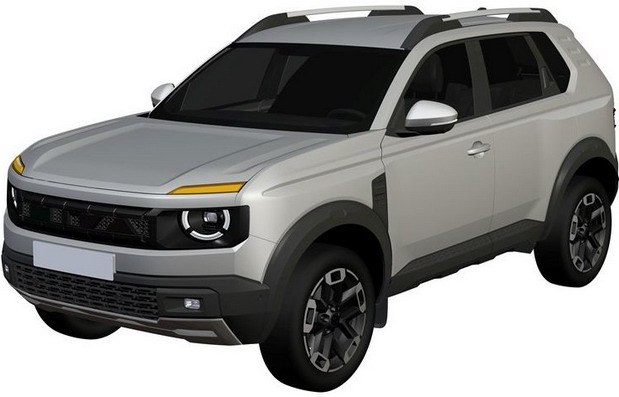
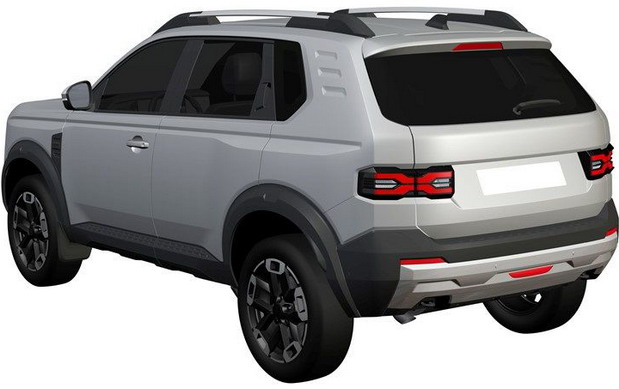
Does this remind you of the Duster? It's perfectly logical, because the new Niva project initiated by the Renault Group was based on the Romanian SUV and its platform, as I mentioned earlier. We assume the length is also similar, around 4.3 meters.
What we have seen in the patent drawings, which were leaked recently, show that, at least on paper, the new Niva already exists. However, the interior has not been revealed, but given the obvious similarity to the successful Duster, it would not be surprising if this model is a copy. It all depends on the components that Renault left at the Togliatti factory, so it would not be unusual to install parts from another model.
However, different rules apply to the engines. We know that they will be gasoline, but it is less likely that they will be the same engines that the Romanian brand uses in European markets. Lada still has older and less efficient 1.6 and 1.8 liter engines on the shelves, so they will likely be found in this SUV, whose arrival date is not yet known.
Autonews


Nenhum comentário:
Postar um comentário