HYUNDAI
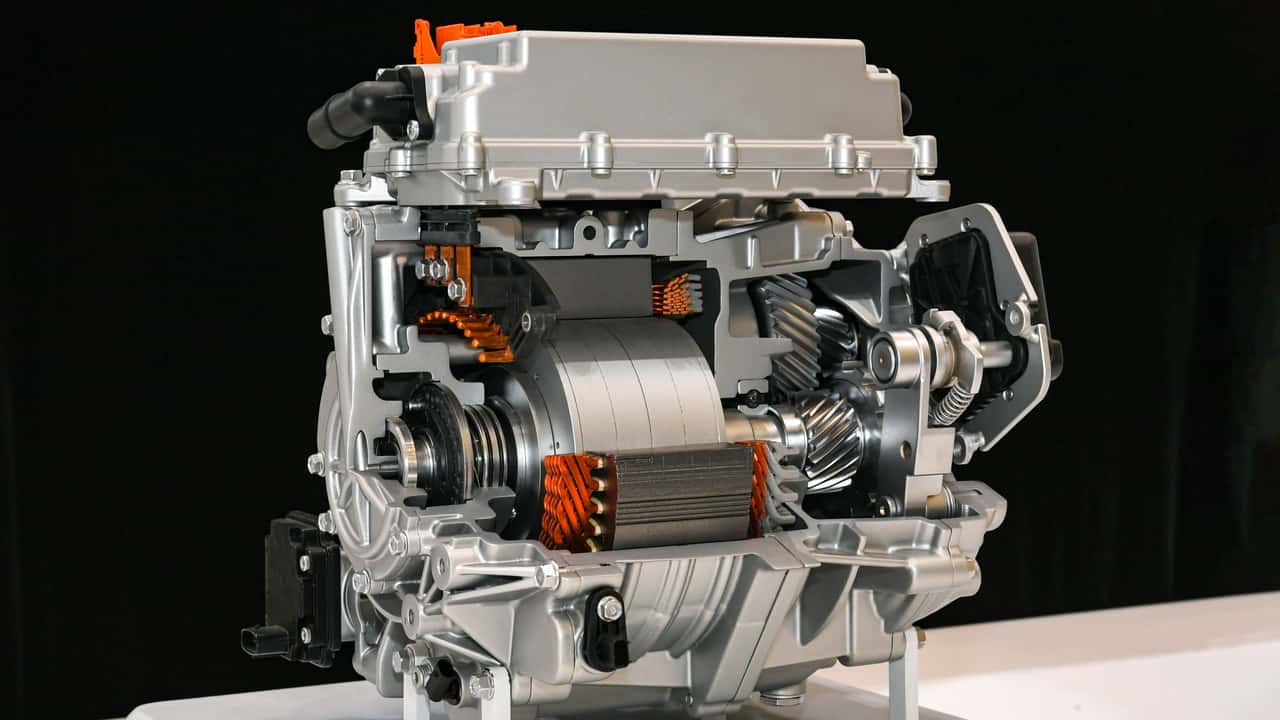
Hyundai Mobis: Hyundai's new modular electric powertrain
Hyundai Mobis has developed a new generation of electric powertrain that can tackle one of the main obstacles to the expansion of electric vehicles: cost. By integrating various components into a more compact and standardized assembly, the technology promises to reduce production costs, simplify repairs, and pave the way for more affordable models in the future.
The new system delivers 160 kW, equivalent to 215 hp, and combines an electric motor, inverter, and reduction gear in a single housing. This is the second integrated assembly developed internally by Hyundai Mobis, following a 250 kW version. The company is also preparing a third 120 kW configuration, aimed at compact and more affordable vehicles.
The major difference lies in the standardization of components. Instead of designing each system in isolation, Hyundai Mobis has started using interchangeable elements between different powertrains. Stator, inverter, and power module can be shared between various vehicles, reducing costs, speeding up production, and simplifying the industrial process.
The company also incorporated structural improvements, including a new cooling system and more efficient power semiconductors. According to Hyundai Mobis, the result is a system with 16% higher specific power than comparable solutions, while the total volume has been reduced by almost 20%.
Hyundai Mobis, the parts and engineering division of Hyundai Motor Group, has unveiled an integrated 160 kW (218 hp) electric powertrain for the automotive industry in general, not just its own brands.
The PE system is the EV equivalent of an internal combustion powertrain, comprising motor, inverter and reduction gear. Hyundai Mobis previously built such systems to customer designs, but has now developed its own component-level intellectual property, allowing it to propose proprietary models to OEMs. Some overseas customers have shown early interest, the company said.
A core element of the engineering work is standardisation and modularisation of key parts, including the stator, inverter and power semiconductor module. Compared with bespoke per-vehicle development, the platform-style approach is positioned as more efficient as EV model counts grow. Hyundai Mobis said specific power has improved by about 16% and overall system volume has fallen by nearly 20%, with new cooling technology applied to the motor and a power module designed for higher energy efficiency.
The 160 kW unit, equivalent to 215 hp, is described as suitable for most EVs currently in mass production, with twin-axle deployments doubling output. The development extends Hyundai Mobis’ electrification portfolio from battery systems into drive systems.
The system combines an electric motor, inverter, and gearbox in a single structure that is approximately 20% more compact than similar systems, with a 16% higher specific power density. The platform was designed as the basis for the group's expansion to 22 to 36 electric models by 2030.
The 160 kW power output is sufficient for a mid-size electric sedan or crossover. But more important than the power itself is the engineering approach. Hyundai Mobis has standardized the starter motor, inverter, and power modules so that they can be used at different powertrain levels. It's a kind of interchangeable parts strategy for electric motors. The company claims that improved cooling and more efficient power semiconductors are responsible for the smaller size and higher power density.
The system also supports all-wheel-drive configurations with two motors, with one unit on each axle, which would effectively double the total power in high-performance models.
The 160 kW unit sits in the middle of a three-tier offering. A high-performance 250 kW (340 hp) version is planned for 2025, while a 120 kW (163 hp) variant for compact cars is planned for the first half of 2026. These are designed to cater to everything from small hatchbacks to large SUVs, utilizing common tooling and parts – a significant way to reduce the cost of producing electric vehicles.
Hyundai Mobis is also offering the platform to companies outside its own group. Mercedes-Benz and Stellantis are already confirmed customers for Mobis' battery systems, and the supplier is also seeking contracts with other automakers for its motor lineup. A battery factory is being built in Spain in partnership with the Volkswagen Group.
In practice, this means that future generations of Hyundai, Kia, and Genesis vehicles will be able to use more compact, efficient, and cheaper-to-produce drive systems. As many electric models adopt two motors, one on each axle, this architecture can also be applied to high-performance vehicles more easily.
Hyundai Mobis has developed a 160-kW Power Electric (PE) system intended for passenger electric vehicles (EVs), expanding its lineup of integrated electric drive systems.
The company previously developed a 250-kW PE system for higher-performance EV applications and plans to complete development of a 120-kW version for smaller EV platforms during the first half of this year.
The PE system combines the motor, inverter, and reduction gear into an integrated electric drive unit comparable to the powertrain in an internal combustion vehicle. Hyundai Mobis said it developed the system architecture and key component technologies internally, including the drive motor stator, inverter, and power semiconductor modules.
The company focused on standardizing and modularizing core components so the systems can be adapted across multiple EV platforms rather than developing unique drive systems for each vehicle model. This approach is intended to support scalability and manufacturing efficiency as automakers expand EV lineups.
The 160-kW system produces approximately 215 horsepower and is intended for use in mainstream passenger EVs. Dual-motor configurations using front and rear PE systems could provide higher total output for all-wheel-drive or higher-performance applications.
According to Hyundai Mobis, the system improves specific power, or power output relative to weight, by approximately 16% while reducing overall volume by nearly 20% compared with previous designs. The company attributed the changes to modularized components, revised cooling architecture and updated power semiconductor modules intended to improve efficiency.
Hyundai Mobis previously completed development of a 250-kW PE system intended for higher-output EV applications. The company also plans to introduce a smaller 120-kW version focused on compact EVs and smaller mobility platforms.
With the 120, 160, and 250-kW systems, Hyundai Mobis is building a modular lineup of electric drive systems intended to support a range of passenger EV applications from compact vehicles to higher-performance platforms.
Another potential benefit is in maintenance. The modular design tends to simplify diagnostics and replacements, which can reduce repair time and costs over the vehicle's lifespan.
For the consumer, the most important consequence is direct. By reducing industrial costs and gaining scale, Hyundai creates conditions to offer, in the coming years, more affordable, efficient, and technologically advanced electric cars. In a market where price remains one of the biggest barriers to electrification, this type of advancement often has a much greater impact than the technical specifications suggest.
Hyundai Mobis is rapidly advancing EV powertrain technology, developing 120kW to 250kW Power Electric (PE) systems—integrating motors, inverters, and reduction gears—for global automakers. A key focus is their 160kW, 215-horsepower unit, designed for widespread electric vehicle applications, as well as innovative, high-efficiency "in-wheel" motors for independent, all-wheel control.
Key innovations & technologies(below):
PE systems (E-Powertrain): Hyundai Mobis has developed a 160 kW system suitable for most mass-produced EVs, featuring a 16% improvement in specific power and a 20% reduction in volume compared to previous models.
In-wheel system: This technology places the electric motor directly inside the wheel, enhancing energy efficiency and allowing for independent control of all four wheels.
e-Corner module: Combined with in-wheel motors, this module enables advanced steering capabilities, including 90-degree turning (crabbing) for parallel parking and "zero spins".
Hydrogen fuel cell components: The company is a leader in mass-producing key components for hydrogen-powered vehicles
Details of the 160 kW modular electric propulsion unit developed by Hyundai Mobis.
Integrated Design: The system combines electric motor, inverter, and reduction gear in a single compact housing.
Performance: This unit produces approximately 215 horsepower.
Modularity: The design allows for interchangeable components such as stators and inverters between different powertrains to reduce costs.
Efficiency: Compared to previous designs, this unit is approximately 20% smaller and offers 16% higher power density.
Autonews


Nenhum comentário:
Postar um comentário