YAMAHA
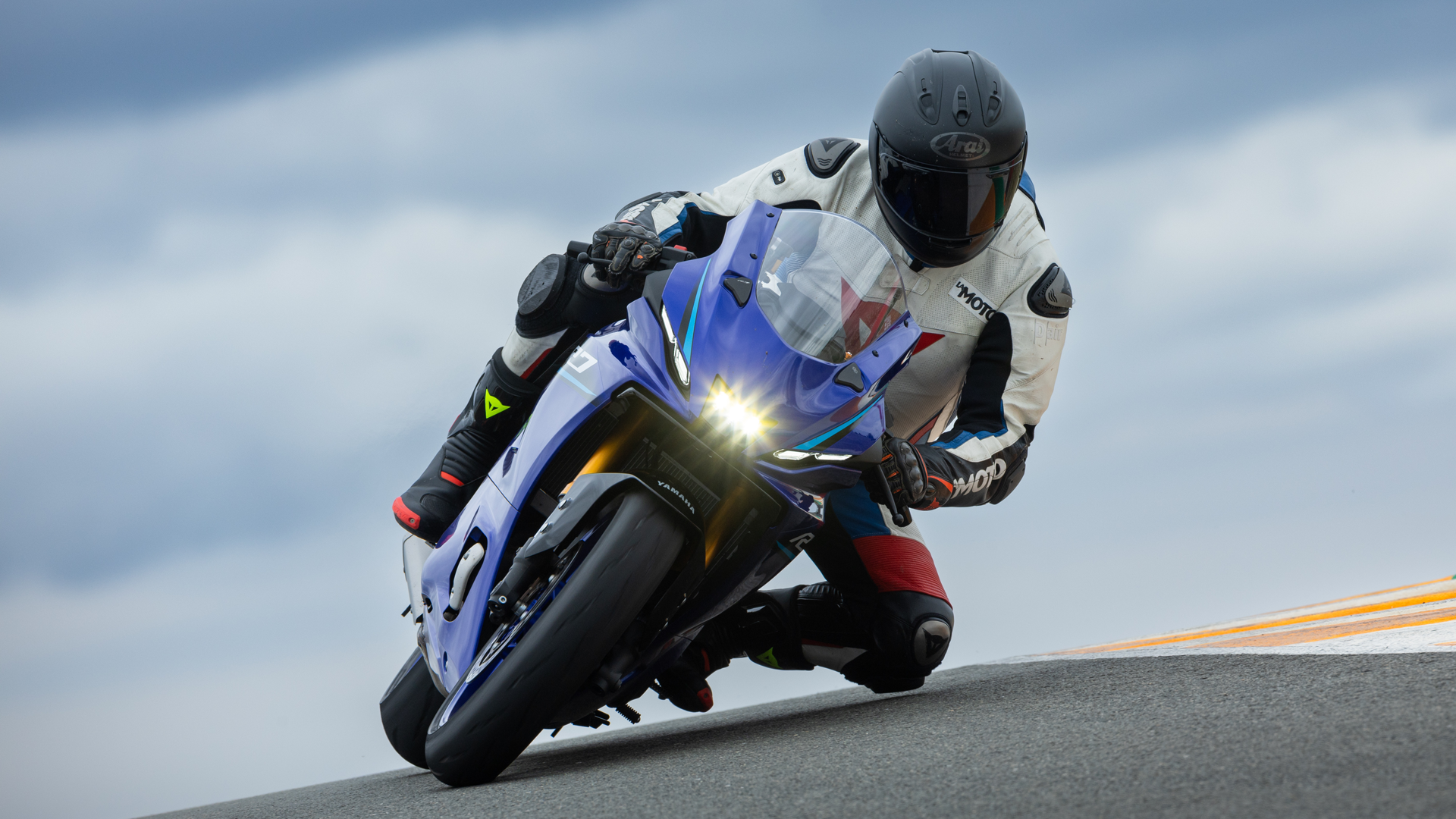
2026 Yamaha R7
The 2026 Yamaha R7, whose technical specifications you can find at this link, has become one of the most common motorcycles in racing, especially in categories that share a common model. It is a constant presence on the grids of the World Rally Championship (WCR), the Women's World Rally Championship (WMC), and was also a key component of the FIM Intercontinental Games in 2024, the Yamaha R7 Cup itself, and is now part of the World Motorcycle Championship (WSM), which replaced the Supersport 300 category. Furthermore, considering that its engine, the Yamaha CP2, will equip the Moto3 bikes in the MotoGP World Championship from 2028, we are talking about the most popular motorcycle in mid-displacement racing.
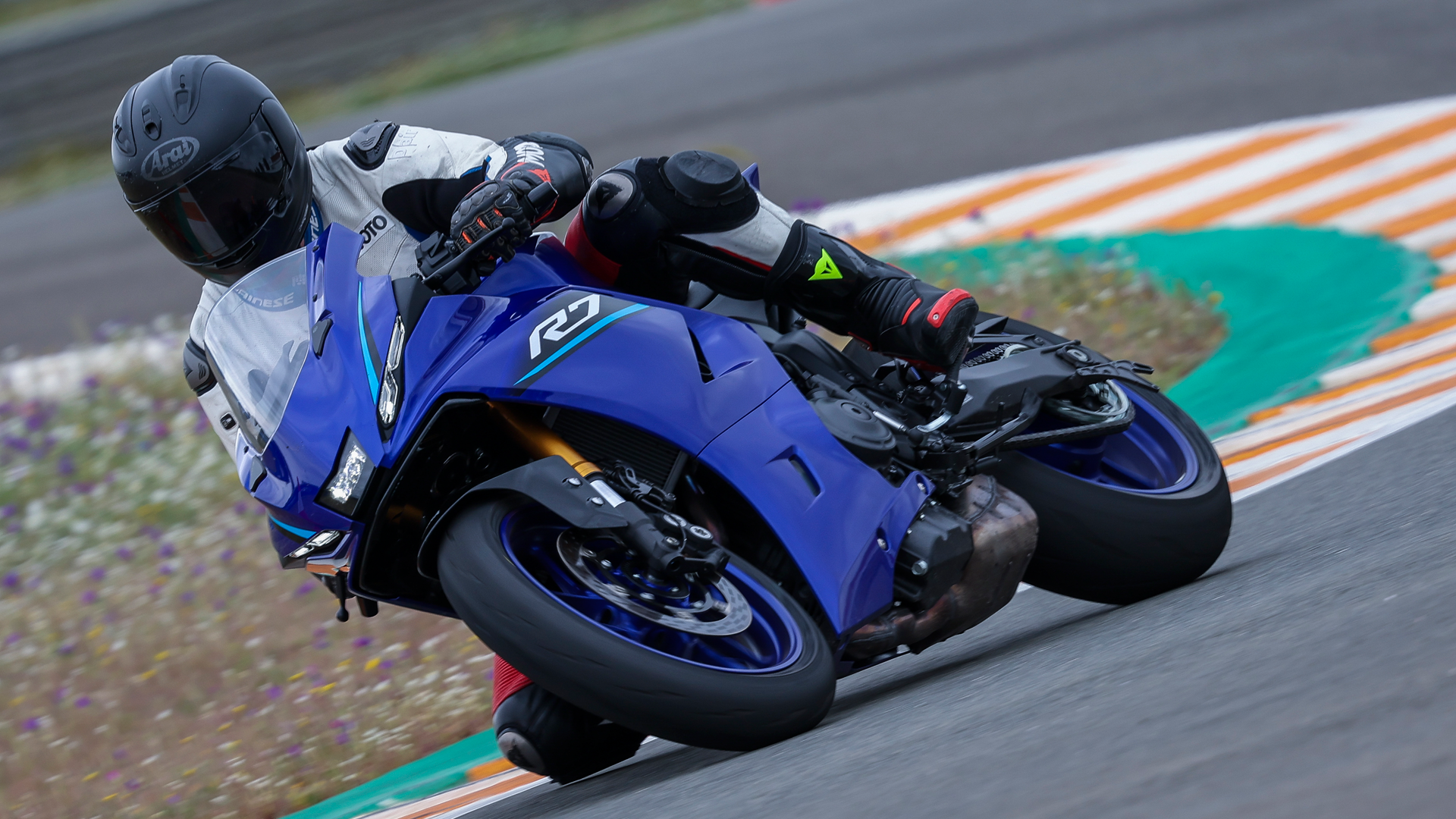
Looking ahead to 2026, the R7 has undergone modifications that go far beyond a simple update to meet Euro 5+ emissions standards and some minor adjustments. Almost all the changes focused on making it a more efficient track bike, especially with the right setup. If you consider what the standard model might lack, you'll realize that everything is easily solved. It's not the most powerful, but in the fourth quarter, Yamaha will release a GYRT parts catalog that, combined with the necessary modifications, will transform it into a true racing machine. The basic model already has a stiffer frame, good brakes, and a fully adjustable fork.
In any case, the R7 is not a motorcycle created exclusively for racing, but rather a sports bike whose main use is on the road, and which can also be enjoyed on a track, especially if it's a relatively small and winding track where pure performance isn't essential, as is the case with the Circuito do Sol in Portugal, a track that has been remodeled and now also hosts motorcycles, which we will discuss later.
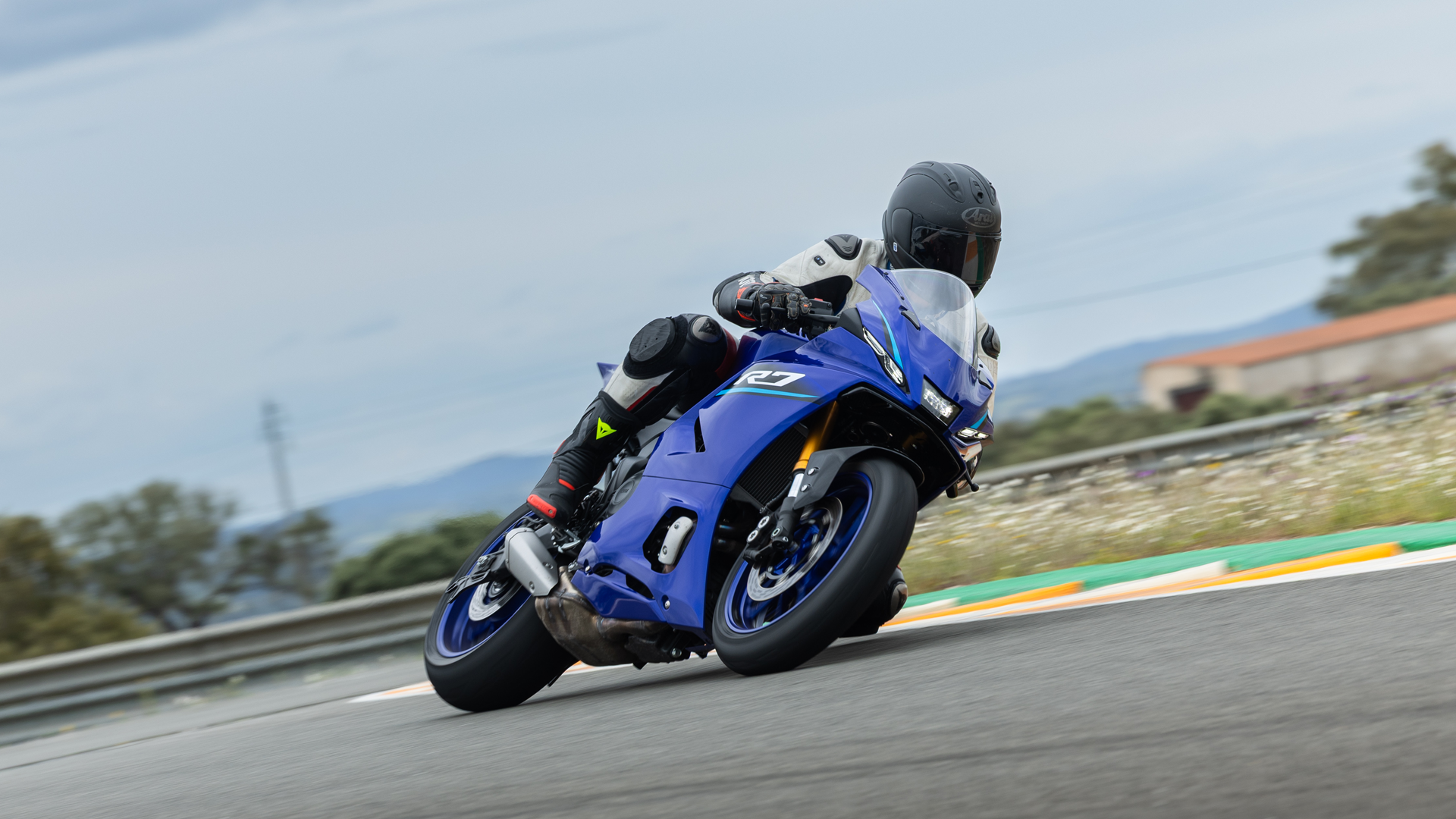
The changes in the 2026 version have much in common with its siblings, which share the 680cc two-cylinder CP2 engine. The arrival of the electronic throttle (ride-by-wire) and a six-axis IMU allowed the implementation of a high-quality set of electronic driver aids, especially for its class, which also work effectively in corners. Traction control, slide control, engine braking, wheelie control, speed control, pit lane speed limiter and launch control are available.
The system features bidirectional gearshift assist, which allows you to reverse the lever operation for track-like gear changes, upshifting when pressing the lever. In addition, it offers three pre-programmed maps and one customizable map. The track mode also disables the rear wheel ABS, all controlled by a new joystick and a TFT display with multiple views.
Mechanically, changes were made to the airbox and its ducts, as well as to the ECU mapping, the clutch and the gearbox gears. Maximum power remains at 73 hp at 8,750 rpm, but the torque curve has been improved by reinforcing the weaker areas, especially in the lower half of the rev range.
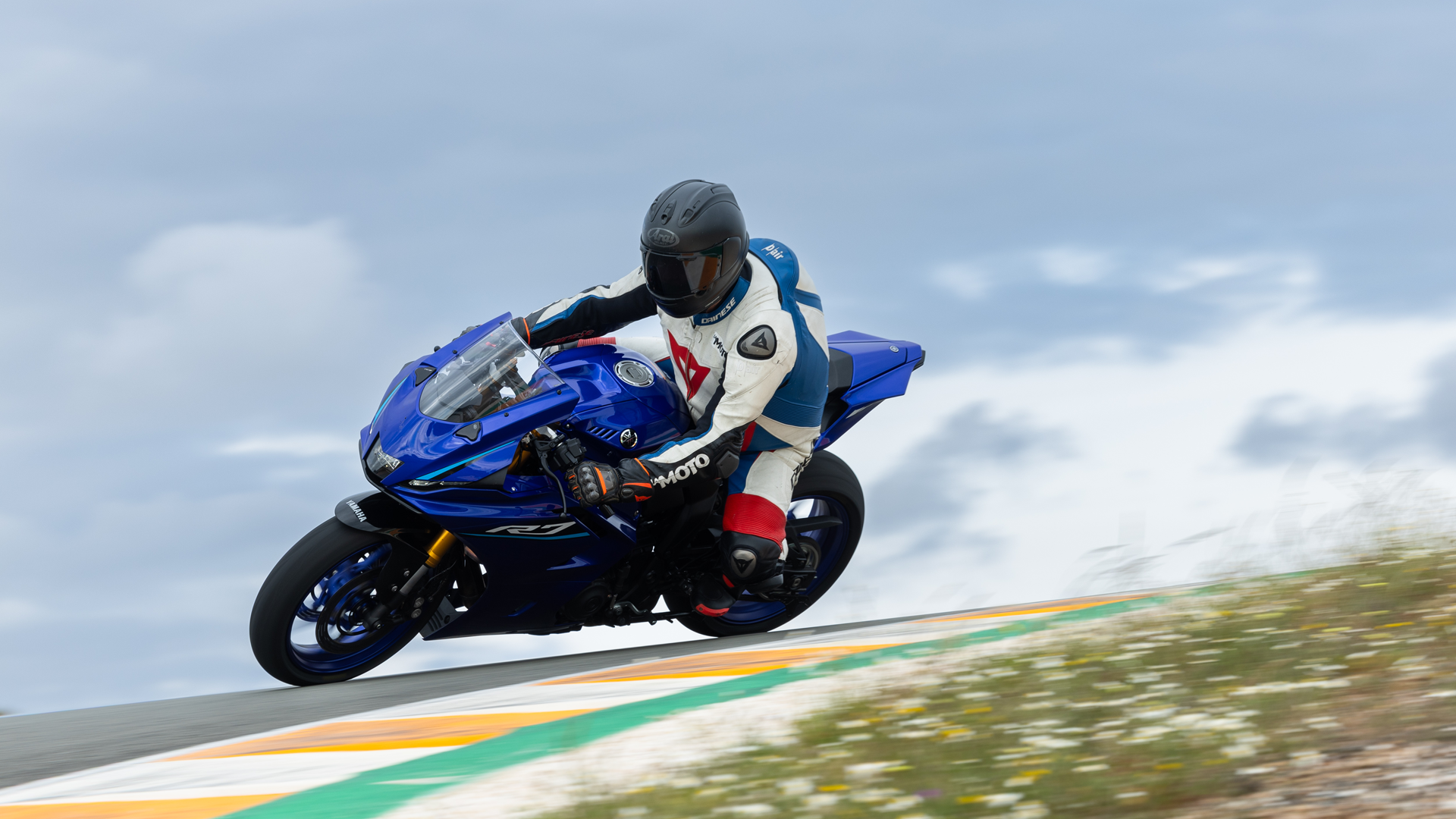
The chassis follows the same design, with a large, split steel center beam weighing 15 kg. The architecture is the same, but with modifications to achieve a 12.9% increase in longitudinal stiffness, 13.2% in torsional stiffness, and 2.3% in lateral stiffness. The side plates have been replaced. Like its sibling models, it features a new asymmetrical rear swingarm with 30% more torsional stiffness and 15% more lateral stiffness. The steering head is made of lighter aluminum, with a perforated top plate.
The KYB front suspension is fully adjustable, with lighter and slightly stiffer springs, maintaining a constant of 17.5 N/mm, and features lighter piston rods and axle. The rear shock absorber operates with new connecting rods and, in addition to preload, offers rebound adjustment. The front brake calipers remain the traditional ADVICS units, complemented by a 16 mm Brembo radial master cylinder with a separate reservoir, and a Brembo master cylinder at the rear. The wheels are centrifugally forged, reducing their weight by almost 500 g.
Changes have also been made to the riding position, focusing on improving comfort on the road. The handlebars are positioned 3.6 mm higher, 8.4 mm further back and 12 mm wider. The seat is slightly lower, at 830 mm, with new material and a different shape for better access. The fuel tank is shorter, providing more room to maneuver and better lateral grip, with a capacity of 14 liters. The clutch lever has 15 adjustments.
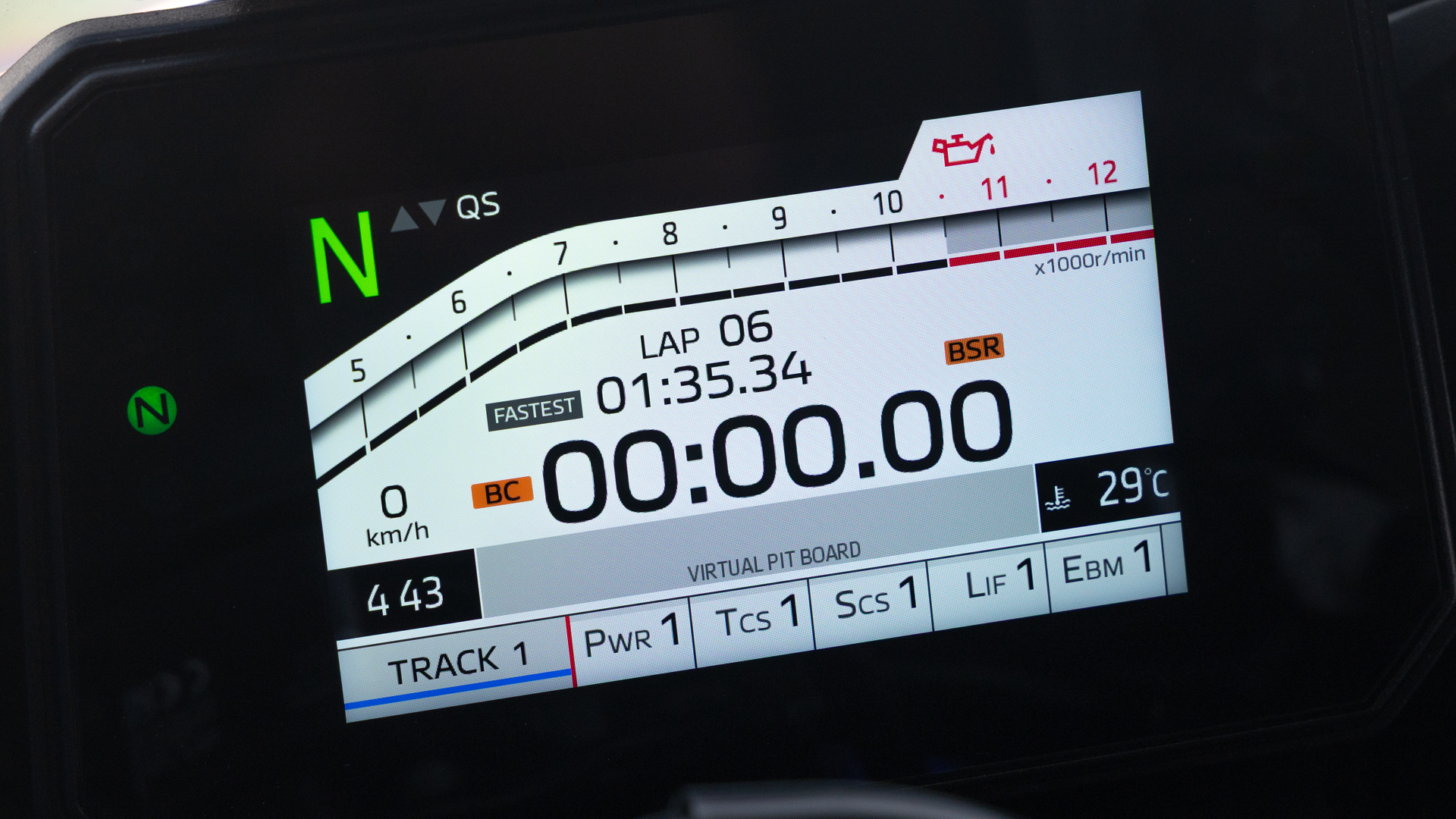
A key innovation is the new 5-inch connectable TFT screen, which offers four display options and a track mode with lap times and fastest laps. Three apps are available: Garmin's app for using a navigation system on the screen, Yamaha's My Ride app with new features for electronically adjusting rider aids.
Telemetry...The new Y-Track Rev app, with GPS, displays lap and sector times, as well as engine data, speed and position, and can be used for telemetry. There are 10 free sessions, after which it costs €6.99 per month. The front bodywork has been refined with turn signals integrated into the mirrors and a lower front spoiler. The rear has also been modified. Finally, there are several accessories available: four packages and an exclusive track kit with mirror covers, rear ABS removal, reverse gear shifting and passenger footrest removal.
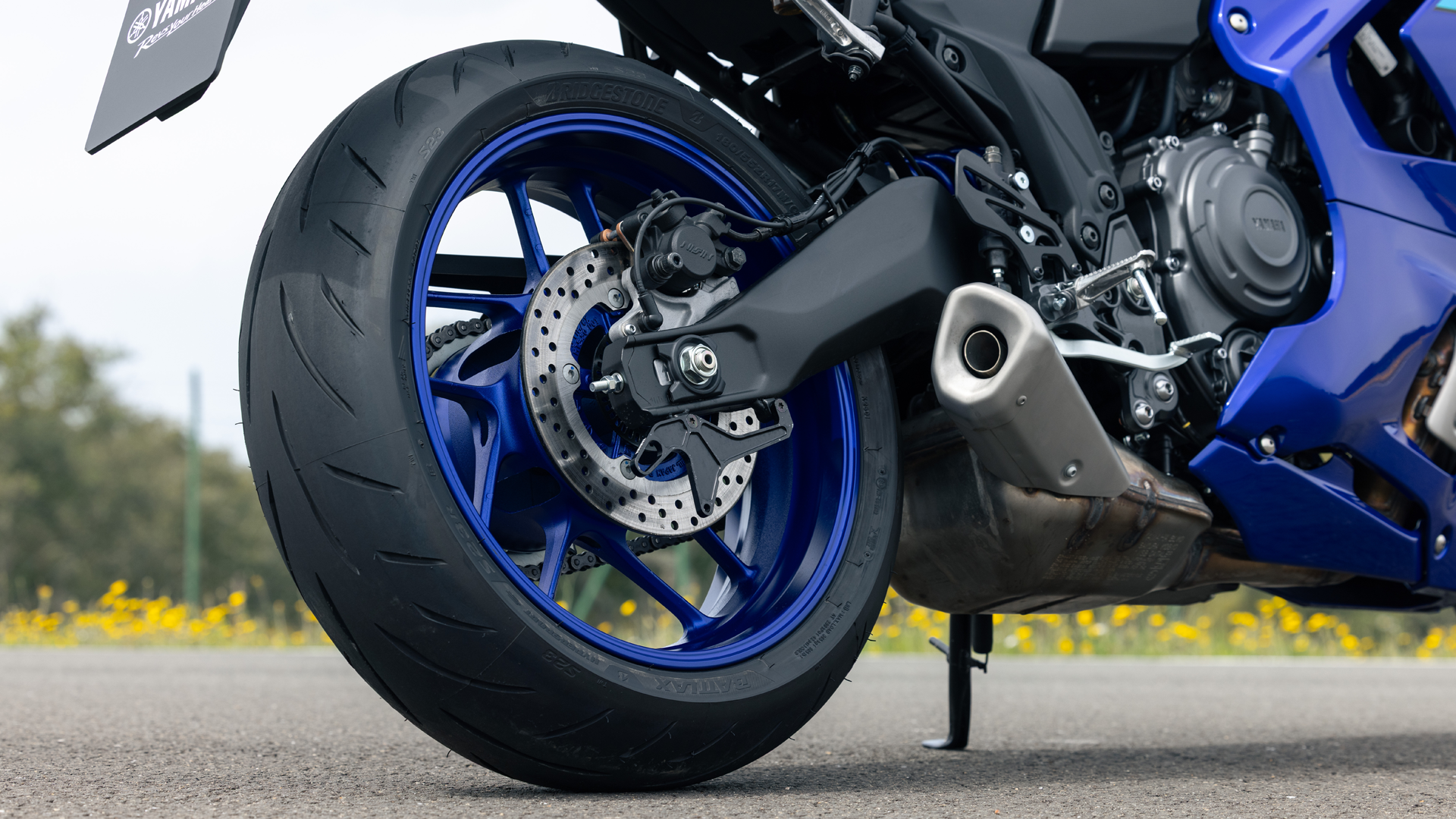
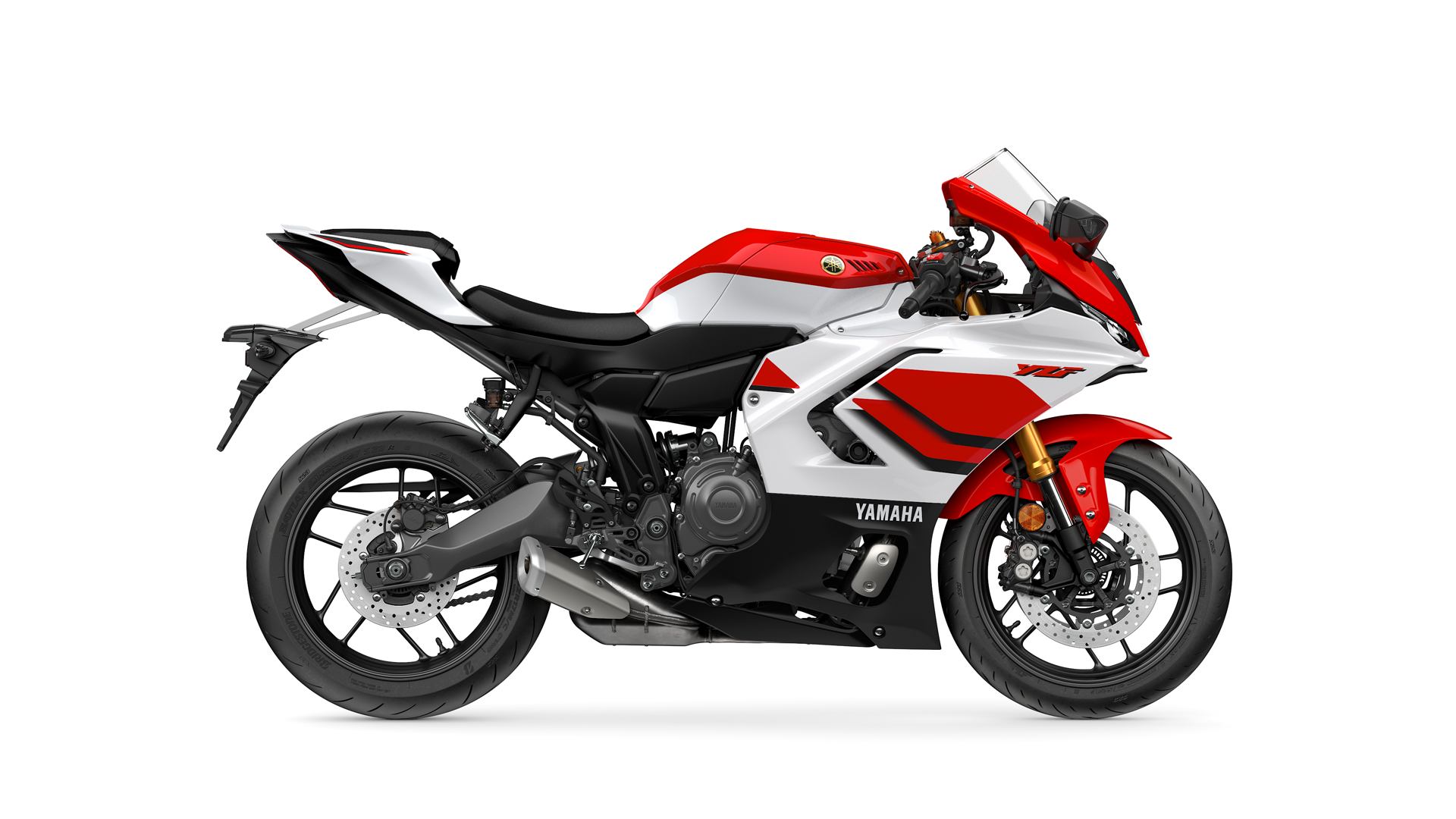
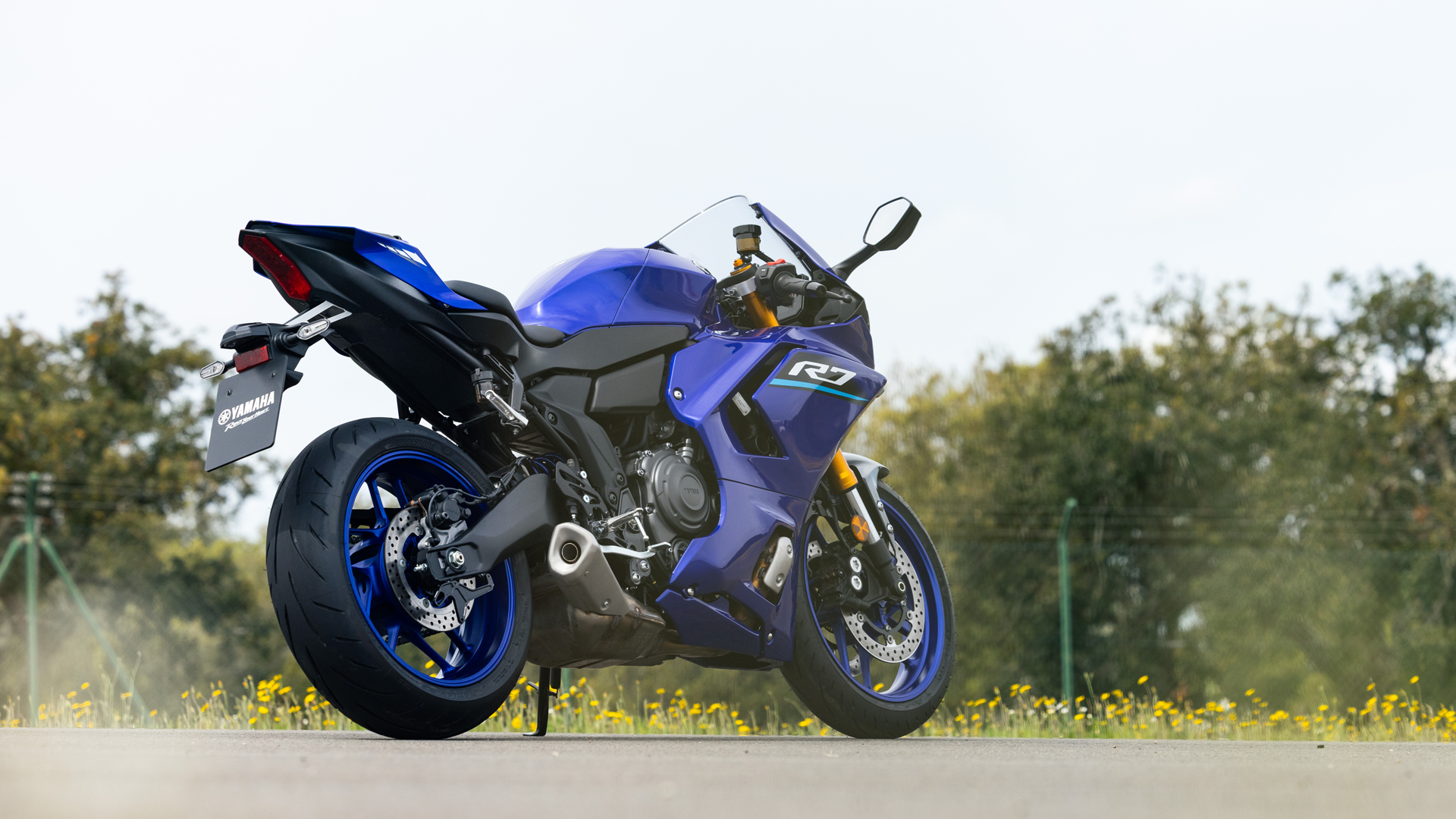
There are three color options: black, Yamaha racing blue, and a special edition called the Yamaha R7 70th Anniversary, whose technical specifications you can find at this link. This edition comes in white and red and is inspired by the paint scheme of the YZF-R7 superbike from the end of the last century. The latter costs €300 more than the €10,499 of the standard colors.
The Yamaha R7 was not born as a racing motorcycle, but rather as an accessible, fun, and efficient street sports bike, in contrast to the high-tech, high-priced, and high-performance superbikes outside the context of racetracks. This philosophy remains, with continuous improvements in the two areas where it needs to excel.
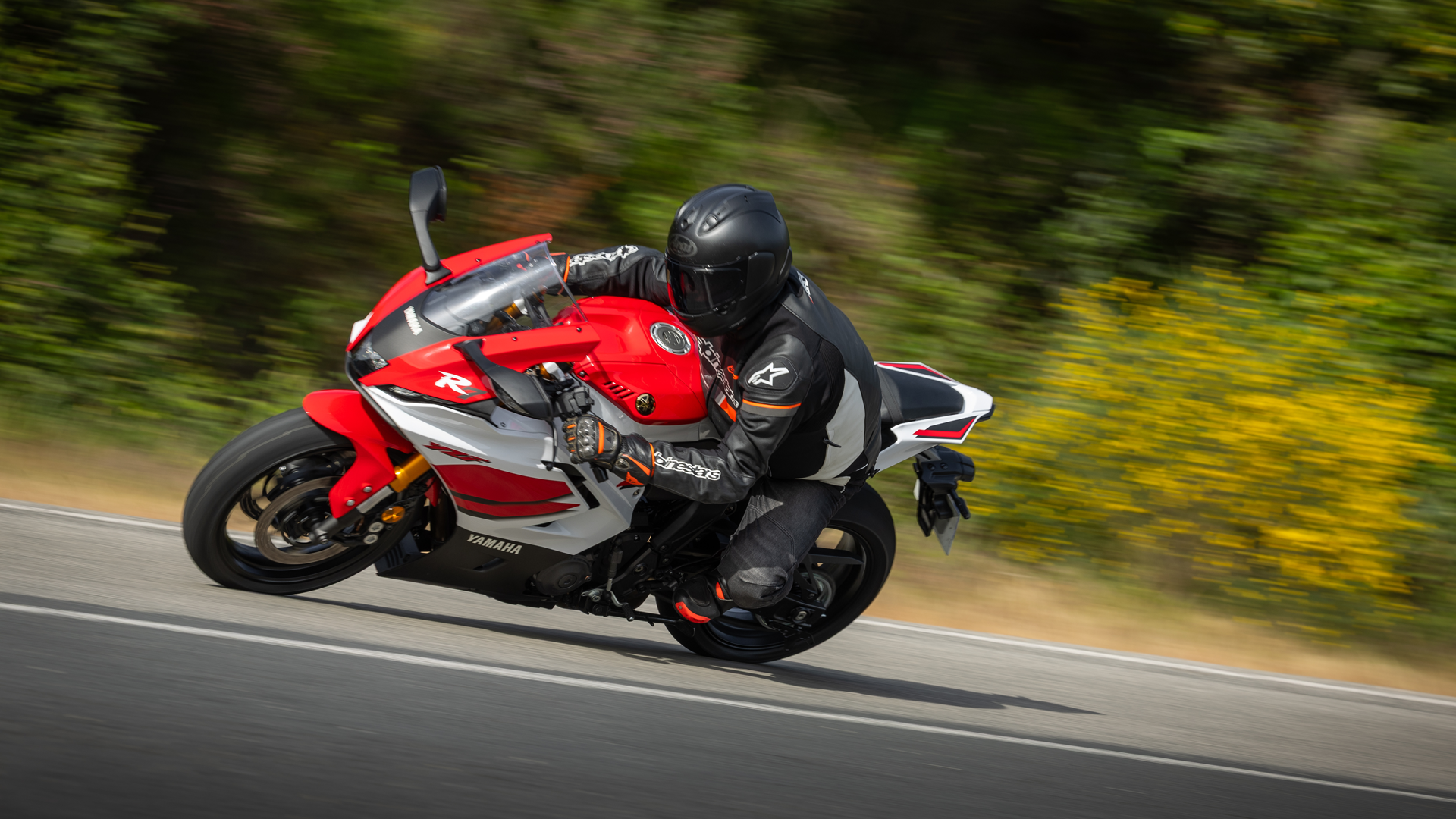
We were able to carry out this initial test both on public roads and on the track, in both cases on quite challenging terrain: the Sierra de Aracena in Huelva, Spain, and the neighboring Circuito do Sol in Alentejo, Portugal. The electronic implementation, the main innovation of the 2026 version, is also noticeable on public roads, as it includes not only driver assistance systems that increase safety and efficiency, but also features such as cruise control and the ability to view the navigation system on the instrument panel.
The riding position hasn't changed much, but enough to avoid fatigue from a sporty position with clip-on handlebars on a 200 km journey, which is quite a lot. The bubble windscreen offers some protection, and the position is classic for a sports bike, allowing you to lean forward and, with the handlebars mounted directly on the front suspension, providing good sensitivity and feedback from the front wheel.
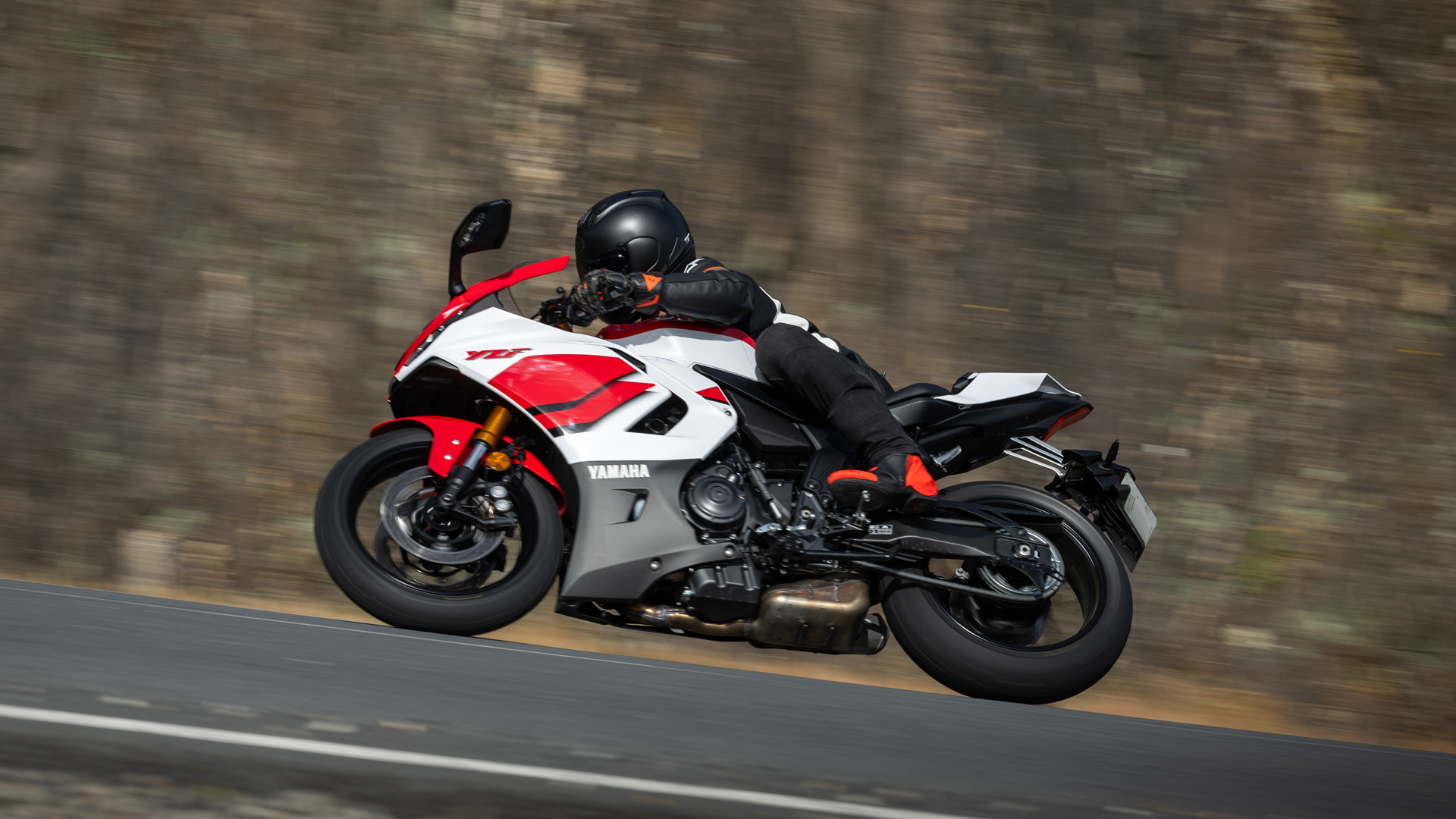
The engine maintains its characteristics, with very linear power delivery, good response at medium revs and sufficient maximum power, although, in the case of a sports bike like the R7, a higher rev range with more power wouldn't hurt. The 73 hp can be well utilized, especially on winding roads, where the twin-cylinder engine allows for smooth starts from mid-range RPMs. The clutch assist works well and allows you to forget about the clutch, which has progressive engagement, but it becomes a little stiff over time.
Sporty touch...The suspension is firm, but even on really rough and uneven stretches, in addition to the vibrations felt from constant impacts, you don't notice any stability problems, even on tight curves. It's also true that the factory Bridgestone Battlax S23 tires are more than adequate for this motorcycle's performance.
The 14-liter fuel tank isn't enough for long distances, but it's also not exactly a touring bike, nor is it suitable for trips with a passenger for more than a reasonable distance. The different riding modes make a small difference, but the engine always responds quite smoothly and with the same power, both in Sport and Street modes.
Upon entering the circuit, equipped with even sportier Bridgestone RS12 tires and a track kit that removes some elements and alters the gear shift direction, as well as eliminating rear ABS and reducing controls to a minimum, you encounter a truly fun motorcycle, especially on a track like the Circuito do Sol, which is characterized by having a series of blind corners with changes in lean angle.
On the R7, with the original transmission ratio, it was only possible to reach fourth gear on the fastest sections, which required agility and sensitivity to the chassis to change direction with the extended suspension at the top of the climbs. Under these conditions, the bike does not suffer from the lack of power at high revs that it would suffer on a fast circuit, because, although the engine performs well until it reaches the maximum power range, just below 9,000 rpm, it does not offer much more beyond that. There are engines of the same displacement with more power, but the R7's is certainly characterized by its ease of use for any type of rider. Its suitability for the track is proven by the lap times that these bikes achieve in various championships.
One thing that has clearly improved is the relationship between the bike and, in this case, the rider. The instrument panel in track mode displays lap times, showing the last laps and the best time, and you can easily adjust the controls. The suspension has sensitive adjustments, although to improve it even further it is necessary to change the shock absorber, which, due to cost, is not specifically designed for the track, so the classic Öhlins will be the obvious solution.
Although ABS is still present on the front wheel, it is almost imperceptible, and its cornering assistance function increases safety for those who do not have much experience. In short, it is a really fun motorcycle, perfect for those who want to accelerate on the track without worrying about power and speed, simply enjoying the curves, exploring the limits, braking hard and accelerating the engine to the maximum.
The Yamaha R7 has become a benchmark among the new mid-displacement sport bikes that have simplified the segment. It maintains the same base as models like the MT-07 or the Tracer, guaranteeing its versatility, but at the same time, it includes all the details that allow it to specialize in its function and make it more than adequate for track riding, with much more ease and confidence than a high-powered, expensive and more complex motorcycle.
by Autonews


Nenhum comentário:
Postar um comentário