BMW
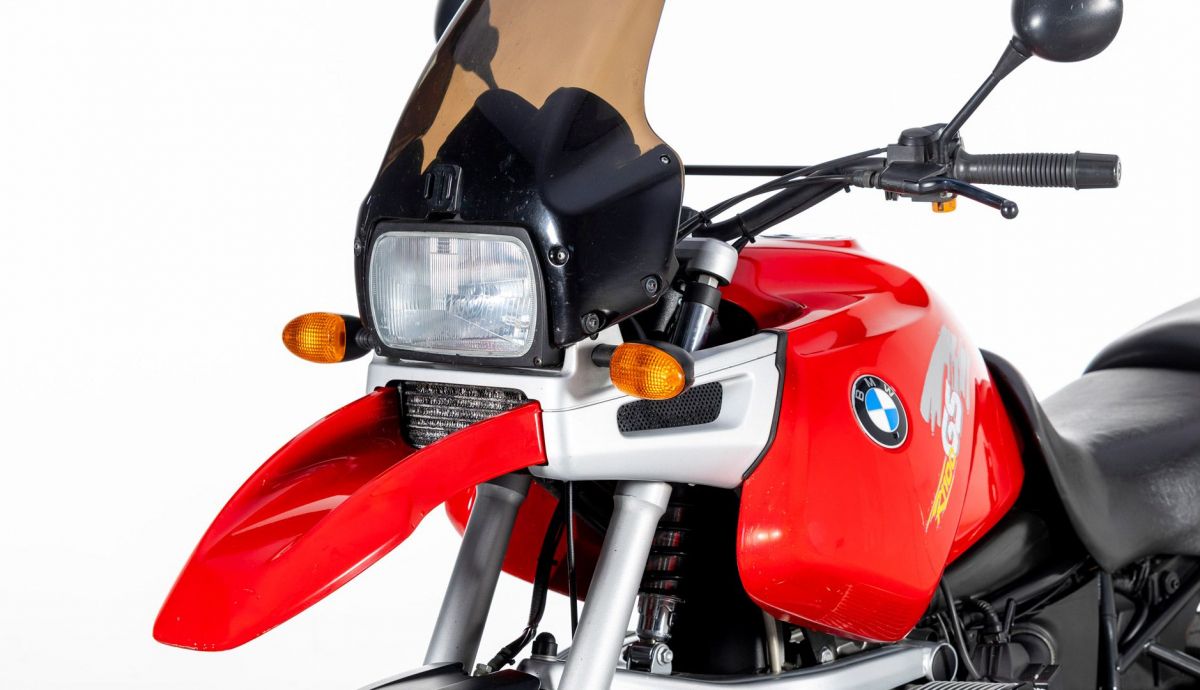
BMW R 1100 GS 1994: the biggest trail bike of its time
When BMW Motorrad released the first images and data of the R 1100 GS in the fall of 1993, journalists at the time commented that those responsible for the project had gone mad.
Although BMW had already launched adventure bikes like the R 80 GS and the R 100 GS, the then-new R 1100 GS clearly raised the bar in terms of performance, weight, and dimensions. With 80 hp and a curb weight of almost 250 kg in the ABS version, this German machine clearly stood out from all adventure bikes sold until then.
Due to its generous size, the bulky aquarium shape, and the raised dorsal fin that, in a way, resembled a trunk, it soon received the nickname "mammoth" from many of its admirers.
Despite including the initials GS for "Gelande / Straße" (rural road in Portuguese) and although it allowed circulation on dirt roads, what stood out most was its effectiveness when driving on asphalt and, even more so, on secondary and tertiary roads, regardless of their poor condition.
In fact, due to its handling and driving comfort, it came to be considered the best BMW for road trips, even surpassing the R 1100 RS that BMW had launched on the market a year earlier.
Despite arriving at a time when it seemed that the passion for trail bikes had faded and, more especially, after the "boom" that this type of motorcycle experienced in the second half of the 80s, the R 1100 GS conquered its space, becoming one of the most desired high-displacement motorcycles.
It is true that its beginnings were not easy, but BMW persisted until it convinced the public that it was a very complete motorcycle. Proof of this persistence is that it remained on the market unchanged for five years, until it was replaced by the R 1150 GS in 1999. Today, seeing the success of maxi-trails and the variety of models available, we can safely say that the star of this Classic Club showed the way to other manufacturers.
As a legitimate member of BMW's "R" series, it was equipped with a horizontally opposed two-cylinder boxer engine. However, this was the only feature it shared with the previous R 100 GS, as everything else was new, boasting several highly innovative aspects.
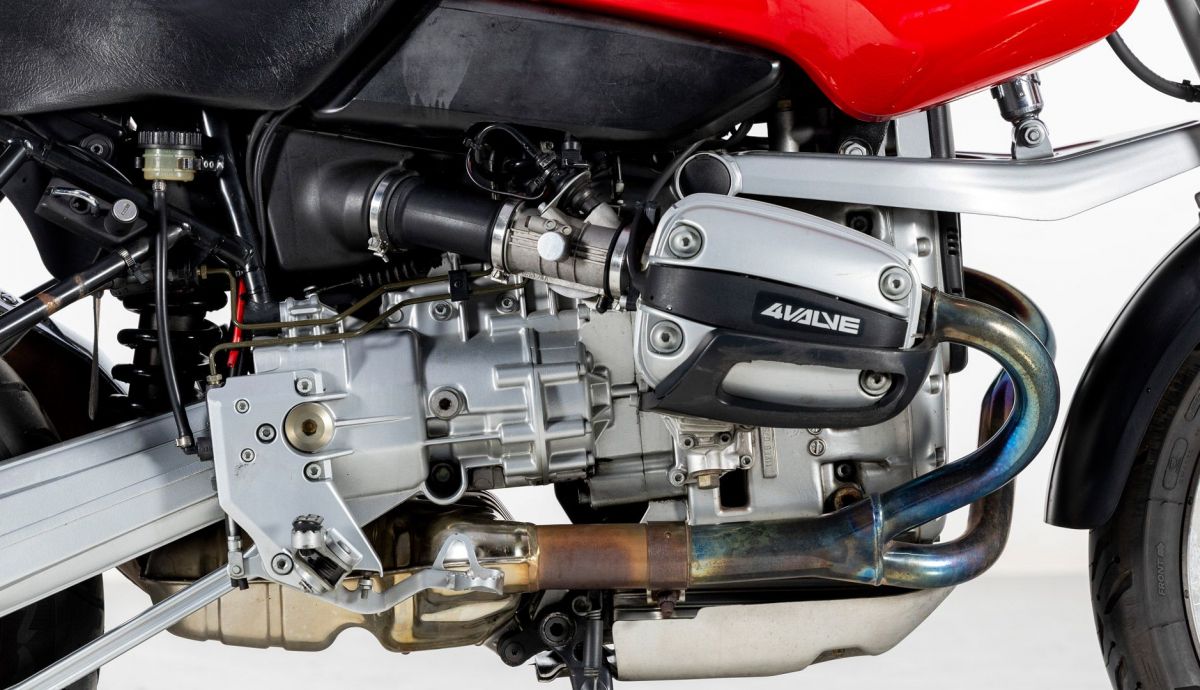
With a 1,085 cc engine, a maximum power output of 80 hp at 6,750 rpm and mixed air/oil cooling, the unprecedented twin-cylinder engine featured cylinder heads with four valves actuated by an overhead camshaft.
Fuel was supplied by a Bosch Motronic MA 2.2 electronic fuel injection system, which controlled ignition and regulated the air-fuel mixture based on throttle position, engine speed, crankshaft position, atmospheric pressure, and ambient and oil temperatures. The "2-in-1" exhaust system terminated in a prominent muffler positioned slightly above, on the left side.
Like other models manufactured by BMW up to that point, the R 1100 GS boxer engine had a five-speed gearbox in a secondary crankcase located behind the engine, with a single-disc dry clutch positioned between the two crankcases.
The secondary transmission was done by an articulated drive shaft, nicknamed Paralever, a system that successfully debuted on the R 80 and R 100 GS, which smoothed transmission reactions and relieved the workload on the rear suspension. Thanks to these features, the R 1100 GS was capable of exceeding 200 km/h, a considerable mark for a trail bike 32 years ago.
Regarding the chassis, BMW announced that it was composed of three parts, one of which was the engine itself. It featured a tubular steel structure at the front and another at the rear, both connected by the engine.
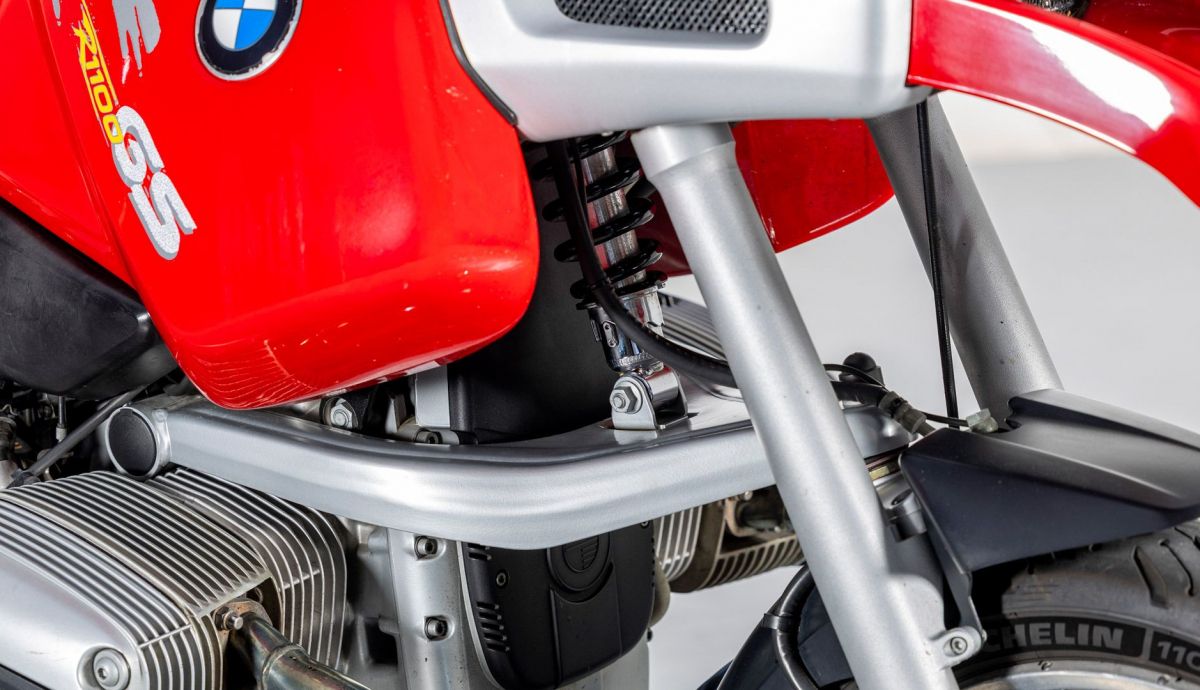
Another important innovation was found in the front suspension, with the GS being the first model in the series to include a system called Telelever. This system combined a central shock absorber, a telescopic fork, and a lower swingarm, with the aim of separating the damping and steering functions, as well as providing an anti-dive effect during braking.
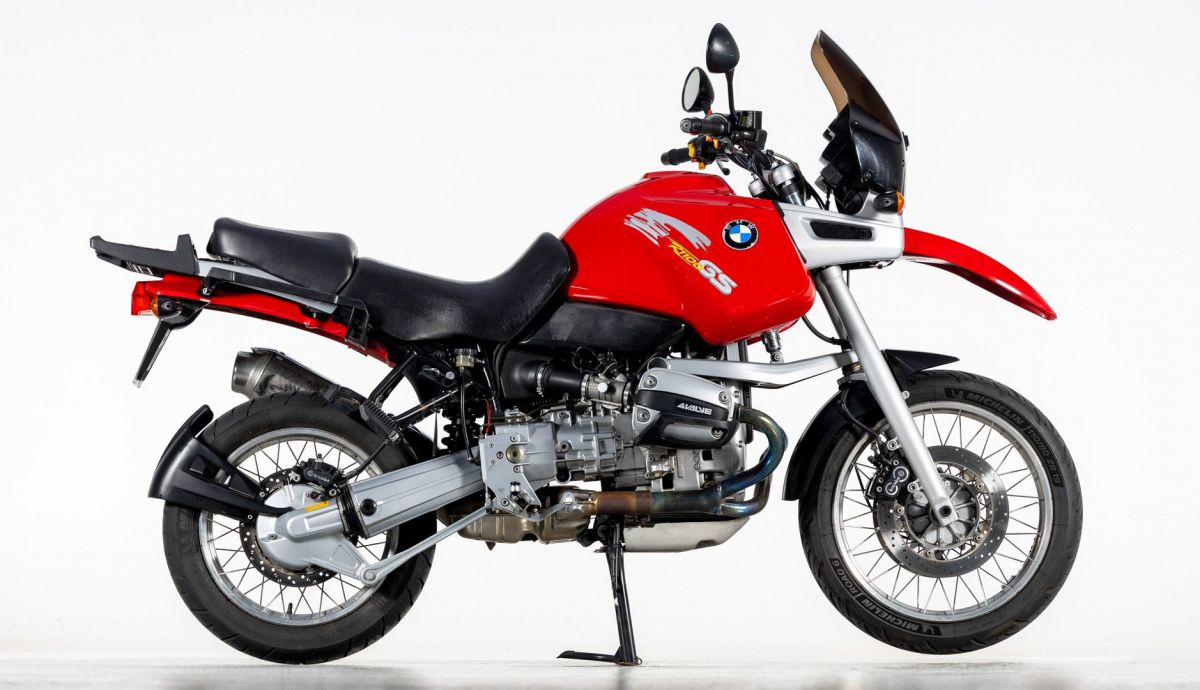
The braking system was from Brembo, with two 305 mm discs and 4-piston calipers on the front axle, and a 276 mm disc with a two-piston parallel caliper at the rear.
As you've already read, it could be optionally equipped with switchable ABS, making it the first adventure motorcycle in history to offer this safety system. Another notable detail for a motorcycle with off-road capability is that it came equipped with spoked wheels designed for tubeless tires.
The tires were mixed-use, in sizes 110/80-19” and 150/70-17”. The 25-liter fuel tank indicated that it was a motorcycle designed for long journeys. Further evidence of this was the availability of saddlebags, a top case, and hand guards as additional accessories.
Autonews and Mundoquatrorodas


Nenhum comentário:
Postar um comentário