AUTONEWS
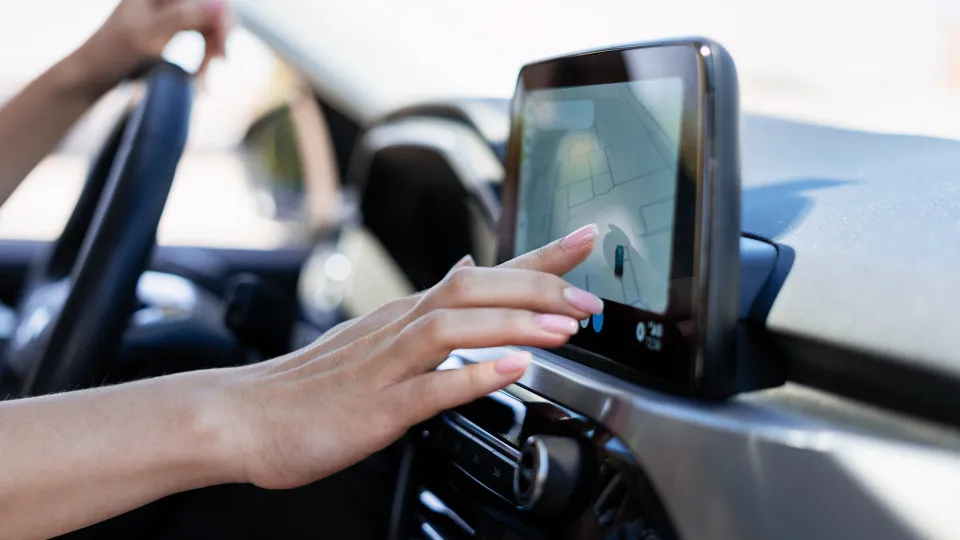
Touchscreens? "Wrong technology for primary car interface"
In recent years, touchscreens in cars have become increasingly common, allowing control of various functions. The interior designer of the new Ferrari Luce doesn't like the concept.
More and more cars are equipped with touchscreens, which allow control of various functions - some of them primary and directly related to driving or the climate control system. Jony Ive believes that this is not the right technology for cars.
The designer, who designed the interior of the new Ferrari Luce - the first 100 percent electric car from the Maranello manufacturer - downplayed the use of a touchscreen.
In statements quoted by the British Autocar, the iPhone designer also explained: "The reason we developed a touchscreen [for the iPhone] was that we were developing an idea to solve a problem. The big idea was to develop a general-purpose interface that could be a calculator, a typewriter, a camera, instead of having physical buttons."
Something that John Ive considers not applicable to cars: "It's something I would never have dreamed of doing because it requires taking your eyes off the road. So, it's the wrong technology to be the primary interface."
The new Ferrari Luce still has a touchscreen in the center, which can rotate to be more for the driver or more for the front passenger. Its designer explained the difference: "So much of what we did was so that you could use it intuitively, enjoy it and use it safely. [...]. It's very well thought out and most of the surfaces are physical."
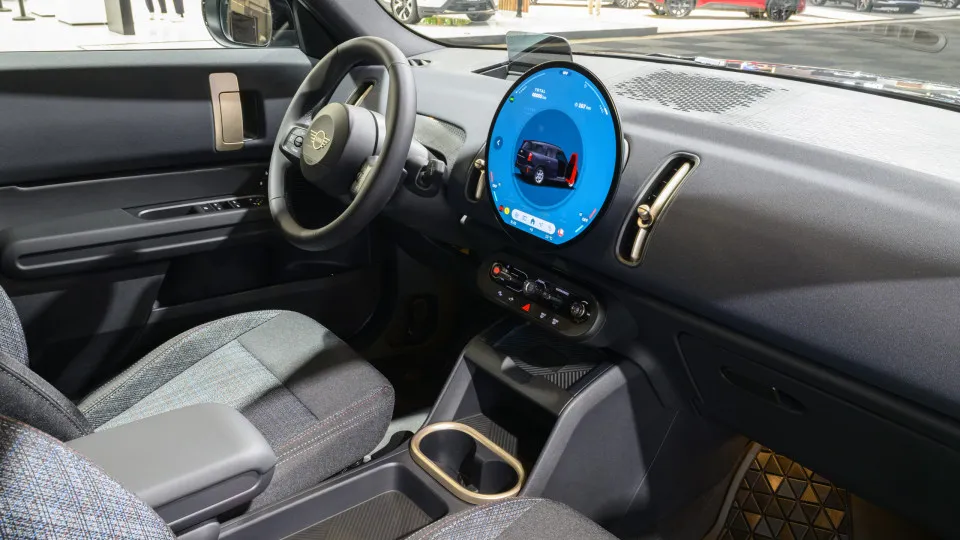
Physical buttons won't disappear from the Mini: "We need to keep..."Mini is currently a brand of the BMW Group. As happens throughout the automotive industry, it has to embrace the digital age, but it doesn't do so by dispensing with physical buttons - even for the sake of identity.
More and more cars are emerging that predominantly feature digital touch controls through digital screens on board. Mini wants to have a balance in its models.
Since 2013, Minis have featured a large central OLED touchscreen that combines modern technology with a certain retro design. A reasonable number of physical control buttons, also with a retro design, are still present.
Holger Hampf, Mini's design director, commented to Motor1 that there is a "general trend" of people asking for the return of traditional physical buttons.
Something that, he stressed, aligns with Mini's strategy: "I believe it's very good, because we are seeking this mix of digital interface and physical possibilities."
For the designer, it is vital to find an ideal balance between each of the onboard experiences – the digital and the analog. He explained why: "If you are too digital, you lose the connection to the personality for which the brand is known. We always need to maintain that analog quality for which Mini is known."
The large circular screen located precisely is the only touch element that Mini wants in its cars: "It's all we need. [...]. The size is perfect, enhancing the digital interface and then perfecting it with physical interaction is perfect for Mini," assured Holger Hampf.
Autonews

/i.s3.glbimg.com/v1/AUTH_cf9d035bf26b4646b105bd958f32089d/internal_photos/bs/2026/4/M/hBY6ChRJKspIo75K2Xsg/chevroletsonic-dianteiramovimento.jpg)


Nenhum comentário:
Postar um comentário